Mulching does a lot more than make your beds look tidy. Here's what every Suffolk County homeowner should actually know before the next season hits.
Share:
Summary:
Most homeowners think of mulch as the stuff you spread in spring to make the beds look fresh. And it does that. But if you’re in Suffolk County, NY, there’s a more important reason to pay attention to it — one that has nothing to do with aesthetics.
The soil here drains fast, dries out quickly, and doesn’t hold nutrients the way soils in other parts of the country do. That creates real challenges for plants, trees, and shrubs that most people don’t connect back to mulching until something starts dying. We’ve seen this pattern play out across hundreds of properties throughout Suffolk County. This post covers what mulching actually does, where most people go wrong, and how it fits into the bigger picture of keeping a Long Island property healthy.
Mulching benefits go well beyond appearance. At its core, mulch does three things that matter enormously in a Suffolk County, NY yard: it slows moisture loss, moderates soil temperature, and suppresses weeds — all at once, passively, season after season.
Research from Iowa State University found that mulching can reduce soil moisture loss by up to 40%. That’s significant anywhere, but it’s especially meaningful on Long Island, where the dominant soil type is sandy glacial outwash — the kind that drains so fast, watering twice a week barely keeps up. When you add mulch to that equation, you’re not just making things look tidy. You’re extending the effectiveness of every inch of rain and every watering session.
Suffolk County, NY sits on sandy glacial outwash — a soil type that drains quickly, leaches nutrients fast, and naturally runs acidic. If you’ve ever noticed your plants struggling in July even though you’ve been watering consistently, this is usually why. The water moves through the soil before roots can absorb it, and the nutrients go with it.
Organic mulch works against all of those problems at once. As it breaks down over time, it adds organic matter back into the soil, which improves its ability to hold both water and nutrients. Cornell Cooperative Extension Suffolk has documented that soil with just 5% organic matter holds nearly two gallons of plant-available water per cubic foot — a dramatic difference from the baseline you’re starting with in most Long Island yards.
The moisture story alone is worth paying attention to. Studies published in arboriculture research have found that organically mulched soil can hold water reserves twice as deep as unmulched soil by the end of a growing season. In a county that has been classified as being in severe drought conditions as recently as late July 2016 by the US Drought Monitor, that depth of moisture retention isn’t a minor convenience — it’s often the difference between plants that make it through August and ones that don’t.
Temperature regulation is the other piece most homeowners underestimate. A Michigan State University research trial found that three inches of wood chip mulch reduced midday soil temperature by 18 degrees Fahrenheit. During a Suffolk County summer, when sandy soil absorbs and radiates heat, that kind of root protection matters. Cooler roots mean healthier plants through the hottest stretch of the year.
And then there’s weed suppression. Properly applied mulch blocks light from reaching the soil surface, which prevents annual weed seeds from germinating. The effect is substantial — up to 95% of weed seed germination can be blocked naturally with the right depth and coverage. If you’ve spent entire weekends hand-pulling weeds from your flower beds, that number should get your attention.
There’s a common mulching error so widespread that it has its own name in the landscaping industry: the mulch volcano. It’s exactly what it sounds like — mulch piled high against the base of a tree trunk, forming a mound that looks intentional but is actually harmful.
Michigan State University Extension has described this as epidemic, noting that homeowners and maintenance crews alike pile mulch right at the base of trees in epidemic numbers. The problem is that mulch pressed against a trunk traps moisture against the bark, which creates conditions for rot and disease. Over time, it can also lead to root girdling — where roots begin to grow around the trunk rather than outward — which slowly strangles the tree from below. The damage often isn’t visible until it’s already significant.
The correct approach is what’s sometimes called a donut shape: mulch spread in a ring around the tree with a clear gap maintained around the trunk itself. The same principle applies to shrubs and perennials — mulch should never be piled against woody stems. This is one of the reasons professional installation makes a real difference. It’s not just about having the right material or the right depth. It’s about knowing where the mulch should and shouldn’t go, and why.
Depth matters too. Two to four inches is the generally accepted range, depending on the material and the application. Less than two inches and you lose most of the weed suppression benefit. More than four inches and you risk suffocating roots and shedding water rather than retaining it. Getting that right consistently across an entire property — flower beds, tree rings, garden borders — takes more precision than a few bags from a hardware store and a Saturday afternoon usually allow for.
Timing is another factor that’s easy to get wrong. In Suffolk County, NY, spring mulching works best once soil temperatures reach at least 65°F — typically sometime in April through early June. Mulching before the soil has warmed can actually slow plant growth by insulating cold ground. Fall mulching, from September through November, serves a different purpose: protecting roots from the freeze-thaw cycles that Long Island winters bring. Both windows matter, and both serve different functions.
Want live answers?
Connect with a Rolling Hills Property Services Inc expert for fast, friendly support.
Once you’ve got your beds properly mulched and your trees protected, the next question many Suffolk County homeowners face is what to do about the lawn itself — especially if there are bare patches, damaged areas, or a full lawn replacement in the picture.
The grass seed vs. sod decision comes down to a few key factors: timeline, budget, and how much establishment care you’re willing to manage. Both options work on Long Island. They just work differently, and the right choice depends on your specific situation.
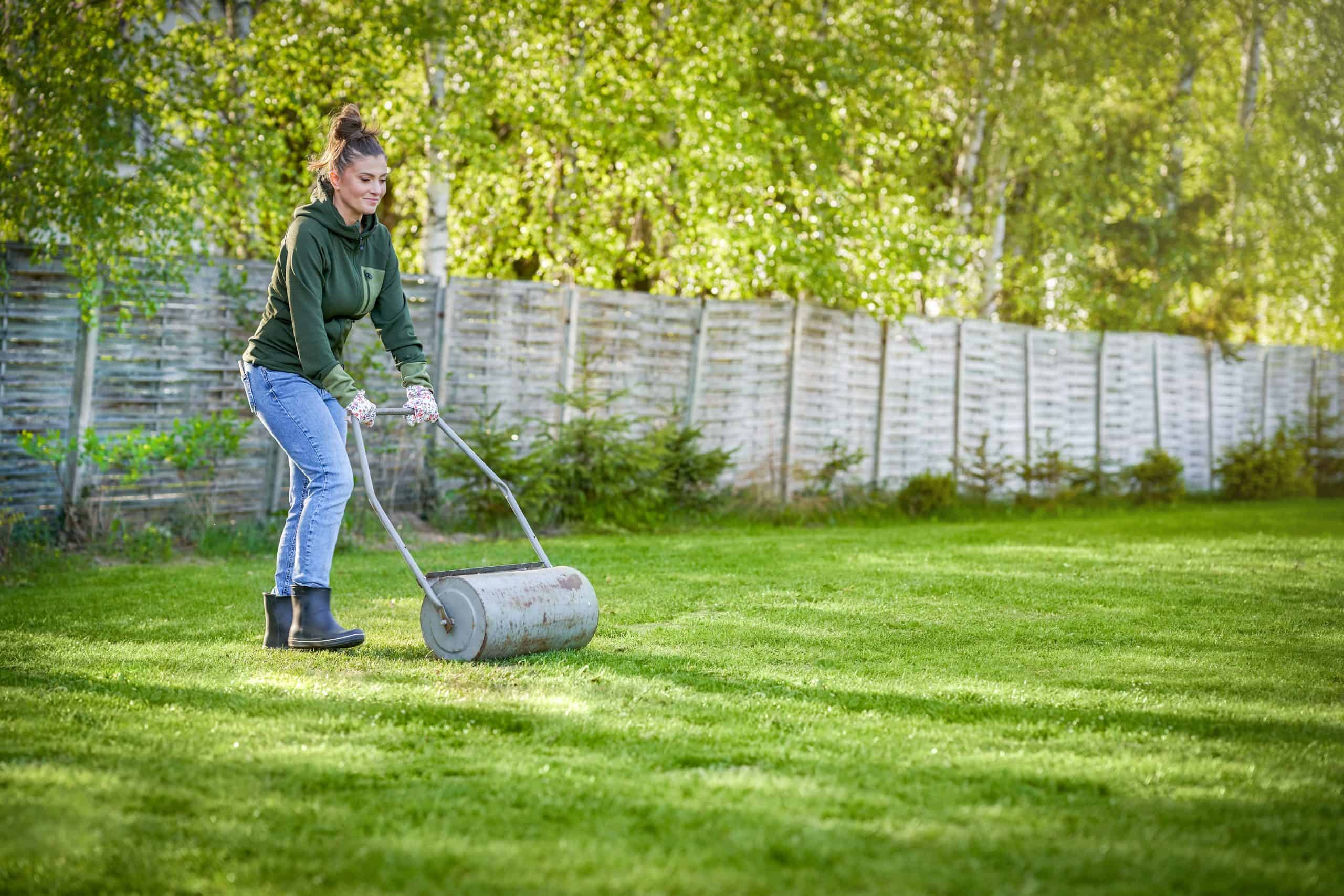
Seeding a new lawn is the more affordable route upfront. Grass seed costs significantly less per square foot than sod, and for large areas, that difference adds up quickly. The trade-off is time. Seeded lawns typically take four to eight weeks to establish visible coverage, and that window requires consistent moisture — which brings mulching back into the picture.
A light layer of straw mulch or another appropriate cover material over freshly seeded areas helps retain moisture, protect seeds from birds, and prevent erosion during the germination period. On Suffolk County’s fast-draining sandy soil, skipping that step is one of the most common reasons new seed fails. We’ve seen it happen repeatedly — homeowners invest in quality seed, then wonder why germination is spotty when the real issue was moisture loss during those critical first weeks.
Sod delivers results immediately. You lay it, water it correctly, and within a few weeks the roots have knit into the soil beneath. The lawn looks finished from day one, which matters if you’re preparing a property for sale, hosting an event, or simply don’t want to look at bare dirt for two months. Sod also tends to establish more reliably on slopes and in areas where seed would wash away before it germinates.
The honest answer is that neither option is universally better. Seeding makes sense for large, flat areas where you have the time and the irrigation to support a longer establishment period. Sod makes sense when you need fast results, when the area has drainage or erosion challenges, or when the visual impact matters immediately. Many homeowners end up using both — sod for high-visibility front areas, seed for larger back sections where the timeline is less critical.
What both approaches have in common is that the surrounding landscape — mulched beds, edged borders, healthy trees and shrubs — sets the stage for how the lawn looks and performs. A freshly installed lawn surrounded by unmulched, weed-heavy beds doesn’t stay looking sharp for long.
Lawn installation cost in Suffolk County, NY varies based on the size of the area, the method you choose, the condition of the existing soil, and whether any prep work — grading, debris removal, or soil amendment — is needed before installation begins.
Sod costs more per square foot than seeding, and that gap becomes meaningful on larger properties. But the total project cost isn’t just about material. Soil preparation is often the biggest variable. Suffolk County’s sandy, nutrient-depleted soil frequently needs amendment before new grass has a realistic chance of establishing well — whether you’re seeding or sodding. Skipping that step to save money upfront tends to show up in patchy results and repeat installations later.
Grading is another factor. If the lawn area has low spots, poor drainage, or uneven terrain, addressing that before installation protects the investment. Water pooling on a newly sodded lawn, or washing seed off a slope during the first heavy rain, are avoidable problems when the site is properly prepared.
The most reliable way to understand what a new lawn installation will cost for your specific property is to get a quote based on an actual assessment. Bed sizes, soil conditions, access, and the scope of any prep work all affect the final number in ways that a general estimate can’t account for accurately. We offer free quotes and can walk through the options — seed, sod, soil prep, and timing — so you have a clear picture before any work begins. Reach us by phone or text at 631-652-8035, Monday through Friday, 9am to 5pm.
The real mulching benefits aren’t about how your yard looks the day after installation — though that’s a genuine upside. They’re about what happens over the following weeks and months: moisture that stays in the soil instead of draining away, roots that stay cooler through a Suffolk County summer, weeds that don’t get the foothold they’d otherwise find in sandy, fast-draining ground.
Done correctly, mulching is one of the highest-return things you can do for a Long Island property. Done incorrectly — too deep, piled against trunks, applied at the wrong time — it can create problems that take years to fully show up.
If you’re ready to get it right this season, Rolling Hills Property Services Inc. is based right here in Smithtown and serves homeowners throughout Suffolk County. We’re fully licensed and insured, and we won’t start any work until you know exactly what’s involved and what it will cost.
Article details:
Share:
Continue learning: