Full service landscaping costs more than a lawn mow — but less than managing three separate contractors. Here's what Suffolk County homeowners actually pay.
Share:
Summary:
You got a quote. Maybe it was $175 a month. Maybe it was $600. And now you’re sitting there wondering if that’s normal — or if you’re being taken for a ride.
That’s exactly where most Suffolk County homeowners land when they start researching full service landscaping costs. The pricing feels opaque, the scope varies wildly from one company to the next, and national averages you find online don’t account for what it actually costs to maintain a property on Long Island. Sandy coastal soil, nitrogen fertilizer restrictions, mature trees that haven’t been touched in a decade — this isn’t Kansas.
Here’s what you actually need to know before you sign anything.
A lot of companies call themselves full service. Most of them mean they mow, edge, and blow off your driveway. That’s lawn maintenance — and it’s a fine thing to offer — but it’s not the same as full service property care.
True full service landscaping means one company handles everything your property needs across every season. Mowing and fertilizing in summer. Tree pruning and cleanup in fall and winter. Spring planting, mulching, and bed work when things come back to life. Grading and drainage when water is pooling somewhere it shouldn’t. Tree removal when a storm leaves something dangerous behind.
The distinction matters because the alternative — hiring three separate contractors and hoping they coordinate — costs more than people realize. Not just in dollars, but in time, in scheduling headaches, and in the things that fall through the cracks when nobody owns the whole picture.
The honest answer is: it depends on the company. But here’s what a genuinely full service provider should be able to cover without sending you elsewhere.
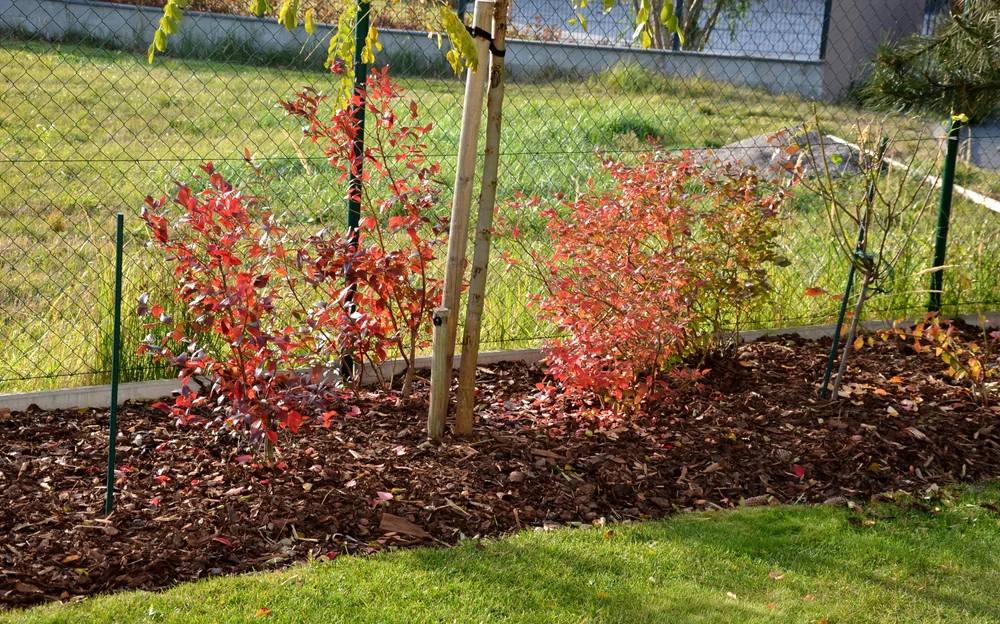
On the maintenance side, that means regular lawn care — mowing, edging, fertilizing on a schedule that actually complies with Suffolk County’s nitrogen restrictions — plus seasonal cleanups in spring and fall, mulch installation, and flower bed maintenance. These are the recurring services that keep a property looking cared for week to week.
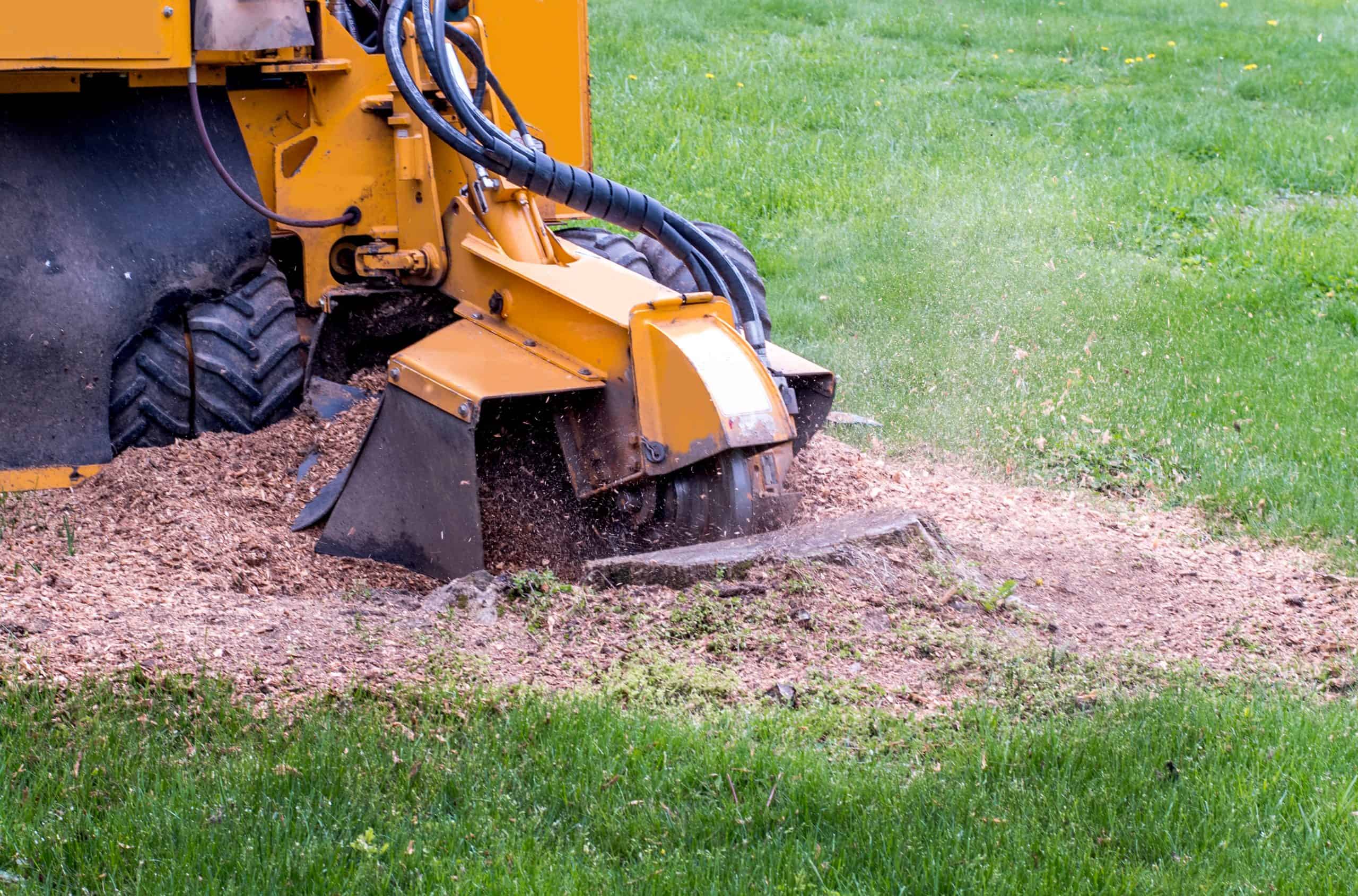
On the tree and shrub side, a real full service company has certified arborists on staff who can assess what your trees need, prune them correctly, and remove them safely when the time comes. This is not the same as a lawn crew with a chainsaw. Improper pruning cuts can cause long-term damage to mature trees and create storm hazards — something Suffolk County homeowners know well after a nor’easter rolls through. Tree trimming, stump grinding, and emergency storm cleanup should all be in scope.
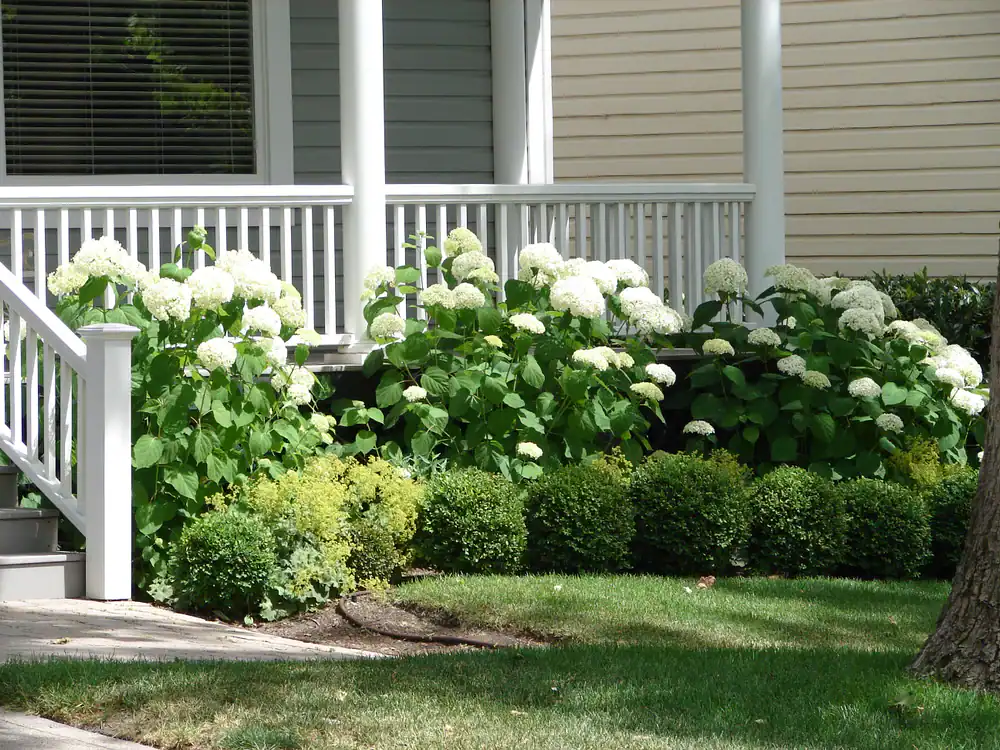
Beyond that, a complete provider should handle planting — whether that’s a privacy screen of arborvitae along your property line, a foundation planting refresh, or native species selected specifically for Long Island’s zone 7a/7b climate and coastal soil conditions. Sandy soils near the Great South Bay drain differently than the clay-heavy inland lots you’ll find further north toward Smithtown. A landscaper who doesn’t know the difference will plant the wrong things in the wrong spots.
Then there’s the work most companies quietly outsource: grading, excavation, drainage correction, hardscaping. If you’ve got a low spot that floods every spring, or a driveway that’s deteriorating, a full service company should be able to address it without you needing to find a third contractor. That’s what full service actually looks like in practice — not a longer menu, but fewer phone calls.
Long Island is not a generic market, and Suffolk County especially is not. The soil varies significantly depending on where you are. Properties near the water — along the South Shore, the bays, or the North Shore coastline — deal with salt air that limits what will actually survive in a planting bed. Inland properties in towns like Smithtown or Brookhaven often have heavier clay soils that hold water and create drainage challenges that sandy coastal lots don’t face the same way.
Then there are the regulations. Suffolk County has enacted specific nitrogen fertilizer restrictions to protect the Long Island aquifer and the health of the surrounding waterways. There are blackout periods. There are phosphorus-free requirements. A landscaper who doesn’t know these rules — or doesn’t follow them — can expose you to violations and fines without you ever knowing it happened.
The seasonal timing here is also specific. Dormant-season pruning, from late fall through winter, is the optimal window for major tree work on Long Island. It minimizes stress on the tree, reduces disease transmission risk, and sets the tree up for stronger spring growth. Miss that window and you’re either waiting another year or doing the work at a less-than-ideal time.
And then there’s storm season. Nor’easters and Atlantic weather systems hit Suffolk County in ways that leave real damage behind — downed limbs, uprooted trees, debris that needs professional removal before it becomes a liability. A company that only does weekly mowing isn’t prepared for that call. A full service provider is.
This is why local expertise isn’t just a marketing phrase. It’s the difference between a company that knows your property’s actual context and one that’s applying a generic playbook that doesn’t fit.
Want live answers?
Connect with a Rolling Hills Property Services Inc expert for fast, friendly support.
Pricing in this industry is confusing because it varies by service type, property size, frequency, and what the company actually brings to the table. National averages exist, but they don’t map cleanly to Long Island, where labor costs, regulatory compliance, and the specific demands of the local environment all factor in.
Most homeowners in the New York area spend somewhere between $1,000 and $2,400 annually on complete lawn care. Professional landscapers generally charge $50 to $100 per hour for a two-person crew. For a standard residential visit — mowing, edging, cleanup — you’re typically looking at $100 to $300 depending on your lot size and what’s included.
Tree trimming averages $400 to $900 per tree; removal runs $400 to $1,200 depending on size and complexity. The bigger number that surprises people is the annual total when you add it all up across services. That’s where understanding what’s included — and what isn’t — really matters.

The cheapest quote is almost never the best deal. That’s not a sales line — it’s a pattern that plays out constantly in this industry, and Suffolk County homeowners are not immune to it.
Here’s what to actually look at before you hire anyone. First, licensing and insurance. In Suffolk County, any contractor performing home improvement work is required to hold a license from the Department of Consumer Affairs. Beyond that, a legitimate landscaping company carries general liability insurance and workers’ compensation coverage. That second one matters more than people realize — if an uninsured worker is injured on your property, you can be held liable. Ask for documentation before the first crew member sets foot on your lawn.
Second, look at certifications for tree work specifically. ISA certification and membership in the Tree Care Industry Association are meaningful signals. They require ongoing education and adherence to industry standards — not every company invests in that. If a company is going to touch your mature trees, you want to know they’re qualified to do it correctly.
Third, get everything in writing. A verbal estimate is not a quote. A real quote is itemized — it tells you what work is being done, what it costs, and what’s not included. If a company won’t put it in writing before starting, that’s information.
Fourth, pay attention to how they communicate. Do they respond quickly? Do they show up when they say they will? Do they tell you what’s happening before it happens? In an industry where disappearing mid-project is a genuine complaint, responsiveness is a real differentiator — not a nice-to-have.
Finally, look at their reviews carefully. Not just the star rating — the details. Reviews that mention specific crew members, specific jobs, and specific outcomes tell you more than generic praise ever will.
Here’s a cost calculation most homeowners never run. They have a lawn guy. A tree guy. Someone they call for spring cleanup. And maybe a fourth person for anything else that comes up. Each of those relationships has its own scheduling friction, its own communication gaps, and its own risk of something falling through the cracks.
The lawn crew doesn’t know the tree company damaged a root zone last fall. The cleanup crew doesn’t know the lawn has a drainage issue that’s been getting worse. Nobody owns the full picture, so nobody catches the problems early — and early is when problems are cheap to fix.
A single full service provider sees your property across every season. That continuity means patterns get noticed. A tree that’s been declining for two years. A low spot that’s getting worse. A planting bed that needs to be rethought because the original plants weren’t right for your soil. These are things a rotating cast of contractors will never flag, because none of them have enough context to see the whole picture.
There’s also the simpler version of this argument: one phone call instead of three. One invoice instead of several. One company that’s accountable for everything on your property, not a situation where everyone points at someone else when something goes wrong.
For Suffolk County homeowners managing medium-to-large residential lots — particularly in towns like Huntington, Smithtown, and Babylon — the coordination cost of fragmented property maintenance is real. It’s just rarely calculated before the frustration sets in.
If you’ve read this far, you’re not just browsing — you’re trying to make a real decision. The most useful thing we can tell you is this: the price you pay matters less than what’s behind it. A fair quote from a licensed, insured company that knows Long Island’s soil, follows Suffolk County’s regulations, and will actually show up and communicate with you is worth more than a low number from someone who checks none of those boxes.
We should be willing to assess your property before quoting, put everything in writing, and answer your questions without making you feel like you’re wasting our time.
If you’re in Suffolk County and want a straight answer on what your property actually needs — and what it will cost — we at Rolling Hills Property Services Inc. offer free quotes and free consultations. Text or call to get started, and you’ll hear back from a real person who knows Long Island.
Article details:
Share:
Continue learning: