A practical guide to grass care in Suffolk County — covering lawn tips, front yard trees, and local resources worth knowing about.
Share:
Summary:
If you’ve searched “grass care near me” and ended up with a wall of service pages and quote forms, you’re not alone. Most homeowners in Suffolk County aren’t looking to hand over their credit card on the first click — they want to understand what’s going on with their lawn first. Why is it patchy near the curb? Why does the grass thin out every August? Why does nothing seem to grow under that oak tree in the backyard?
We’ve put together a practical guide to answer those questions. You’ll find lawn care tips specific to Long Island’s climate, the best trees for Suffolk County front yards, and a curated list of local resources worth bookmarking.
Generic lawn care advice is written for a national audience. Suffolk County is not a generic market. The soils here — particularly on the South Shore and across the eastern stretches of Long Island — tend to be sandy and fast-draining, which means fertilizer doesn’t hold the way it does in heavier inland soils. The maritime climate brings humidity, salt air, and the occasional nor’easter that can leave your yard looking like a construction site overnight.
The grass types that actually thrive here are cool-season varieties: tall fescue, Kentucky bluegrass, and perennial ryegrass. Each has its own personality. Tall fescue handles drought and foot traffic well. Kentucky bluegrass gives you that dense, lush look but needs more attention. Perennial ryegrass establishes fast and works well for overseeding thin areas. Knowing which one you have — or which mix is in your yard — changes everything about how you care for it.

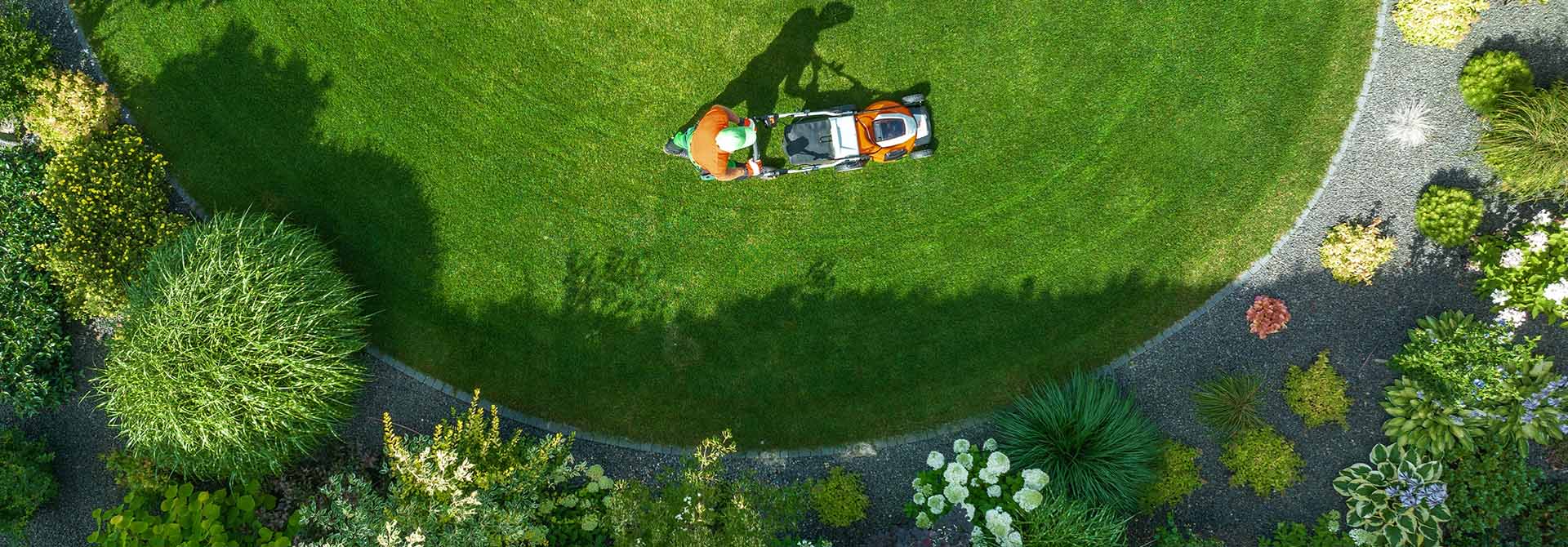
Mowing frequency depends on growth rate, and growth rate depends on the time of year. During spring and early fall — when cool-season grasses are in their active growing phases — you may need to mow every five to seven days. In the heat of July and August, those same grasses slow down significantly, and mowing too aggressively during a heat spell can stress the lawn when it’s already struggling.
A good rule of thumb: mow when the grass reaches about one and a half times your target height. If you want a three-inch lawn, mow when it hits four and a half inches. Cutting more than a third of the blade at once puts unnecessary stress on the plant and leaves it vulnerable to disease and drought damage.
Watering is where a lot of Suffolk County lawns go wrong. Frequent, shallow watering encourages roots to stay near the surface — which makes the grass fragile and heat-sensitive. What you actually want is deep, infrequent watering that pushes moisture down into the top six to eight inches of soil. About one inch of water per week is the general target during active growth, though sandy soils may need slightly more frequent applications since they drain faster.
Fertilization timing matters more than most homeowners realize. For cool-season grasses in Suffolk County, the most important fertilization windows are early spring — when the lawn is coming out of dormancy and needs fuel to green up — and fall, when the grass is recovering from summer stress and building root reserves for winter. Applying heavy nitrogen in midsummer can push growth at exactly the wrong time, leaving the lawn more vulnerable to heat and disease. Soil testing every two to three years helps you understand what your specific yard actually needs, rather than guessing with a generic bag from the hardware store.
Some lawn care tasks are genuinely manageable for a motivated homeowner. Regular mowing, basic raking, and hand-pulling weeds in a small area are all reasonable DIY territory. But there’s a line where the complexity and the stakes go up enough that professional help pays for itself.
Aeration and overseeding are a good example. Core aeration — pulling small plugs of soil from the lawn — relieves compaction, improves drainage, and opens up the turf for seed-to-soil contact. Done in early fall, it’s one of the highest-return investments you can make in a Suffolk County lawn. But timing it wrong, or skipping it entirely because it feels like an extra step, means overseeding produces thin, inconsistent results.
Fertilizer and pesticide application is where licensing becomes a real issue. In New York State, pesticide and fertilizer application requires a state license — this isn’t a technicality, it’s a legal requirement. Hiring an unlicensed applicator puts you at risk, and in a county that sits above a critical aquifer system, the environmental stakes are genuine. Suffolk County has specific regulations around pesticide use near wetlands and groundwater recharge areas, and New York has restricted or banned certain common herbicides — including glyphosate — that are still sold freely in other states. If you’re hiring someone to treat your lawn, ask directly whether they’re licensed to apply in New York.
Weed control, grub prevention, and disease management are also areas where professional diagnosis makes a real difference. A patchy lawn could be a grub problem, a fungal issue, a soil pH imbalance, or simply the wrong grass type for that area of your yard. Treating the wrong thing wastes money and time, and in some cases makes the underlying problem worse.
Want live answers?
Connect with a Rolling Hills Property Services Inc expert for fast, friendly support.
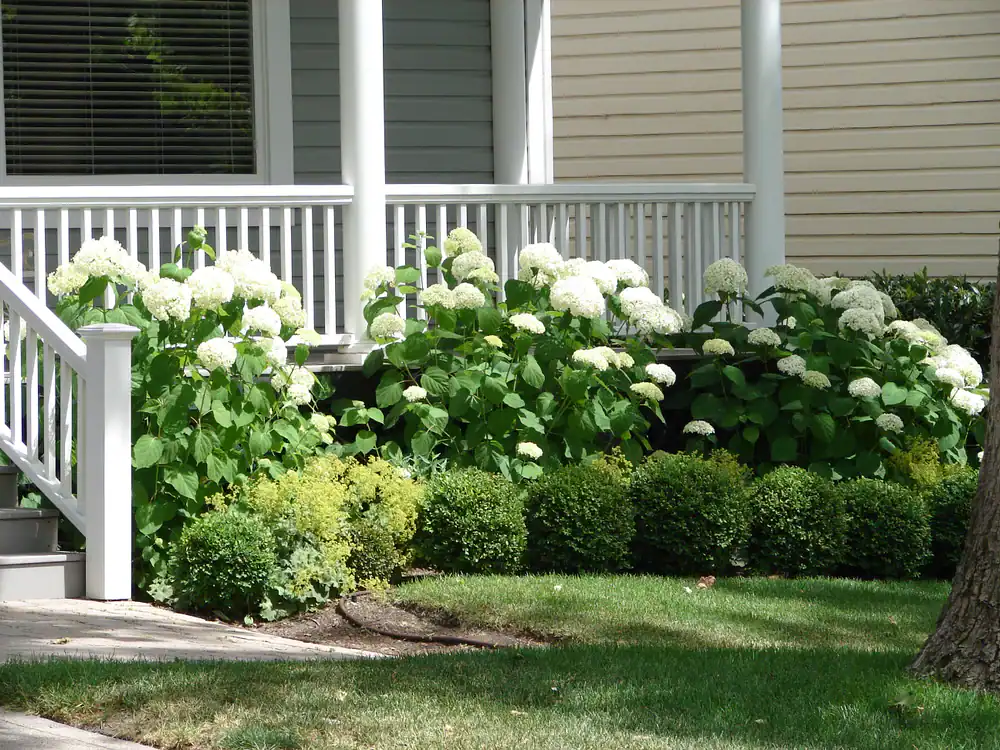
Choosing a front yard tree on Long Island isn’t just about what looks good — it’s about what survives here. Suffolk County spans USDA Hardiness Zones 6b through 7b, which gives you more flexibility than many parts of New York, but the coastal exposure, salt air, and periodic storm stress narrow the field considerably. A tree that thrives in an inland Connecticut yard may struggle within a mile of the Long Island Sound or Great South Bay.
The good news is that Zone 6b–7b supports a wide range of beautiful, manageable trees. The key is matching the right species to your specific site conditions — sun exposure, soil type, proximity to the coast, and available space at maturity.

For homeowners who want something with strong visual impact and relatively low maintenance, the eastern redbud is a standout choice. It blooms in early spring before the leaves emerge, producing clusters of pink-purple flowers along the branches — a striking display that signals the season has turned. It tops out around twenty to thirty feet, which keeps it proportionate on most residential lots without overwhelming the house or the sightlines.
The serviceberry — also called Amelanchier — is another excellent option, and one that’s native to the northeastern United States. It offers four-season interest: white spring flowers, edible summer berries that attract birds, brilliant fall color, and attractive bark through the winter. It handles Long Island’s soil variability well and doesn’t require much intervention once established.
For homeowners who want something more dramatic, the Japanese maple is a reliable performer in Zone 7b — particularly in sheltered locations away from direct coastal wind. The weeping varieties add strong architectural interest and stay compact enough for smaller front yards. They do prefer some protection from harsh afternoon sun and salt spray, so placement matters.
The Princeton elm deserves mention for larger properties. It was specifically bred for disease resistance — a response to the Dutch elm disease that devastated American elm populations — and it brings back that classic arching canopy that defined so many Long Island streetscapes a century ago. It’s a long-term investment, but one that pays off in curb appeal and shade value over decades.
If you’re closer to the water and dealing with salt air and sandy soil, river birch and American holly are worth considering. River birch tolerates wet conditions and has attractive peeling bark that adds year-round texture. American holly is evergreen, handles coastal conditions reasonably well, and provides winter color and wildlife habitat.
Planting a tree sounds straightforward until you realize how many variables can complicate it here. Suffolk County has specific regulations around tree removal and planting near wetlands, coastal zones, and protected areas. Heritage trees — older, larger specimens that fall under local preservation ordinances — require permits before any work is done. If your property is governed by an HOA, there may be additional restrictions on species, size, and placement that aren’t obvious until you’ve already bought the tree.
Utility lines are another practical concern that often gets overlooked at the planning stage. A tree that looks perfectly sized in the nursery can grow into overhead lines within ten to fifteen years if it’s planted in the wrong spot. Checking with your utility provider and understanding the mature canopy spread of your chosen species before you plant saves a significant headache down the road.
Soil preparation matters more than most homeowners expect. Long Island’s sandy soils drain quickly, which is good for preventing waterlogged roots but means that young trees need consistent moisture during their establishment period — typically the first two to three growing seasons. Amending the planting hole with organic matter and mulching around the base of the tree helps retain moisture and regulate soil temperature through Long Island’s variable spring and fall weather.
Timing also plays a role. Fall planting — from late September through November — gives trees a chance to establish roots before the ground freezes, without the stress of summer heat. Spring planting works too, but requires more attentive watering through the first summer. Avoid planting during the hottest weeks of July and August unless you’re prepared to water consistently and protect the root zone from heat stress.
If you’re navigating any of the permit or regulatory questions, or if your property involves wetland buffers, coastal setbacks, or HOA review, working with a contractor who handles that coordination as part of the service is worth the investment — rather than leaving you to figure it out on your own.
Good grass care in Suffolk County comes down to knowing the local variables — the grass types, the soils, the seasonal windows, the regulations — and working with someone who treats your property as a specific place rather than a generic job. Whether you’re dealing with a lawn that’s been neglected for a season or planning a front yard tree installation from scratch, the details matter more here than most generic advice accounts for.
We’re fully licensed and insured, we use eco-friendly products and practices, and we back every job with a 100% satisfaction guarantee. The fastest way to get pricing and availability is to text us at 631-652-8035.
Article details:
Share:
Continue learning: