Land clearing costs on Long Island run higher than national averages — and Suffolk County's wetlands, soil, and permit rules make the difference. Here's what to expect.
Share:
Summary:
You searched “land clearing cost,” found a range somewhere between $500 and $8,000 per acre, and now you’re more confused than when you started. That gap exists because those national averages don’t account for Suffolk County’s specific terrain, soil conditions, wetland regulations, and permit requirements.
Rolling Hills Property Services Inc. has been handling land clearing and site prep across Suffolk County for years. We’ve seen what catches homeowners off guard, what drives the actual price, and how local conditions on Long Island differ from the rest of the country. This guide is our honest breakdown of what you’ll really pay and why.
Land clearing isn’t just cutting down trees. That’s where a lot of homeowners get tripped up — they get a quote for “clearing,” assume it covers everything, and then discover that stump grinding, debris hauling, and grading are each a separate line item.
Full land clearing services typically include removing trees and brush, grinding or pulling stumps, hauling debris off-site (or mulching it on-site), and grading the surface so it’s usable afterward. Each of those steps adds to the total. Some contractors quote only the cutting. We quote the whole job.
Knowing the difference before you sign anything matters — especially when you’re planning a construction project, pool installation, or major landscaping work on your Suffolk County property.

Most homeowners in Suffolk County aren’t clearing hundreds of acres — they’re dealing with a half-acre backyard that’s gone wild, a wooded lot they just purchased, or a section of their property they want to open up for a pool, addition, or garage.
For a half-acre residential lot in Suffolk County, costs typically fall between $405 and $2,935 depending on what’s growing there. Light brush and overgrown shrubs land at the lower end. Mature oak trees, dense bramble, and multiple stumps push the number up considerably. Our experience across Suffolk County shows average clearing costs running $2,800 to $4,500 per acre — noticeably higher than many national estimates — and that range reflects real conditions here, not theoretical ones.
Suffolk County’s native vegetation is part of why local costs run higher. Pitch pine, mature oaks, and scrub oak are common across central and eastern Suffolk, and they’re harder to clear than younger deciduous growth. If your property sits in or near the Pine Barrens — covering parts of Brookhaven, Southampton, and Riverhead — there are additional permit considerations under the Long Island Pine Barrens Protection Act that can affect both cost and timeline.
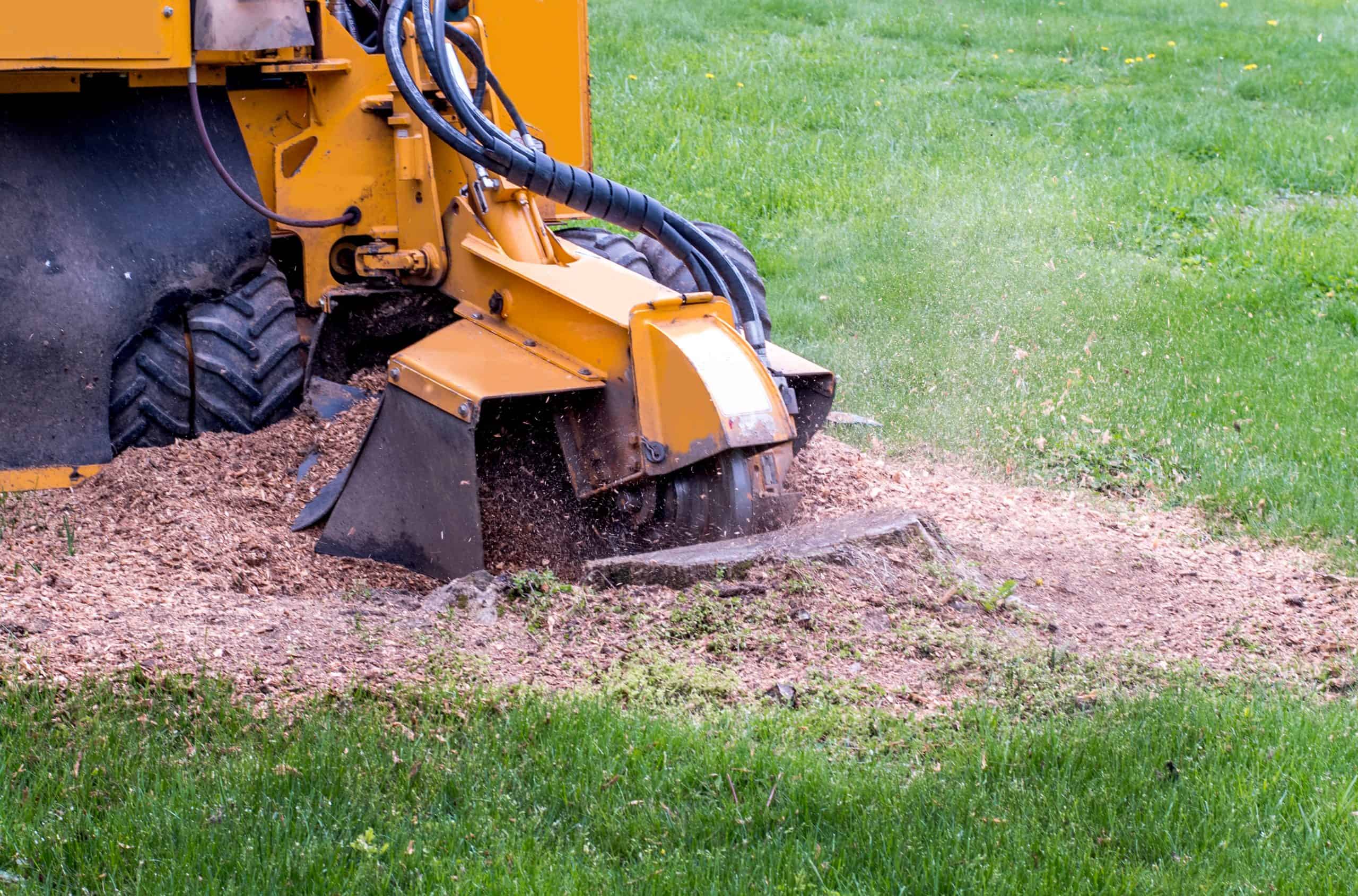
Stump grinding is worth budgeting for separately. It typically adds $800 to $2,500 per acre depending on stump count and size. Skipping it usually just creates a problem for whoever comes next — whether that’s a landscaper, a pool installer, or a builder.
Debris handling is another variable. Hauling everything off-site costs more than mulching it in place, but on-site mulching isn’t always practical depending on what you’re doing with the cleared land. We’ll walk through the tradeoffs when we quote the job.
This is the part most homeowners don’t think about until it’s too late. Suffolk County has a genuinely complex regulatory environment for land clearing — and the cost of getting it wrong isn’t just a fine. It can mean stopping work mid-project, paying for mandatory restoration, and starting the permit process from scratch.
The NYSDEC regulates any activity that disturbs tidal or freshwater wetlands, including clearing, grading, cutting, and filling. If your property is near the South Shore — Great South Bay, Moriches Bay — or anywhere along the North Shore coastline, there’s a real chance that part of your land falls within a regulated wetland or its 100-foot adjacent buffer.
Tidal wetlands maps are on file at the Suffolk County Clerk’s Office, and checking them before you break ground isn’t optional — it’s the difference between a smooth project and a significant headache.
Beyond NYSDEC, Suffolk County is divided into 10 towns — Babylon, Brookhaven, East Hampton, Huntington, Islip, Riverhead, Shelter Island, Smithtown, Southampton, and Southold — and each one has its own building department with its own permit requirements. What clears easily in Smithtown may require additional approvals in Southampton or East Hampton.
We offer permit consultation services as part of our land clearing and grading work. We know which projects trigger review, which towns require soil disturbance permits above certain square footage thresholds, and how to move through the process without unnecessary delays. That’s not a minor thing — it can save weeks off your project timeline and protect you from fines that can far exceed the cost of getting the permit right the first time.
Want live answers?
Connect with a Rolling Hills Property Services Inc expert for fast, friendly support.
Not every overgrown property needs heavy equipment and a full clearing crew. Sometimes the issue is dense brush, invasive shrubs, and a few small saplings — not mature trees and stumps. That’s brush clearing, and it’s a meaningfully different scope with a meaningfully different price.
Basic brush hogging — running a rotary mower attachment through overgrown fields or light vegetation — can run as low as $20 to $200 per acre. Once you’re dealing with moderate brush, woody shrubs, and small trees, that range moves up to $500 to $1,500 per acre. Full land clearing with mature trees, stumps, and grading sits higher still.
Knowing which category your property falls into is the first step toward getting a quote that actually reflects the job.
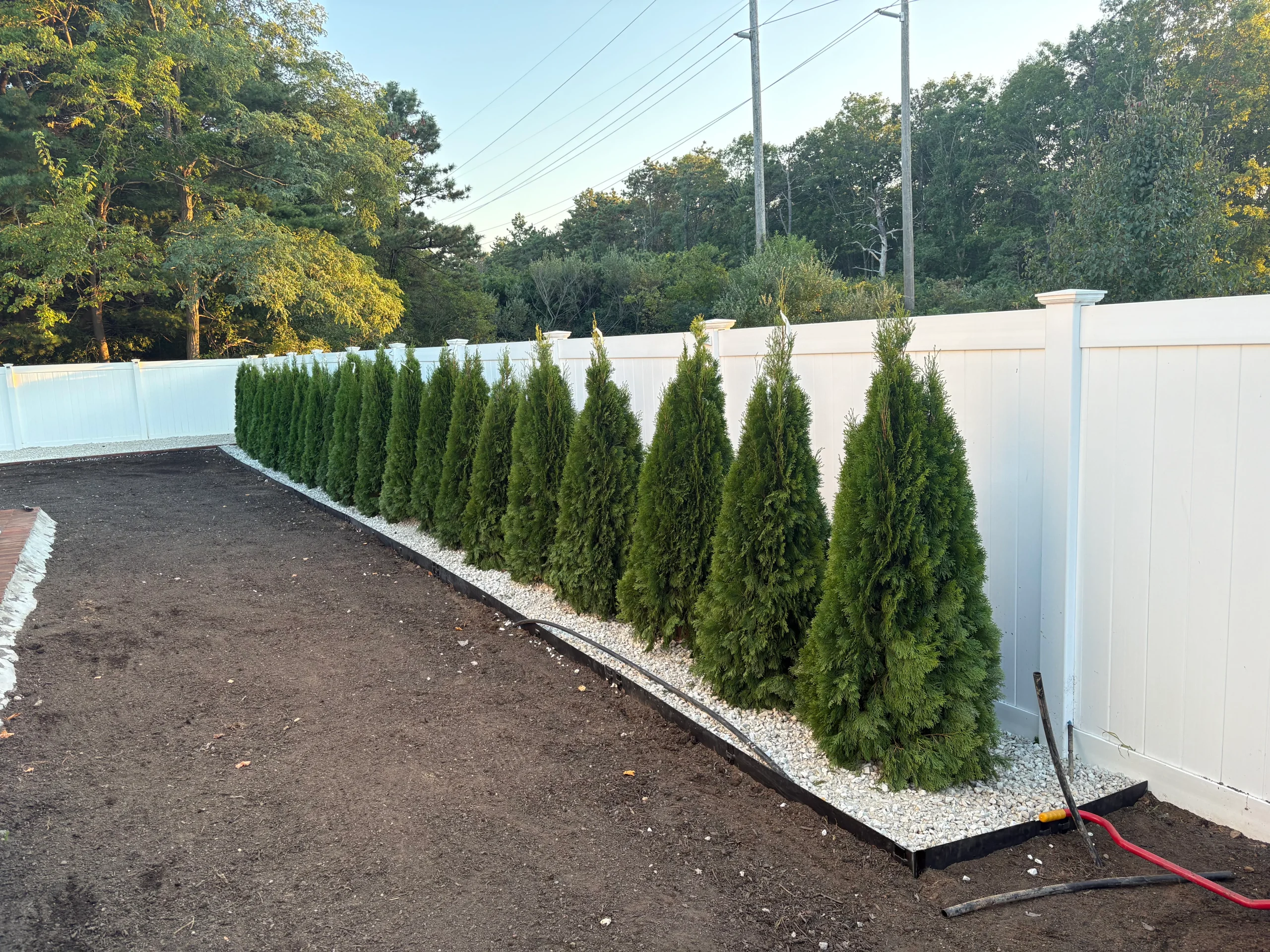
Long Island’s geology is different from most of the country, and it shows up in land clearing projects in ways that national cost guides never mention. The soil here is predominantly sandy loam over glacial outwash — it drains quickly, which is generally a good thing, but it can be unstable after clearing if grading isn’t done properly.
Properties being prepped for construction, a pool, or a major hardscaping project almost always need grading after clearing, not just the clearing itself. Grading adds to the total cost — typically $670 to $5,500 on top of the clearing, depending on the scale of the work and the equipment required.
We use GPS-guided graders for precision leveling, which matters when you’re creating a foundation, improving drainage, or establishing a slope that won’t cause erosion problems down the line. It’s not something you want done roughly.
Terrain also plays a role beyond soil type. Flat, accessible lots cost less to clear than properties with significant slope, rocky outcroppings, or limited equipment access. If your lot has a steep grade or the clearing area is hemmed in by fencing, structures, or neighboring trees you want to preserve, that affects how the work gets done and what it costs. We assess all of that before quoting — not after.
One thing we hear from homeowners regularly: they hired one company to clear, another to grind stumps, and a third to grade — and the coordination between them added weeks and unexpected costs to the project. We handle all of it under one contract. Clearing, stump grinding, debris management, grading, and site prep — one crew, one timeline, one point of contact.
Timing affects both availability and, in some cases, cost. Spring — roughly March through May — is peak demand for land clearing across the Northeast. Homeowners who planned winter projects start executing once the ground thaws, and contractors fill up quickly.
If your project is tied to a construction start date or a pool installation window, booking in late winter gives you more scheduling flexibility and a better chance of hitting your target date.
Fall is the secondary peak, typically September through November, when homeowners want to clear before winter and get the site ready for spring work. The shoulder seasons — late winter and early fall — tend to offer the best combination of availability and responsiveness.
Suffolk County’s coastal exposure also means storm damage drives emergency clearing demand year-round. Nor’easters and the occasional hurricane leave downed trees and debris that need to be addressed quickly, regardless of the season. We handle storm cleanup and emergency clearing across Suffolk County, so if you’re dealing with post-storm damage, that’s something we can move on fast.
Some clearing work near wetlands or coastal areas has seasonal restrictions tied to wildlife nesting and vegetation cycles. If your property is near a regulated area, timing the project to avoid those windows — or planning around permit review timelines — is something we factor in from the start.
The honest answer to “how much does land clearing cost?” is that it depends — but not in the vague, unhelpful way that phrase usually means. It depends on specific things: how dense the vegetation is, whether stumps are included, whether grading is needed, whether your property triggers any permit requirements, and which town in Suffolk County you’re in.
What we can tell you is that Long Island clearing costs typically run $2,800 to $4,500 per acre for average conditions, and that the full scope of a project — clearing, stumps, debris, and grading — usually costs more than the initial clearing quote suggests. Getting an itemized quote upfront, from a contractor who’s assessed the actual site, is the only way to budget accurately.
Rolling Hills Property Services Inc. is based in Smithtown and serves homeowners and property managers throughout Suffolk County. If you want a straight answer on what your project will actually cost, text us at 631-652-8035 for fast pricing and availability, or reach out to schedule a free consultation. We’ll look at the property, tell you what’s involved, and give you a number you can actually plan around.
Article details:
Share:
Continue learning: