What does driveway paving actually cost in Suffolk County? Here's a plain-language breakdown by material, size, and the local factors that move the number.
Share:
Summary:
You’ve probably already noticed the cracks. Maybe a pothole or two that appeared after last winter. And now you’re trying to figure out what a new driveway actually costs in Suffolk County — not the national average you keep seeing online, but a real number for your street, your town, your soil.
The problem is, most cost guides are written for a generic American homeowner. They don’t account for Long Island’s sandy soil, the freeze-thaw cycles that hammer driveways every winter, or the permit requirements that vary town by town across Suffolk County, NY. We’ve been installing driveways throughout the region for years, and we know exactly what changes the price and what doesn’t. Here’s what you actually need to know before you call anyone.
Asphalt is by far the most common driveway material in Suffolk County, and for good reason — it handles freeze-thaw movement better than concrete, costs less upfront, and can last 20 to 30 years when it’s installed correctly. The emphasis there is on “correctly,” because that’s where most driveways on Long Island fall short.
For residential driveways in communities like Holbrook, Holtsville, Smithtown, and Huntington, expect to pay in the range of $3 to $7 per square foot, depending on site conditions and how much excavation is involved. A standard single-car driveway (roughly 12 by 20 feet) typically runs $720 to $1,680. A two-car driveway with turnaround space can easily reach $3,000 to $8,000 or more. Larger projects in premium suburban communities with long driveways, turnarounds, or Belgian block edging can run significantly higher. The square footage adds up fast on Long Island lots.
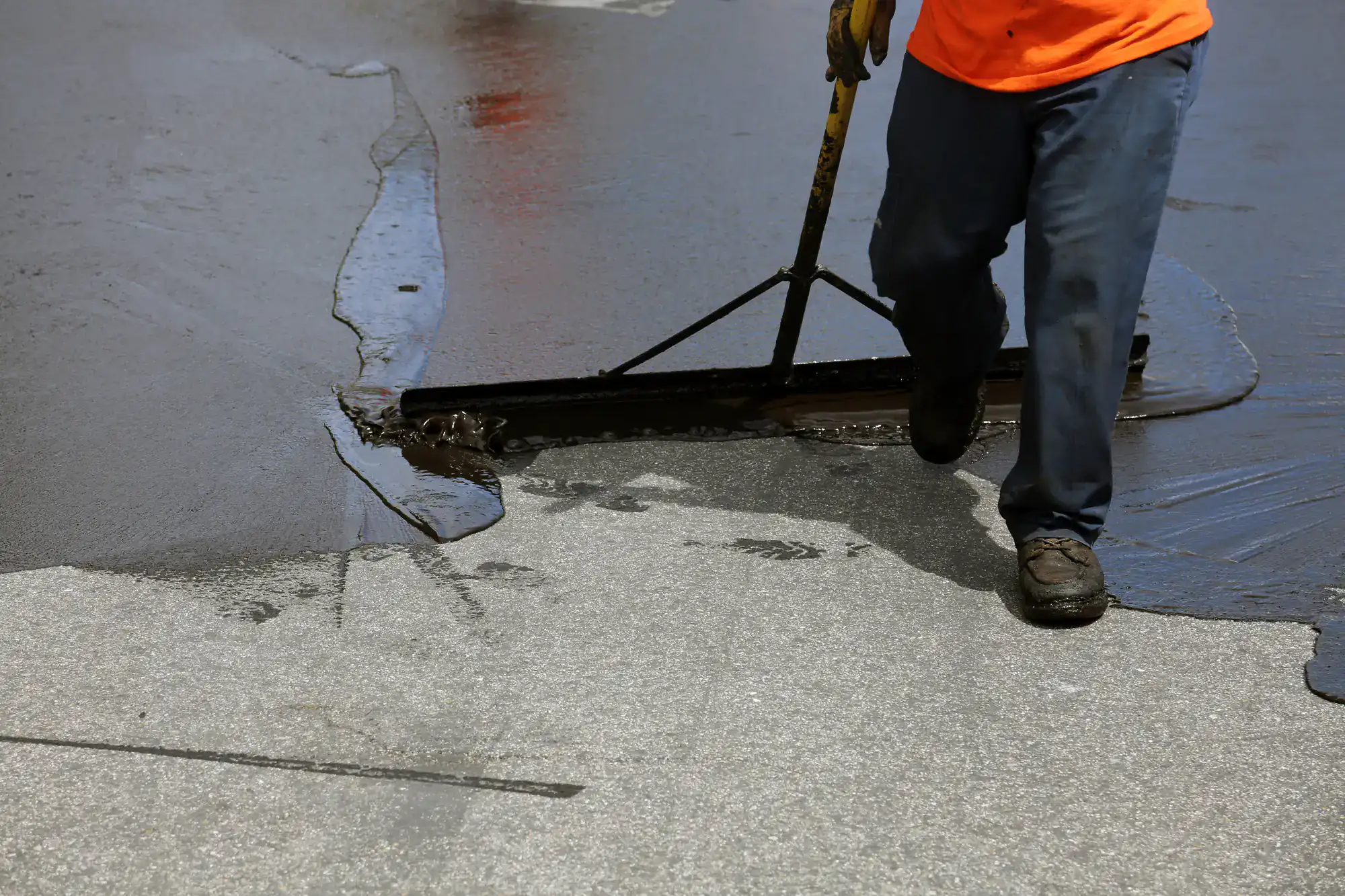
If you’ve gotten multiple quotes and they’re thousands of dollars apart, you’re not imagining things — and the gap almost never comes down to material cost. It comes down to what’s happening below the surface.
A proper asphalt installation in Suffolk County starts well below grade. The soil here is largely sandy and glacially deposited, which means it doesn’t compact with the same stability you’d find in clay-heavy soils elsewhere. If a contractor doesn’t excavate to the right depth, install a compacted aggregate base in multiple lifts, and grade the surface correctly for drainage, that driveway is going to start showing cracks within a few winters.
Long Island typically sees 20 to 40 freeze-thaw cycles in a single winter season. Every time water gets into a small crack, freezes, and expands, it widens that crack a little more. Over three or four winters, what started as a hairline fracture becomes a pothole. That process accelerates dramatically in driveways with inadequate base depth or poor drainage.
So when you see a quote that’s $4,000 lower than everyone else’s, it’s worth asking what they’re skipping. Usually it’s excavation depth, base material quality, or asphalt thickness. The cheapest quote today can easily become the most expensive decision five years from now.
A complete asphalt driveway project in Suffolk County also needs to account for drainage. Standing water is one of the top causes of early driveway failure, and on Long Island’s sandy soils, water movement below the surface can erode a base that looks solid from above. That’s why drainage — whether it’s proper grading, a catch basin, or a French drain — isn’t an optional add-on. It’s part of doing the job right.
This is the question most Suffolk County homeowners are actually wrestling with. The driveway isn’t completely gone — there are just a few bad spots. Is it worth repairing, or is it time to start fresh?
The honest answer depends on what’s causing the potholes. If your base is still sound and you’re dealing with surface-level damage — a pothole here, some cracking there — professional repair is a reasonable option. Hot-mix pothole repair done by a licensed contractor holds up far better than the cold-patch products you’ll find at a hardware store, which are essentially a temporary fix. Professional pothole repair typically runs $100 to $400 per pothole depending on size and depth.
But if the potholes are caused by base failure — which is common in driveways that were installed without proper excavation on Suffolk County’s sandy soil — patching is just delaying the inevitable. You’ll be calling someone again next spring, and the spring after that. The structural problem is underneath, and no surface patch fixes that.
A good way to think about it: if your driveway is under 15 years old and the damage is isolated, repair often makes sense. If it’s 20-plus years old, the damage is widespread, or you’ve already patched the same spots more than once, a full replacement is usually the better investment. You’re not just paying for a new surface — you’re paying for a properly engineered base that won’t repeat the same failure cycle.
We see this regularly across Suffolk County, particularly in communities where driveways were installed in the 1990s and early 2000s without the base prep standards that should have been followed. The driveway looks like a paving problem. It’s actually an excavation problem that was deferred for two decades.
Want live answers?
Connect with a Rolling Hills Property Services Inc expert for fast, friendly support.
When someone asks about the cost of a new driveway, they’re usually thinking about the asphalt or concrete itself. But a complete new driveway installation in Suffolk County involves several steps before a single inch of paving material goes down — and those steps are what determine whether the driveway lasts 5 years or 25.
A full installation starts with excavation, grading for drainage, base installation, and compaction. If there’s an existing driveway, removing it adds to the cost. If the site has drainage issues or difficult access, that affects the price too. In most Suffolk County townships — Smithtown, Islip, Brookhaven, Huntington, Southampton — a permit is also required for new driveway construction, which means filing paperwork, coordinating inspections, and ensuring the work meets local code.
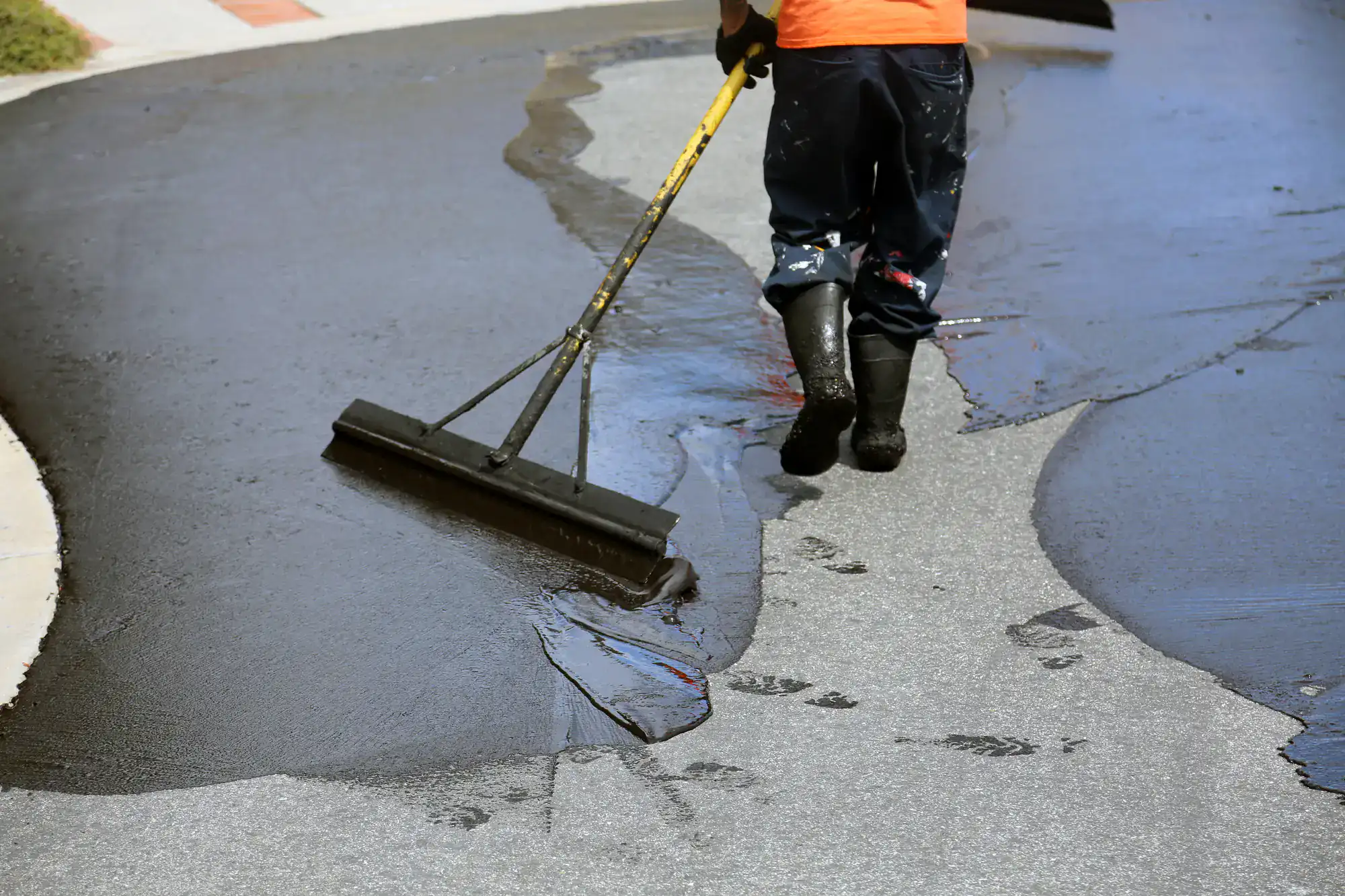
Size is the most obvious factor — a standard single-car driveway costs significantly less than a two-car driveway with a turnaround. But beyond size, several site-specific factors move the number in ways that aren’t always obvious until a contractor walks the property.
Existing pavement removal is one of the first things that can add cost. Tearing out old asphalt or concrete and hauling it away typically adds $1 to $3 per square foot on top of the new installation price. It’s unavoidable if the old surface is too deteriorated to overlay, and in Suffolk County, most driveways that are 20-plus years old fall into that category.
Drainage is another major variable. Sandy Long Island soils drain well on the surface but can behave unpredictably below grade, especially near the water table in coastal South Shore communities like Shirley, Bay Shore, or Hampton Bays. If the site needs a catch basin, a French drain, or significant regrading to direct water away from the home’s foundation, that work needs to happen before paving — and it adds to the project cost in a meaningful way.
Belgian block edging is worth mentioning here because it’s a common feature in premium Suffolk County communities, and it’s often misunderstood as a purely decorative upgrade. It’s not. Belgian block serves as a structural border that keeps asphalt and concrete edges from crumbling and spreading over time. Without it, the edges of an asphalt driveway are vulnerable — especially through freeze-thaw cycles. It extends the life of the installation, not just the look of it.
Finally, permits. Most homeowners don’t factor permit costs and timelines into their project planning, but in Suffolk County they’re not optional for new construction. A contractor who tells you permits aren’t necessary for your project is either misinformed or cutting corners — and either way, that creates liability for you at resale.
This comes up constantly, and the answer isn’t as simple as “concrete lasts longer, so go with concrete.” Both materials have real trade-offs in Long Island’s specific climate, and the right choice depends on your budget, your timeline, and what you’re optimizing for.
Asphalt costs less upfront — typically $3 to $7 per square foot in Suffolk County for residential installations — and it actually handles freeze-thaw movement better than concrete because it has some flexibility. Concrete is rigid, which means it’s more prone to cracking when the ground shifts under it during winter. It also absorbs road salt, which accelerates surface spalling. On Long Island, where road salt is applied heavily every winter and vehicles track it onto residential driveways, concrete surfaces can deteriorate faster than expected if they’re not sealed regularly.
Concrete does last longer under ideal conditions — 30 to 40-plus years compared to 15 to 30 for asphalt — and it requires less ongoing maintenance if the surface is in good shape. Nationally, concrete runs $8 to $20 per square foot installed, putting it meaningfully above asphalt for upfront cost. For homeowners in Suffolk County who are planning to stay in their home long-term and want a lower-maintenance surface, concrete can make sense. For homeowners who want a quality driveway at a lower entry cost and are comfortable with periodic sealing and maintenance, asphalt is the more practical choice.
Pavers — concrete, brick, or stone — represent a third option that’s popular in higher-end communities across Suffolk County. Stone pavers installed in the region run $17 to $23 per square foot, with a standard driveway project often landing between $10,200 and $13,800. They last 50-plus years, individual pavers can be replaced without resurfacing the entire driveway, and they hold up well through freeze-thaw cycles. The upfront cost is significantly higher, but for homeowners in communities like Smithtown, Dix Hills, or Huntington where curb appeal and long-term durability both matter, pavers are worth understanding as an option.
The best material for your driveway depends on your specific site, your budget, and your long-term plans for the property. That’s exactly why a conversation with someone who knows Suffolk County’s soil and climate conditions is worth more than any general comparison chart.
The cost of a new driveway in Suffolk County isn’t one number — it’s a range shaped by your material choice, your site conditions, your drainage needs, and the quality of what goes in below the surface. What you’re really paying for isn’t the asphalt or concrete you can see. It’s the base prep, the drainage engineering, and the local knowledge that determines whether that driveway holds up through Long Island winters or starts failing in two or three years.
If you’re comparing quotes and they’re significantly different, ask each contractor what’s included in the base preparation and whether drainage is accounted for. The answers will tell you a lot about what you’re actually comparing.
We’re based in Smithtown and work throughout Suffolk County. We handle the full scope — excavation, drainage, permits, and paving — so you’re not coordinating multiple contractors for a single project. If you want a straight answer on what your driveway will cost, text us at 631-652-8035 for fast pricing and availability. Free consultations are available, and we’ll walk you through exactly what the job involves before you commit to anything.
Article details:
Share:
Continue learning: