Choosing between concrete and asphalt for your Suffolk County driveway? Freeze-thaw cycles and salt exposure change everything about which material actually lasts.
Share:
Summary:
You’re staring at driveway estimates that differ by thousands of dollars, and every contractor has a different opinion about which material is “best.” The real answer? It depends entirely on where you live.
Suffolk County’s coastal climate throws challenges at driveways that most regions never see. Temperatures that hover around freezing all winter create more freeze-thaw cycles than sustained cold. Salt from winter roads and ocean air attacks surfaces year-round. Sandy soil shifts, and clay soil holds water right where you don’t want it.
This isn’t about which material costs less upfront. It’s about which one still looks good and functions properly 15 years from now—without draining your wallet on repairs. Here’s what actually matters when you’re choosing between concrete and asphalt in Suffolk County, NY.
The difference between concrete and asphalt comes down to how each material responds to stress. Concrete is rigid—strong under compression but prone to cracking when the ground shifts or water freezes beneath it. Asphalt is flexible—it bends with temperature changes and ground movement instead of breaking.
In Suffolk County, that flexibility matters more than most contractors admit. Your driveway faces temperature swings that can hit 30 degrees in a single day during spring and fall. Water seeps into tiny cracks during the day, then freezes overnight when temperatures drop. Ice expands with tremendous force—up to 30,000 pounds per square inch—widening those cracks every single cycle.
Coastal moisture adds another layer of complexity. Salt air from Long Island Sound doesn’t just corrode metal—it accelerates concrete deterioration by attracting additional water into the surface. That salty water refreezes when temperatures drop below 25 degrees, creating more freeze-thaw damage than you’d see inland. The combination of coastal humidity and winter road salt creates conditions that test both materials harder than standard suburban environments.

Suffolk County sits in a climate zone that creates the worst possible conditions for driveways. Temperatures hover between 20 and 40 degrees for extended periods all winter. That’s not cold enough to stay frozen, and not warm enough to fully thaw—so you get repeated freeze-thaw cycles instead of one sustained freeze.
Concrete handles this poorly. The material is porous, so water penetrates small surface openings and works its way deeper over time. When that water freezes, it expands by about 9%. The pressure cracks the concrete from the inside out. Spring thaw reveals damage that seemed to appear overnight but was actually months in the making.
You’ll see it start as hairline cracks. By the second or third winter, those cracks widen into what contractors call “alligator cracking”—a network of interconnected breaks that looks like reptile skin. Once concrete reaches that point, you’re looking at replacement, not repair. Patches show forever, and they don’t solve the underlying problem.
Asphalt flexes instead of breaking. The petroleum-based binder gives it natural elasticity that concrete lacks. When ground movement or ice expansion creates pressure, asphalt absorbs it. Temperature swings cause the material to expand and contract, but it returns to its original shape instead of cracking.
That doesn’t mean asphalt is indestructible. Water still penetrates if you skip sealcoating. Salt and UV exposure break down the binder over time, making the surface brittle. But the failure mode is different—you get gradual surface wear instead of catastrophic cracking. And when asphalt does need repair, patches blend in better than concrete fixes.
The coastal influence makes this worse. Ocean temperatures moderate Long Island’s climate, which sounds nice until you realize it means more temperature fluctuations. You don’t get sustained cold that keeps everything frozen. Instead, you get constant cycling above and below freezing—sometimes multiple times per week. Every cycle compounds the damage.
Road salt is necessary for winter safety, but it’s brutal on driveways. The problem isn’t just the salt itself—it’s how salt changes water’s behavior. Salt lowers the freezing point of water, which means more freeze-thaw cycles throughout the winter months. Water that would normally stay frozen at 28 degrees keeps cycling between liquid and ice when salt is present.
Concrete absorbs this salty water like a sponge. The material is naturally porous, and salt makes it even more vulnerable. Salt-infused concrete can hold up to 10% extra water compared to untreated concrete. That’s 10% more potentially destructive pressure every time temperatures drop. Calcium chloride and magnesium chloride—common de-icing chemicals—are particularly damaging to concrete surfaces.
The damage shows up as surface scaling and spalling. You’ll see the top layer of concrete flaking off, exposing aggregate underneath. It starts small, but once it begins, it accelerates. Each winter peels off another layer until you’re looking at a surface that’s structurally compromised and visually shot.
Asphalt handles salt better, but it’s not immune. The dark surface absorbs heat, which helps melt snow and ice faster—a practical advantage for safety and convenience. But prolonged salt exposure still degrades the binder. You’ll notice fading from rich black to gray, and the surface becomes more brittle over time.
Coastal salt air adds complexity that inland properties don’t face. Even if you’re careful about de-icing your own driveway, salt spray from passing cars travels up to 150 feet. You’re getting salt exposure whether you apply it yourself or not. Combined with coastal humidity, this creates a perfect storm for surface deterioration.
Proper sealing helps both materials, but it’s not optional in Suffolk County—it’s essential. Concrete needs sealing every 2-3 years to prevent water infiltration. Skip it, and you’re inviting freeze-thaw damage. Asphalt needs sealcoating every 2-3 years to protect the binder from UV damage, water penetration, and chemical attack. The difference is that asphalt sealcoating is cheaper and easier to apply.
Want live answers?
Connect with a Rolling Hills Property Services Inc expert for fast, friendly support.
The upfront cost difference is real, but it’s not the whole story. Asphalt runs $4 to $8 per square foot installed in Suffolk County. For a standard 600-square-foot two-car driveway, you’re looking at $2,400 to $4,800. Concrete costs $6 to $12 per square foot—that same driveway runs $3,600 to $7,200.
That’s a $1,200 to $2,400 difference at installation. For many homeowners, that gap makes the decision. But the calculation changes when you factor in maintenance and lifespan. Over 30 years, the total cost of ownership gets surprisingly close.
Here’s what most estimates don’t tell you: asphalt requires more frequent maintenance, but concrete repairs cost more when they’re needed. Asphalt sealcoating runs $300 to $600 every 2-3 years. Over 30 years, that’s $3,000 to $6,000 in maintenance. Add in occasional crack filling and maybe one resurfacing, and you’re at $8,000 to $10,000 total.
Concrete maintenance costs less frequently but hits harder. Sealing every 3-5 years costs about the same as asphalt. But when cracks develop—and in Suffolk County’s climate, they will—repairs run $200 to $500 per section. Major damage might require slab replacement at $4,000 to $8,000. Total 30-year cost: $6,500 to $8,000 if you’re lucky, more if freeze-thaw damage accelerates.
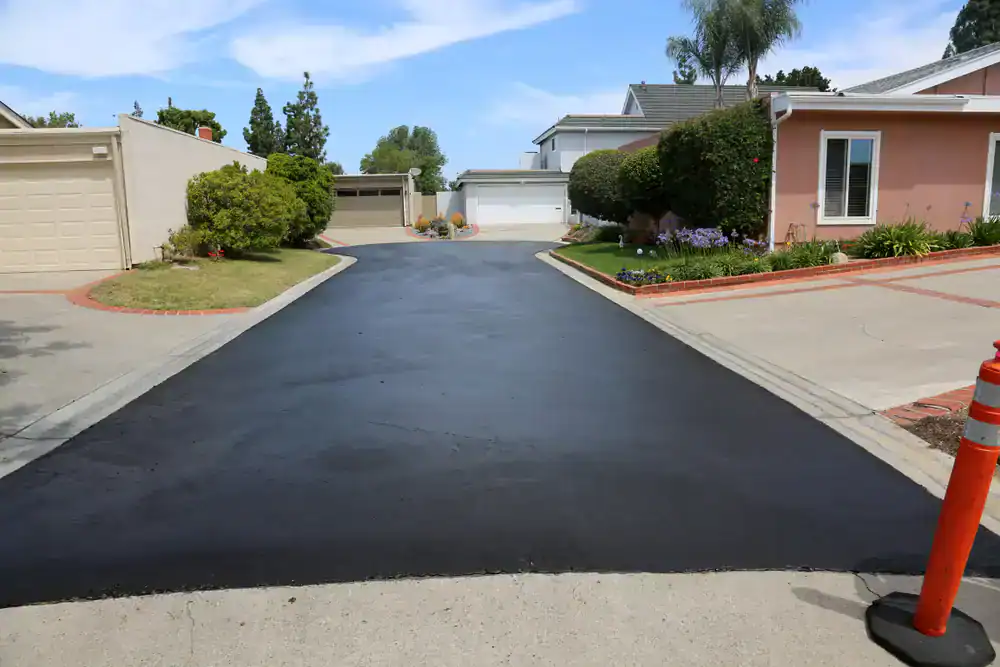
Asphalt demands regular attention. You need to sealcoat every 2-3 years to maintain that protective barrier against water, UV damage, and chemical exposure. Skip it, and you’ll watch the surface deteriorate fast. Water penetrates, freeze-thaw cycles create cracks, and those cracks turn into potholes.
The good news? Asphalt maintenance is straightforward and relatively affordable. Sealcoating is a DIY option if you’re handy, though professional application ensures better results. Crack filling costs $1 to $3 per linear foot for small cracks. Even larger repairs—patching potholes or damaged sections—run $2 to $5 per square foot. And when patches are done right, they blend in reasonably well.
Resurfacing extends asphalt’s life significantly. Around the 15-year mark, you can add a new layer of asphalt over the existing surface for $1,500 to $3,000. That gives you another 10-15 years without full replacement. It’s like hitting the reset button on your driveway’s lifespan.
Concrete requires less frequent maintenance, which sounds great until something goes wrong. You should seal concrete every 3-5 years to prevent water infiltration and staining. Regular pressure washing keeps it looking clean. But when freeze-thaw damage creates cracks, repairs get complicated.
Small cracks can be filled, but the fixes are visible. Concrete doesn’t blend the way asphalt does. Larger cracks or surface scaling require more extensive work—grinding down the damaged area, applying new concrete, and hoping it matches. Often, it doesn’t. The color and texture differences make repairs obvious.
When concrete damage reaches a certain point, you’re looking at slab replacement. That means cutting out the damaged section, removing it, preparing the base, and pouring new concrete. It’s expensive, disruptive, and the new section rarely matches the old concrete perfectly. Color and finish differences stand out for years.
In Suffolk County specifically, proper drainage matters more than the material itself. Clay soil holds water, creating additional challenges for any driveway. Water that can’t drain away stays available for repeated freeze-thaw damage all winter. French drains, proper grading, and adequate base preparation prevent more problems than any sealant ever will.
Material lifespan numbers you see online assume ideal conditions. Suffolk County doesn’t offer ideal conditions. Your driveway faces challenges that accelerate wear on both materials—the question is which one degrades faster in this specific environment.
Asphalt typically lasts 15 to 20 years in moderate climates. In Suffolk County, with proper maintenance, you can push that to 20-25 years. The key word is “proper.” Sealcoat every 2-3 years without fail. Address cracks immediately before water penetrates. Ensure good drainage so water doesn’t pool on the surface.
The flexibility that helps asphalt survive freeze-thaw cycles also means it softens in summer heat. Suffolk County summers aren’t Arizona, but you’ll still see some softening on the hottest days. Heavy vehicles can leave tire marks. Oil and gasoline spills penetrate more easily than they would on concrete. But these are manageable issues, not deal-breakers.
Concrete can last 30 to 40 years in warm, dry climates. In Suffolk County’s coastal, freeze-thaw environment, expect 25 to 30 years if installation and maintenance are perfect. That’s a big “if.” Proper installation means adequate base preparation, correct thickness (at least 4 inches, preferably 5-6 for driveways), steel reinforcement, properly placed control joints, and professional finishing.
Skip any of those steps, and you’re looking at premature failure. Concrete poured too thin cracks under vehicle weight. Inadequate base preparation leads to settling and heaving. Missing control joints mean cracks appear in random, ugly patterns instead of along planned lines. And once concrete starts failing in freeze-thaw conditions, deterioration accelerates quickly.
The property value consideration matters too. A well-maintained driveway—regardless of material—can add $5,000 to $20,000 in home value. That’s typically a 5-10% increase. Concrete generally adds slightly more value than asphalt because buyers perceive it as longer-lasting and lower-maintenance. But a cracked, deteriorating concrete driveway hurts value more than well-maintained asphalt.
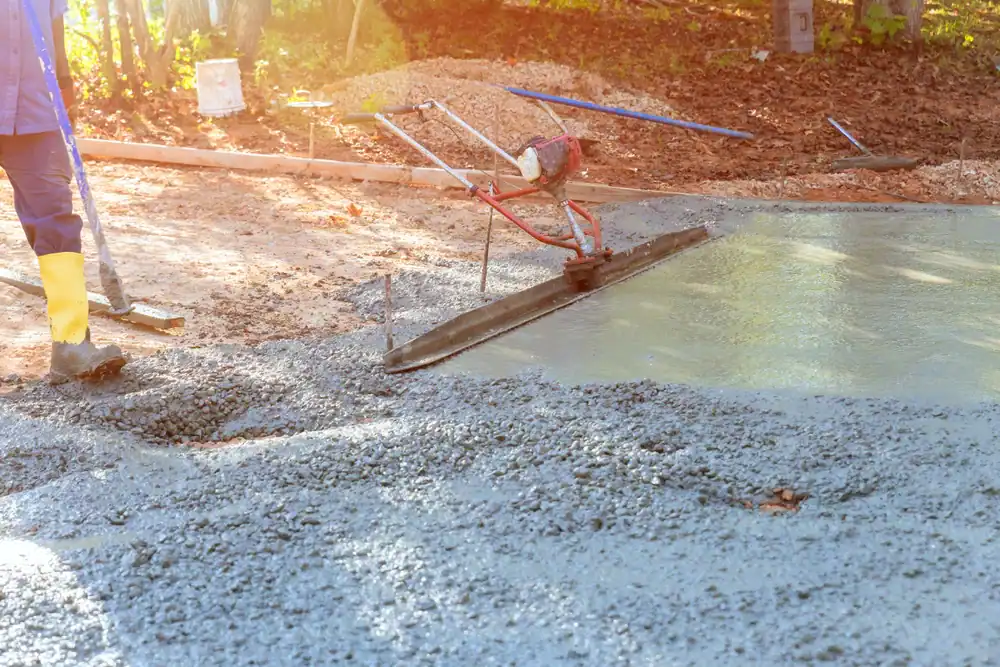
Installation timing affects longevity significantly. Asphalt should be installed when temperatures are consistently above 50 degrees—typically May through October in Suffolk County. Concrete needs similar conditions plus no rain forecast for 48 hours after pouring. Both materials need proper curing before use. Asphalt is ready in 24-48 hours. Concrete needs 7 days before you can drive on it.
There’s no universal “best” material for Suffolk County driveways. Asphalt handles freeze-thaw cycles better and costs less upfront. Concrete lasts longer if installed perfectly and adds slightly more property value. Both need regular maintenance to survive coastal conditions.
Your decision comes down to budget, timeline, and how much maintenance you’re willing to commit to. If you want lower upfront costs and don’t mind regular sealcoating, asphalt makes sense. If you’re planning to stay long-term and want maximum lifespan, concrete works—but only with proper installation and drainage.
What matters most is working with someone who understands Suffolk County’s specific challenges. Sandy soil, clay substrates, coastal moisture, and freeze-thaw cycles require local expertise. We know how Long Island conditions affect driveways because we’ve been serving Suffolk County property owners for years. Whether you’re planning a new installation or evaluating your current driveway, getting guidance from local professionals who understand these challenges makes the difference between a driveway that lasts decades and one that fails in years.
Article details:
Share:
Continue learning: