Lorem ipsum dolor sit amet, consectetur adipiscing elit. Ut elit tellus, luctus nec ullamcorper mattis, pulvinar dapibus leo.

Choosing between asphalt and concrete for your Suffolk County driveway? Compare real costs, lifespan, and performance in Long Island's brutal freeze-thaw cycles.
Share:
Lorem ipsum dolor sit amet, consectetur adipiscing elit. Ut elit tellus, luctus nec ullamcorper mattis, pulvinar dapibus leo.
Summary:
Your driveway is taking a beating. Between Suffolk County’s freeze-thaw cycles, coastal salt, and sandy soil, that surface you’re standing on faces more punishment than driveways in most parts of the country. And when you’re looking at replacement or installation, the cost question isn’t as simple as comparing two numbers on a quote.
The real cost includes what you’ll pay upfront, what you’ll spend maintaining it over the next 20 to 30 years, and whether the material you choose will actually survive Long Island’s climate. Some materials crack after a single winter here. Others last decades. The difference comes down to understanding what works in coastal conditions—and what doesn’t.
Asphalt installation in Suffolk County typically runs $5 to $8 per square foot. For a standard 600-square-foot driveway, you’re looking at $3,000 to $4,800. Concrete costs more upfront at $6 to $15 per square foot, putting that same driveway between $4,800 and $12,000 depending on finish and complexity.
That price gap makes asphalt look like the obvious budget choice. But installation cost is only part of the equation. The real number you need to know is total cost of ownership—what you’ll actually spend over the life of your driveway. And that’s where the math gets interesting for Suffolk County homeowners.
The difference in upfront costs comes down to materials and installation complexity. Asphalt is petroleum-based and cures quickly, allowing contractors to complete work efficiently with fewer specialized tools. Concrete requires more precise mixing, longer curing time, and more technical expertise for finish work—all of which translates to higher labor costs.
Suffolk County’s sandy soil creates installation challenges that contractors in other regions don’t face. Proper base preparation here requires 8 to 10 inches of excavation, followed by compacted gravel layers. Each layer needs proper compaction before the next goes down. Contractors who skip this step create driveways that fail within years, not decades.
Most driveway failures in Suffolk County trace back to inadequate base preparation, not material choice. The sandy soil and coastal moisture we deal with demand proper excavation and drainage planning. Standard preparation should include excavation to that 8 to 10 inch depth, with removed soil replaced by compacted gravel or crushed stone in layers. This creates a stable platform that resists the shifting and settling that plague poorly prepared driveways.
Removal of existing driveways adds $1,500 to $4,000 to your project cost. Concrete removal costs more than asphalt due to weight and disposal fees. If your property has drainage issues—common in coastal areas with high water tables—you’ll need to factor in grading work and possibly drain channels to prevent water from pooling against your foundation.
Your driveway’s size and shape matter too. Longer driveways, circular designs, and wider aprons increase both material and labor costs. But these aren’t areas where you want to cut corners. In Suffolk County’s climate, proper drainage and base preparation determine whether any material succeeds or fails.
The coastal influence adds another layer of complexity. Salt air accelerates weathering even if you’re not right on the water. Combined with the freeze-thaw cycles we experience—temperatures swinging from below freezing to above 50 degrees in a single day during spring and fall—your driveway faces stress that standard installations can’t handle.
Properties in areas like Smithtown, Huntington, and throughout Suffolk County also need to consider permit requirements. Many Long Island towns require permits for driveway work, particularly if you’re changing the footprint or adding impervious surface. Permit fees typically range from $100 to $500, depending on your municipality.
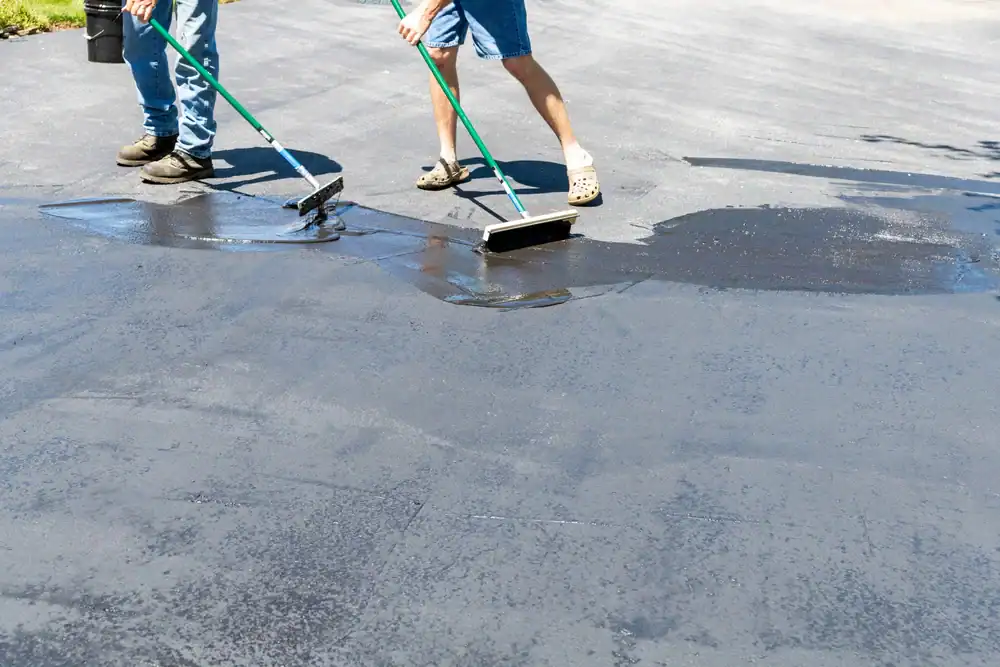
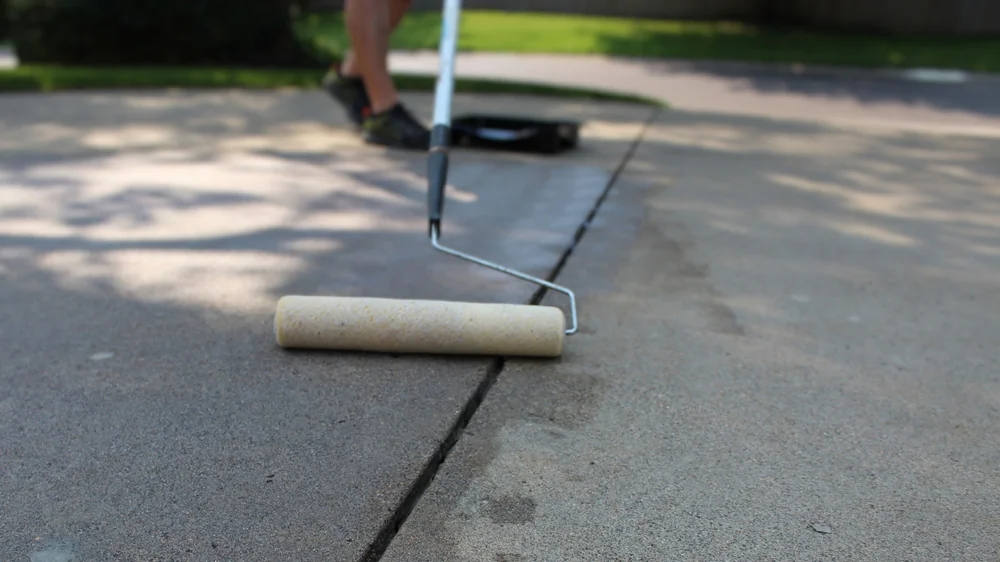
Here’s what most homeowners don’t realize until after installation: asphalt requires resealing every 2 to 3 years to prevent cracking. That’s $300 to $600 per application in Suffolk County. Over a 20-year lifespan, you’re looking at 7 to 10 resealing jobs—adding $2,100 to $6,000 to your initial investment.
Asphalt also softens in summer heat and can develop permanent tire marks in high-traffic areas. When you patch asphalt, those patches stay visible forever. The material breaks down from sun exposure, requiring periodic repairs beyond just sealing. Factor in crack filling and pothole repairs, and your “budget-friendly” asphalt driveway becomes significantly more expensive over time.
The maintenance timeline for asphalt is demanding. You need to seal it 6 months to 1 year after installation, then every 3 to 5 years thereafter to maintain its lifespan. Cracks appear more frequently with asphalt since it’s a softer material, though they’re easier to repair than concrete cracks. Even with DIY options available for minor repairs, the cumulative time and expense add up.
Concrete requires less frequent maintenance. You should seal it every 2 to 3 years similar to asphalt, but the material itself is more resistant to weathering and heavy loads. Concrete doesn’t soften in heat. It won’t develop the tire marks that plague asphalt driveways. Once finished and sealed, concrete doesn’t need active maintenance beyond occasional cleaning.
The tradeoff? When concrete does need repairs, they’re more complex and costly than asphalt patches. Repairing cracks in concrete can be challenging and expensive, but these issues are less frequent if the driveway is properly maintained. You might pay $3 to $25 per square foot for concrete repairs depending on the type and severity of damage.
Over 30 years, total ownership costs tell the real story. A concrete driveway runs $6,500 to $8,000 including maintenance. Asphalt costs $8,000 to $10,000 over the same period. The material that costs more upfront actually saves you money long-term, assuming you’re planning to stay in your home for 15-plus years. By year 15, concrete’s higher initial cost is often recouped through lower maintenance expenses.
Want live answers?
Connect with a Rolling Hills Property Services Inc expert for fast, friendly support.
Suffolk County’s climate doesn’t give driveways a fair fight. We experience 30 to 40 freeze-thaw cycles each winter. Water seeps into small cracks during rain and snowmelt, then expands when it freezes overnight—exerting up to 30,000 pounds per square inch of pressure. That’s enough force to crack concrete from within and shift heavy pavers.
Salt makes everything worse. The salt spread on roads and driveways during winter doesn’t just disappear come spring. It penetrates deep into porous surfaces, causing gradual corrosion and that characteristic white, chalky appearance you see on older driveways. The chemical assault breaks down the material itself, leading to surface chipping and flaking.
Coastal moisture adds yet another challenge. Even properties not directly on the water deal with salt air that accelerates weathering. Combined with our sandy soil that shifts and settles, Long Island creates the perfect storm for driveway damage. Understanding how different materials handle these specific conditions determines whether you’re looking at decades of reliable service or constant repairs.
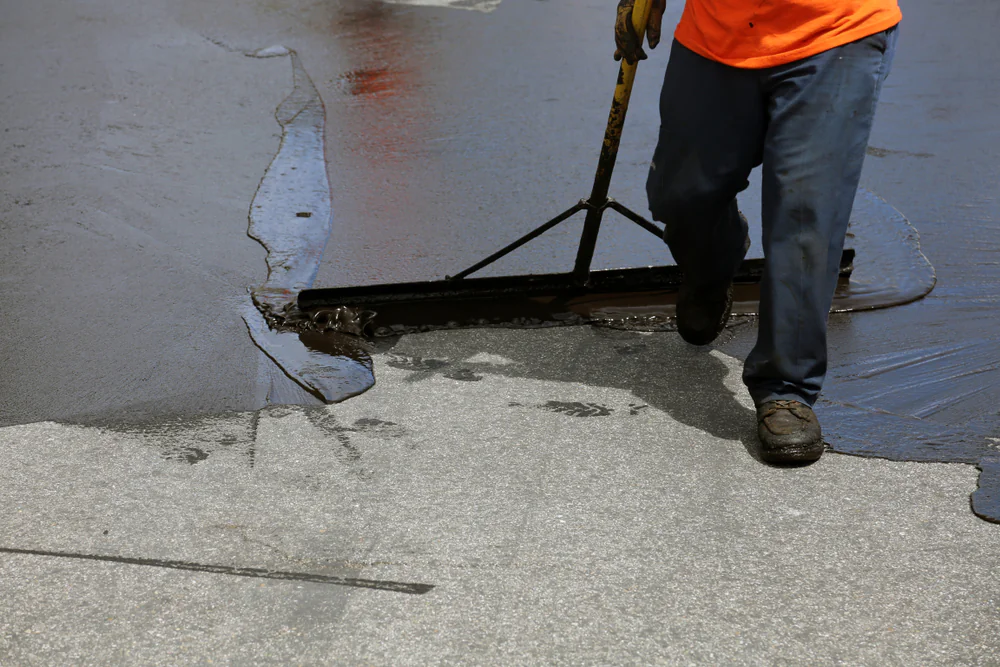
Asphalt’s petroleum-based composition gives it natural flexibility that concrete lacks. When temperatures fluctuate, asphalt flexes instead of cracking like rigid materials. That flexibility matters in Suffolk County, where we see dramatic temperature swings throughout winter and spring. The material can handle the expansion and contraction that comes with freeze-thaw cycles better than rigid surfaces.
The dark color of asphalt absorbs heat from the sun, helping snow and ice melt faster than on lighter surfaces. This reduces the time moisture has to work its way into vulnerable areas—a real advantage during our unpredictable winter weather patterns. Asphalt driveways across Nassau and Suffolk counties benefit from this natural snow-melting property, requiring less salt application than concrete surfaces.
Asphalt typically lasts 15 to 30 years in Long Island’s climate with proper maintenance. In neighborhoods from Smithtown to Southampton, well-maintained asphalt driveways can reach that upper range when contractors use proper installation techniques and homeowners stay on top of resealing schedules. The key is that regular maintenance—skip it, and you’re looking at the lower end of that lifespan range.
But asphalt isn’t perfect for our climate. The same flexibility that helps it handle freeze-thaw cycles makes it vulnerable to summer heat. On hot days, asphalt can become tacky or sticky. Heavy vehicles parked in the same spot can leave permanent depressions. The material also breaks down from UV exposure, requiring that regular resealing to maintain its protective properties.
Salt exposure affects asphalt too, though differently than concrete. The petroleum binders break down over time from chemical exposure, leading to that faded, worn appearance you see on older asphalt driveways. Without proper maintenance—meaning consistent resealing—asphalt in coastal areas deteriorates faster than in inland regions.
Installation quality matters more than material choice. A properly installed asphalt driveway with adequate base preparation will outlast a poorly installed concrete driveway every time. That means excavation to proper depth, compacted gravel base in layers, and attention to drainage—all designed for Suffolk County’s specific soil and moisture conditions. We account for sandy soil, freeze-thaw cycles, and drainage in coastal areas as part of our standard installation process.
Concrete offers superior longevity when properly installed—30 to 40 years compared to asphalt’s 15 to 20 years. Some well-maintained concrete driveways last 50 years or more with proper care. The material is resistant to heavy loads and less likely to develop the potholes that plague asphalt driveways. It doesn’t soften in summer heat, won’t develop tire marks, and requires less frequent maintenance overall.
Concrete’s lighter color reflects heat rather than absorbing it, keeping your property cooler in summer. This makes it ideal for driveways in warmer climates, though it performs well in Long Island’s varied conditions when installed correctly. The material also offers aesthetic versatility—you can stamp it, stain it, or color it to create unique designs that complement your home’s style.
But concrete has a fatal flaw in freeze-thaw climates if not installed correctly. When water gets absorbed into concrete’s porous surface, our freeze-thaw cycles turn that moisture into expanding ice crystals. Water expands about 9 percent when it freezes, creating internal pressure that cracks pavers from the inside out. The force is tremendous—enough to crack concrete from within. You’ve seen this on older driveways around Suffolk County. Those spiderweb cracks aren’t from settling or poor installation alone. They’re from winter.
The damage compounds each year. Small cracks let in more water, which creates bigger cracks when it freezes. Within 7 to 10 years, you’re looking at major repairs or complete replacement instead of the 30-plus years concrete should last. This isn’t a one-time event—Nassau and Suffolk counties experience those 30 to 40 freeze-thaw cycles each winter, meaning your driveway faces this stress dozens of times per season.
The solution is air-entrained concrete mix—specifically designed to resist freeze-thaw damage. This mix contains microscopic air bubbles that give water somewhere to expand when it freezes, preventing the internal pressure that causes cracking. Exterior concrete mixtures should contain 5 to 8 percent air content to provide freeze-thaw durability. Not all contractors use this mix. Some cut costs with standard concrete that won’t survive Long Island winters. We use air-entrained concrete mix on all our installations to ensure your driveway can handle the climate.
Salt damage accelerates concrete deterioration in coastal areas like ours. The salt used on roads and driveways during winter seeps into concrete’s porous surface. This creates that white, chalky residue called efflorescence and gradually breaks down the material itself. Proper sealing helps, but the damage is cumulative over years of exposure. You should avoid deicers that contain calcium chloride or magnesium chloride, which cause concrete to deteriorate faster than normal. Plain rock salt (sodium chloride) is the only recommended deicer for concrete surfaces.
Concrete also requires careful attention to expansion joints and proper drainage. Without joints placed correctly, the slab will crack as it expands and contracts with temperature changes. Poor drainage means water pools on the surface, increasing freeze-thaw damage and potentially causing foundation problems. Proper drainage around the driveway helps both materials last longer by preventing water pooling that causes cracks during freeze-thaw cycles.
Maintenance costs for concrete run lower than asphalt in terms of frequency, but higher when problems develop. You should seal concrete every 2 to 3 years, similar to asphalt. But when repairs are needed, expect to pay significantly more than you would for comparable asphalt work. The good news is that with proper installation using air-entrained mix and adequate base preparation, those major repairs should be infrequent.
The asphalt vs concrete cost question isn’t just about installation price. It’s about understanding total ownership costs, how each material performs in Long Island’s brutal climate, and which option protects your property value over decades. A quality driveway can add $5,000 to $10,000 to your property value, with some properties seeing increases up to $20,000.
Asphalt costs less upfront but requires consistent maintenance to survive our freeze-thaw cycles and coastal salt exposure. Concrete costs more initially but lasts longer with less frequent maintenance—assuming it’s installed with the right mix and proper base preparation for Suffolk County’s sandy soil. The choice depends on your budget, how long you plan to stay in your home, and your tolerance for ongoing maintenance.
What matters most is working with contractors who understand local conditions. The freeze-thaw cycles, coastal moisture, and soil challenges we face here destroy standard installations. Proper excavation depth, compacted base layers, drainage planning, and climate-appropriate materials make the difference between a driveway that lasts decades and one that fails within years.
At Rolling Hills Property Services Inc., we bring local expertise and transparent pricing to every project. Reach out to discuss your specific property needs and get honest guidance on which material and installation approach makes sense for your situation.
Article details:
Share:
Continue learning: