A month-by-month lawn care calendar built specifically for Suffolk County's cool-season grass, sandy loam soil, and local fertilizer regulations — not recycled advice from somewhere else.
Share:
Summary:
If you’ve ever searched for a lawn care schedule and ended up with advice that felt slightly off for your yard, that’s because it probably was. Most of what’s out there is written for a generic lawn in a generic climate — not for the sandy loam soil, coastal humidity, and strict fertilizer regulations that come with owning property in Suffolk County, NY.
The timing here matters more than most people realize. Apply fertilizer a week too early and it’s wasted. Miss the fall overseeding window and you’re starting next spring already behind. Get the pre-emergent wrong and crabgrass wins again. Here’s what the calendar actually looks like for Long Island.
Suffolk County lawns are dominated by cool-season grasses — tall fescue, Kentucky bluegrass, and perennial ryegrass. These grasses thrive in spring and fall, slow down in summer heat, and go dormant in winter. That growth pattern is the foundation of everything else in this calendar.
The soil here is mostly sandy loam — well-draining, which sounds like a good thing until you realize it also loses nutrients faster than heavier soils. Treatments that would last weeks elsewhere may need more precise timing and application rates on Long Island. Add in the coastal humidity, salt air from the Sound and the bays, and Suffolk County’s strict fertilizer regulations, and you’re dealing with a set of conditions that no generic schedule accounts for.
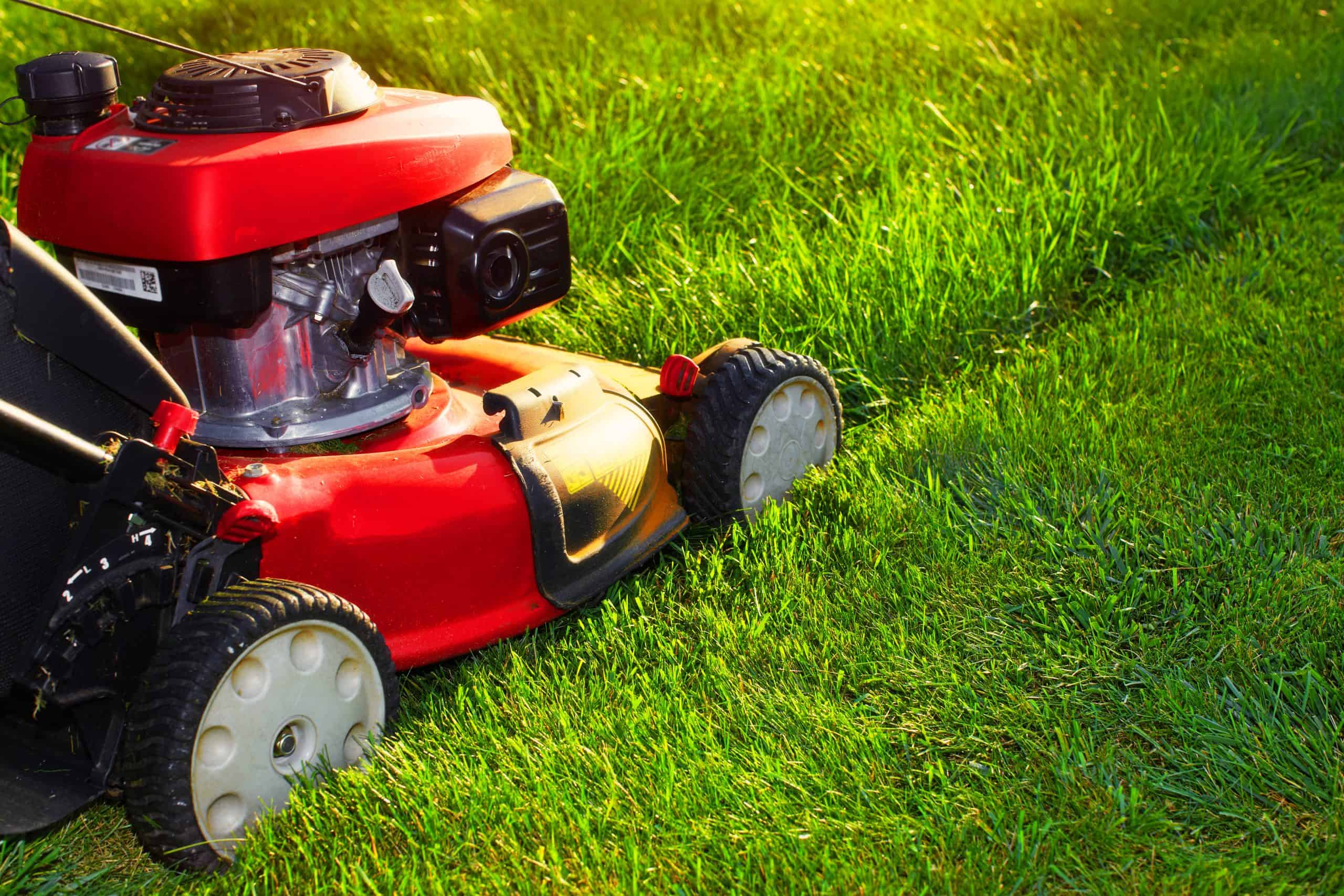
March is mostly a waiting game. The lawn is still dormant or just waking up, and the urge to get out there and do something is understandable — but fertilizing too early is one of the most common mistakes Long Island homeowners make. Grass only absorbs fertilizer when soil temperatures are above 55°F. In Suffolk County, that threshold usually arrives in mid-April, not March.
Applying before then doesn’t feed your lawn — it feeds the runoff heading toward the Great South Bay or Peconic Bay. That’s not just a local concern; it’s why Suffolk County has had strict fertilizer regulations on the books since 2008.
April is when things actually start. Once the soil warms and you’ve mowed the lawn at least twice, that’s your signal that the grass is actively growing and ready to take up nutrients. This is also the window for pre-emergent herbicide — the treatment that stops crabgrass before it germinates. Timing is everything here. Crabgrass seeds germinate when soil temps hit 55°F, so the pre-emergent needs to go down just before that happens. Miss the window and you’re managing crabgrass reactively all summer, which is a much harder fight.
One thing worth knowing: pre-emergent herbicide and overseeding cannot be done in the same zone at the same time. Pre-emergents prevent all seed germination — including grass seed. If you have bare patches that need overseeding in spring, those areas need to be handled separately, without pre-emergent. It’s a detail that catches a lot of people off guard.
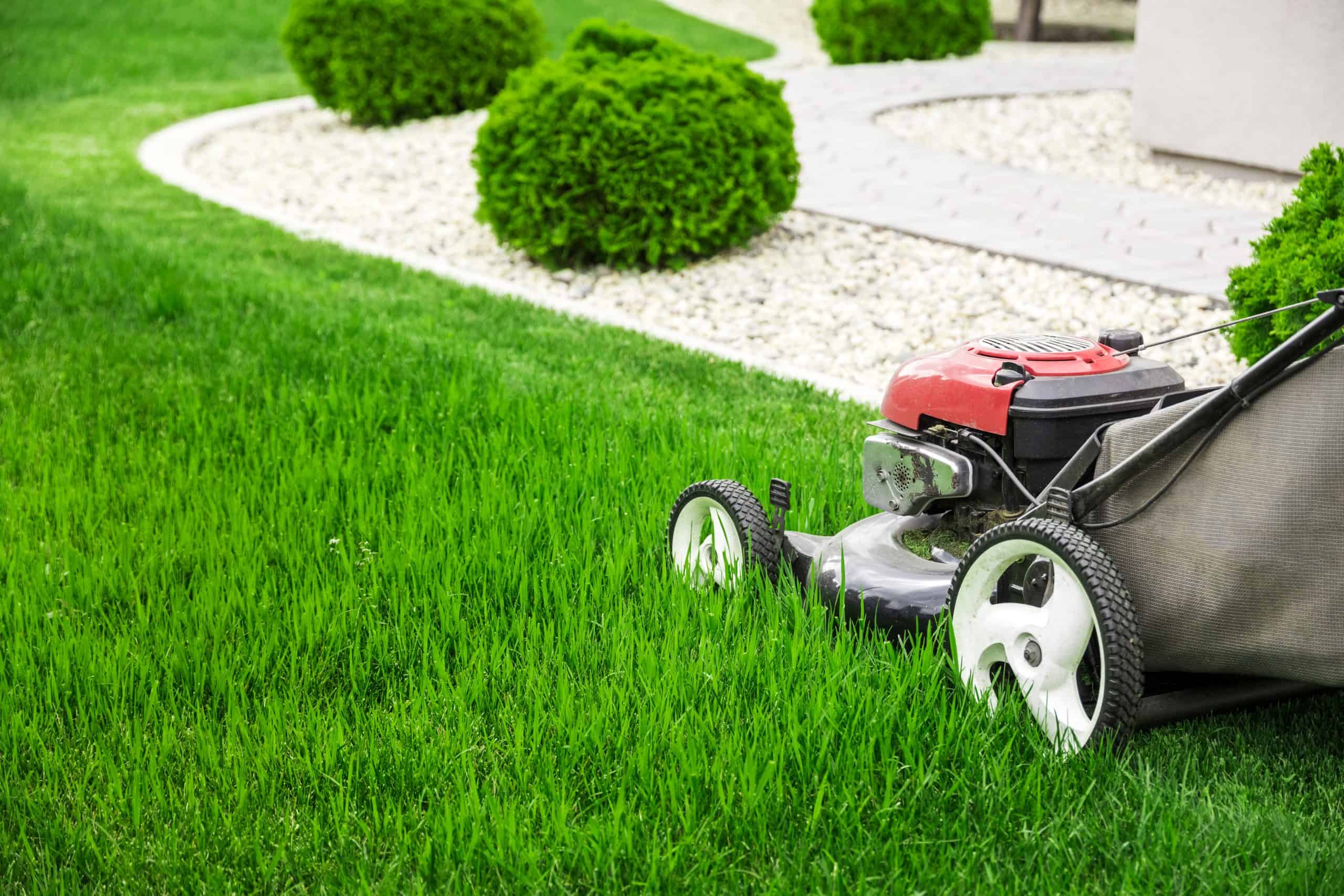
May is for post-emergent weed control on any broadleaf weeds that made it through, and for keeping mowing consistent. The one-third rule applies all season: never cut more than one-third of the blade length in a single mow. Mowing too short stresses the grass and opens the door for weeds and disease. A mowing height of three to four inches is the right range for most Suffolk County lawns through the growing season.
Summer is the season where most people either over-manage or under-manage their lawn — and both cause problems. Cool-season grasses slow their growth significantly when temperatures climb into the mid-80s, which is a normal Suffolk County summer. Some lawns will look a little tired by July, and that’s not necessarily a failure. It’s biology.
Fertilizing during summer heat stress is generally a mistake. The grass isn’t actively growing fast enough to use it, and on Long Island’s sandy soil, excess nitrogen can leach quickly toward the county’s sole-source aquifer — the only source of drinking water for 1.5 million residents. That’s not a small concern, and it’s why we work within Suffolk County’s fertilizer regulations rather than around them.
What summer does call for is smart watering and grub awareness. Deep, infrequent watering encourages roots to grow down rather than staying shallow — which makes the lawn more resilient through dry stretches. Early morning is the best time to water, reducing evaporation and lowering the risk of fungal disease, which Suffolk County’s humid summers make a real concern.
Grub season starts in late June and runs through August. Japanese beetle and European chafer larvae — the two species most commonly found on Long Island lawns — hatch from eggs in the soil and begin feeding on grass roots. Preventive grub treatments go down in late June or July, before the eggs hatch. If you’re seeing brown patches in August that don’t respond to watering, grub damage is a likely cause, and curative treatments can still help through early September. A general rule from Cornell Cooperative Extension: if you find ten or more grubs per square foot when you pull back a section of turf, treatment is warranted.
Want live answers?
Connect with a Rolling Hills Property Services Inc expert for fast, friendly support.
Suffolk County’s fertilizer blackout period runs from November 1 through April 1. No fertilizer applications during that window — period. Violations carry fines of up to $1,000 per application. This law, passed in 2008 as Suffolk County Local Law 41-2007, was the first of its kind in New York State, driven by the need to protect the county’s groundwater and reduce nitrogen runoff into local waterways.
Beyond the blackout dates, the law also restricts phosphorus in lawn fertilizers and requires slow-release nitrogen formulations in certain situations. These aren’t technicalities — they reflect real environmental stakes for a county where the aquifer underneath your lawn is what comes out of your tap. We make sure every application we make complies with these regulations, every time.

Fall is the most important season for cool-season lawns in Suffolk County. That’s not an opinion — it’s how the grass works. Tall fescue, Kentucky bluegrass, and perennial ryegrass all recover from summer stress and build root reserves in the fall. The treatments you apply between September and early November have more lasting impact than anything you do in spring.
The overseeding window for Long Island opens in early September and closes around October 15. After that, new seedlings don’t have enough time to establish before the ground cools and growth stops. Soil temperatures need to be above 50°F for germination, and they’re typically dropping toward that threshold by mid-October in Suffolk County.
September is also the right time for core aeration — pulling small plugs of soil from the lawn to reduce compaction, improve drainage, and give new seed better soil contact. On sandy loam soil, aeration is especially valuable because it helps break up any compacted surface layer that’s developed over the summer. Aerate first, then overseed into the open channels.
Fertilizing in September — once after Labor Day, and potentially again in October — builds the root system before winter and gives the lawn a head start on spring green-up. The October application is often called a “winterizer,” and it’s one of the most impactful treatments of the year. Just keep the November 1 deadline in mind: all fertilizer applications need to be wrapped up before that date. At one pound of nitrogen per 1,000 square feet, slow-release formulations are the right choice for both effectiveness and compliance.
Fall is also when systemic broadleaf herbicides are most effective. Weeds like dandelion and clover are moving nutrients down into their root systems in fall, which means herbicides applied at this time travel with those nutrients and do a more complete job than spring applications.
Weed control in Suffolk County is a two-season job, and most homeowners only work one of them. The spring pre-emergent application handles crabgrass — but only if the timing is right. Apply it before soil temperatures hit 55°F in April, and you stop crabgrass before it starts. Apply it after, and you’re spraying a lawn that’s already lost the battle for that season.
For broadleaf weeds — dandelion, clover, ground ivy — post-emergent herbicides can be applied in spring once weeds are actively growing, but fall is actually the more effective window. As temperatures drop, perennial weeds pull energy and nutrients down into their root systems. A systemic herbicide applied in September or October follows that same path and kills the plant at the root, not just the top. That’s why fall-treated dandelions are far less likely to come back the following spring than spring-treated ones.
There’s also Poa annua — annual bluegrass — which is a weed that behaves differently from the others. It germinates in fall and dies in summer heat, but while it’s alive it competes with desirable turf and looks patchy. Controlling it requires a fall pre-emergent application in areas with established turf, which is another reason the fall calendar is more complex than most homeowners expect.
The pre-emergent and overseeding conflict applies in fall too. If you’re overseeding thin or bare areas, you cannot apply pre-emergent in those same spots. The two goals are incompatible in the same zone at the same time. A good lawn care program accounts for this by mapping which areas need seed and which areas need weed prevention — and treating them accordingly.
What makes weed control genuinely difficult to manage on your own in Suffolk County is the combination of timing precision, product selection, and regulatory compliance. Pesticide application for hire in New York requires a Commercial Pesticide Applicator Certification from the NY DEC — specifically Category 3a, which covers turf and ornamental applications. That certification exists for a reason. The products, rates, and timing all matter, and getting them wrong costs more than just a patchy lawn.
The month-by-month calendar for Suffolk County lawns isn’t complicated once you understand the logic behind it — soil temperature drives timing, cool-season grass drives the seasonal priorities, and local law draws the hard lines. Fall matters more than spring. Pre-emergents and overseeding don’t mix. And nothing goes on the lawn after November 1.
Following this schedule consistently is what separates lawns that recover and improve year over year from lawns that just survive. The difference usually isn’t effort — it’s timing and knowledge of what Long Island’s specific conditions actually require.
If you’d rather hand this off to someone who already knows the soil, the regulations, and the seasonal windows, we serve all of Suffolk County from our Smithtown base. Reach out for a free quote — you can call or text us at 631-652-8035 for fast pricing and availability.
Article details:
Share:
Continue learning: