Suffolk County winters are harder on your landscaping than most guides admit. Here's what actually works — and why timing matters more than most homeowners realize.
Share:
Summary:
Every spring, Suffolk County homeowners discover the same thing: a shrub that looked perfectly healthy going into winter is now brown, split, or dead. The damage didn’t happen overnight. It built up quietly through January and February — freeze-thaw cycles, salt spray from passing plows, wind pulling moisture out of evergreen needles faster than frozen ground could replace it. By the time you notice it, the damage is already done.
Burlap shrub wrap is the most effective low-cost method for preventing that from happening. But there’s a right way to do it, a wrong way, and a window that closes faster than most people expect.
The standard advice you’ll find online — wrap your plants before it freezes, remove the wrap in spring — isn’t wrong, but it’s written for somewhere with a simple winter. Long Island doesn’t have that. Suffolk County sits in a coastal climate where temperatures regularly swing above and below freezing throughout December, January, and February. That’s not just cold. That’s a freeze-thaw cycle repeating itself over and over, and each cycle puts stress on plant tissue, root systems, and bark in ways that sustained cold weather simply doesn’t.
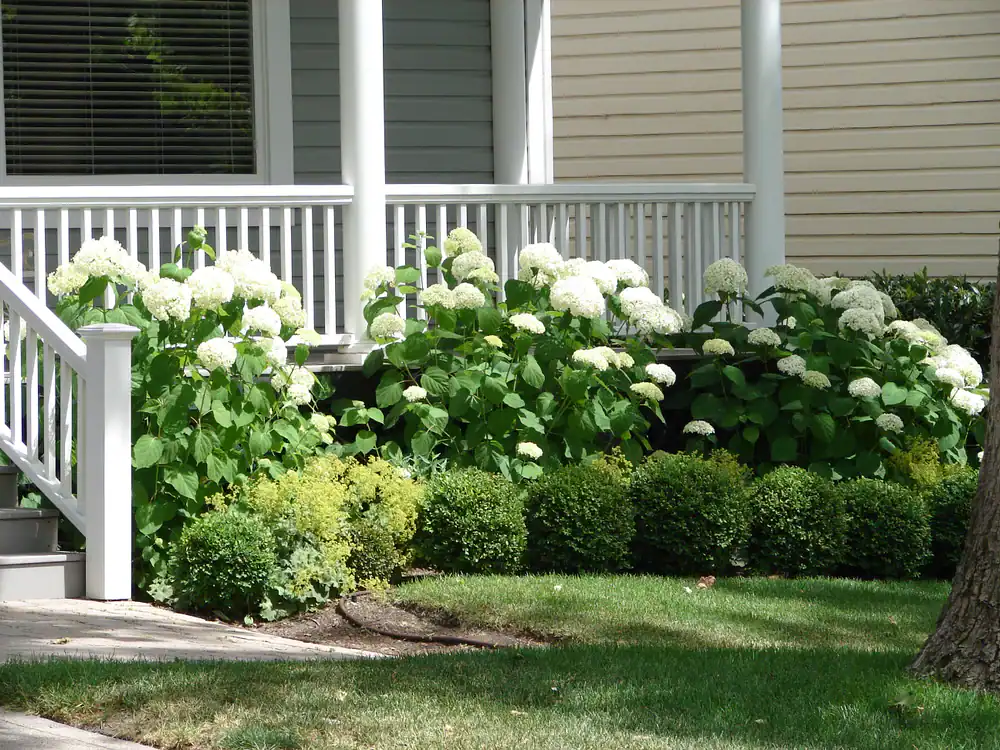
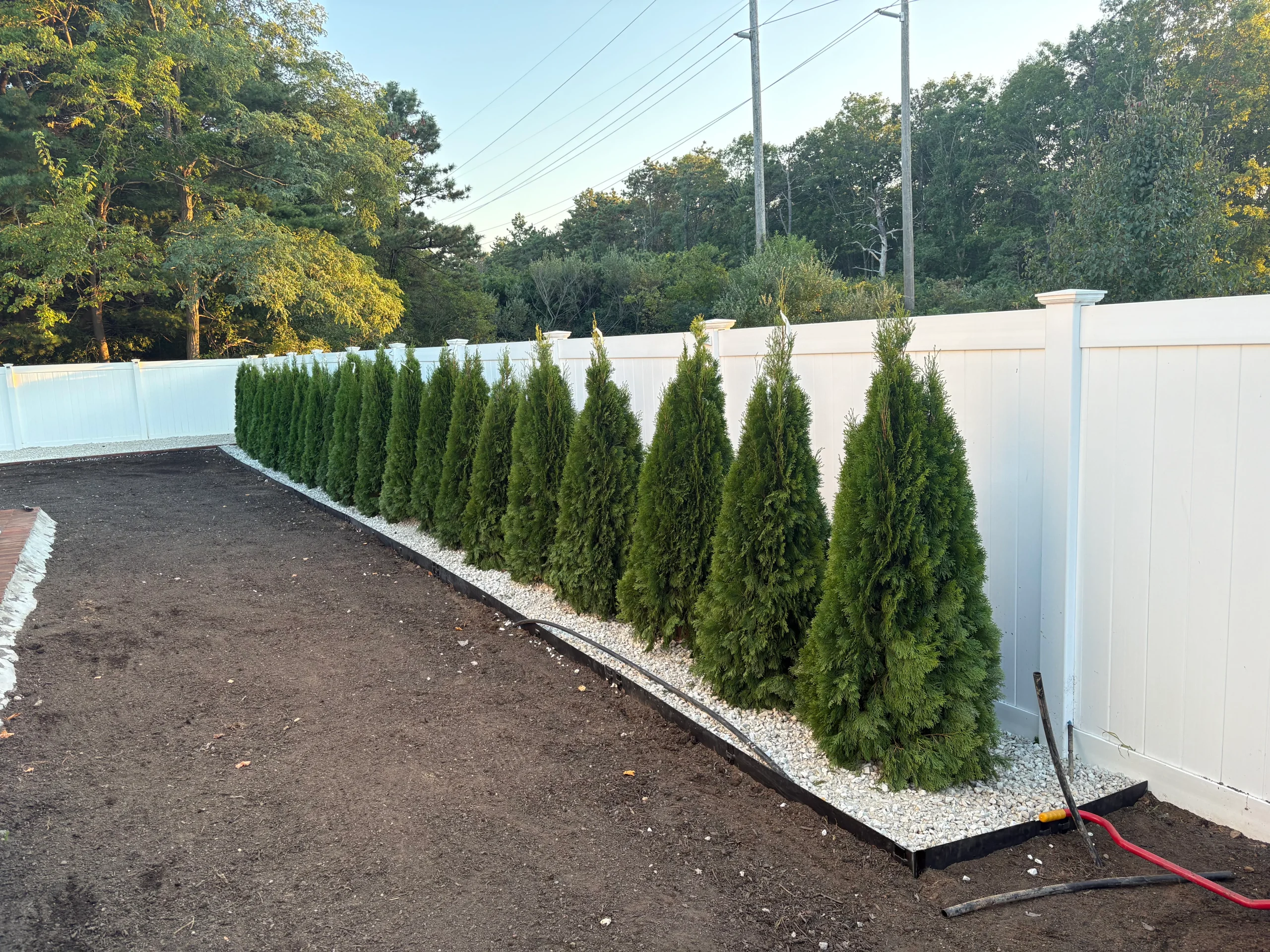
Add in nor’easters pushing salt spray inland from both the Sound and the Atlantic, road salt from county and state plowing operations landing on foundation plantings near every driveway and roadway, and a deer population that treats unprotected arborvitae like a buffet — and you start to understand why generic winter plant guides fall short here.
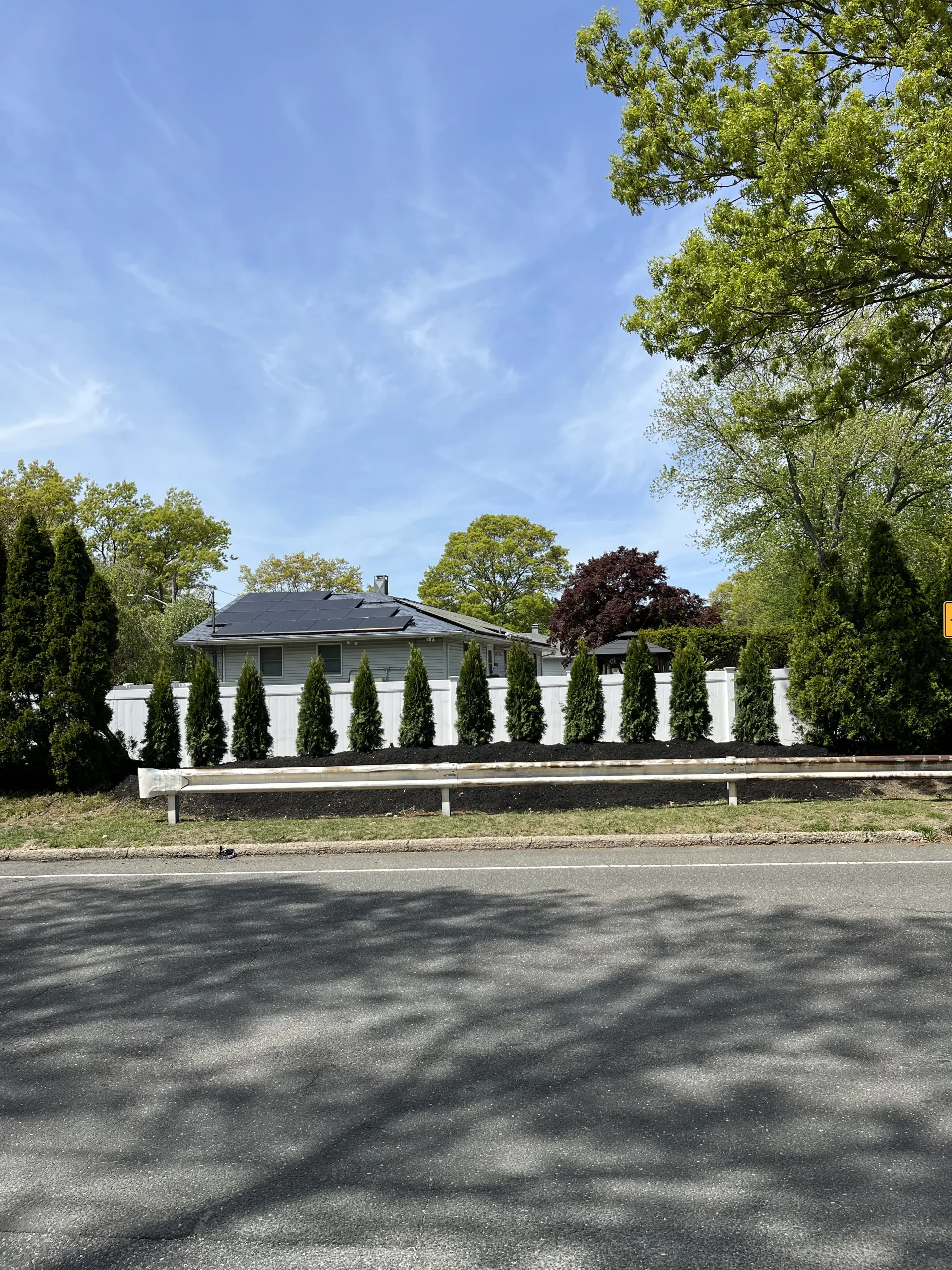
Most homeowners think about winter plant damage in terms of cold temperatures. That’s only one piece of it, and honestly, not always the most damaging one.
Wind desiccation is what kills most evergreens on Long Island. When wind pulls moisture out of needles and leaves faster than frozen ground can replenish it through the roots, the plant essentially dries out from the inside. Arborvitae, boxwoods, yews, and junipers are especially vulnerable to this — and they’re also the most common foundation plants in Suffolk County neighborhoods. A well-installed burlap wrap creates a wind barrier that slows that moisture loss without cutting off air circulation the way plastic wrap does.
Sunscald is less talked about but just as real. When winter sun warms one side of a tree trunk and temperatures then drop sharply overnight, the bark expands and contracts faster than it can handle. The result is long vertical cracks — sometimes called frost cracks — that open the tree up to disease and structural damage. Wrapping young or thin-barked trees like maples and cherries through the winter prevents that temperature swing from doing its worst.
Road salt is a serious threat in Suffolk County. If your shrubs are within 15 to 20 feet of any road, driveway, or walkway that gets treated in winter, they’re absorbing salt spray every time a plow passes or someone tosses down ice melt. The damage shows up in spring as brown, scorched-looking foliage — but it happened in January. Positioning burlap as a physical barrier between vulnerable plants and the road is one of the most overlooked uses of the material, and it’s particularly relevant for foundation plantings along busy Suffolk County roads.
Deer browse is another serious winter threat across Smithtown, Stony Brook, Setauket, and much of eastern Suffolk County. When natural food sources are scarce, deer will strip a hedge down to the trunk. Burlap wrap provides a physical deterrent — not foolproof, but a meaningful layer of protection that most homeowners don’t think about until after the damage is done.
This comes up constantly, and it’s worth being direct about: plastic wrap is not an acceptable substitute for burlap, and using it can cause more damage than doing nothing at all.
Burlap breathes. It blocks wind and filters sun while allowing air and moisture to move through the fabric. That’s the whole point. When you wrap a plant in burlap, you’re not creating a sealed environment — you’re creating a buffer. The plant can still respire. Moisture doesn’t accumulate against the bark or foliage. On the warm January days that Long Island regularly sees — 50 degrees, sometimes higher — the plant doesn’t overheat inside its wrapping.
Plastic does the opposite. It seals moisture against the plant, which creates conditions for fungal rot and disease. On a warm winter afternoon, it can raise the temperature inside the wrap to levels that stress or damage the plant. When temperatures drop again overnight, the condensation that built up during the day freezes against the bark. It’s a cycle that compounds damage rather than preventing it.
Cardboard is the other DIY substitute that doesn’t hold up. It absorbs moisture, loses structural integrity in wet weather, and provides inconsistent protection as it breaks down. It might get you through one mild storm, but it won’t hold up through a Suffolk County nor’easter.
The right material is breathable burlap — ideally at least 6.5 oz. weight for effective protection. Wrap it snugly enough to stay in place, but not so tight that it girdles the trunk or compresses the foliage. For larger shrubs, the better method is often to drive stakes around the plant and wrap the burlap around the frame rather than directly against the plant, which keeps air circulating and prevents moisture from being trapped against the foliage.
Want live answers?
Connect with a Rolling Hills Property Services Inc expert for fast, friendly support.
Here’s something most winter protection guides skip entirely: unprotected shrubs don’t just die on their own. The salt spray runoff, the snow pile placement, the freeze-thaw heaving of soil near foundation beds — all of it affects the lawn around them. By the time spring arrives, many Suffolk County homeowners are dealing with bare spots, dead patches, and compacted areas adjacent to the very shrubs that took the most winter damage.
That leads to a question we hear regularly in spring: should you repair those bare spots with sod or grass seed?

The honest answer is that it depends on the size of the area, your timeline, and how much foot traffic the lawn sees. But there are clear situations where sod is the better call.
Sod gives you an established lawn immediately. If you’re dealing with a large bare area — say, a section of front lawn that was buried under a snow pile all winter and is now a muddy, patchy mess — sod fills it in fast and holds the soil in place right away. You’re not waiting six to eight weeks for seed to germinate and fill in. You’re not watching the area wash out in a spring rain before the grass has a chance to root. For high-visibility areas near the front of the property, or sections where erosion is a real concern, sod is the more reliable choice.
Sod also makes sense when the underlying soil has been heavily compacted or salt-damaged. Salt doesn’t just kill grass — it lingers in the soil and suppresses germination. If you seed into salt-affected soil without addressing the underlying problem, you’ll get poor germination rates and patchy results. With sod, you’re laying down an already-established root system that has a better chance of pushing through compromised soil conditions, especially when paired with proper soil prep and aeration beforehand.
The trade-off is cost and timing. Sod costs more than seed, and it needs to be installed during the right window — typically spring or early fall — when temperatures and moisture levels support root establishment. But for Suffolk County homeowners who want their lawn to look right by the time summer arrives, sod is often the faster and more predictable path.
Not every winter lawn problem calls for sod. Smaller bare spots — the kind left by foot traffic, a single patch of salt spray, or a shrub that was removed — are often good candidates for grass seed repair, especially if the surrounding lawn is otherwise healthy.
The key is not to skip the prep work. Bare spot repair fails most often because people scatter seed over dead or compacted soil and expect it to take hold. It usually doesn’t. Before you seed, the area needs to be loosened — raked or aerated — so the seed makes actual contact with the soil rather than sitting on top of a crust. If salt damage is a factor, which it often is in Suffolk County properties near roads or driveways, flushing the area with water over several days before seeding helps dilute the salt concentration in the soil and improves germination rates.
Timing matters here too. Early spring — once soil temperatures consistently hit around 50 degrees — is the optimal window for seeding cool-season grasses like the fescues and ryegrasses that perform best in Long Island’s climate. Seed put down too early in cold, wet soil tends to rot before it germinates. Seed put down too late in the season runs into summer heat stress before the roots have a chance to establish.
For small patches, a quality grass seed blend matched to your existing lawn type, good soil contact, consistent moisture for the first few weeks, and a little patience will usually do the job. For anything larger than a few square feet, or for areas where you’ve had repeated failures with seed, it’s worth having someone assess the soil conditions before you invest in another round of seed that may not take.
The broader point is that winter shrub protection and spring lawn repair aren’t separate problems — they’re connected. Protecting your foundation plantings with burlap shrub wrap reduces the salt spray and runoff that damages adjacent lawn areas in the first place. It’s a small investment in fall that often saves a bigger one in spring.
The wrapping window in Suffolk County is late October through mid-November — after the first hard frost, before the first deep freeze. Too early and you trap heat and moisture against the plant. Too late and the damage may already be underway. Spring removal timing is just as important: burlap left on too long creates conditions for fungal growth and pest activity, and it’s the step most DIYers forget or delay.
Getting both ends of that window right is the difference between wrapping that works and wrapping that creates new problems.
If you’d rather not track the weather, haul materials, and remember to come back in March, that’s exactly what we handle at Rolling Hills Property Services Inc. We serve homeowners throughout Suffolk County and know this climate well — the salt spray, the freeze-thaw cycles, the species that need protection most, and the timing that actually works here. Reach out for a free quote and we’ll take it from there.
Article details:
Share:
Continue learning: