Suffolk County driveway costs range from $7-$25 per square foot depending on material, site conditions, and prep work. Get the real numbers before you commit.
Share:
Summary:
You’re staring at three different quotes for your driveway. One contractor says $8,000. Another says $15,000. The third came in at $22,000—and all three insist they’re giving you the right price for basically the same project.
Welcome to driveway shopping in Suffolk County, where costs swing wildly depending on who you ask and what they’re actually including. The truth is, driveway installation cost isn’t just about square footage and material. It’s about your soil, your drainage, your town’s permit requirements, and whether the contractor actually knows how to build something that’ll survive a Long Island winter.
This guide walks you through real 2026 pricing, the factors that push costs up or down, and what you actually need to know before you commit. Let’s start with what concrete driveways actually cost around here.
Concrete driveways in Suffolk County run between $12 and $25 per square foot installed in 2026. For a standard two-car driveway around 600 square feet, you’re looking at $7,200 to $15,000 depending on thickness, site prep, and whether you want any decorative finishes.
That’s a big range, and it’s not random. The low end assumes straightforward conditions—level site, good drainage, easy access, basic gray concrete. The high end accounts for challenging soil, significant grading work, thicker slabs for heavier vehicles, or stamped and colored finishes that add visual appeal.
Most Long Island driveways fall somewhere in the middle. You’ll pay around $15 to $18 per square foot for a quality installation with proper base preparation, adequate thickness for our climate, and the drainage planning that actually matters here. If your property has access challenges, needs significant excavation, or requires extensive drainage work, expect to move toward the higher end of that range.
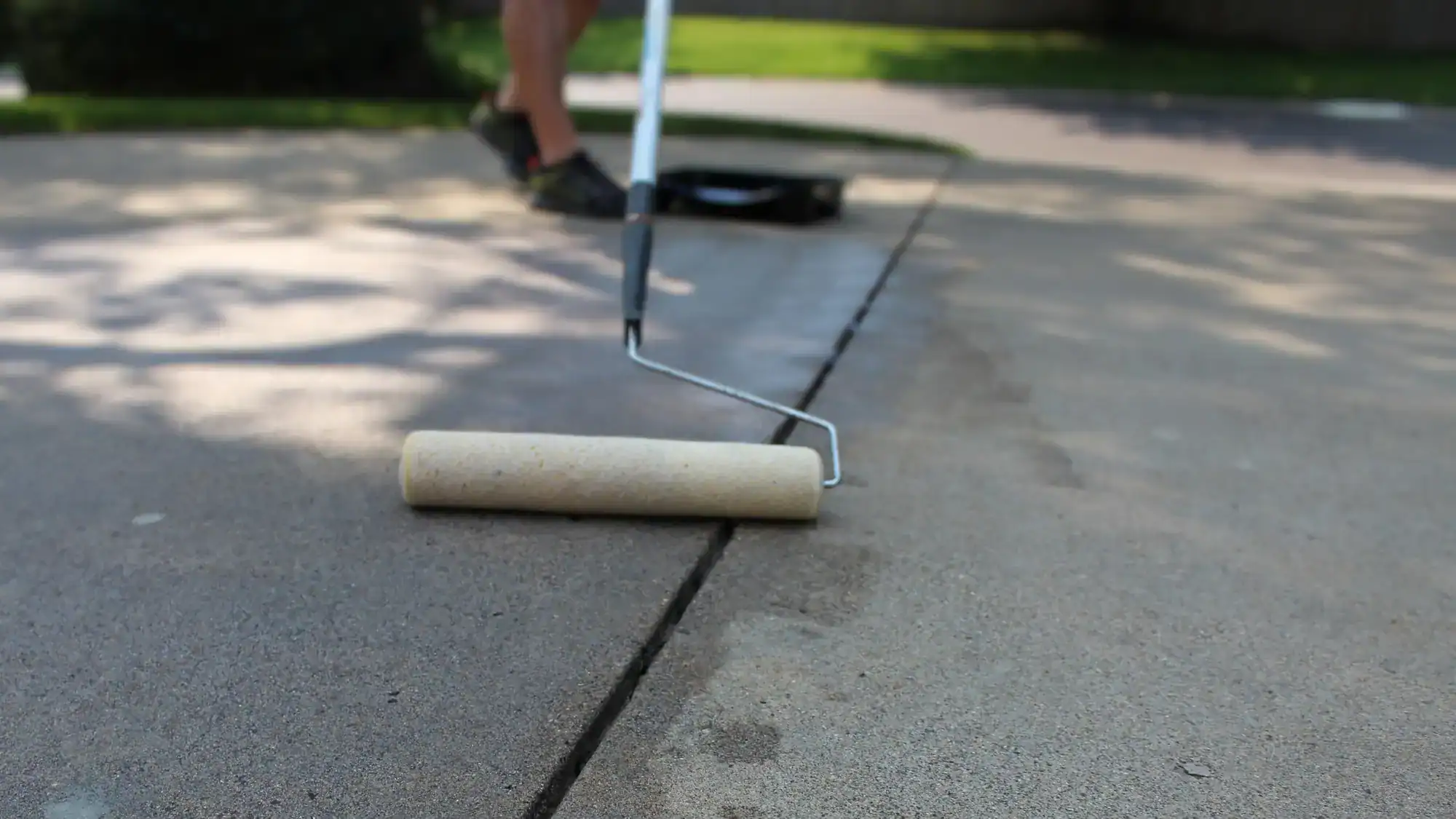
When contractors quote concrete driveway installation cost, you need to know what’s actually in that number. A complete installation includes demolition and removal of your existing driveway, excavation to proper depth, base preparation with compacted stone, proper grading for drainage, the concrete pour itself, finishing work, and cleanup.
Demolition alone adds $1,500 to $4,000 to your project depending on what’s coming out. Concrete removal costs more than asphalt because of the weight and disposal fees. If you’ve got a circular driveway or significant square footage, that number climbs.
Base preparation is where quality contractors separate themselves from the cheap ones. Long Island’s soil conditions demand proper excavation and a solid compacted stone base—typically 6 inches minimum. Sandy soil on the South Shore drains well but needs more base material for stability. Clay-heavy soil in areas like Huntington and Smithtown requires extra excavation work. Contractors who skip this step give you a lower price and a driveway that fails in five years instead of lasting thirty.
The concrete itself needs to meet Suffolk County standards—minimum 3000 PSI, though 4000 PSI or higher performs better in our freeze-thaw cycles. Standard thickness is 4 inches for regular vehicles, but if you’re parking trucks or RVs, you want 6 to 8 inches. That thickness upgrade costs about 25% more but prevents cracking under heavy loads.
Finishing work affects both appearance and durability. Basic broom finish is functional and affordable. Stamped or colored concrete adds $3 to $10 per square foot but gives you the look of stone or pavers without the higher cost. Some homeowners add borders or decorative elements that push the price up but significantly boost curb appeal.
Drainage planning isn’t optional in Suffolk County. Our coastal moisture, heavy rainfall, and freeze-thaw cycles destroy driveways that don’t shed water properly. Your driveway needs to slope away from your house and away from areas where water pools. Even a 1-2% grade makes a massive difference. Water sitting on your driveway surface means your drainage is wrong, and you’ll pay for it later in cracks and deterioration.
Asphalt looks cheaper upfront—$7 to $15 per square foot installed compared to concrete’s $12 to $25. For that same 600-square-foot driveway, asphalt runs $4,200 to $9,000 while concrete costs $7,200 to $15,000. That’s a real difference when you’re writing the check.
But upfront cost tells you almost nothing about what you’ll actually spend over time. Asphalt needs sealing every 3 to 5 years at $300 to $600 per application. It requires resurfacing around the 15-year mark for $1,500 to $3,000. Over 30 years, you’re looking at $8,000 to $10,000 total for asphalt versus $6,500 to $8,000 for concrete when you factor in maintenance and eventual replacement.
Concrete lasts 25 to 40 years in Long Island conditions with minimal maintenance—occasional cleaning, sealing every 5 to 7 years to protect against stains. Asphalt lasts 15 to 20 years and demands more attention throughout its life. It softens in summer heat, can develop permanent tire marks, and when you patch it, those patches stay visible forever.
Long Island’s climate matters here. Our freeze-thaw cycles are more severe than many parts of the country. Asphalt’s flexibility helps it handle that expansion and contraction better than concrete in some ways. But concrete’s rigidity means it doesn’t soften in heat or develop ruts from heavy traffic.
The real decision comes down to your timeline and budget. If you need the lowest possible upfront cost and don’t mind regular maintenance, asphalt makes sense. If you’re staying in your home long-term and want to minimize ongoing hassle, concrete wins. If you care about design flexibility and curb appeal, concrete offers more options—stamped patterns, colors, borders that asphalt can’t match.
Neither material is wrong. They’re just suited for different priorities. What matters is understanding what you’re actually buying and what it’ll cost you over the years you’ll own it.
Want live answers?
Connect with a Rolling Hills Property Services Inc expert for fast, friendly support.
Most driveway replacements within your existing footprint don’t require permits in Suffolk County. But if you’re expanding the driveway, changing drainage patterns, or connecting to county roads, you’ll need permits from your town or Suffolk County itself.
Permit fees typically range from $100 to $500 depending on the scope of work. That’s not the expensive part. The expensive part is the time, the paperwork, and making sure everything meets local codes—which is why working with contractors who actually know Suffolk County requirements matters.
Many Long Island towns require permits for driveway work when you’re adding impervious surface or altering the footprint. Some homeowner associations have their own approval requirements for driveway changes. We know which applies to your property and handle the applications when required.

Suffolk County follows NYSDOT Specifications and Standards for all work within county right-of-way. If your driveway connects to a county road or involves work in the county right-of-way, you’re dealing with specific requirements for materials, installation methods, and inspection.
All concrete and asphalt must meet Suffolk County Standards. Concrete requires minimum 28-day compressive strength of 3000 PSI unless otherwise specified. Contractors need to provide plant tickets showing batch time stamps, permit numbers, and mix specifications. This isn’t bureaucracy for its own sake—it’s quality control that ensures your driveway actually meets the standards it’s supposed to.
Driveways and curb ramps must meet ADA requirements as set forth in PROWAG and NYSDOT Specifications. If your driveway involves an apron where it meets a public road, you may need coordination with your town highway department. That apron work can add $1,000 to $3,000 to your project.
Stormwater management is a big deal in Suffolk County. If your project involves construction activity permits, you’ll need to comply with Stormwater Pollution Prevention Plans, sediment and erosion control measures, and Best Management Practices. All site surface water runoff needs to stay onsite and not discharge onto county right-of-way.
For residential driveways, contractors need proof of Commercial General Liability insurance with Suffolk County listed as additional insured. The standard requirement is $2 million per occurrence, though residential driveways may qualify for reduced limits of $1 million per claim. Any contractor working on your property needs to provide this proof of insurance—it protects you if something goes wrong.
The permit process sounds intimidating, but it’s manageable when you’re working with contractors who’ve done it before. We know which forms to file, what inspections are required, and how to schedule work to meet county requirements without unnecessary delays. Contractors who don’t know this stuff cause problems—failed inspections, project delays, work that doesn’t pass code and needs to be redone.
Site conditions drive more cost variation than almost anything else in driveway installation. Two identical driveways can have wildly different prices because of what’s happening under the surface and around the property.
Soil conditions matter enormously in Suffolk County. Sandy soil on the South Shore drains well but shifts and settles, requiring more base material for stability. Clay-heavy soil in parts of Huntington and Smithtown holds water and requires extra excavation to reach stable ground. High water tables—especially in southern shore communities like Babylon and Massapequa—demand extra attention to drainage and base preparation.
Grading and drainage work can add thousands to your project or be relatively straightforward depending on your property. If your lot slopes toward your house, you need extensive grading work to redirect water. If you’ve got natural drainage away from structures, you’re in better shape. Proper slope—even just 1 to 2% grade—prevents water from pooling and destroying your driveway from within through freeze-thaw damage.
Access challenges increase costs fast. If heavy equipment needs to navigate tight spaces, remove mature trees, or work around obstacles, labor costs climb. Some Suffolk County properties have driveways under existing structures or in areas requiring removal of landscaping, fencing, or other features. Every complication adds time and expense.
Existing utilities create constraints. If you’ve got irrigation systems that need relocation, underground utilities that limit excavation depth, or drainage systems that need to be worked around, your contractor needs to plan accordingly. Hitting a utility line during excavation isn’t just expensive—it’s dangerous and can shut down your project.
Tree roots and landscaping preservation add complexity. If you want to protect existing trees near your driveway, proper planning prevents root damage that could kill valuable specimens. Some homeowners don’t realize that even gravel driveways can be deadly to trees—typically involving 10 inches of excavation and heavy equipment compaction that crushes roots.
The season and weather conditions during installation affect both cost and quality. Concrete and asphalt both need specific temperature ranges for proper curing. Cold weather concrete requires special measures—protection periods, temperature maintenance, sometimes pre-construction meetings with county inspectors. Asphalt shouldn’t be placed when pavement surface temperatures are too low. Contractors who understand Long Island’s climate schedule work appropriately and build in weather contingencies.
Driveway installation cost in Suffolk County isn’t simple, but it’s not mysterious either. You’re paying for materials, labor, site preparation, and the expertise to build something that actually lasts in Long Island’s climate. Concrete runs $12 to $25 per square foot, asphalt costs $7 to $15 per square foot, and the real number depends on your specific site conditions, material choices, and whether you’re working with contractors who understand what proper installation looks like here.
The cheapest quote isn’t the best value when it skips base preparation, uses inadequate materials, or ignores drainage planning. The most expensive quote isn’t automatically better if it’s padding costs without delivering real value. What matters is understanding what you’re actually buying and working with professionals who know Suffolk County’s soil, climate, and regulatory requirements.
Your driveway is a decades-long investment in your property. It affects your curb appeal, your daily convenience, and your home’s value. Getting it right the first time costs less than fixing it later. If you’re ready to move forward with a driveway project backed by local expertise, transparent pricing, and quality workmanship, we bring the experience and commitment to get it done right.
Article details:
Share:
Continue learning: