
Hear from Our Customers

You stop losing expensive perennials to invasive growth. Your garden beds look intentional again, not overgrown. The plants you paid good money for actually have room to thrive.
Manual weed removal means we’re not spraying chemicals near your hostas or ornamental grasses. We’re pulling by hand, getting the roots, and doing it on a schedule that matches how weeds actually grow here in Suffolk County. Spring through fall, we’re targeting the species that show up in Shirley’s acidic soil before they choke out what you planted on purpose.
Your property looks maintained without you spending Saturday mornings bent over a garden bed. That’s the outcome—more time, better curb appeal, and landscaping that actually reflects what you invested in it.
We’re based in Smithtown and have been handling residential weed control across Suffolk County for years. We’re not a national franchise following a generic script. We know that Shirley’s soil is acidic, that crabgrass loves compacted areas near driveways, and that Creeping Charlie will take over if you’re not paying attention.
We’re licensed and insured because we’re working on properties worth $400K to $850K. You need someone who understands what’s at stake. Our crews hand-pull weeds around established perennials, mulch beds, and ornamental plantings without damaging root systems or pulling the wrong thing.
Shirley homeowners expect their properties to look sharp. We help you meet that standard without the weekend labor.

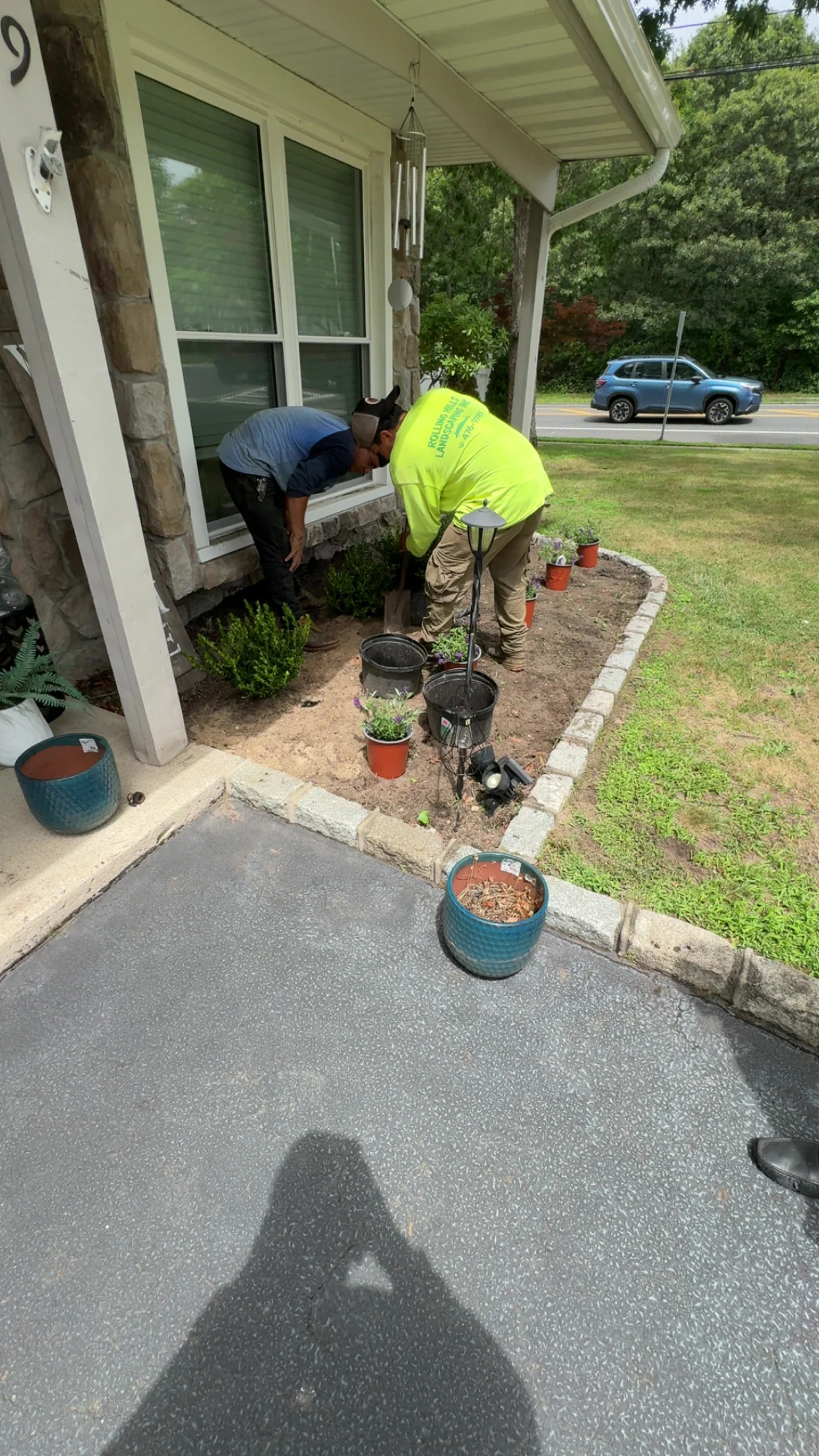
We start with a walkthrough of your garden beds to identify what’s a weed and what’s intentional. Not every crew knows the difference between a young perennial and an invasive—ours does.
Then we hand-pull everything that doesn’t belong, getting the root system out so it doesn’t come back in two weeks. For dense areas or stubborn species like dandelions, we use tools that extract the taproot without disturbing surrounding plants. If your beds need mulch refreshed or edges redefined, we handle that during the same visit.
Timing matters here. We schedule seasonal weeding and mulching based on when weeds actually germinate in Long Island’s climate—not a random calendar. Early spring hits before crabgrass takes hold. Mid-summer targets warm-season invaders. Fall cleanup prevents next year’s problems.
You’re not managing a schedule or wondering if it’s time. We show up, do the work, and your garden beds stay clean without you thinking about it.

Ready to get started?
You get manual removal of all visible weeds in designated garden beds, including root extraction for perennials like dandelions and Creeping Charlie. We’re not just surface-pulling and hoping—we’re getting what’s underneath.
Shirley’s dense suburban lots mean garden beds are often layered with hostas, daylilies, ornamental grasses, and shrubs. We work carefully around established plantings to avoid damage. If you’ve invested in Japanese maples, hydrangeas, or any high-value perennials, we’re protecting those while clearing out what’s invasive.
Mulch refreshing and edging are part of the service when needed. Long Island’s freeze-thaw cycles and heavy rainfall break down mulch faster than in other regions, and weeds love exposed soil. We top off mulch to suppress future growth and redefine bed edges so everything looks intentional.
You also get communication. If we spot compacted soil, poor drainage, or signs that your beds need aeration or lime applications to address acidity, we’ll tell you. We’re not upselling—we’re letting you know what we’re seeing so you can make informed decisions about your property.

Most Shirley properties need professional weeding every 4 to 6 weeks during the growing season—roughly April through October. That frequency keeps ahead of how fast weeds germinate in Suffolk County’s climate without letting them establish deep root systems.
If your beds are heavily mulched and you’ve had consistent maintenance, you might stretch to every 8 weeks in mid-summer. But if it’s been a while, or if your soil is compacted and acidic (which most of Long Island is), weeds will come back faster. Crabgrass, dandelions, and Creeping Charlie don’t take breaks here.
One-time cleanups help if you’re catching up, but ongoing seasonal weeding is what actually keeps beds looking maintained. Spring and fall are the most critical times because that’s when the majority of weed seeds germinate and when perennials need the most protection.
Not if it’s done correctly. Hand-pulling by someone who knows what they’re doing is actually safer for perennials than chemical treatments or aggressive tools.
The key is recognizing what’s a weed and what’s not, then pulling at the right angle to remove the root without disturbing nearby plants. For example, dandelions have taproots that need to be loosened and extracted carefully—yanking them out can damage shallow-rooted perennials nearby. Creeping Charlie spreads horizontally, so you’re tracing stems back to the source rather than just ripping surface growth.
We work around hostas, daylilies, ornamental grasses, and shrubs daily. The goal is to clear weeds while protecting what you planted on purpose. If a bed is overgrown to the point where roots are tangled, we’ll let you know before we start pulling so there are no surprises.
Dandelions are everywhere in Suffolk County—they thrive in Long Island’s acidic soil and show up in lawns and garden beds. Creeping Charlie is another major one, especially in shaded or moist areas. It’s part of the mint family, spreads aggressively, and has dense growth with purple flowers.
Crabgrass is common in compacted soil, which happens a lot in Shirley’s dense suburban lots where foot traffic is high. If you’re seeing crabgrass in your beds, it usually means the soil underneath needs aeration. Smooth crabgrass and large crabgrass both show up here, with large crabgrass being more prevalent.
You’ll also see chickweed, purslane, and various grassy weeds depending on sun exposure and moisture levels. Each one requires a slightly different removal approach, which is why manual weeding by someone who knows local species is more effective than DIY guessing.
Yes, and that’s exactly why hand-pulling exists as a service. Chemical treatments can burn or stress high-value perennials, and aggressive tools can damage root systems or bark on ornamental shrubs.
We work around Japanese maples, hydrangeas, hostas, ornamental grasses, and other plantings that cost real money to establish. The process is slower than spraying or using a hoe, but it’s precise. We’re pulling weeds by hand, close to the base of plants, without disturbing mulch layers or surface roots.
If you’ve invested in your landscaping—and most Shirley properties in the $400K to $650K range have—you need someone who treats it like an investment, not just another yard. We’ve worked on enough high-value properties to know what careful looks like, and we’re insured in case anything ever goes wrong.
Early spring is critical because that’s when you can get ahead of the first wave of germination. Weeds start growing when soil temperatures hit around 65 degrees for several consecutive days, which happens in April here. If you clear beds before that, you’re starting the season clean.
Mid-summer weeding targets warm-season species that thrive in heat and humidity. Long Island summers are intense, and weeds like purslane and crabgrass love it. Staying on top of removal during June through August prevents them from going to seed and creating next year’s problem.
Fall cleanup is your last chance to pull perennials like dandelions before they go dormant and your first line of defense against spring weeds. Anything you remove in October isn’t coming back in April. Seasonal weeding and mulching in fall also protects beds during winter freeze-thaw cycles, which are tough on Long Island.
Yes. Mulch slows weed growth, but it doesn’t stop it completely. Weed seeds blow in, birds drop them, and some species will push right through two inches of mulch if the conditions are right.
Mulch also breaks down over time, especially with Long Island’s heavy rainfall and freeze-thaw cycles. Once it thins out or compacts, you’re back to exposed soil, and that’s when weeds take off. Refreshing mulch during weeding visits keeps that barrier effective.
Even well-mulched beds in Shirley need regular attention. The goal is to catch weeds early—when they’re small and easy to pull—rather than waiting until they’re established and competing with your perennials for water and nutrients. Consistent maintenance is what keeps mulched beds looking the way they’re supposed to.
Other Services we provide in Shirley