
Hear from Our Customers

Your driveway shouldn’t need patching every spring. Your walkways shouldn’t crack after two winters. And water definitely shouldn’t pool near your foundation after every storm.
Shirley properties face specific challenges that generic concrete work can’t handle. The clay-heavy soil here acts like a barrier, trapping water at the surface. Coastal moisture accelerates wear. Freeze-thaw cycles crack poorly installed surfaces within years.
Professional concrete and masonry work addresses these issues at the source. Proper grading moves water away from structures before it becomes a problem. Heavy machinery ensures full-depth compaction that won’t settle or shift. Belgian block aprons and curbs add definition while standing up to decades of Long Island weather. The result is a property that looks sharp and stays dry, with surfaces built to last 30, 50, even 75 years with minimal maintenance.
We’ve been handling property maintenance across Suffolk County for years. We’re based in Smithtown, fully licensed and insured, and we understand exactly what Shirley homeowners face when it comes to drainage, soil conditions, and coastal weather patterns.
We’re not subcontracting your job to whoever’s available. Our crews, our equipment, our standards. We show up when we say we will, keep you updated throughout the project, and guarantee the workmanship because we’re the ones doing it.
Shirley’s clay soil requires a different approach than sandy areas closer to the coast. Water tables fluctuate. Drainage needs to be designed with Long Island’s specific conditions in mind. That’s not something you learn from a manual—it comes from years of working these properties and seeing what holds up.

First, we assess your property’s grading, drainage patterns, and soil conditions. Shirley’s clay content means we’re looking at how water moves across your property now and where it’s likely to cause problems. This isn’t a quick glance—it’s understanding your specific site.
Next comes the prep work. We use heavy machinery to excavate to proper depth, address any drainage issues at the base level, and ensure compaction that won’t settle over time. If your property needs French drains or grading corrections, this is when that happens. Skipping this step is why you see driveways cracking and sinking after a few years.
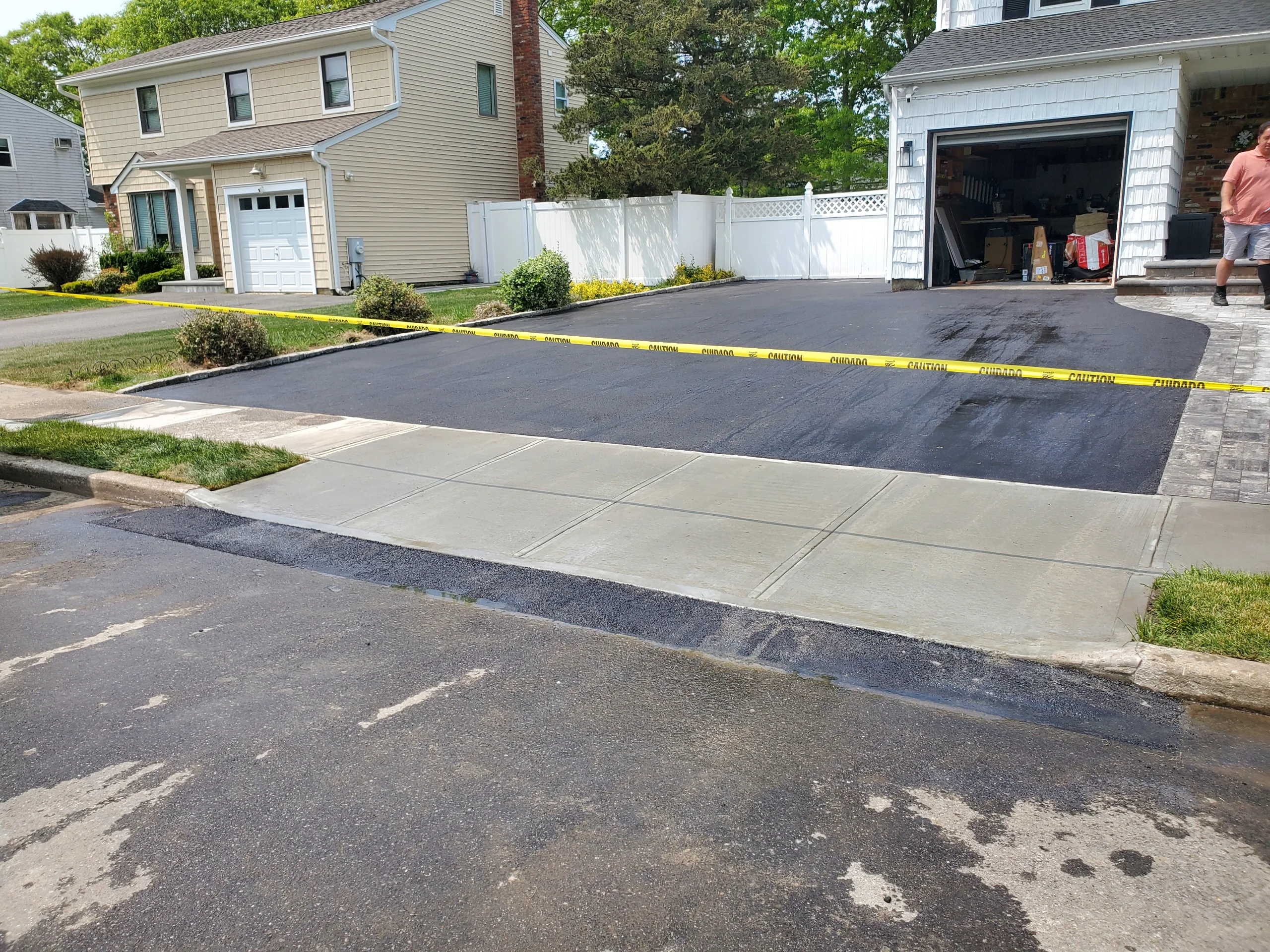
Then we install the concrete or masonry work itself—whether that’s a new driveway, sidewalk repair, Belgian block aprons, or curb installation. We follow International Residential Code standards for slope and pitch, coordinate with the town highway department when required for curb cuts, and make sure every surface directs water away from your home. The work is inspected, finished properly, and built to handle Long Island’s freeze-thaw cycles and coastal moisture for decades.

Ready to get started?
Belgian block driveway aprons give your property that high-end, estate-quality look while providing incredible durability. These aren’t decorative—they’re functional, weather-resistant, and they don’t crack like asphalt or stain like cheaper materials. In neighborhoods across Shirley and Suffolk County where curb appeal directly impacts property value, Belgian block is the permanent upgrade.
Concrete curb installation and sidewalk repair address both aesthetics and drainage. Properly installed curbs channel water where it needs to go while defining property lines and driveway edges. Sidewalk repairs fix trip hazards and prevent further damage from freeze-thaw cycles that would otherwise spread every winter.
Masonry flatwork covers patios, walkways, and other hardscaping that needs to withstand Long Island weather. We’re talking about surfaces that last 40-plus years when installed correctly—not the kind that shift, crack, or require constant maintenance. Local concrete grading and prep is what makes the difference between work that lasts and work that fails. Shirley’s soil conditions require proper excavation depth, compaction, and drainage design. That’s where most contractors cut corners, and it’s why you see problems within a few years.
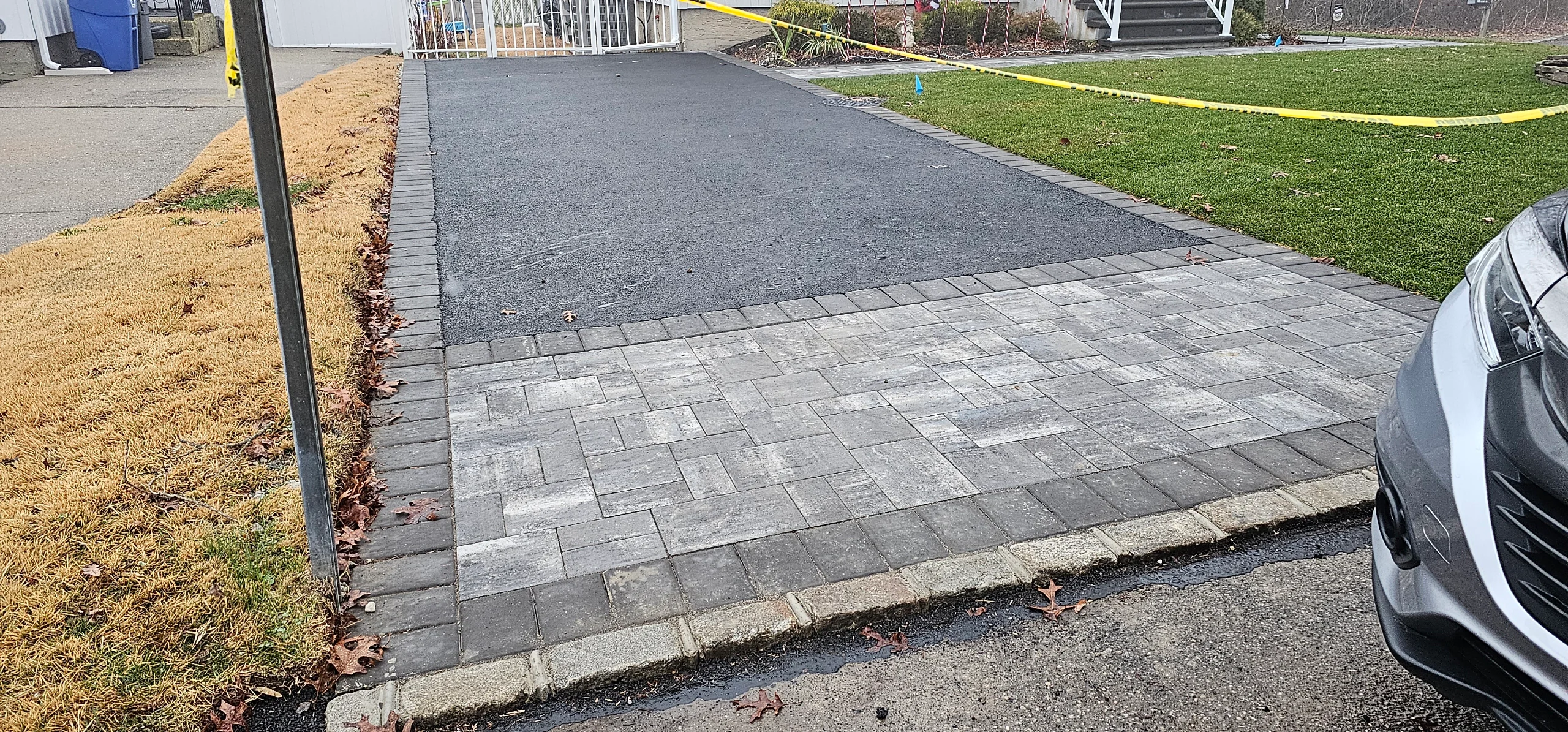
Concrete driveways in Shirley typically run between $8 and $18 per square foot depending on the size, site conditions, and whether you’re adding Belgian block edging or aprons. A standard two-car driveway averages 600 square feet, putting most projects between $4,800 and $10,800.
That range accounts for Shirley’s clay soil, which often requires additional excavation and drainage work. If your property has grading issues or needs a French drain system to handle water properly, that adds to the cost but prevents foundation damage and surface failure down the road. Belgian block aprons add another $30 to $70 per square foot but deliver that premium look and can last 75-plus years.
The investment makes sense when compared to asphalt, which needs sealcoating every few years and replacement within 15 to 20 years. Concrete driveways installed properly can last 30 to 50 years and typically increase home values by $3,000 to $10,000 with an ROI between 50% and 80%.
Long Island’s clay-heavy soil is the main culprit. Clay acts like a natural barrier to water movement, and when builders use heavy machinery during construction, they compact the soil even further. That creates an impermeable layer that traps water at the surface instead of letting it drain naturally.
Shirley properties often sit on soil with high clay content, and when you combine that with coastal moisture and fluctuating water tables, you get standing water that won’t go away on its own. Your lawn stays soggy, water creeps toward your foundation, and every storm makes it worse.
Professional grading corrects the slope so water moves away from structures. French drain systems handle both surface water and groundwater, and when installed properly, they last 30 to 40 years. The key is understanding how water moves across your specific property and designing a solution that works with Shirley’s soil conditions, not against them. Surface fixes won’t solve a drainage problem caused by compacted clay and poor grading.
Yes. Suffolk County requires a Right-of-Way Permit from the Department of Highways before constructing driveways or curb cuts. All aprons and curb cuts must be constructed in concrete, and the work has to meet town specifications for slope, materials, and drainage.
Skipping the permit process can result in fines and having to tear out the work and redo it to code. The permit ensures your apron connects properly to the street, handles drainage correctly, and meets safety standards. It also protects your property value—unpermitted work shows up during home sales and creates complications with buyers and lenders.
The permit process adds time and typically costs between $1,000 and $3,000 depending on the scope of work, but it’s not optional. We coordinate with the town highway department as part of the installation process, handle the paperwork, and make sure everything is inspected and approved. That’s part of working with licensed contractors who know local regulations.
Belgian block aprons can last 75 to 100 years or longer with minimal maintenance. These are the same materials used in European streets that have been in place for centuries. They don’t crack like asphalt, don’t stain easily, and they’re resistant to erosion from rain, ice, and snow.
Long Island’s freeze-thaw cycles destroy asphalt and concrete over time, but Belgian block handles temperature fluctuations without cracking or shifting when installed on a properly prepared base. The individual blocks can expand and contract slightly without causing structural damage, which is why they outlast other driveway materials by decades.
Maintenance is minimal—occasional cleaning and very rare re-leveling if the base settles, which shouldn’t happen if the installation is done correctly. The upfront cost is higher at $30 to $70 per square foot, but when you’re looking at a lifespan three to four times longer than asphalt, the math works out. For Shirley homeowners who want a permanent upgrade that adds serious curb appeal and property value, Belgian block is the choice.
Flatwork refers to horizontal concrete surfaces like driveways, sidewalks, patios, and floors. It’s different from vertical concrete work like walls or foundations. The installation process for flatwork requires specific attention to grading, drainage, and surface finishing because water needs to move across and off these surfaces properly.
In Shirley, masonry flatwork has to account for clay soil that doesn’t drain naturally and freeze-thaw cycles that cause cracking if the base isn’t prepared correctly. That means proper excavation depth, compacted gravel base, reinforcement when needed, and precise slope to direct water away from structures. The concrete itself needs to be the right mix for Long Island weather and finished to prevent surface water from pooling.
Contractors who specialize in flatwork understand these requirements and have the equipment to handle site prep correctly. That’s different from general concrete contractors who might focus on foundations or structural work. For driveways, walkways, and patios in Shirley, you want someone who knows how to build horizontal surfaces that handle drainage and weather for decades.
If you see standing water after storms, soggy areas that won’t dry out, or water moving toward your foundation, your property needs drainage work before any concrete installation. Installing a driveway or patio over poor drainage just traps the problem underneath, which leads to settling, cracking, and structural failure within a few years.
Shirley’s clay soil makes drainage issues common. Water doesn’t percolate through clay naturally, so it sits at the surface or moves along the top of the compacted layer until it finds a low spot. If your property slopes toward your house instead of away from it, or if previous construction compacted the soil without addressing drainage, you’re going to have problems.
A site assessment identifies where water is coming from, where it’s going, and what needs to happen to redirect it properly. That might mean installing French drains, regrading the property, or adding catch basins. The cost of drainage work adds to the project, but it’s not optional if you want concrete that lasts. Skipping this step is why you see driveways sinking and cracking prematurely across Long Island.
Other Services we provide in Shirley