
Hear from Our Customers

You’re tired of planning your day around puddles. Tired of explaining to guests why they need to watch their step. Tired of a driveway that looks worse every season and makes you wonder how much longer before someone trips or water starts affecting your foundation.
Most driveways fail because contractors skip the prep work that matters. They pour asphalt over sandy soil without understanding how Amityville’s ground shifts. They don’t account for coastal moisture or the freeze-thaw cycles that hit Long Island harder than most realize.
When we handle your driveway paving, you get excavation down to proper depth—typically 8 to 10 inches. You get drainage evaluation that factors in how water moves across North Amityville properties. You get base preparation designed specifically for the sandy soil conditions here, not some generic approach that works in other parts of the country but fails on Long Island.
The result is a smooth, level surface that directs water away from your home. No more puddles that sit for hours after rain. No more uneven sections that make you cringe every time you pull in. Just a driveway that works the way it should and stays that way for twenty-five years instead of five.
We’re based in Smithtown and have been working across Suffolk County long enough to understand what Amityville properties need. We’re not a franchise following a manual written for different soil conditions. We’re the team that knows North Amityville’s sandy soil requires different prep than properties five miles inland.
We’re fully licensed and insured, which matters more than it sounds. When excavation goes wrong—hitting an unmarked utility line, damaging a foundation, creating drainage problems—you need a contractor who can make it right without pointing fingers or disappearing.
Our reputation here depends on doing this correctly. We pull permits from local authorities before we start. We contact 811 to mark underground utilities. We use equipment sized for residential neighborhoods, operated by people who’ve done this enough times to work around mature trees, existing structures, and tight access points without creating problems.

First, we evaluate your property’s drainage patterns and soil conditions. This isn’t a quick glance—we’re looking at how water moves during heavy rain, where your water table sits seasonally, and what your soil composition means for base preparation. Amityville’s location means dealing with sandy soil that shifts if not handled correctly.
Next, we handle permits and utility marking. Suffolk County has specific requirements, and we manage that process so you don’t have to figure out which office to call or what paperwork they need. We also get underground utilities marked before any digging starts, which prevents serious problems.
Then comes excavation and site prep. We dig down to proper depth, removing unstable soil and creating a base that won’t settle unevenly. For most residential driveways here, that means going 8 to 10 inches deep and installing a compacted stone base that handles Long Island’s freeze-thaw cycles.
After the base is set and compacted, we install your new driveway—whether that’s asphalt or pavers. Asphalt gets applied in layers designed to flex with temperature changes. Pavers get set with edge restraints that keep everything in place through seasonal ground movement. Either way, we’re building for the conditions your driveway will actually face, not ideal weather that doesn’t exist here.

Ready to get started?
You get drainage planning that prevents water from pooling near your foundation. North Amityville properties often deal with water management challenges because of soil conditions and coastal proximity. We grade your driveway to direct water away from structures and evaluate natural flow patterns so rain doesn’t create problems.
You get excavation that accounts for sandy soil behavior. Long Island’s soil composition is different from what most driveway materials are designed for. We remove unstable material, compact the base properly, and use stone aggregate that locks together instead of shifting when ground freezes and thaws.
You get materials selected for this climate. The asphalt mixes we use are designed to handle Northeast conditions—flexing with temperature changes without cracking. If you’re going with pavers, we use products engineered to survive freeze-thaw cycles that happen multiple times per week during Long Island winters.
You also get permit handling and utility coordination. We pull required permits from Suffolk County authorities and arrange for underground utility marking before we break ground. This protects you from fines and prevents damage to water lines, gas lines, or electrical systems that could shut down your property and cost thousands to repair.

Most residential driveway projects take three to five days from excavation to finished surface. That timeline assumes normal soil conditions and weather that cooperates.
Day one usually involves excavation and hauling away old material if you’re replacing an existing driveway. Day two focuses on base preparation—bringing in stone aggregate, spreading it evenly, and compacting it properly. This step can’t be rushed because your driveway’s long-term performance depends on having a stable base.
Days three and four involve asphalt installation and finishing work. We typically apply asphalt in layers, allowing proper compaction between layers. The final day includes edging, cleanup, and making sure drainage works as planned. You’ll need to stay off the new asphalt for 24 to 48 hours while it cures, and we recommend waiting about a week before parking heavy vehicles on it.
Weather affects this timeline significantly. We can’t install asphalt when temperatures drop below 50°F or during rain. Long Island’s coastal weather can be unpredictable, so we build some flexibility into scheduling. If conditions aren’t right, we wait—because rushing installation in bad weather guarantees problems later.
Amityville’s combination of sandy soil and coastal moisture creates conditions most driveways aren’t built to handle. Sandy soil shifts and settles differently than clay or rocky soil. When contractors don’t account for this during base preparation, you get uneven settling that creates cracks and low spots where water pools.
Coastal proximity means higher humidity and more frequent freeze-thaw cycles. Long Island’s location creates temperature swings above and below freezing multiple times per week during winter. Each cycle expands and contracts the ground beneath your driveway. If the base isn’t prepared correctly or the asphalt mix isn’t designed for these conditions, you’ll see cracking within a few years.
Water table changes also affect driveway stability here. During wet seasons, the water table rises closer to the surface. If drainage wasn’t planned properly during installation, water saturates the base material and weakens it. When temperatures drop, that water freezes and expands, pushing up on your driveway from underneath.
Most driveway failures in North Amityville happen because contractors use the same approach they’d use anywhere else. They don’t adjust excavation depth for sandy soil. They don’t select asphalt mixes designed for coastal conditions. They don’t plan drainage for properties where water doesn’t absorb into the ground as quickly. The result is a driveway that looks fine initially but starts failing within five years instead of lasting twenty-five.
Suffolk County requires permits for new driveway construction and major driveway replacements. The specific permits depend on your property’s zoning, whether you’re changing the driveway’s footprint, and how close you are to wetlands or other protected areas.
Most residential driveway projects need a building permit from the Town of Babylon, which has jurisdiction over Amityville. If you’re expanding your driveway or changing its location, you might also need site plan approval. Properties near water or designated wetlands face additional requirements and longer approval timelines.
We handle this permit process for you. We know which office to contact, what documentation they need, and how long approval typically takes. We also coordinate with 811 to have underground utilities marked before excavation starts. This is required by law and prevents you from being liable if a contractor hits a gas line, water main, or electrical system.
Skipping permits creates serious problems. If the town discovers unpermitted work, they can require you to remove the new driveway entirely and start over with proper permits. You might also face fines and have difficulty selling your property later because the unpermitted work shows up in title searches. Handling permits correctly from the start costs less and eliminates these risks.
Asphalt handles Long Island’s freeze-thaw cycles better than concrete and costs less than pavers. It flexes with temperature changes instead of cracking, and repairs are simpler when problems do occur. For most Amityville properties, asphalt offers the best combination of durability and value.
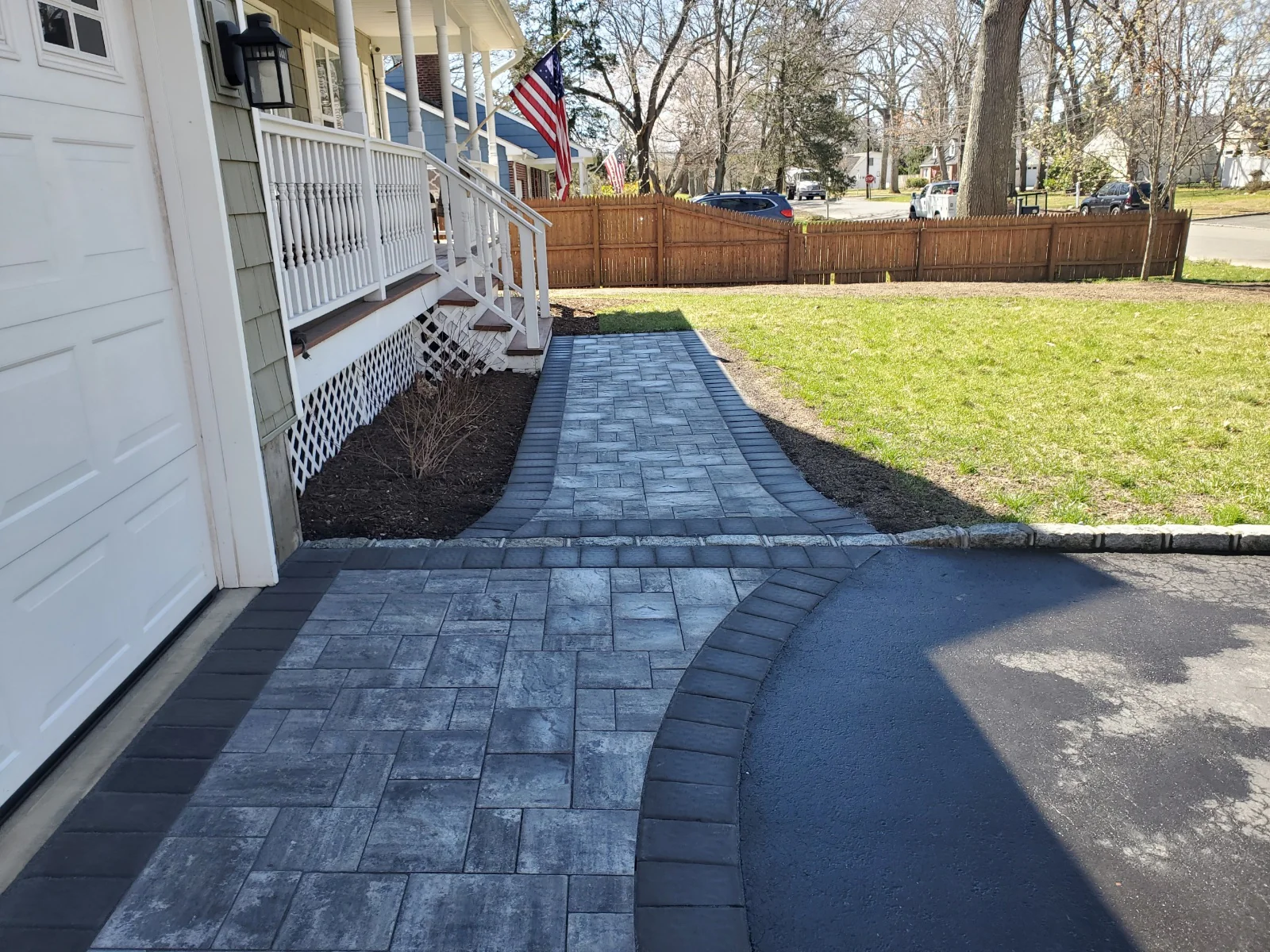
Pavers cost more upfront but give you more design options and can last longer if installed correctly. They handle freeze-thaw cycles well because individual pavers can shift slightly without the entire surface cracking. If one paver gets damaged, you can replace it without redoing the whole driveway. Pavers also handle oil stains and tire marks better than asphalt.
The decision often comes down to budget and priorities. If you want a driveway that performs well and stays within a reasonable budget, asphalt makes sense. Expect to pay $3 to $7 per square foot installed, depending on your property’s access and soil conditions. A typical two-car driveway runs $3,000 to $6,000.
Pavers typically cost $10 to $25 per square foot installed. That same two-car driveway might run $8,000 to $20,000. You’re paying for materials that last longer and look more distinctive, but the base preparation requirements are similar. Both options need proper excavation, drainage planning, and base compaction to perform well in Amityville’s soil and climate conditions.
Proper drainage means water moves away from your home and doesn’t pool anywhere on the driveway surface. After heavy rain, puddles shouldn’t persist for more than an hour or two. If you’re seeing standing water hours after rain stops, drainage wasn’t planned correctly.
During installation, we evaluate how water naturally flows across your property. North Amityville properties often have subtle slopes that aren’t obvious until you study how water moves during storms. The driveway needs to be graded so water runs toward the street or designated drainage areas—not toward your foundation or into low spots where it sits.
You should also see evidence of base preparation that prevents water from saturating the ground beneath your driveway. This usually means a compacted stone base that allows water to drain through instead of pooling underneath. In areas where the water table is high seasonally, additional drainage solutions like French drains might be necessary.
Red flags include contractors who don’t discuss drainage during estimates, who suggest minimal excavation to save money, or who can’t explain how they’ll handle water flow on your specific property. Every property is different. A drainage plan that works for your neighbor might not work for you if your lot slopes differently or if mature trees affect how water moves across the ground.
Seal coating every two to three years protects asphalt from Long Island’s weather and extends its lifespan significantly. Seal coating fills small cracks before they become big problems and protects the surface from UV damage, salt, and oil stains. Late spring through early fall works best for seal coating here because you need consistent temperatures above 50°F.
You should also address cracks and damage promptly. Small cracks turn into big cracks when water gets in and freezes. Fixing a crack when it first appears costs very little. Waiting until it’s spread across half your driveway means more extensive repairs or even replacement.
Keep your driveway clean. Sweep off debris regularly and remove oil stains when they happen. Oil breaks down asphalt over time, and leaves or organic material that sits on the surface can stain and hold moisture against the asphalt.
Avoid using metal shovels or sharp snow removal tools during winter. Metal blades can gouge the surface and create spots where water penetrates. Use plastic shovels or snow blowers with rubber paddles instead. Also be careful with de-icing salt—too much salt accelerates asphalt deterioration. Sand or calcium chloride products designed for asphalt are better choices for Amityville winters.
Other Services we provide in Amityville