
Hear from Our Customers

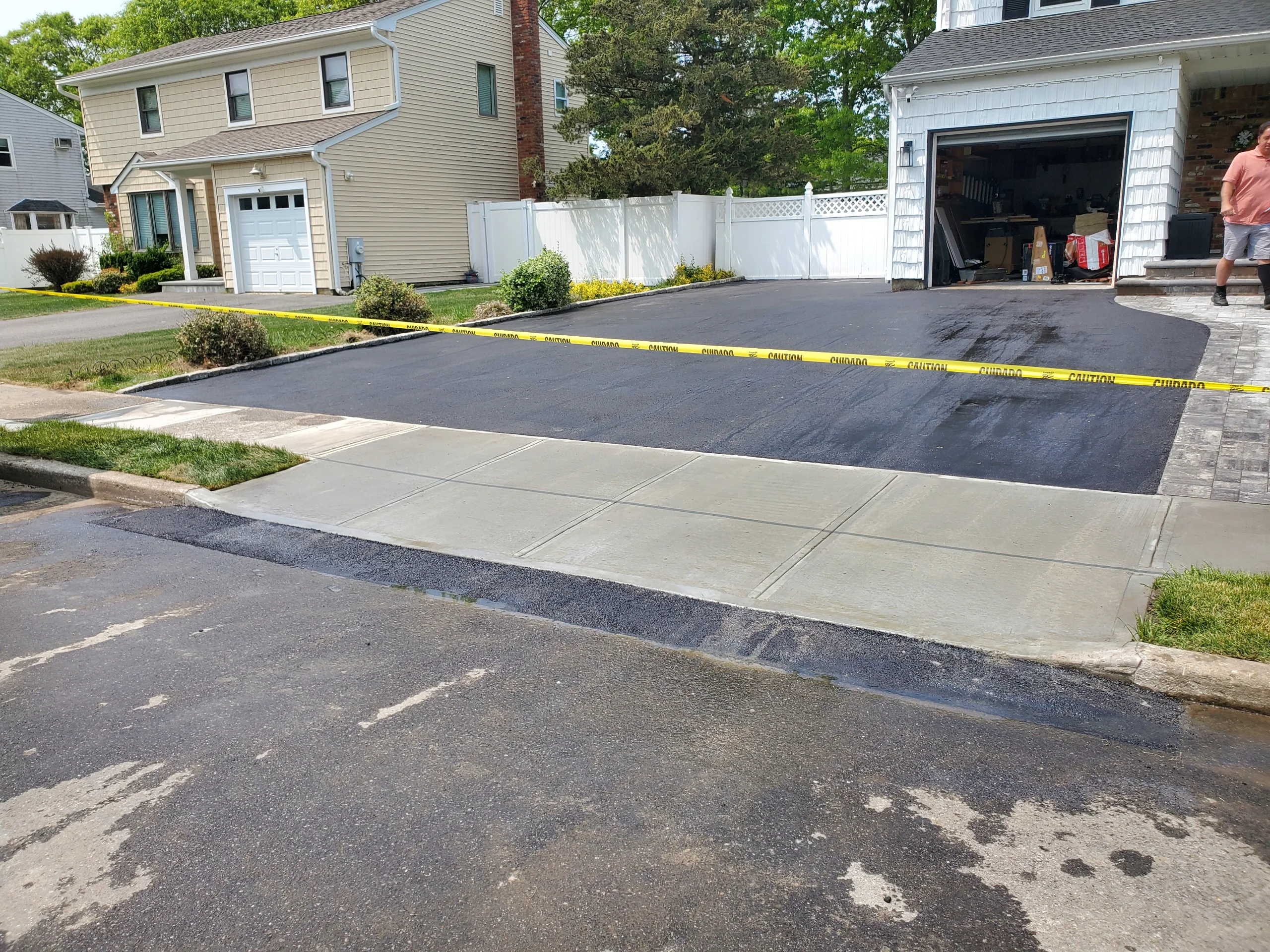
Your driveway apron cracks because water pools underneath. Your sidewalk settles because the base wasn’t compacted right. That uneven concrete near your garage gets worse every winter because nobody mapped the drainage before they poured.
Here’s what changes when the grading is done right: water flows away from your foundation instead of toward it. Your Belgian block apron stays level because we excavate 6-12 inches and stabilize the base with geotextile fabric—especially important in Holtsville’s clay-heavy soils. The concrete doesn’t crack in two years because we’re using heavy machinery to compact every layer, not a hand tamper and hope.
You’re not just getting a smooth surface. You’re getting work that holds up through Suffolk County winters without shifting, cracking, or creating the kind of liability that costs you thousands when someone trips on your sidewalk.
This is the difference between concrete that looks good for a season and concrete that increases your property value for decades.
We’ve been handling property maintenance across Suffolk County long enough to know that Holtsville’s soil doesn’t behave like the rest of Long Island. We’re based in Smithtown, fully licensed and insured, and we’ve seen what happens when concrete contractors skip the prep work or ignore local drainage patterns.
We’re not the cheapest option—and that’s intentional. You’re paying for equipment that actually grades to spec, materials that last through freeze-thaw cycles, and a crew that knows the difference between pouring concrete and installing concrete correctly.
When your neighbor asks who did your driveway apron or why your new sidewalk still looks perfect three winters later, that’s the result we’re after.

We start by mapping your property’s drainage. That means identifying where water flows during heavy rain and making sure your new concrete directs it away from your foundation and neighboring properties. This step gets skipped constantly—and it’s why you see settled concrete everywhere in Holtsville.
Next comes excavation. We’re removing 6-12 inches depending on what’s going in and what your soil looks like. If we’re dealing with clay-heavy soil, we’re laying geotextile fabric before the base goes in. Then we’re compacting in layers using actual equipment, not hand tools.
For Belgian block driveway aprons or curbing, we’re setting each block on a concrete foundation with mortared joints. That’s what keeps them from shifting when you pull in and out of your driveway 400 times a year.
Once the concrete is poured or the blocks are set, we’re managing the cure time based on local weather. Suffolk County’s temperature swings matter. Concrete that cures too fast cracks. Concrete that freezes before it cures fails.
You’ll know the timeline before we start, and we’ll keep you updated if weather changes the schedule.

Ready to get started?
Concrete curb installation means we’re forming, pouring, and finishing curbs that define your driveway or walkway edges. These aren’t decorative—they’re structural. They protect your pavement edges and keep your driveway from spreading over time.
Belgian block driveway aprons are the upgrade that actually shows. They frame your driveway entrance with that old-world look while handling the weight of your vehicles better than poured concrete edges. We’re talking about blocks set on a concrete base with hard joints, not loose pavers on sand that shift every season.
Sidewalk repair in Holtsville often means dealing with liability issues before they become legal problems. Suffolk County codes say any vertical difference of half an inch or more between concrete sections is a violation. We’re removing the damaged sections, regrading the base, and pouring new concrete that matches your existing work.
For full concrete installations—patios, walkways, or driveways—we’re handling everything from excavation to finishing. That includes proper pitch for drainage, control joints to manage cracking, and a finish that works for your property. Broom finish for traction, smooth trowel for a clean look, or exposed aggregate if that’s your style.
Every project gets the same attention to base prep and drainage mapping, because that’s what determines whether your concrete lasts 10 years or 50.
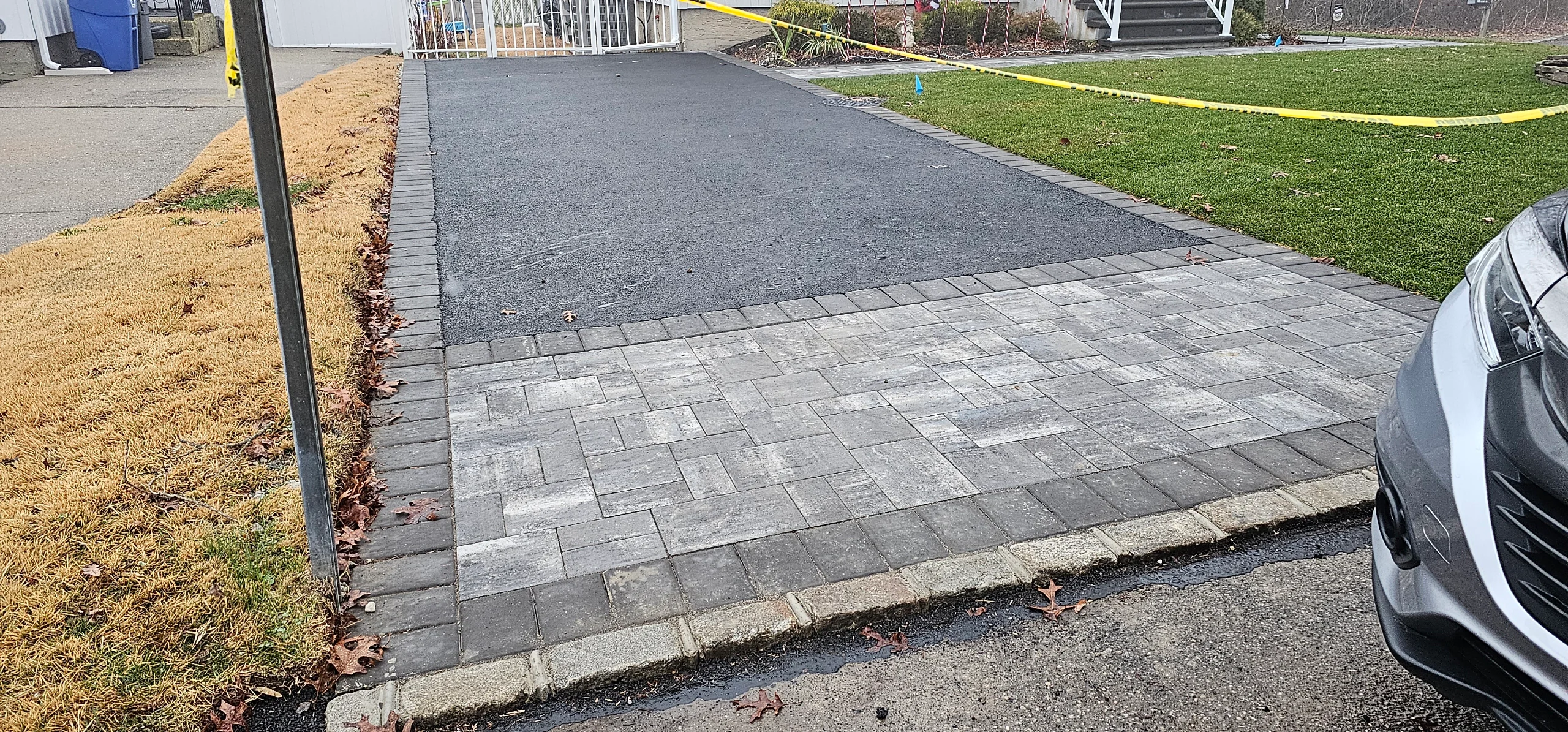
Belgian block aprons typically run $30-70 per square foot installed, depending on the size of your apron and site conditions. A standard two-car driveway apron might be 80-120 square feet, putting most projects in the $2,400-$8,400 range.
That price includes excavation, base prep with proper compaction, a concrete foundation for the blocks, the Belgian blocks themselves, and mortared joints. If your driveway entrance has drainage issues or needs significant grading work, that affects the total.
The reason Belgian block costs more than poured concrete is the labor and materials. Each block is set individually on a concrete base. The joints are mortared, not just sand-filled. And the result is an apron that handles vehicle traffic better than almost any other option while adding that high-end look that increases your property value in Holtsville’s competitive real estate market.
Properly installed concrete lasts 30-100 years in Suffolk County, but that range depends entirely on the quality of the installation. The concrete that fails in 10 years wasn’t installed correctly—wrong base prep, poor drainage, or bad timing with weather conditions.
Suffolk County’s freeze-thaw cycles are tough on concrete. Water gets into small cracks, freezes, expands, and makes those cracks bigger. That’s why proper drainage and base preparation matter so much. If water can’t pool under your concrete, it can’t freeze and cause damage.
The other factor is the concrete itself. We’re using the right mix for Long Island’s climate and making sure it cures properly. Concrete that cures too fast in hot weather or freezes before it’s fully cured will crack prematurely. Timing the work with local weather patterns isn’t optional—it’s the difference between concrete that lasts and concrete that becomes your problem in five years.
It depends on the scope of work and whether your sidewalk is in the public right-of-way. If you’re repairing or replacing a sidewalk that’s between your property line and the street, you typically need a permit from the Town of Brookhaven, which governs Holtsville.
Suffolk County and local municipalities take sidewalk maintenance seriously because of liability issues. If someone trips on your damaged sidewalk and gets injured, you’re liable—and your homeowner’s insurance deductible plus potential lawsuit costs can easily hit five figures.
We handle permit applications as part of our service because we know what the town requires: proper base depth, correct concrete thickness, ADA-compliant slopes where needed, and inspection scheduling. Trying to skip the permit process might save you a fee upfront, but it creates problems when you sell your property or if the town notices unpermitted work. It’s not worth the risk.
Belgian block is individual granite blocks set on a concrete foundation with mortared joints. Regular concrete curbing is poured in place using forms. Both define edges and protect your pavement, but they’re not interchangeable.
Belgian block handles vehicle traffic better because each block is solid granite. If one block gets damaged, you can replace just that block. With poured curbing, damage usually means removing and replacing entire sections. Belgian block also gives you that European, old-world aesthetic that increases curb appeal significantly—especially in higher-end Holtsville neighborhoods where appearance matters for property values.
Poured concrete curbing costs less upfront, typically $4-6 per linear foot installed versus $30-70 per square foot for Belgian block. But poured curbing can crack and settle if the base isn’t perfect. Belgian block is more forgiving of minor settling because the individual blocks can shift slightly without creating the kind of visible damage you get with cracked concrete.
For driveway aprons specifically, Belgian block is the premium choice. It frames your driveway entrance, handles the constant weight of vehicles turning in and out, and adds value that you’ll recover when you sell.
Drainage mapping happens before we excavate anything. We’re looking at where water flows during heavy rain, where it’s pooling now, and where it needs to go after your new concrete is in place. This isn’t guesswork—we’re using levels and grade measurements to plan the pitch.
Concrete needs to slope away from your foundation at a minimum of 1/4 inch per foot. That’s not negotiable. If we’re installing a patio, walkway, or driveway, we’re making sure water flows toward your yard or street, not toward your house or your neighbor’s property.
For areas with clay-heavy soil—common in parts of Holtsville—we’re adding geotextile fabric under the base material to prevent soil migration. Clay expands when wet and contracts when dry, which creates movement under your concrete. The fabric stabilizes everything and keeps your base from shifting.
If your property has serious drainage problems, sometimes concrete work needs to wait until we address the bigger issue. Installing a beautiful new patio that floods every time it rains doesn’t solve your problem—it just makes it more expensive. We’ll tell you upfront if drainage correction needs to happen first.
We can get close, but perfect matching is difficult with concrete because of how it ages. Your existing concrete has years of weathering, UV exposure, and wear. New concrete will look newer—at least initially—even if we match the mix and finish exactly.
That said, we’re matching the finish style, thickness, and control joint pattern so the repair blends as well as possible. If your existing concrete has a broom finish, we’re using the same technique. If it’s smooth troweled or has exposed aggregate, we’re replicating that.
Color matching is trickier. Concrete color depends on the cement source, aggregate type, water ratio, and curing conditions. We can add color if needed, but it’s an extra cost and still won’t be perfect because your old concrete has aged.
For sidewalk repairs where liability is the main concern, matching isn’t as critical as fixing the trip hazard and meeting code requirements. For visible areas like front walkways or patio extensions, we’ll discuss your options upfront so you know what to expect. Sometimes replacing a larger section gives you a cleaner look than trying to patch small areas that will always be noticeable.
Other Services we provide in Holtsville