
Hear from Our Customers

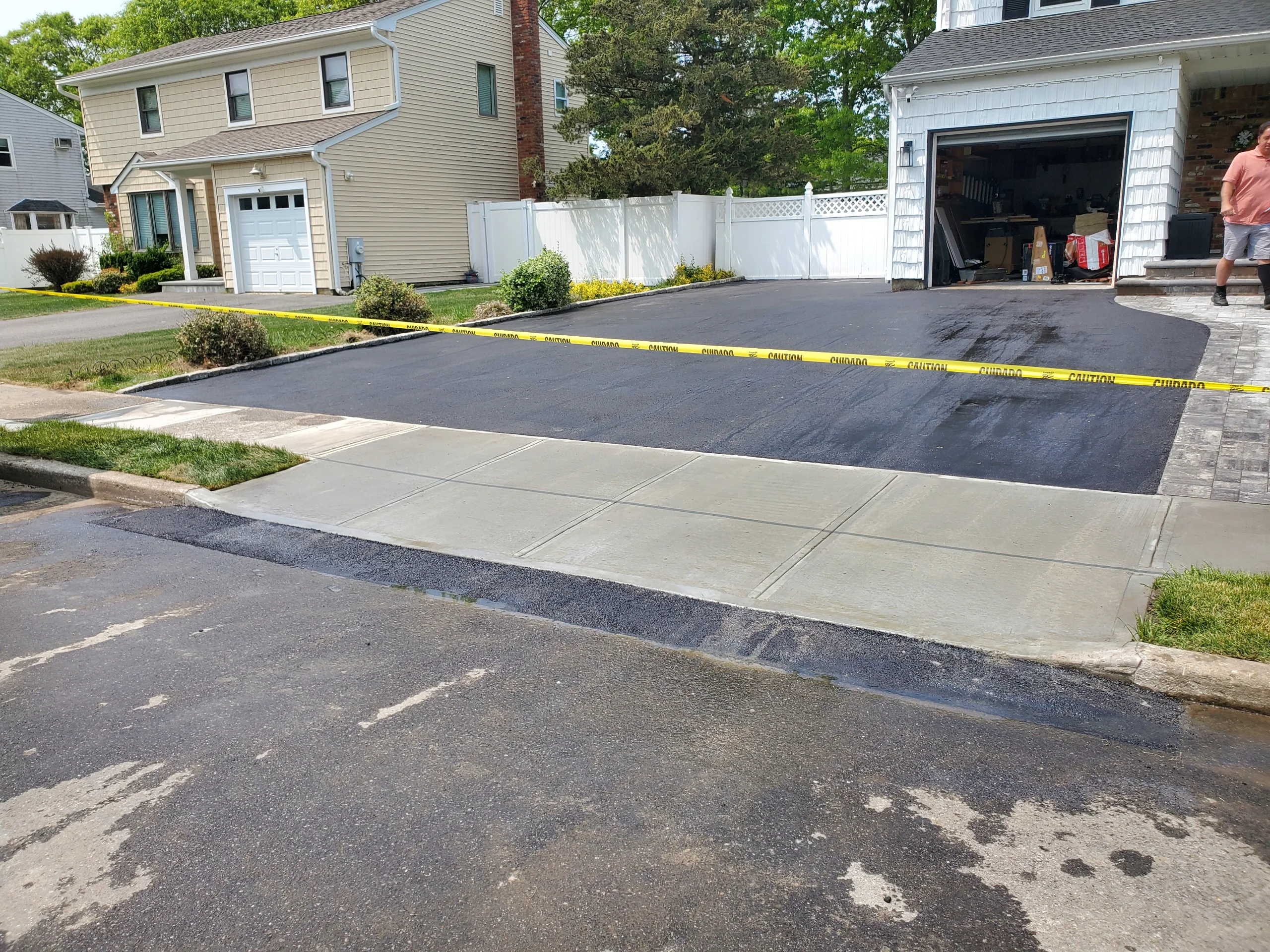
You’re looking at a driveway that doesn’t crack after three winters. A sidewalk that doesn’t heave every spring. An apron that makes your home look like it belongs in the neighborhood’s upper tier.
That’s what happens when concrete grading and prep are done right for Suffolk County soil conditions. Water drains away from your foundation instead of pooling next to it. Your base stays stable through freeze-thaw cycles because it was built with multiple compacted layers, not shortcuts.
A properly installed concrete driveway can increase your home’s value by 5-10%. For a $400,000 home in Bohemia, that’s $20,000 to $40,000. But only if the work is done right the first time. Poor installation means you’re paying twice—once for the original job, and again in three years when you’re calling someone else to fix it.
We’ve been handling property maintenance in Suffolk County long enough to know exactly what happens when concrete work isn’t done right here. We’ve seen the pooling water, the cracked aprons, the driveways that fail in five years instead of lasting thirty.
We’re based in Smithtown and we work throughout Bohemia and surrounding areas. That means we understand Long Island’s sandy soil, coastal moisture, and the drainage issues that hit hardest in early spring when the ground is still frozen and the rain starts coming.
We’re licensed and insured. We use professional-grade equipment. And we don’t move on to the next job until the grading is right and the drainage works the way it should.

First, we look at your property’s drainage. Where does water go when it rains? Where does it pool? What’s the soil composition? This determines everything about how we prep the base.
Next comes excavation and grading. We remove the existing surface, compact the subgrade, and build up layers of gravel base. Each layer gets compacted with heavy machinery—not hand tampers. The slope has to direct water away from your house and away from areas where it can collect.
Then we install edge restraints to prevent lateral movement and pour the concrete. For Belgian block driveway aprons, we set each block individually to create clean lines that complement your home’s style.
After the concrete cures, we clean up completely. You get a detailed walkthrough of what was done and what to expect as the concrete fully cures over the next few weeks. Most driveways are ready for light traffic in 3-7 days and full use in about a month.

Ready to get started?
We handle concrete curb installation, full driveway replacement, sidewalk repair, Belgian block aprons, and masonry flatwork. Each project starts with proper site assessment and drainage planning specific to your property.
In Bohemia, drainage isn’t optional. Your property deals with heavy spring rains, coastal moisture, and soil that doesn’t drain like other parts of the country. We factor in Suffolk County’s specific conditions—the freeze-thaw cycles, the sandy soil composition, the way water moves across Long Island properties.
For driveway aprons, we offer Belgian block installation that adds immediate curb appeal. These aprons frame your driveway entrance with clean, elegant lines that signal quality to anyone pulling up to your home. It’s a detail that matters in established Bohemia neighborhoods where property values reflect attention to this kind of finishing work.
Every concrete project includes proper base preparation, professional-grade materials, and grading that accounts for Long Island’s drainage requirements. We don’t pour concrete over questionable bases or skip steps that matter five years from now.
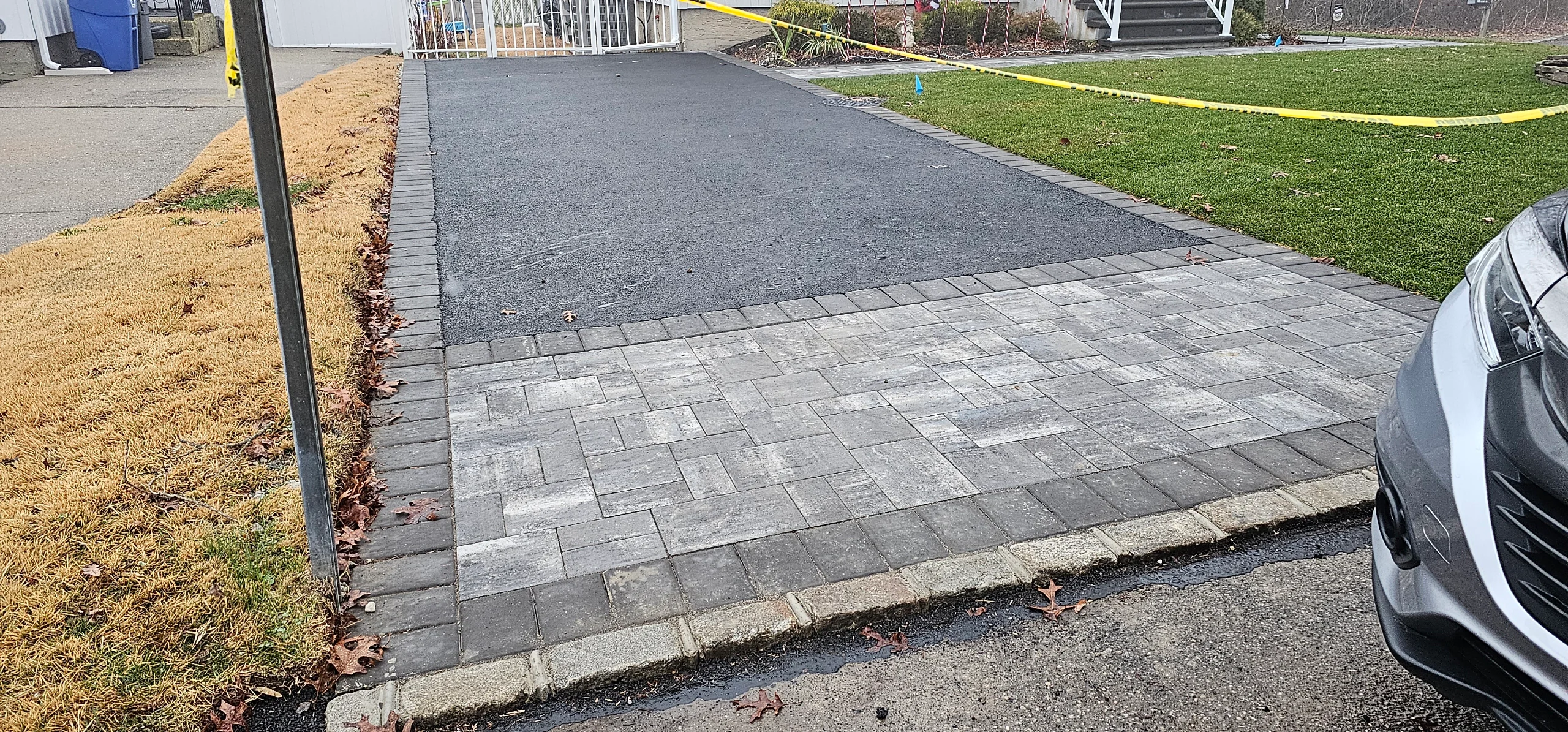
A properly installed concrete driveway lasts 20 to 50 years in Bohemia—about twice as long as asphalt. But that lifespan depends entirely on installation quality and drainage planning.
The driveways that fail early all have the same problem: water. When water pools on or near concrete, it gets into small cracks, freezes during winter, expands, and breaks the surface apart from the inside. This is why drainage planning isn’t optional in Suffolk County—it’s the difference between a driveway that lasts 30 years and one that needs replacement in five.
Proper installation means multiple layers of compacted gravel base, correct slope for drainage, and edge restraints to prevent the concrete from shifting. If those elements are in place and you keep up with basic maintenance like sealing every few years, you’re looking at decades of use before replacement is even a consideration.
Suffolk County has sandy soil, coastal moisture, and freeze-thaw cycles that put more stress on concrete than most other climates. A driveway installation that works in Ohio won’t necessarily work here.
The sandy soil drains differently and shifts more than clay-heavy soils. That means your base preparation has to account for potential settling and movement. Coastal moisture accelerates wear on concrete surfaces, especially if there are any cracks where salt air can penetrate.
Then there’s the freeze-thaw issue. Water gets into any available crack, freezes, expands, and destroys the concrete from within. Long Island gets just enough freezing weather to cause this problem repeatedly throughout winter. That’s why proper sealing and drainage are critical here—you’re not just preventing cosmetic damage, you’re preventing structural failure.
Industry data shows concrete driveways can increase property value by 5-10% and deliver a 50-80% return on investment at resale. For a typical Bohemia home valued at $400,000, that’s a potential increase of $20,000 to $40,000.
But the real value shows up in two places: curb appeal and buyer perception. 72% of homebuyers say curb appeal influences their first impression of a property. A cracked, stained, or deteriorating driveway hurts your chances of selling and lowers your asking price. A new concrete driveway does the opposite—it signals that the home has been maintained and cared for.
Belgian block aprons add another layer of value in established neighborhoods where these details matter. They’re a visual signal that the property is in the upper tier. When potential buyers pull up and see clean concrete with professional edging, they’re already thinking higher offer before they walk through the front door.
Watch for water pooling near your foundation, standing water on the driveway surface, or water that drains toward your house instead of away from it. These are signs your drainage is failing or was never set up correctly.
Water pooling near your foundation is the most expensive problem. It leads to basement flooding, foundation damage, and mold issues. Water extraction alone costs $1,000-$3,000, mold remediation runs $500-$7,000, and foundation repairs can hit $10,000 or more. Proper concrete grading prevents all of this by directing water away from your home.
Standing water on your driveway surface means the slope is wrong or the base is settling unevenly. This water will freeze in winter, expand, and crack your concrete. Once cracks start, they spread quickly. The fix is to address drainage during installation—making sure the driveway slopes away from the house and away from areas where water can collect.
If you have isolated cracks or small sections that have heaved, repair might work. If you have widespread cracking, multiple heaved sections, or drainage issues causing repeated damage, replacement makes more sense.
Heaving happens when water gets under the concrete, freezes, and pushes sections upward. This is common in Long Island because of freeze-thaw cycles and poor drainage. If it’s one section, we can remove and replace just that part. If it’s happening in multiple spots, the problem is usually the base or drainage—and patching won’t fix it long-term.
Widespread cracking means the concrete has reached the end of its lifespan or was never installed properly. You can patch cracks temporarily, but they’ll keep spreading. At a certain point, replacement costs less than ongoing repairs and gives you another 20-30 years of use. We’ll walk your property and tell you honestly which approach makes sense for your situation.
Belgian block aprons require individual placement of each stone, precise alignment, and more labor than pouring a standard concrete apron. But the visual impact and durability make it worth the investment in established Bohemia neighborhoods.
Each block gets set individually to create clean, uniform lines. The blocks themselves are more expensive than poured concrete, and the installation takes longer because there’s no room for error—misaligned blocks are immediately obvious. But once they’re in, they last indefinitely and they don’t crack or deteriorate the way poured concrete can.
The curb appeal difference is significant. Belgian block signals quality and attention to detail. It’s a finishing touch that elevates your home’s appearance and fits the character of higher-end Suffolk County neighborhoods. When you’re looking at property values in the $400,000+ range, these details influence buyer perception and final offers.
Other Services we provide in Bohemia