
Hear from Our Customers

Water doesn’t pool in your driveway after heavy rain. Your foundation stays dry because the grading directs runoff exactly where it needs to go. And when winter hits, you’re not dealing with cracked concrete from freeze-thaw damage.
That’s what happens when the prep work is done right. Sayville gets up to 45 inches of rain annually, and without proper drainage, that moisture works its way under your concrete. It erodes the soil. It freezes. It expands. Then your sidewalk cracks, your driveway apron shifts, and you’re looking at expensive repairs within a few years.
We use excavators and grading lasers to ensure every concrete project is set up to handle Long Island’s specific soil conditions and weather patterns. The result is flatwork that stays level, drains properly, and doesn’t require constant patching. Your property value goes up. Your liability risk goes down. And you’re not calling someone back in three years to fix what should’ve been done correctly the first time.
We’re based in Smithtown and work throughout Suffolk County. We know what Long Island soil does to concrete. We know how coastal humidity and temperature swings affect masonry. And we know that Sayville homeowners are paying some of the highest property taxes in the country—median tax bill here is $12,140—so every improvement needs to actually add value.
We’re fully licensed and insured. We use professional-grade equipment because it makes a measurable difference in how long your concrete lasts. And we communicate clearly throughout the process so you know exactly what’s happening and when.
You’re not getting a crew that shows up, pours some concrete, and disappears. You’re getting people who understand that a Belgian block apron or a new sidewalk is a long-term investment in your property.

First, we assess your property’s drainage needs and soil conditions. This isn’t a quick glance—we’re looking at how water moves across your property, where it pools, and what that means for grading. If you’re in Sayville near the Great South Bay, we’re also factoring in coastal moisture and how that affects your foundation over time.
Next comes excavation and prep. We remove old concrete if needed, excavate to the proper depth, and use grading lasers to ensure the base is perfectly level and sloped for drainage. This is where most concrete jobs succeed or fail. If the base isn’t right, nothing else matters.
Then we install your concrete, Belgian block aprons, or masonry flatwork. We use materials designed to withstand freeze-thaw cycles—because Long Island doesn’t have consistently cold winters. It fluctuates. And that’s what destroys poorly installed concrete.
After installation, we make sure everything is sealed and finished properly. You get a clear timeline upfront, and we stick to it. No surprises. No dragging things out. Just professional work done right the first time.

Ready to get started?
You get sidewalk repair that addresses the root cause—not just the visible crack. When a slab is uneven, water collects underneath and erodes the soil. Then winter freezes it, and the damage spreads. We fix the drainage issue, not just the surface problem.
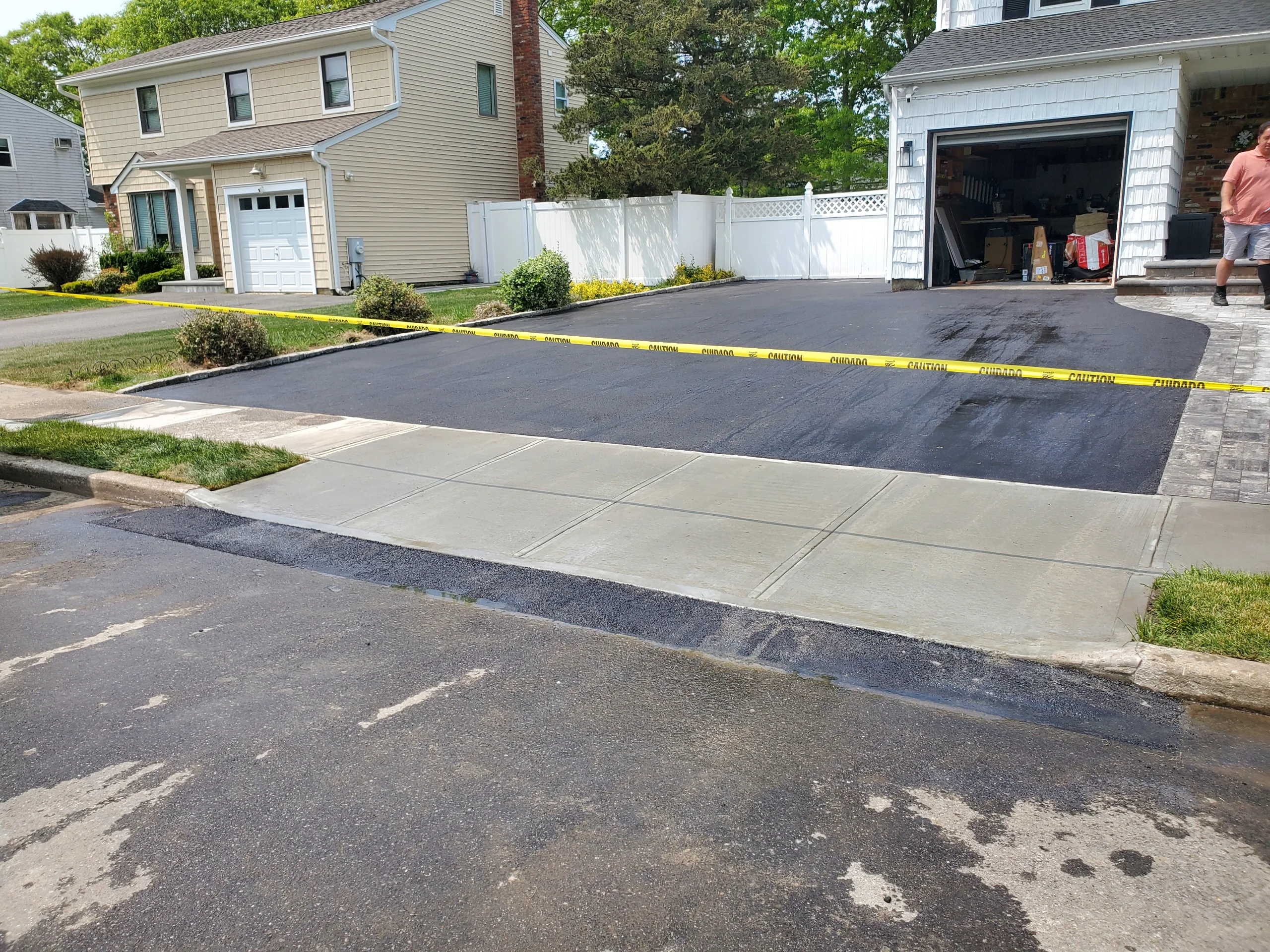
Belgian block driveway aprons are built to last 50-plus years. They don’t crack like asphalt or concrete. They’re stain-resistant and handle erosion from rain, ice, and snow without breaking down. And they immediately boost curb appeal in Sayville’s high-end neighborhoods where first impressions matter.
Our masonry flatwork includes patios, walkways, and any horizontal concrete surface that needs to be level, durable, and properly drained. We handle local concrete grading and prep with heavy machinery, so the foundation is solid from day one.
Every project is engineered for Long Island’s climate. That means accounting for freeze-thaw cycles, coastal humidity, and soil conditions that vary across Suffolk County. You’re not getting a generic concrete job. You’re getting work that’s built to last in this specific environment.
Properly installed concrete lasts 25 to 30 years in Long Island’s climate. But that lifespan depends entirely on the prep work and drainage. If water gets underneath your concrete and freezes, you’ll see cracks within a few winters.
Long Island experiences regular freeze-thaw cycles—not consistently cold temperatures. Water seeps into small cracks, freezes, expands, and makes the damage worse. Over one winter, this can happen dozens of times. That’s why grading and drainage are critical.
We use grading lasers and excavators to ensure water drains away from your concrete, not under it. The base is compacted properly, and the slope is precise. That’s what gets you 25-plus years instead of needing repairs in five.
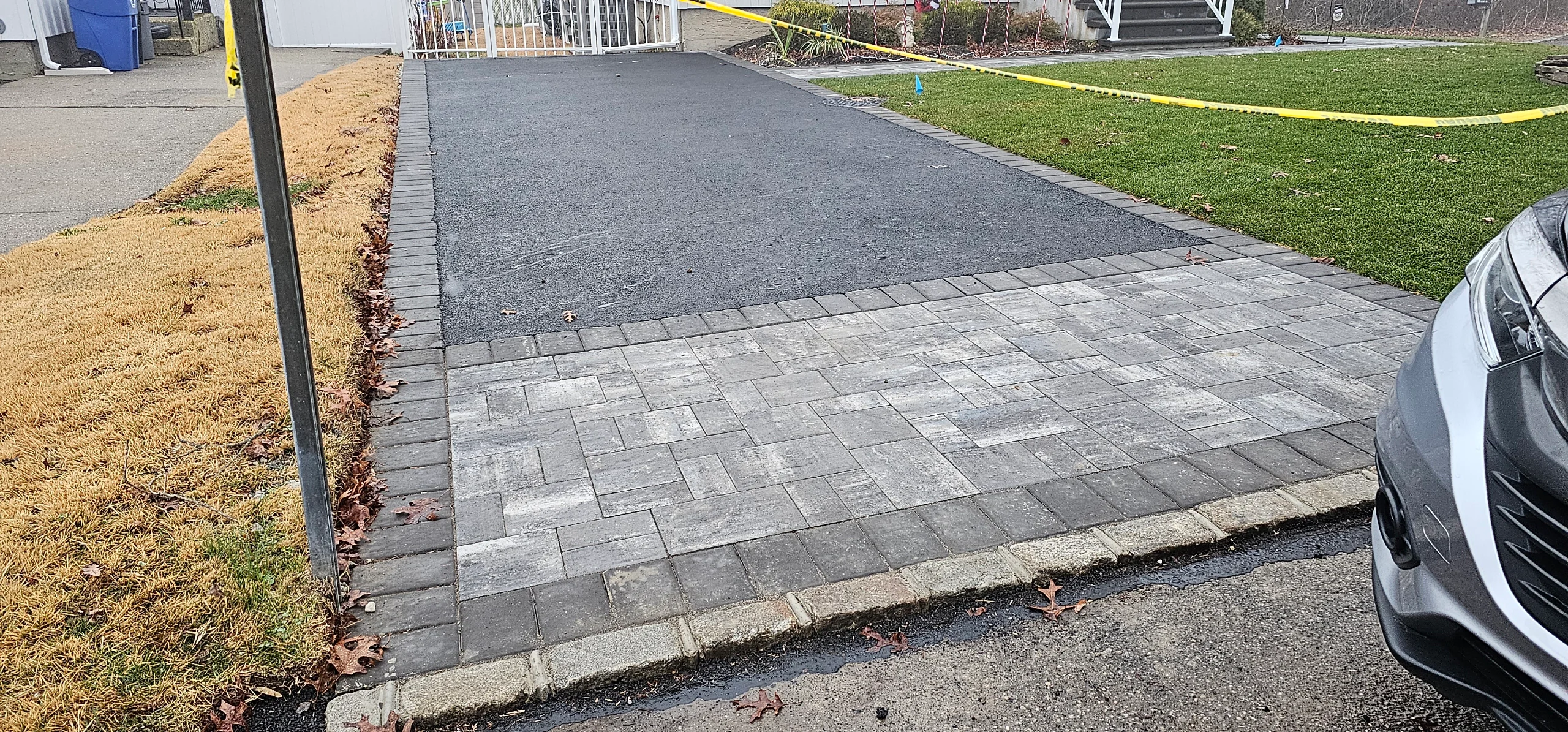
Belgian block aprons last 50 to 100 years. Concrete lasts 25 to 30. Belgian blocks don’t crack from freeze-thaw cycles, and they’re resistant to stains, erosion, and weather damage. Concrete requires periodic sealing and crack patching, especially in colder climates.
The upfront cost is higher for Belgian blocks, but you’re not replacing them in 20 years. They’re also more visually appealing, which matters in Sayville’s established neighborhoods where curb appeal directly impacts property value.
If you’re looking for a permanent solution that doesn’t require ongoing maintenance, Belgian block is the better investment. If budget is the primary concern and you’re okay with periodic upkeep, concrete works—but only if it’s installed correctly with proper drainage.
Because the drainage is wrong. When water collects under a concrete slab, it erodes the soil. Then winter comes, the water freezes, and the concrete cracks. The problem gets worse every year because more water gets in, more soil erodes, and the freeze-thaw cycle repeats.
Fixing just the surface doesn’t solve anything. You need to address the grading so water drains away from the sidewalk, not under it. That means excavating, re-leveling the base, and ensuring the slope directs water properly.
We see this constantly in Sayville—homeowners who’ve patched the same sidewalk three times in ten years. The issue isn’t the concrete quality. It’s that the foundation was never set up correctly to handle Long Island’s rainfall and temperature swings. Fix the drainage, and the cracking stops.
Concrete services in Sayville typically run $3 to $7 per square foot, or $97 to $109 per cubic yard. But that’s a rough range. Your actual cost depends on the size of the project, the condition of the existing surface, and how much excavation and grading are needed.
A simple sidewalk repair costs less than a full driveway apron installation with Belgian blocks. If we’re dealing with poor drainage or unstable soil, that adds to the prep work—and the cost. But it also means the job lasts decades instead of failing in a few years.
We provide clear, detailed quotes upfront so you know exactly what you’re paying for. No surprises. And we explain why certain steps are necessary—because you deserve to understand what you’re investing in and why it matters for your property.
It depends on the cause and severity. If the concrete is uneven because the soil underneath has eroded, patching won’t fix it. The slab will keep shifting until you address the drainage and re-level the base. In that case, replacement is the smarter move.
If the concrete itself is still in good shape but just slightly uneven, we can sometimes lift and level it. But if there are multiple cracks, significant erosion, or ongoing drainage issues, replacement gives you a longer-lasting result.
We assess the situation honestly. If a repair will hold up, we’ll tell you. If you’re going to be back in two years with the same problem, we’ll recommend replacement. The goal is to fix it once and be done—not create a temporary patch that fails when the next freeze-thaw cycle hits.
It depends on the scope of the project. Sidewalk repairs and small driveway aprons typically don’t require permits. Larger projects—like new driveways, significant grading changes, or work that affects drainage patterns—usually do.
The Town of Islip has specific building codes, and we make sure every project complies. We handle the permit process if one is needed, so you don’t have to deal with the paperwork or worry about code violations down the line.
Getting permits might seem like extra hassle, but it protects you. It ensures the work is inspected and meets local standards. And if you ever sell your property, you won’t run into issues with unpermitted improvements that could delay or complicate the sale.
Other Services we provide in Sayville