
Hear from Our Customers

Your property sits in a market where homes appreciate at nearly 12% annually. That means every detail matters, and damaged concrete doesn’t just look bad—it actively works against your investment.
Professional concrete work solves drainage before it becomes a foundation problem. It creates clean lines that frame your property. It holds up against salt air, freeze-thaw cycles, and the kind of weather that’s become standard along the coast.
When the grading is right and the base is properly prepared, you’re looking at 25 to 50 years of performance. That’s what separates a permanent upgrade from something you’ll be redoing in five years. You get curb appeal that lasts and structural integrity that protects everything sitting on top of it.
We’re based in Smithtown and work throughout Suffolk County. We understand Long Island’s soil conditions, drainage challenges, and what it takes to build something that holds up in coastal environments.
You’re dealing with a market where 22% of properties face severe flooding risk over the next 30 years. Every property faces severe wind risk. That’s not a sales pitch—that’s FEMA data, and it’s why proper installation matters more here than almost anywhere else.
We’re licensed, insured, and we’ve spent years learning what works in Montauk specifically. Not just concrete work in general—concrete work that accounts for your drainage patterns, your soil type, and the weather you actually get.

First, we assess your property’s grading and drainage. Montauk properties have specific challenges—coastal soil conditions, water table concerns, and drainage patterns that need to be understood before any concrete gets poured.
Then comes excavation and base preparation. This is where heavy machinery matters. We’re not hand-tamping a base and hoping it holds. We’re using equipment to ensure proper compaction and creating a foundation that won’t shift, settle, or crack under Long Island’s freeze-thaw cycles.
For Belgian block installations, that means a three-layer system: reinforced concrete base, mortar bed, and mortar-jointed blocks. For sidewalks and aprons, it means proper thickness, correct slope for drainage, and a finish that meets DOT specifications. Everything gets graded to direct water away from structures, not toward them.
The concrete cures, the installation settles, and you’re left with something that looks clean and performs exactly as it should. No shifting pavers. No rutted edges. No water pooling where it shouldn’t.

Ready to get started?
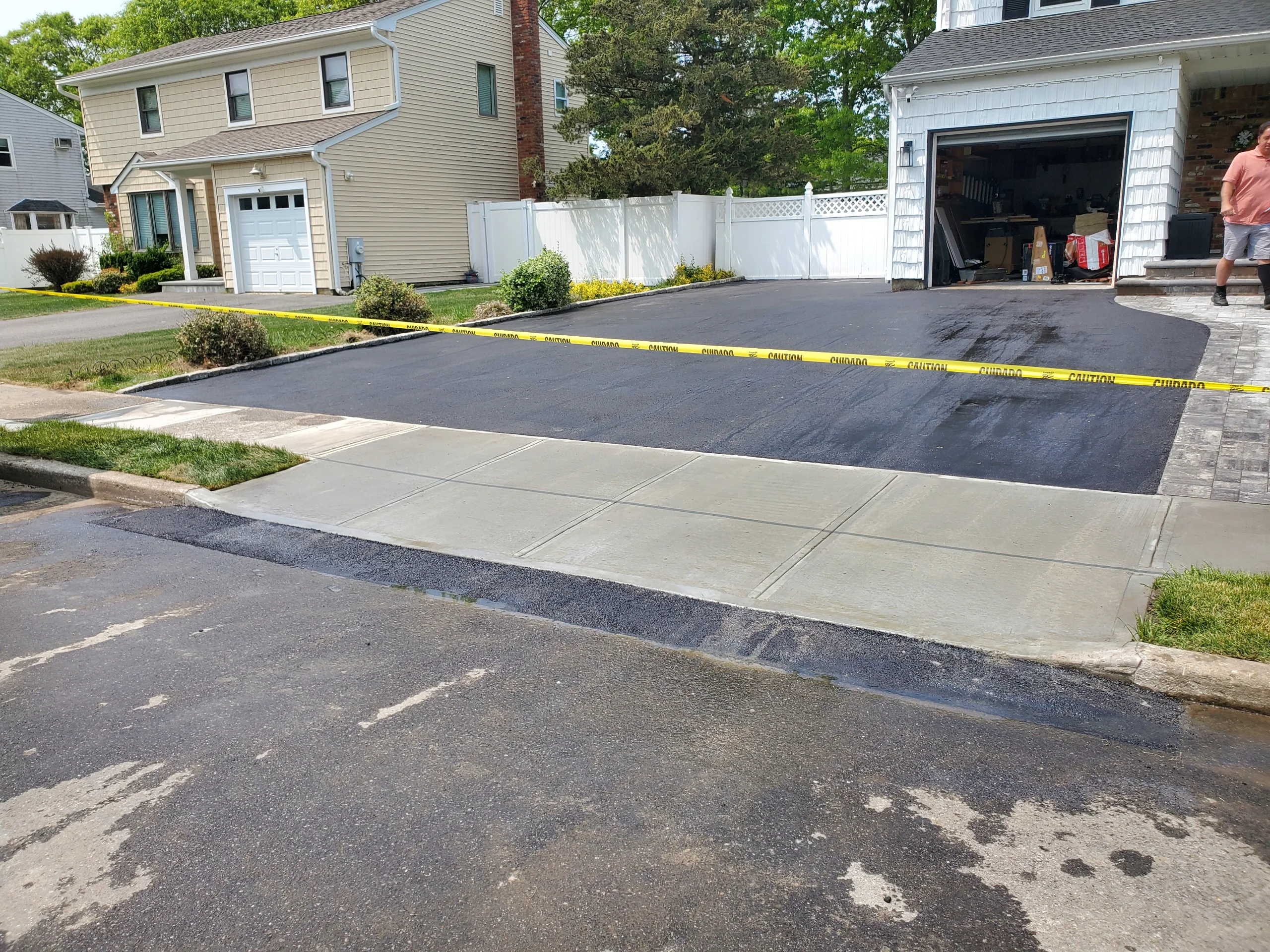
Belgian block driveway aprons are one of the most requested upgrades in high-end Long Island neighborhoods. They add structure, protect pavement edges, and create that estate-quality appearance that buyers notice. When installed correctly with a proper concrete base and mortar joints, they last generations.
Concrete curb installation defines property lines, manages stormwater runoff, and prevents erosion along driveways and roads. In Montauk, where drainage is critical, curbs aren’t decorative—they’re functional infrastructure that keeps water moving in the right direction.
Sidewalk repair addresses trip hazards, improves accessibility, and removes violations before they become legal liabilities. Damaged concrete affects property value and creates risk. Professional repair or replacement solves both problems permanently.
We also handle masonry flatwork—patios, walkways, and other horizontal concrete surfaces that need to drain properly and withstand coastal conditions. Everything gets built to handle salt air, strong winds, and the severe weather events that have doubled in frequency since 1980. Your property deserves work that accounts for the environment it’s actually in.
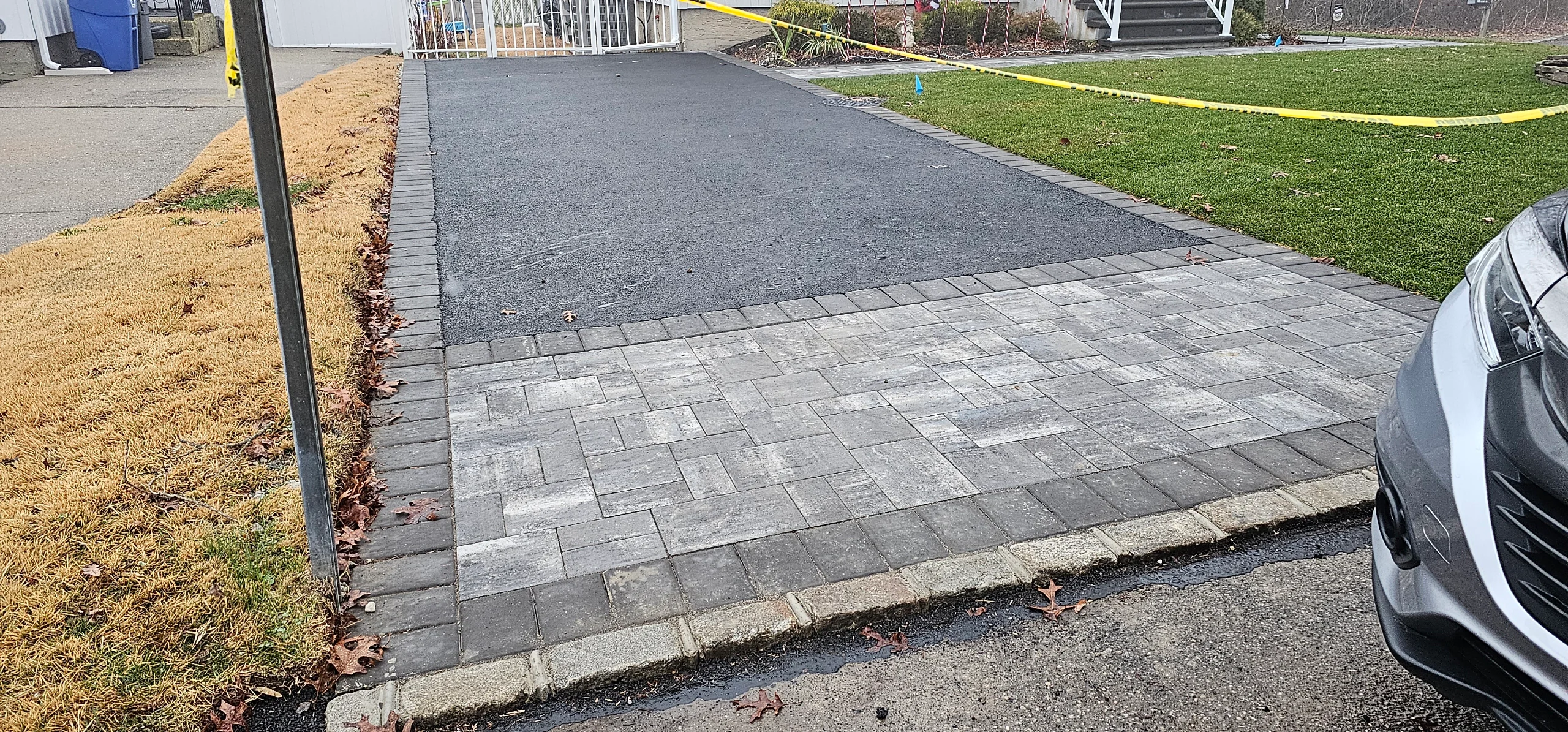
Costs vary based on linear footage, site conditions, and whether excavation is needed. Most Belgian block apron installations in Montauk range from several thousand dollars for a standard driveway to significantly more for larger estates with complex grading.
The price reflects proper installation—not just the materials. You’re paying for excavation, a reinforced concrete base, mortar bedding, and mortar joints between blocks. That three-layer system is what prevents the shifting and rutting you see with cheaper installations that treat Belgian blocks like pavers.
In a market where median home values exceed $2.9 million, professional installation protects your investment. DIY attempts or cut-rate contractors often fail within a few years, requiring complete reinstallation. The right approach costs more upfront but eliminates the need to redo the work.
Repair works when damage is isolated—a single cracked section, minor surface spalling, or small areas of deterioration. If the base is still solid and the damage hasn’t spread, targeted repair can extend the life of your concrete for years.
Replacement becomes necessary when you’re dealing with widespread cracking, significant settling, or base failure. If water has compromised the foundation or if multiple sections show damage, patching individual spots won’t solve the underlying problem. You’ll end up repairing again within a year or two.
We assess the extent of damage, the condition of the base, and whether the existing concrete is properly graded for drainage. In Montauk, where 22% of properties face flooding risk, drainage is often the root cause of concrete failure. If the original installation didn’t account for water management, repair is just a temporary fix. Replacement with proper grading solves the problem permanently.
Properly installed concrete sidewalks and flatwork last 25 to 50 years, even in Montauk’s coastal conditions. Belgian block installations can last even longer—generations, if the base is right and the joints are maintained.
The key is installation quality. Coastal environments are hard on concrete. Salt air accelerates deterioration. Freeze-thaw cycles create cracking. Storm water and flooding put constant pressure on drainage systems. If the base isn’t properly compacted, if the grading doesn’t direct water away from structures, or if the concrete isn’t thick enough for the load it’s carrying, you’ll see failure within years, not decades.
We build for Long Island’s specific conditions. That means accounting for soil types that hold water, designing drainage that handles severe weather events, and using proper thickness and reinforcement. The concrete you’re looking at today should still be performing when you sell the property. That’s the standard we build to.
Most concrete work requires permits, especially if you’re altering drainage patterns, working near property lines, or replacing sidewalks adjacent to public roads. Town of East Hampton has specific requirements for concrete work, and unpermitted installations can create problems when you sell.
Permits ensure work meets code—proper thickness, correct slope for drainage, ADA compliance where applicable. They also create a paper trail that protects you if issues arise later. Insurance companies often require documentation of professional installation, and DIY work can void coverage if damage occurs.
We handle permitting as part of the process. It’s not an upsell or an extra—it’s standard practice for professional contractors. You shouldn’t have to navigate town requirements or worry about whether your installation meets code. That’s our job, and it’s built into how we operate.
Most failures happen because the installation was treated like a paver project instead of a masonry project. Belgian blocks need a reinforced concrete base, a mortar bed, and mortar joints between blocks. Without that three-layer system, blocks shift, rut, and settle unevenly.
Some contractors skip the concrete base entirely and set blocks on compacted stone. That works for pavers designed to move slightly, but Belgian blocks are heavier and less forgiving. Without a solid base, they sink into the ground under vehicle weight, especially along the edges where there’s less support.
Other installations use a concrete base but skip the mortar joints, relying on sand or polymeric sand instead. That allows water infiltration, which undermines the base over time. In Long Island’s freeze-thaw conditions, water gets under the blocks, freezes, expands, and pushes everything out of alignment. Proper mortar joints prevent water infiltration and lock the blocks in place. It’s more labor-intensive and costs more, but it’s the difference between an installation that lasts five years and one that lasts fifty.
Professional concrete work can enhance property value by 5 to 10% through improved curb appeal, better functionality, and reduced liability risk. In Montauk’s market, where homes sell for well over $2 million, that percentage represents significant dollar value.
Curb appeal matters more in high-end markets. Buyers notice clean lines, well-defined edges, and quality materials like Belgian block. Damaged concrete signals deferred maintenance and raises questions about what else hasn’t been maintained. Fresh, professionally installed concrete signals that the property has been cared for.
Functionality matters too. Proper drainage protects foundations, prevents flooding, and manages stormwater in a market where 22% of properties face severe flooding risk. Buyers are increasingly aware of climate risk, and properties with professional drainage solutions command premium prices. You’re not just improving appearance—you’re demonstrating that the property can handle Montauk’s environmental challenges.
Other Services we provide in Montauk