
Hear from Our Customers

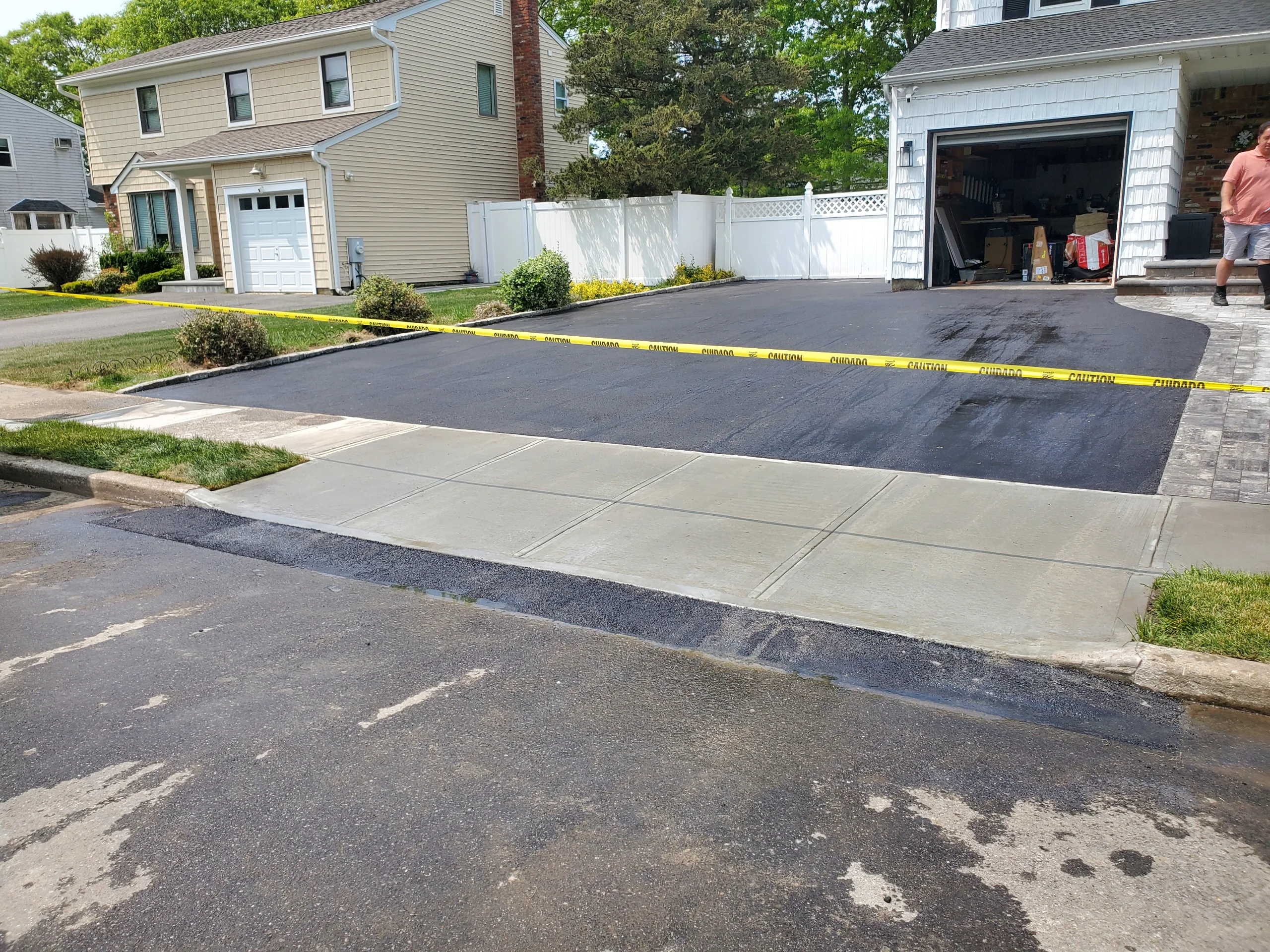
You’re looking at concrete that doesn’t crack after one winter. No pooling water in your driveway. No liability from uneven sidewalks that trip someone and cost you thousands.
When concrete is installed right—with compacted aggregate base, proper pitch for drainage, and reinforced structure—it handles Long Island’s freeze-thaw cycles without falling apart. That means your Belgian block driveway apron stays level under vehicle weight. Your sidewalks don’t heave when tree roots push. Your curbs don’t crumble when the snowplow comes through.
Well-executed masonry flatwork adds 5-10% to your property’s perceived value in Melville’s competitive market. Not because it’s decorative, but because buyers recognize quality work that won’t need replacing in three years. It signals that the property has been maintained by someone who cares about doing things once, correctly.
We’re based in Smithtown and work throughout Suffolk County. We’ve been handling Melville’s specific challenges—sandy soil, drainage issues, salt air exposure—long enough to know what fails and why.
You’re dealing with contractors who use the right equipment for proper grading. We don’t cut corners on base prep or use inadequate materials that shift under load. Every job is licensed, insured, and done with machinery that ensures your concrete sits on a foundation that won’t settle.
We’re transparent about pricing, timeline, and what your property actually needs. No upselling. No disappearing mid-project. Just clear communication and work that holds up.

First, we assess your property’s drainage and grading needs. Melville properties have specific pitch requirements to prevent water from pooling or running toward foundations. We identify problem areas before any concrete gets poured.
Next comes excavation and base preparation. We remove existing damaged concrete, excavate to proper depth, and install a compacted aggregate base. This isn’t optional—Belgian blocks and concrete curbs need solid foundations to handle vehicle traffic without rutting or shifting. We use heavy machinery to ensure compaction meets structural standards.
Then we install your concrete work—whether that’s sidewalk repair, Belgian block driveway aprons, or concrete curb installation. Blocks are set in mortar bed with mortar joints, not just laid on sand. Concrete is reinforced where needed and finished with proper slope for drainage.
Finally, we clean up and walk you through maintenance expectations. Most of what we install is virtually maintenance-free, but you should know what to watch for and when to call if something needs attention.

Ready to get started?
You get site assessment with drainage analysis specific to your property’s grade and soil conditions. We measure existing pitch, identify water flow problems, and design solutions that prevent future damage.
Our concrete grading and prep includes full excavation, aggregate base installation, and compaction using commercial equipment. This is where most contractors cut corners—and where most concrete failures start. We don’t skip steps.
For Belgian block driveway aprons, you’re getting quarried granite setts installed on reinforced concrete base with mortar joints. These handle snowplow impact, provide traction in winter, and won’t crack from freeze-thaw cycles like poured concrete edges.
Sidewalk repair includes addressing root damage, ADA compliance if needed, and matching existing concrete where sections connect. We don’t just patch—we fix the underlying issue causing the damage.
Concrete curb installation adds structure to driveway edges and prevents asphalt deterioration. Properly installed curbs protect your pavement investment and add clean lines that increase curb appeal in Melville’s higher-end neighborhoods.
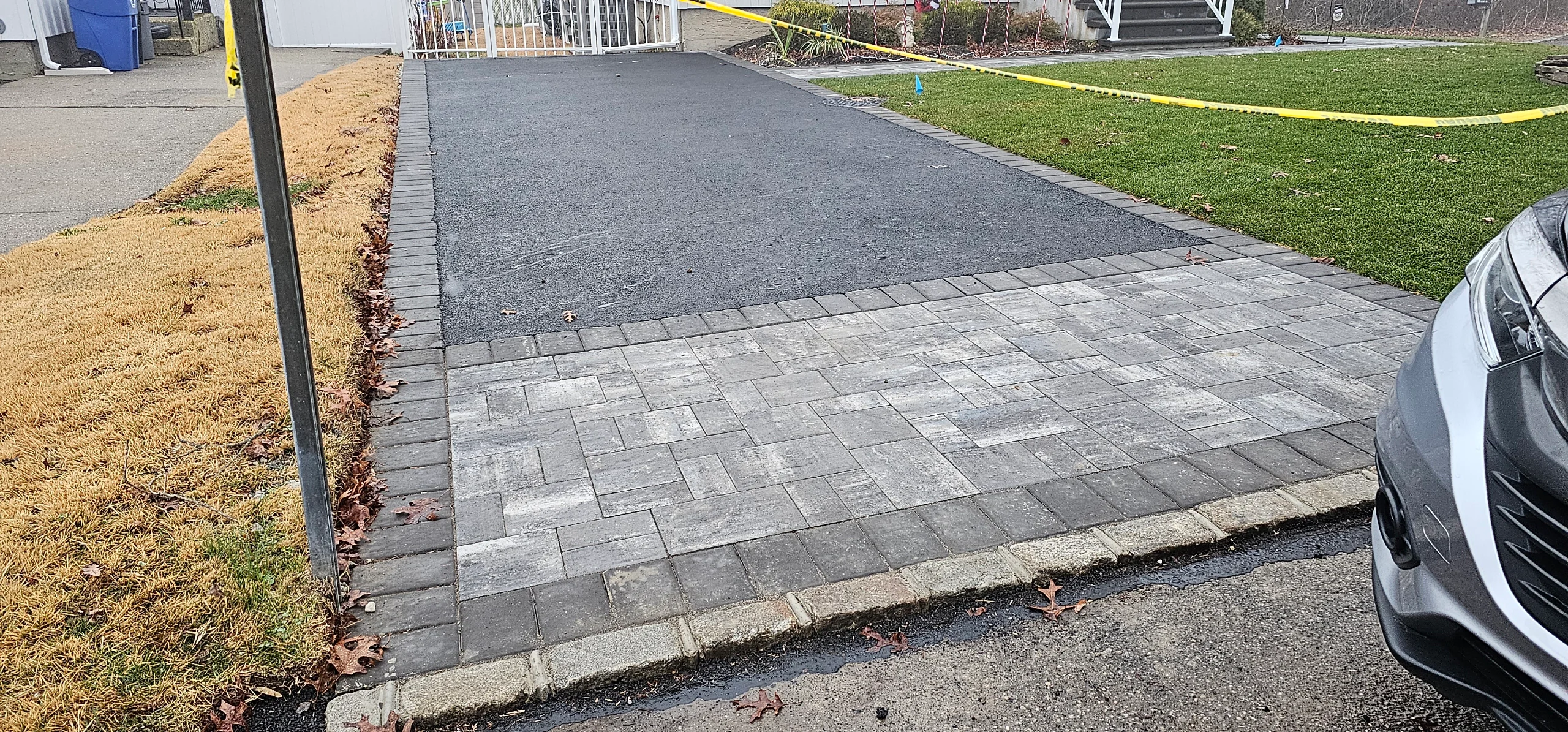
Most Belgian block driveway aprons in Melville take two to four days depending on size and site conditions. Day one is excavation and base prep—we remove existing materials, grade for drainage, and install compacted aggregate base. This can’t be rushed. Proper compaction prevents future settling.
Day two involves setting the reinforced concrete base and allowing initial cure time. Belgian blocks need solid foundation, not sand or gravel, to handle vehicle weight without shifting.
Days three and four are block installation, mortar jointing, and cleanup. We set each granite block in mortar bed and fill joints with mortar for structural integrity. Weather affects timeline—we don’t install in freezing temperatures or heavy rain because it compromises mortar cure and long-term durability.
Concrete cracks in Melville primarily from three issues: improper base preparation, inadequate drainage, and freeze-thaw damage. Long Island’s sandy soil doesn’t provide stable foundation without proper compaction. Water that pools or drains incorrectly seeps into concrete, expands when frozen, and causes cracking.
We prevent this by excavating to proper depth and installing compacted aggregate base that won’t shift or settle. Every project includes drainage analysis—we ensure water flows away from concrete, not into it. Proper pitch is critical in Melville where heavy rain can overwhelm inadequate grading.
We also use reinforcement where needed and control joints in larger pours to manage natural concrete movement. The goal isn’t to prevent all cracking—concrete moves—but to control where cracks occur and prevent structural failure. Quality materials and proper installation mean your concrete handles Long Island winters without deteriorating.
Belgian blocks are quarried granite setts—solid rectangular blocks with split faces that provide traction and durability. Pavers are manufactured concrete or clay units that interlock. For driveway aprons in Melville, Belgian blocks are superior for vehicle traffic.
Pavers can shift under heavy loads unless perfectly installed with edge restraints. Belgian blocks set in mortar on concrete base don’t move. They handle snowplow impact without chipping and provide better traction on slopes or in winter conditions.
Belgian blocks are also virtually maintenance-free. They don’t need sealing, won’t fade, and granite withstands salt exposure and freeze-thaw cycles better than manufactured pavers. The upfront cost is higher, but you’re installing something once that lasts decades. Pavers often need releveling or edge repair within years, especially with vehicle traffic. For permanent curb appeal that doesn’t require ongoing maintenance, Belgian blocks are worth the investment.
Sidewalk repair in Melville typically runs $12-$30 per square foot depending on damage extent and site conditions. Simple crack repair or small section replacement falls on the lower end. Projects involving tree root removal, ADA ramp installation, or curb work cost more.
Most residential sidewalk repairs range $1,000-$5,000 total. If you’re replacing 50 square feet of basic sidewalk with standard 4-inch concrete, expect around $15-$18 per square foot. Add root mitigation or drainage correction, and you’re looking at $20-$25 per square foot.
The real cost isn’t just the concrete—it’s fixing what caused the damage. If tree roots heaved your sidewalk, removing concrete without addressing roots means you’ll have the same problem in two years. We price projects to solve the actual issue, not just cover symptoms. You’ll get a detailed quote that breaks down excavation, base prep, concrete work, and any drainage or root management needed so you understand exactly what you’re paying for.
Most concrete work in Melville requires permits, especially for sidewalk repair, driveway aprons, or curb installation. Town of Huntington (which includes Melville) has specific requirements for concrete work that affects drainage, property lines, or public right-of-way.
Sidewalk repairs often need permits because they’re in public easement even if on your property. Driveway aprons and curb work require permits to ensure proper drainage and ADA compliance where applicable. Skipping permits creates liability if someone gets injured and creates issues when you sell your property.
We handle permit applications as part of our service. We know Huntington’s requirements, submit proper documentation, and schedule inspections. This protects you legally and ensures work meets code. Some contractors skip permits to save time or hide substandard work—that’s not how we operate. Permitted work gives you documentation that concrete was installed correctly and inspected, which matters for insurance claims and property value.
Quality concrete work increases Melville property values by improving curb appeal, eliminating liability risks, and signaling overall property maintenance. Well-installed Belgian block aprons, clean curbs, and level sidewalks add 5-10% to perceived value in competitive markets.
Buyers notice concrete immediately. Cracked driveways, uneven sidewalks, and deteriorating curbs suggest deferred maintenance and potential hidden problems. Clean, professional masonry flatwork signals that the property has been cared for properly. In higher-end Melville neighborhoods, exterior details matter—buyers expect quality and will pay for it.
Concrete work also delivers strong ROI. Exterior improvements including sidewalk and driveway work yield 60-85% return on investment in strong markets like Suffolk County. You’re not just spending money—you’re making a strategic improvement that recovers most of its cost at sale while eliminating liability exposure from trip hazards. Proper concrete work is one of the few home improvements that protects you legally, increases value, and requires virtually no maintenance once installed correctly.
Other Services we provide in Melville