
Hear from Our Customers

You know what your garden beds should look like. Clean edges. Visible mulch. Plants that aren’t competing with crabgrass and dandelions for space. The problem is keeping them that way without spending your weekends bent over pulling weeds that come back two weeks later.
That’s where manual weed removal makes the difference. We’re not spraying chemicals that drift onto your perennials or using shortcuts that leave roots behind. We hand-pull every weed at the root level, working around your existing plants so nothing gets damaged in the process.
The result is garden beds that look intentional. Your shrubs and flowers get the nutrients and water they need instead of sharing with invasive growth. Your property looks like someone actually takes care of it, which matters in Melville’s dense suburban neighborhoods where curb appeal isn’t optional.
This isn’t a one-time cleanup. It’s seasonal weeding and mulching that keeps beds maintained through Long Island’s unpredictable growing seasons, so you’re not starting from scratch every spring.
We’ve been handling property maintenance in Suffolk County for years, and we’ve seen what happens when weeding gets ignored or done wrong. We’re based in Smithtown, which means we understand Long Island’s extremely acidic soil, the way weather swings affect weed growth, and which invasive species show up in Melville’s inland suburban properties.
We’re licensed and insured, and we don’t disappear after one visit. You’ll get the same crew who knows your property, understands where problem areas are, and shows up when we say we will.
Our approach is straightforward. We focus on residential weed control that actually works for the long term, not quick fixes that look good for a week. That means hand-pulling, proper timing, and attention to the details that keep your beds looking maintained between visits.

We start by walking your property to see what we’re dealing with. Not all weeds are the same, and not all garden beds have the same issues. Some areas might be overrun with crabgrass. Others might have dandelions that have been spreading for seasons. We identify what’s growing, where the problem spots are, and what’s worth saving.
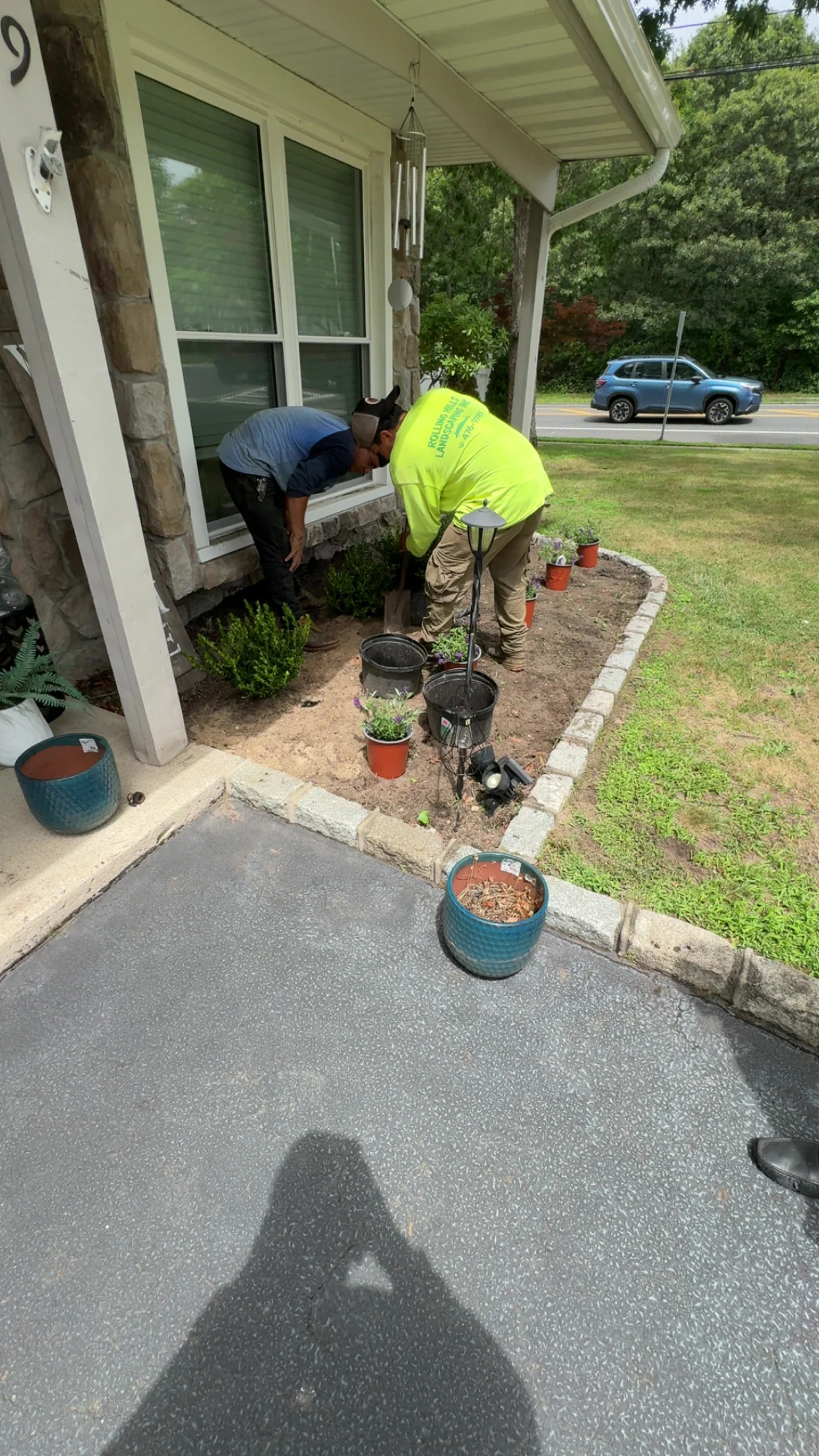
Then we get to work with hand-pulling. This isn’t a quick rake-through. We’re pulling each weed at the root so it doesn’t just snap off at soil level and regrow in a week. We work carefully around your perennials, shrubs, and anything else you want to keep. If something looks questionable, we ask before we pull it.
After the beds are cleared, we haul away the debris. You’re not left with piles of pulled weeds sitting on your lawn. If you’re adding mulch or need bed edging redone, we handle that too as part of the seasonal maintenance.
You’ll see the difference immediately. Beds look defined again. Your plants have room to breathe. And because we’re pulling at the root and timing our visits with Melville’s growing patterns, the results last longer than DIY attempts or chemical treatments that don’t address the actual problem.

Ready to get started?
Our professional weeding services cover the full scope of garden bed maintenance. We hand-pull all visible weeds, including roots, so you’re not dealing with regrowth a week later. We work around existing perennials and shrubs without damaging them, which is critical in Melville’s established neighborhoods where mature plantings add real value to your property.
We remove all debris from your property. No piles left behind for you to deal with. If your beds need fresh mulch after weeding, we can handle that as part of seasonal weeding and mulching services. Mulch isn’t just cosmetic—it suppresses future weed growth and helps your soil retain moisture during Long Island’s dry spells.
We also address bed edges. Weeds don’t respect boundaries, and over time, grass creeps into beds and blurs the lines. We redefine those edges so your beds look intentional and maintained, not like they’re slowly being reclaimed by your lawn.
Timing matters here. Melville’s inland location means you’re dealing with dense suburban soil that holds moisture differently than coastal areas. We schedule visits based on when weeds are actively growing but before they seed, which keeps your beds cleaner for longer and reduces the amount of work needed each visit.

Most properties in Melville benefit from weeding every four to six weeks during the growing season, which runs from late April through October. That frequency keeps weeds manageable before they establish deep root systems or go to seed.
If your beds have been neglected or you’re dealing with aggressive species like crabgrass or bindweed, you might need more frequent visits initially to get ahead of the problem. Once beds are under control, you can often extend the time between visits.
The key is consistency. Weeding once in May and then ignoring beds until September means you’re starting over each time instead of maintaining progress. Regular visits also let us catch new weed growth early, when it’s easier to remove and hasn’t had time to spread or choke out your perennials.
Not when it’s done correctly. Hand-pulling is actually safer for your perennials and shrubs than chemical treatments or aggressive mechanical removal. We pull weeds individually at the base, working around root systems of plants you want to keep.
The risk with DIY weeding is rushing or pulling too aggressively, which can disturb soil around nearby plants or accidentally yank out something valuable. We take the time to identify what’s a weed and what’s not, especially in mixed beds where ground covers or spreading perennials can look similar to invasive growth.
If we’re unsure about a plant, we ask before removing it. That’s especially important in established Melville gardens where homeowners have spent years cultivating specific plantings. The goal is cleaner beds without collateral damage to what you’ve invested in.
Chemical weed killers come with trade-offs that don’t make sense for most garden beds. Non-selective herbicides kill everything they touch, including your perennials and shrubs. Selective herbicides are less risky but still require careful application, and they don’t work on all weed types.
There’s also drift to consider. Spray herbicides can move with wind or get tracked onto grass, creating dead spots where you didn’t intend. If you have pets or kids who use your yard, chemical treatments add another layer of concern.
Hand-pulling removes the entire weed, including the root system, without introducing chemicals into your soil. It’s more labor-intensive, but it’s also more precise and doesn’t put your existing plants at risk. For garden beds where you’ve invested in specific plantings, manual removal is the safer choice that actually solves the problem instead of creating new ones.
Crabgrass is the big one. It thrives in Long Island’s climate and spreads aggressively through garden beds if it’s not pulled before it seeds. You’ll also see dandelions, which have deep taproots that break off if you don’t pull them completely, leading to regrowth.
Bindweed and ground ivy are common in shaded beds or areas with poor drainage. Both spread through underground runners, which means pulling visible growth isn’t enough—you need to trace and remove the root systems or they’ll keep popping up.
Chickweed and purslane show up in beds with exposed soil, especially after spring mulching when there are gaps in coverage. These are easier to control with regular weeding before they establish, but they spread quickly if ignored. Knowing what you’re dealing with helps determine the best removal approach and timing for follow-up visits.
Weeding clears existing growth, and mulching prevents new weeds from taking hold. After we remove weeds from your beds, applying a fresh layer of mulch blocks sunlight from reaching weed seeds in the soil, which keeps them from germinating.
Mulch also regulates soil temperature and retains moisture, which benefits your perennials and shrubs while making conditions less favorable for weed growth. In Melville’s dense suburban neighborhoods, mulched beds also look intentional and maintained, which matters for curb appeal.
We typically recommend mulching in late spring after the first round of weeding, and then again in fall if beds need refreshing. The combination of regular manual weed removal and proper mulch coverage keeps your garden beds cleaner with less effort between professional visits. It’s not about one or the other—both work better when done together as part of a maintenance plan.
Yes. Overgrown beds just require a more intensive initial cleanup before moving to regular maintenance. We’ve worked on properties where beds were more weeds than plants, and the process is the same—just more time-consuming on the first visit.
We start by identifying what’s worth saving. Sometimes perennials or shrubs are hidden under weed growth and just need to be uncovered. Other times, beds need to be cleared down to soil level and replanted. We’ll walk you through what makes sense based on what’s actually there.
After the initial cleanup, we move to a regular weeding schedule to keep beds maintained. The goal is getting your property to a point where maintenance visits are manageable instead of starting from scratch each time. Most overgrown beds can be brought back under control in one or two intensive sessions, and then maintained with standard four-to-six-week visits during the growing season.
Other Services we provide in Melville