
Hear from Our Customers

You’ve probably seen it happen. A neighbor gets concrete work done, and within two seasons it’s cracking, pooling water, or settling unevenly. That’s what happens when contractors skip the grading or don’t account for Copiague’s soil conditions and drainage realities.
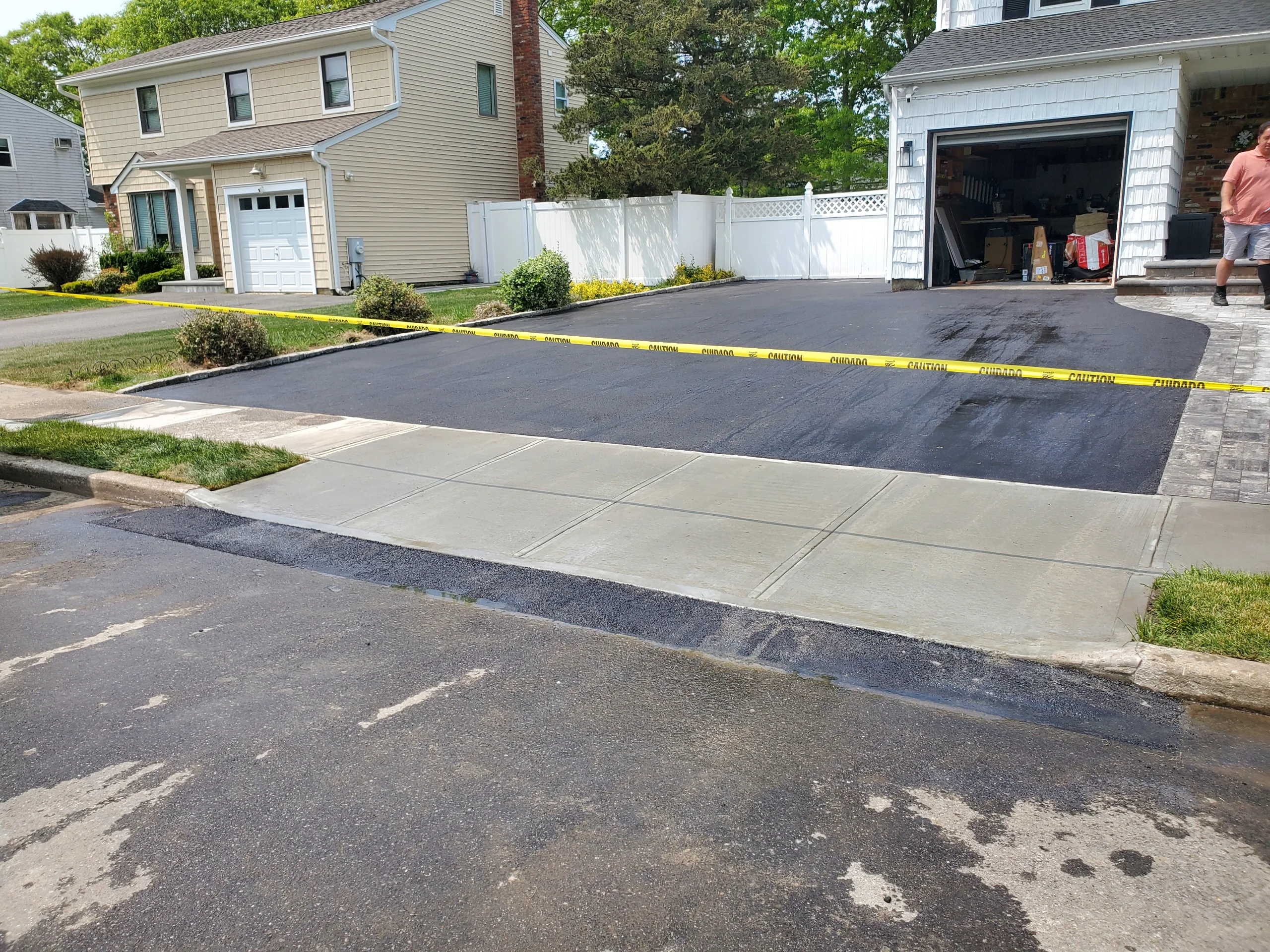
When concrete work is done right here, it solves problems instead of creating them. Water flows away from your foundation during nor’easters. Your driveway apron handles heavy vehicles without rutting. Sidewalks stay level and safe. Curbs hold their line.
The difference isn’t just how it looks on day one. It’s how it performs five years later when your neighbor is calling for repairs and you’re not. That’s what proper base preparation, heavy machinery grading, and local expertise actually buy you. A permanent upgrade that increases your property value in Suffolk County’s competitive market, not a temporary fix that becomes your next headache.
We’ve been handling concrete and masonry work across Suffolk County long enough to see what lasts and what doesn’t. We’re based in Smithtown, fully licensed and insured, and we use the same heavy equipment and GPS-guided graders that commercial contractors rely on because precision matters in Copiague’s challenging environment.
We’re not a crew that shows up with hand tools and good intentions. We bring compactors, graders, and the technical knowledge to handle Long Island’s high water table and sandy soil. Every job gets engineered for drainage first, because that’s what determines whether your concrete investment lasts three years or thirty.
You’ll work with people who understand Suffolk County’s permit requirements, building codes, and the specific installation techniques that prevent the failures you’ve probably already seen around your neighborhood. We show up when we say we will, explain what needs to happen and why, and complete the work without surprises.

First, we assess your property’s drainage patterns and soil conditions. This isn’t a quick walk-around. We’re looking at grades, water flow during heavy rain, and any existing issues that need addressing before new concrete goes down. You’ll get a detailed quote that explains what we’re doing and why each step matters for your specific property.
Before any concrete gets poured, we handle the grading and base preparation with heavy machinery. For Belgian block driveway aprons, that means three layers: excavation, a reinforced concrete base, and proper compaction. For sidewalk repair or concrete curb installation, we’re ensuring the subgrade is stable and properly sloped. This is where most contractors cut corners, and it’s why their work fails.
Once the base is right, we move to installation. Concrete gets poured, finished, and cured according to the specifications your property needs. For masonry flatwork, we’re setting materials with the proper joints and drainage considerations. You’ll see professional-grade results because we’re using professional-grade processes, not shortcuts that save us time but cost you money later.

Ready to get started?
Every concrete project starts with local concrete grading and prep work that accounts for Copiague’s specific challenges. That means addressing the high water table issues common across Long Island and engineering drainage solutions that prevent the water buildup that destroys 90% of concrete and masonry work during coastal storms.
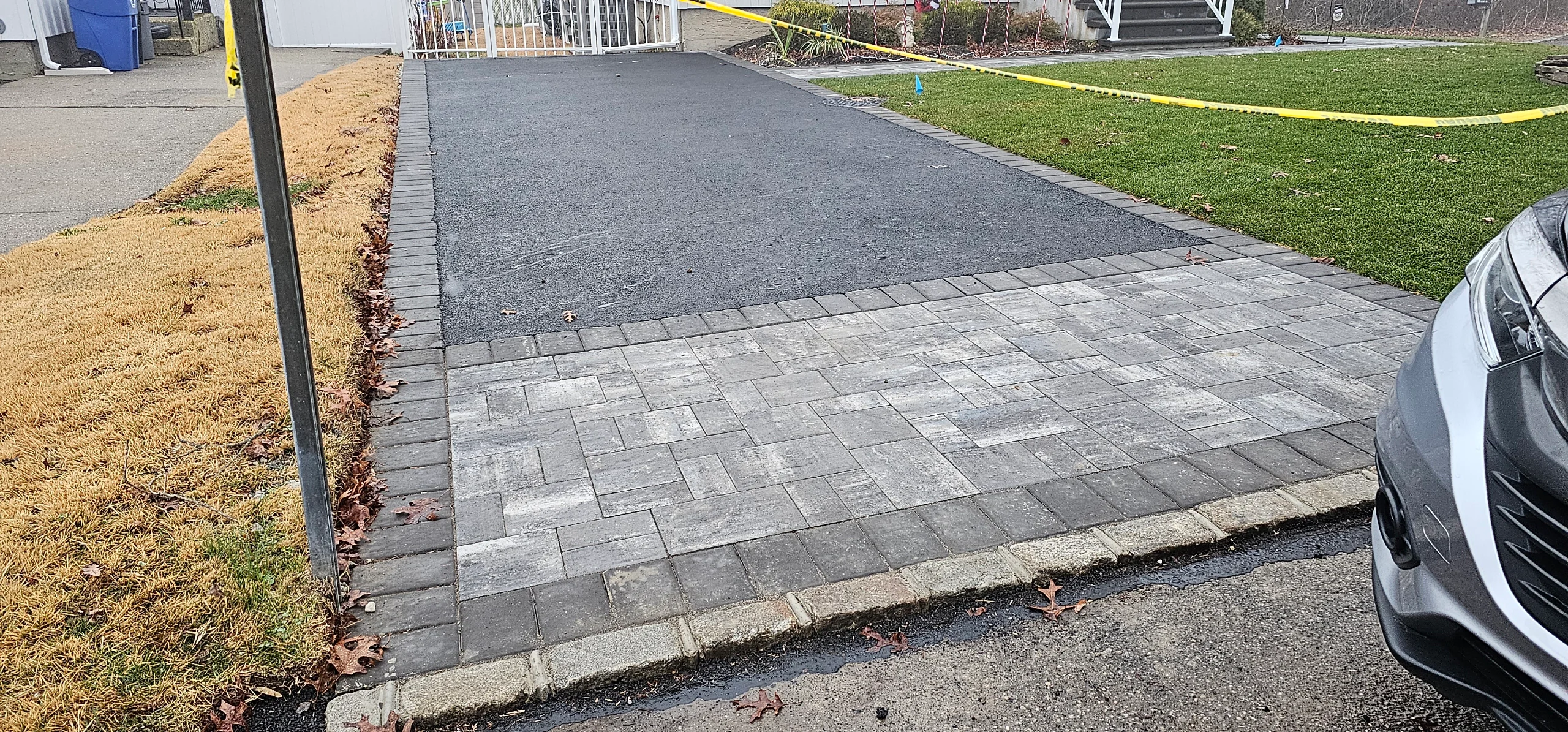
For Belgian block driveway aprons, you’re getting installation that’s built like commercial work, not residential shortcuts. Three-layer construction with reinforced concrete base, proper compaction, and hard joints that handle vehicle weight without shifting or rutting. These aprons are weather-resistant, stain-resistant, and erosion-resistant because the materials and installation method are both designed for durability.
Sidewalk repair and concrete curb installation get the same attention to structural integrity. We’re not patching problems—we’re fixing the underlying issues that caused them. Whether that’s poor drainage, inadequate base preparation, or settling from Suffolk County’s sandy soil, we address it so the repair actually lasts. Your property gets the curb appeal upgrade that increases home value in Copiague’s neighborhoods, plus the drainage performance that protects your foundation and landscaping during every storm season.
Properly installed concrete should last 25 to 30 years in Copiague, even with Long Island’s freeze-thaw cycles and coastal moisture. The key word is “properly installed.” Most concrete failures you see around Suffolk County happen within the first five years, and they’re almost always caused by poor drainage or inadequate base preparation, not the concrete itself.
When contractors skip the grading work or don’t account for our high water table, water gets trapped under the concrete. During winter, that water freezes, expands, and creates pressure that cracks the surface. During heavy rain, it washes away the base material and causes settling. Neither problem has anything to do with concrete quality and everything to do with installation shortcuts.
We handle the base preparation with heavy machinery and engineer drainage into every project because that’s what determines longevity here. Your concrete work should outlast your mortgage, not need replacement before your landscaping matures.
Belgian block aprons are significantly more durable than poured concrete or asphalt aprons, but only when they’re installed correctly. The material itself is incredibly weather-resistant, doesn’t crack like concrete, and won’t develop the ruts and deterioration you see with asphalt. They’re also stain-resistant and handle the freeze-thaw cycles we get in Copiague without breaking down.
The installation method is what separates quality work from the aprons that fail within a few years. Belgian blocks don’t interlock like pavers, so they need a solid reinforced concrete base and hard joints to handle vehicle traffic. Many contractors install them like cast pavers with sand joints, and those installations go bad quickly—rutting, shifting, and requiring expensive repairs.
When we install Belgian block aprons, you’re getting three-layer construction: proper excavation, a reinforced concrete base that’s engineered for heavy loads, and hard joints that lock everything in place. That’s why these aprons can last a lifetime with minimal maintenance while adding substantial curb appeal and property value to your Copiague home.
Most concrete and masonry work in Copiague requires permits from Suffolk County, especially if the project involves grading changes, drainage modifications, or work near property lines. Sidewalk repair, driveway aprons, and concrete curb installation typically need permits to ensure the work meets local building codes and doesn’t create drainage problems for neighboring properties.
The permit process exists for good reasons. Suffolk County has specific requirements for how concrete work must handle stormwater runoff, especially in areas with high water tables or proximity to wetlands. Inspectors verify that the base preparation, grading, and drainage solutions meet code before the concrete gets poured. This protects you from future issues and protects your neighbors from water problems caused by improper installation.
We handle the permit applications and inspections as part of our service. You don’t need to visit town offices or figure out what documentation Suffolk County requires. We know the local codes, we know what inspectors look for, and we schedule everything to keep your project moving without delays.
Concrete cracks in Copiague for three main reasons: poor drainage, inadequate base preparation, or improper curing. The freeze-thaw cycles we experience on Long Island make all three issues worse. Water gets into small cracks, freezes during winter, expands, and turns minor problems into major structural failures within a season or two.
Poor drainage is the biggest culprit. When water pools on or under concrete, it has nowhere to go. During storms, that water saturates the base material and causes settling. During winter, it freezes and creates pressure from below. Either way, cracks develop and spread quickly. That’s why we engineer drainage into every project before concrete gets poured—proper grading and base preparation prevent the water issues that cause most cracking.
We also use control joints strategically placed to manage the natural expansion and contraction concrete experiences with temperature changes. These joints give the concrete predetermined places to crack in straight lines that don’t affect structural integrity or appearance. Combined with proper curing time and techniques, this approach gives you concrete work that handles Suffolk County’s climate without the cracking problems you’ve probably seen on other properties.
Concrete costs in Copiague vary significantly based on the scope of work, site conditions, and whether drainage issues need addressing before installation. A straightforward sidewalk repair might run a few thousand dollars, while a Belgian block driveway apron with proper base preparation and drainage engineering can cost considerably more. The real question isn’t what concrete costs—it’s what you’re actually getting for that investment.
Cheap concrete work costs you more in the long run. Contractors who underbid projects skip the grading, use inadequate base material, or ignore drainage problems that will cause failures within a few years. You’ll pay less upfront and then pay again for repairs, and probably again for full replacement when the repairs don’t hold. That’s not saving money—that’s spending it twice on the same problem.
When we quote a project, you’re seeing the cost of work that lasts. Heavy machinery for proper grading, adequate base preparation, drainage engineering, and installation techniques that account for Long Island’s challenging conditions. We’re not the cheapest option, and that’s actually good news for your property value and your peace of mind. You’re investing in concrete work that’s still performing decades from now, not calling for repairs in three years.
Whether concrete needs repair or replacement depends on what’s causing the problem and how far the damage has progressed. Surface cracks, minor settling, or isolated sections of damage can often be repaired effectively if the underlying base is still sound. But if the base has failed, drainage issues are causing ongoing problems, or the damage is extensive, replacement is usually the smarter investment.
Here’s what we look at during assessment: Is water pooling on or around the concrete? Are there large cracks or significant settling? Is the base material still providing adequate support? If drainage problems exist or the base has deteriorated, repairs become temporary fixes that don’t address the real issue. You’ll spend money on patches that fail within a year or two because the conditions that caused the original damage are still present.
When replacement makes sense, we handle it as a complete solution. That means fixing the drainage issues, properly preparing the base, and installing new concrete that’s engineered for your property’s specific conditions. Sometimes that costs more upfront than repairs, but it’s the difference between solving the problem once and dealing with it repeatedly. We’ll give you an honest assessment of what your concrete actually needs, not just what generates the quickest sale.
Other Services we provide in Copiague