Suffolk County's unique soil composition—from sandy loams to coastal salt exposure—determines whether your landscaping thrives or struggles year after year.
Share:

Summary:
Your lawn looks tired by August. Plants you installed last spring are already struggling. Water pools in spots that should drain fine, or disappears so fast nothing stays hydrated. If you’re dealing with any of these problems in Suffolk County, the issue probably starts below the surface. Long Island’s soil doesn’t behave like soil in other regions, and generic landscaping advice won’t fix what’s happening in your yard. You need to understand what you’re actually working with—sandy composition that drains fast, coastal salt that burns foliage, and a water table that rises and falls with every storm. Let’s start with what makes this soil different.
Most residential properties in Suffolk County sit on sandy loams that drain quickly—sometimes too quickly for your grass to absorb nutrients before they wash through. Haven Loam is the most common soil type here: deep, well-drained, and responsive to organic matter when you add it. But without that organic matter, you’re working with soil that lets water and fertilizer disappear faster than plants can use them.
About 43% of Long Island sits on Carver and Plymouth series soils, which are coarse sand. Another 15% is Riverhead sandy loam. Both drain fast. That sounds good until you realize nutrients leach through before grass roots can grab them, and organic matter breaks down rapidly in summer heat.

Sandy soil creates a specific set of problems that homeowners notice but don’t always connect to soil composition. Your fertilizer applications don’t last as long as the bag says they should. Grass greens up for a few weeks, then fades again. You’re watering more frequently than neighbors in other regions, but plants still look stressed.
This happens because sand particles are large compared to silt or clay. Water moves through the spaces between particles quickly, carrying dissolved nutrients with it. In heavier soils, those nutrients stick around longer. Here, they’re gone. You can throw more fertilizer at the problem, but that just means more nutrients leaching into groundwater while your grass stays hungry.
The solution isn’t more fertilizer—it’s changing how the soil holds onto what you give it. Organic matter acts like a sponge. Compost, grass clippings left on the lawn, and organic amendments all add carbon to the soil. That carbon feeds bacteria and fungi that break down nutrients and make them available to grass roots over time instead of washing away immediately.
Core aeration helps too. Most Suffolk County lawns benefit from aeration at least every 2-3 years. Some need it annually, especially in high-traffic areas or spots with clay content that compacts easily. Aeration creates channels for air, water, and roots to move, and it gives you an opportunity to work organic matter into the soil profile instead of just sitting on top.
The key is understanding that sandy soil isn’t bad—it just needs help retaining what you add to it. Once you build up organic matter content, this soil drains well without draining too fast, and plants can actually use the nutrients you’re paying for.
Here’s where Suffolk County gets complicated. You’ve got sandy soil that drains fast, but you also have a high water table that fluctuates based on rainfall and proximity to the coast. During dry periods, the water table drops. After heavy rain, it rises—sometimes dramatically. When groundwater rises to meet your landscape, drainage stops working the way it should.
Clay pockets make this worse. Suffolk County isn’t all sand. You’ve got areas with clay-heavy soil that drains slowly and holds water for extended periods. Clay particles pack together tightly. After heavy rain, clay soil can stay saturated for days or even weeks. During that time, your landscape is essentially sitting in water instead of draining properly.
Water pooling in your yard after rain isn’t always a surface problem. Sometimes it’s the water table pushing up from below. Sometimes it’s a clay pocket that’s holding water while the sandy soil around it drains fine. And sometimes it’s both—high groundwater meeting clay soil, creating conditions where water has nowhere to go.
You’ll see this show up as soggy spots that never fully dry out, grass that stays wet and develops fungal problems, or areas where water sits for days after storms while the rest of your property looks fine. These aren’t problems you can fix with surface drainage alone. You need to understand what’s happening below ground.
French drains work well in Suffolk County because they intercept groundwater before it reaches the surface. Unlike surface drains that only address water after it’s already causing problems, French drains catch water as it moves through the soil. They’re particularly effective in areas where sandy soil meets clay pockets, or where the water table sits close to the surface during wet periods.
Proper grading matters too. Long Island’s relatively flat topography means water doesn’t naturally flow away from properties like it would in hillier areas. You have to create that flow through strategic grading, and you have to account for both surface runoff and subsurface water movement. Properties developed during the severe drought of the 1960s—when water tables were 5-10 feet lower than today—often have grading that doesn’t work anymore because groundwater levels have changed.
Understanding your specific soil conditions and water table behavior determines which drainage solutions actually work. Generic approaches fail here because they don’t account for how sandy soil, clay pockets, and fluctuating groundwater interact on Long Island properties.
Want live answers?
Connect with a Rolling Hills Property Services Inc expert for fast, friendly support.
If your property sits within a few miles of Long Island Sound or the Atlantic Ocean, you’re dealing with an additional challenge that inland properties don’t face. Salt spray rides on coastal winds, landing on foliage and accumulating in soil. When humidity rises or dew forms, that salt dissolves and burns plant tissue. Over time, salt in the soil interferes with water uptake, creating drought-like conditions even when soil appears wet.
You’ll recognize salt damage by leaves that turn brown on the windward side, uneven growth with plants shorter toward the ocean, or thin turf near open exposures despite regular care. Many traditional garden plants struggle in these conditions, not because you’re doing anything wrong, but because they weren’t designed to handle salt-laden air.

Coastal properties need plant selection that accounts for both sandy soil and salt exposure. Generic landscaping recommendations don’t work here because most plants can’t handle the combination of quick-draining soil and salt stress. You need species that tolerate both.
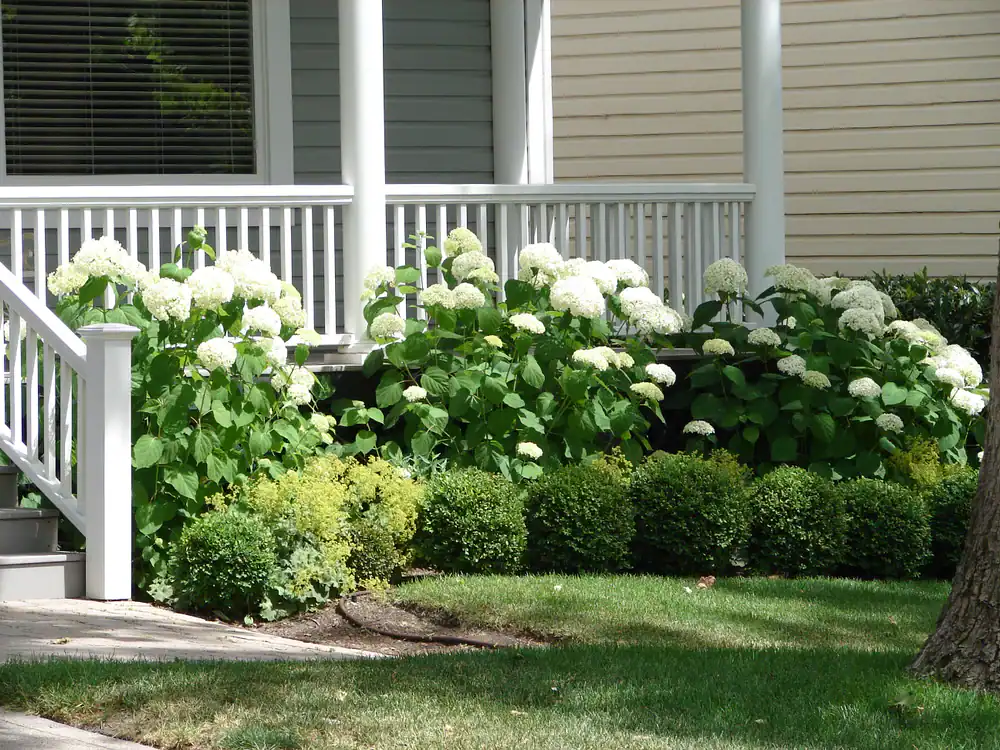
Native and salt-tolerant plants perform best. Beach grass, bayberry, hydrangeas, and rosa rugosa all handle salt spray without permanent damage. These species have evolved to thrive in coastal environments, which means they’re adapted to exactly the conditions your property faces. They require less maintenance than non-native alternatives and establish stronger root systems that help stabilize sandy soil.
For lawns, cool-season grasses work best in Suffolk County. Tall fescue, Kentucky bluegrass, and perennial ryegrass all perform well here because they love moderate temperatures and can handle cold winters. Tall fescue is particularly valuable for coastal properties because it’s drought-resistant and adapts to varying soil conditions—important when you’re dealing with sandy soil that drains fast.
These grasses grow most actively in spring and fall when temperatures sit between 60 and 75 degrees. Summer is the challenge. When temperatures push into the 80s and 90s, cool-season grasses go semi-dormant. They slow down, stop growing as fast, and turn a duller green. That’s normal, not a problem to fix with heavy fertilizer.
Plant spacing and layout matter too. Creating windbreaks with salt-tolerant trees and shrubs protects less hardy plants behind them. This layered approach lets you use a wider variety of species by reducing direct salt exposure on plants that can’t handle it. Properties that try to plant everything in full coastal exposure end up replacing struggling plants every few years.
Soil amendment becomes even more critical on coastal properties. Sandy soil already drains fast and leaches nutrients quickly. Add salt stress, and plants need every advantage you can give them. Incorporating compost into planting holes, mulching to retain moisture, and regular organic matter additions help plants establish and survive in conditions that would kill them without soil support.
Improving Suffolk County soil isn’t about replacing it—it’s about making what you have work better. Compost is the most effective amendment for sandy soil because it increases nutrient retention without changing drainage characteristics. Think of compost as enriching your existing soil rather than replacing it.
For new garden beds, spread a 3-4 inch layer of compost over the area you intend to plant, then mix it into the top 6-8 inches of soil. This creates a zone where roots can access nutrients and moisture that sandy soil alone wouldn’t hold. For existing beds, apply a quarter-inch to 1-inch layer of compost to the surface each year. This gradually builds organic matter content over time.
Lawns benefit from different application methods. Topdressing with a thin layer of compost after aeration works well because the compost falls into the holes created by aeration, getting it into the soil profile where it does the most good. Leaving grass clippings on the lawn adds organic matter with every mowing—those clippings break down and feed soil organisms that make nutrients available to grass roots.
Suffolk County soils tend to be slightly acidic, which means occasional lime applications can balance pH. But don’t guess. A basic soil test every couple of years tells you what’s actually missing. Then you can add what’s needed instead of throwing amendments at the problem and hoping something works.
Timing matters too. Soil temperatures need to consistently hit 55°F before grass can absorb nutrients effectively. In Suffolk County, that’s usually mid-April. Applying fertilizer or amendments too early wastes product because dormant grass can’t use it, and unused nutrients leach through sandy soil into groundwater. Timing applications for when grass is actively growing means plants actually benefit from what you’re adding.
The goal isn’t creating perfect soil—it’s creating soil that supports the plants you want to grow. Sandy soil with adequate organic matter drains well without draining too fast, holds nutrients long enough for plants to use them, and supports the microbial activity that makes healthy landscapes possible.
Suffolk County’s soil won’t behave like soil in other regions, and that’s not a problem once you understand what you’re working with. Sandy composition that drains quickly needs organic matter to retain nutrients. Coastal salt exposure requires plant selection that can handle the stress. Water table fluctuations demand drainage solutions designed for Long Island’s specific conditions.
The key is working with these conditions instead of fighting them. Choose plants adapted to sandy soil and salt spray. Build organic matter content gradually through compost and proper lawn care. Address drainage problems by understanding whether you’re dealing with surface water, groundwater, or both.
If you’re tired of watching your landscape struggle despite your best efforts, we can help. At Rolling Hills Property Services Inc., we bring local expertise to every project, with solutions designed specifically for Long Island’s environmental challenges.
Article details:
Share:
Continue learning: