
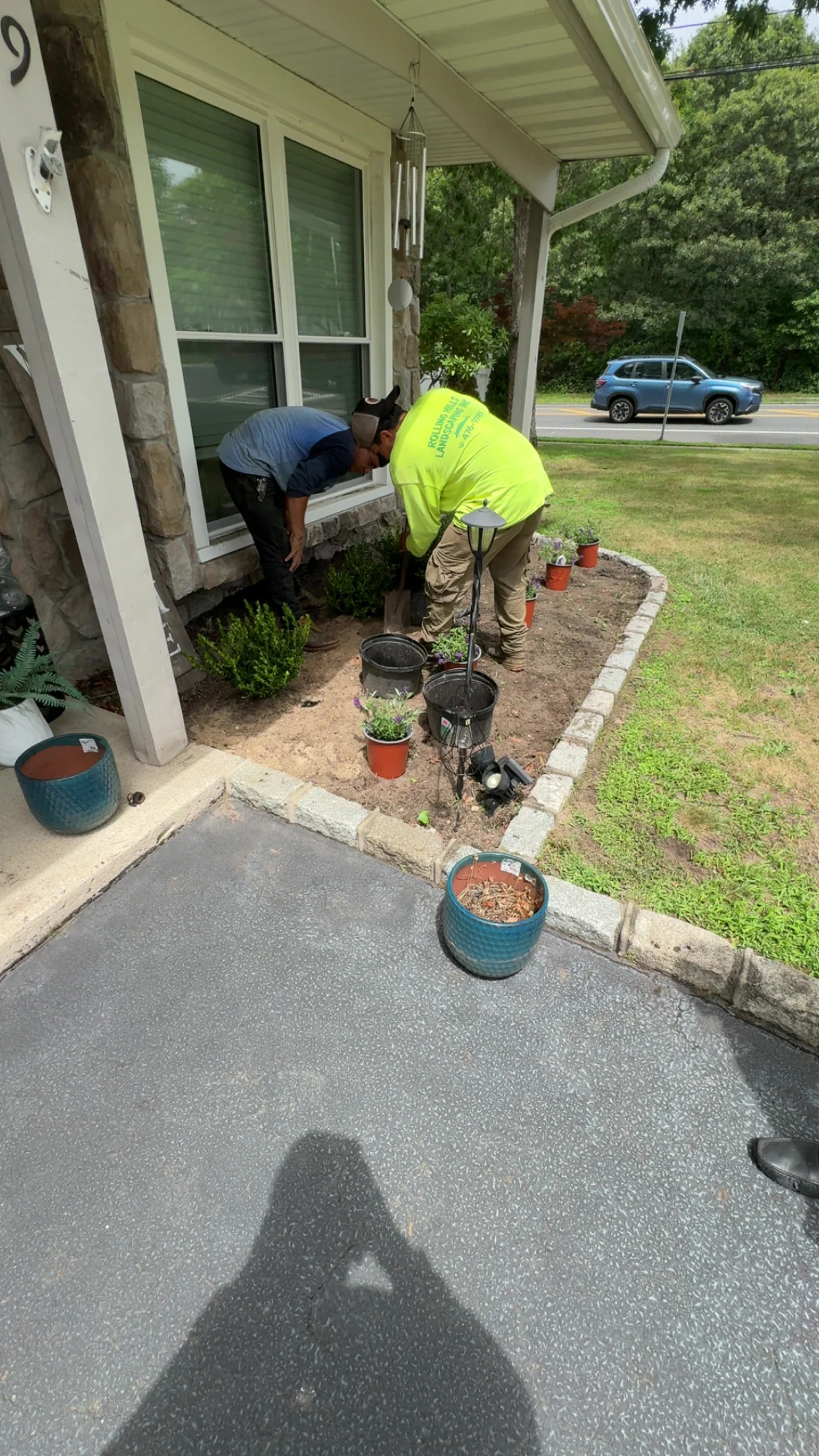
Hear from Our Customers

You’re not spending weekends on your hands and knees anymore. Your garden beds stay clean through the season, not just for a week after you pull everything yourself.
The weeds that keep coming back—crabgrass in the sunny spots, clover spreading through your lawn, dandelions popping up after every rain—they’re gone. Not just cut back or covered up, but removed at the root so they don’t regenerate in two weeks.
Your perennials and ornamental plants stay protected because we’re not spraying chemicals that drift onto the flowers you actually want. Manual weed removal means precision. We pull what doesn’t belong and leave everything else untouched.
Stony Brook’s dense suburban garden beds and sandy loam soil create the perfect environment for aggressive weed growth, especially when oak shade and summer heat stress your lawn. When turf thins out, weeds move in fast. Our approach keeps that from happening by addressing the problem before it spreads and maintaining the density your landscape needs to resist future invasions.
Rolling Hills Property Services Inc is based in Smithtown and we’ve been handling residential weed control and landscape maintenance across Suffolk County for years. We’re fully licensed and insured, and we know how Long Island’s acidic soil, North Shore breezes, and seasonal weather patterns affect your property.
You’re working with a local team that understands the specific challenges of maintaining large garden beds on properties over an acre. We’ve seen what happens when weeds take over established landscaping, and we know how to prevent it.
Our work is straightforward. We show up on time, communicate clearly about what needs to be done, and complete the job without damaging your plants or leaving a mess behind. You get reliable service from people who live and work in the same community you do.

We start with an assessment of your garden beds to identify what’s growing where and what needs to be removed. Not every green plant is a weed, and we’re careful to distinguish between invasive growth and the perennials or ground cover you’re trying to maintain.
The actual removal happens by hand. We pull weeds when they’re young—before they flower and drop seeds—and we remove the entire root system. For weeds with deep taproots like dandelions, we use specialized tools that extract the root without breaking it off underground. If the root stays in the soil, the weed comes back. That’s why manual removal works better than surface cutting.
After pulling, we clear away all the removed plant material so seeds don’t spread across your beds. If you’ve requested seasonal mulching, we apply a fresh layer to suppress future germination and retain soil moisture. The timing matters too—we schedule services after rain when the soil is loose, making removal easier and more complete.
For properties dealing with recurring weed pressure, we recommend a layered approach that combines hand-pulling with pre-emergent treatments in early spring and targeted post-emergent applications later in the season. That’s a year-round strategy, not a one-time fix.

Ready to get started?
Every service includes complete manual weed removal from your garden beds, walkways, and landscape borders. We’re pulling the roots, not just clipping tops. You also get debris removal—we haul away everything we pull so your property is clean when we leave.
We protect your existing plants throughout the process. If you’ve got hostas under oak trees or ornamental grasses along your driveway, we work around them carefully. There’s no collateral damage to the landscaping you want to keep.
Stony Brook properties often feature large, established garden beds with dense plantings. That’s the aesthetic here—layered, full, and green. But it also means weeds hide easily and spread quickly if they’re not managed. We focus on those high-density areas where DIY weeding becomes overwhelming, especially for aging property owners who can’t physically keep up with the workload.
If your lawn is thinning in spots and inviting crabgrass or clover, we’ll talk through options for improving turf density. A thick, healthy lawn is your best defense against weeds long-term. We handle the immediate problem and help you understand how to prevent it from coming back.

Most properties benefit from weeding every three to four weeks during the growing season, which runs from late April through September on Long Island. That frequency keeps weeds from establishing deep root systems and prevents them from flowering and spreading seeds across your beds.
If your property has a history of heavy weed pressure—especially crabgrass, clover, or nutsedge—you might need service every two to three weeks in peak summer months. Weeds grow fast when it’s hot and wet, and Stony Brook’s summer conditions create ideal growth windows.
For properties with well-maintained landscapes and minimal weed issues, monthly service might be enough. It depends on your soil, sun exposure, and how much mulch or ground cover you have suppressing germination. We’ll assess your property and recommend a schedule that makes sense for your specific situation, not a one-size-fits-all plan.
No, not when it’s done correctly. Manual weed removal is actually safer for your plants than chemical applications because there’s no drift, no root absorption, and no risk of burning foliage. We’re physically targeting the weeds and leaving everything else alone.
The key is knowing what to pull and what to leave. Our team is trained to identify common Long Island perennials, ornamental grasses, and ground covers so we’re not accidentally removing plants you want. If there’s any uncertainty about a plant, we ask before pulling it.
Hand-pulling also allows us to work in tight spaces where plants are close together—something you can’t do safely with herbicides. If you’ve got a crowded garden bed with hostas, ferns, and flowering perennials all mixed in, manual removal is the only method that won’t harm your existing landscape investment.
Crabgrass is the biggest issue in summer, especially in thin or sunny areas of your lawn. It’s a warm-season annual that spreads aggressively once it germinates, and it thrives in the sandy loam soil common throughout Stony Brook. You’ll see it explode in July and August if it’s not controlled early.
Dandelions, white clover, and chickweed are perennial problems in garden beds and lawns. Dandelions have deep taproots that regenerate if you don’t pull the entire root. Clover spreads through runners and fills in bare spots quickly. Chickweed forms dense mats that smother other plants if left unchecked.
You’ll also see nutsedge in poorly drained areas, ground ivy in shaded spots under trees, and broadleaf plantain along walkways and driveways. Each weed has different growth habits and requires different removal techniques. That’s why experience matters—knowing how to pull each type completely, without leaving root fragments that regrow, is what separates effective weeding from wasted effort.
Early spring is ideal—late March or early April before weeds start their aggressive growth phase. If you can remove weeds while they’re small and before they flower, you’re preventing thousands of seeds from spreading across your property later in the season.
Early summer is the second-best window, especially after rainfall when soil is moist and loose. Weeds pull out more completely when the ground isn’t dry and compacted. If you wait until mid-summer when everything is established and seeding, you’re fighting an uphill battle.
That said, it’s never too late to start. Even if your garden beds are already overgrown, removing weeds now prevents the problem from getting worse and gives your desirable plants room to recover. We just recommend starting a regular maintenance schedule rather than waiting for weeds to take over before calling. Prevention is easier and less expensive than restoration.
Our primary method is manual removal—physically pulling weeds by hand or with specialized tools. That’s the safest approach for properties with established perennials, vegetable gardens, or areas where pets and children play regularly.
For larger properties or situations where hand-pulling alone isn’t practical, we may recommend targeted herbicide applications as part of a layered weed control strategy. That typically means pre-emergent treatments in early spring to prevent crabgrass germination and selective post-emergent treatments for specific problem areas later in the season.
If we do use any chemical treatments, we’re transparent about what’s being applied, where, and why. We’re licensed and trained in proper application techniques, and we always prioritize the health of your existing landscape. Many clients prefer a hybrid approach—hand-pulling in garden beds and around ornamentals, with carefully timed treatments for lawn weeds. We’ll work with your preferences and your property’s specific needs.
Cost depends on property size, how much garden bed area you have, and how severe the weed problem is. For a typical Stony Brook property with a half-acre to full acre of landscaping, expect to pay between $150 and $400 per visit for comprehensive garden bed weeding and cleanup.
Larger properties with extensive plantings or heavy weed infestations will cost more because the work takes longer. If we’re spending four hours hand-pulling weeds from dense garden beds, that’s reflected in the price. Smaller properties with minimal weed pressure and well-maintained beds will be on the lower end.
We provide transparent pricing after assessing your property. You’ll know exactly what the service costs before we start, and there are no surprise charges. For clients who schedule regular maintenance—every three to four weeks through the growing season—we can often offer better per-visit pricing than one-time cleanups. Consistent maintenance is less labor-intensive than letting weeds take over and then trying to reclaim your beds.
Other Services we provide in Stony Brook