
Hear from Our Customers

You’ve probably seen concrete work fail after just a few winters. Cracks spreading across driveways. Sidewalk slabs tilting and sinking. Belgian block edging that shifts out of place every spring.
That happens when contractors skip the engineering that matters. In Stony Brook, your property sits on sandy soil that drains fast but shifts easily. Water moves through it during nor’easters and heavy rain. Without proper grading, base preparation, and drainage planning, that water destroys concrete from beneath.
Our concrete and masonry work starts below the surface. We use heavy machinery to grade your site for Stony Brook’s specific drainage patterns. We install state-approved recycled concrete aggregate that provides the compaction stability sandy soil demands. We add edge restraints so pavers and curbing stay locked in place as the ground shifts seasonally.
The difference shows up years later. Your driveway apron still sits level. Your sidewalk hasn’t cracked or heaved. Your Belgian block edging hasn’t spread or sunk. You’re not calling contractors back for repairs that shouldn’t be necessary.
We’ve been handling property maintenance across Suffolk County for years. We’re based in Smithtown, and we’ve worked in enough Stony Brook properties to understand what your neighborhood demands.
Your home value sits well above New York averages. You’re investing in a property worth protecting. That means your concrete work needs to match the quality of your neighborhood, and it needs to survive Long Island’s climate without constant repairs.
We’re fully licensed and insured. We pull proper permits. We use manufacturer-certified installation methods from companies like Cambridge, Techo-Bloc, and Unilock. Those certifications aren’t just paperwork—they mean we’ve been trained on the techniques that prevent the failures you see in poorly installed work.
You’ll get transparent pricing before we start. You’ll get constant updates while we’re working. And you’ll get concrete and masonry flatwork that increases your property value instead of becoming a maintenance headache.

We start by assessing your property’s drainage. That’s not optional in Stony Brook—it’s the difference between work that lasts three years and work that lasts thirty. We look at how water moves across your site during heavy rain, where it pools, and where it needs to go.
Next comes excavation and grading. We remove existing materials down to stable soil. Then we use heavy machinery to grade the base so water flows away from your foundation and doesn’t collect under your concrete. This step takes time, but it’s what prevents the settling and cracking that destroy driveways within a few seasons.
We install a proper base using recycled concrete aggregate that’s 95% concrete—not the cheap fill mix that’s mostly dirt and clay. This base compacts solidly in sandy soil and provides the drainage your property needs. For pavers and Belgian block work, we add edge restraints that lock everything in place as the ground shifts.
Then we pour or install your concrete, curbing, or masonry flatwork. We work in sections, allowing proper curing time. We don’t rush the process because shortcuts here become your expensive repairs later.
You’ll see the finished surface—smooth concrete, level pavers, or precisely placed Belgian block. But the real work is underneath, engineered for Suffolk County’s soil and climate.

Ready to get started?
Concrete curb installation gives your driveway clean edges that define your property and improve drainage. In Stony Brook’s high-end neighborhoods, that detail matters for curb appeal. Properly installed curbing also prevents your driveway edges from crumbling and spreading over time.
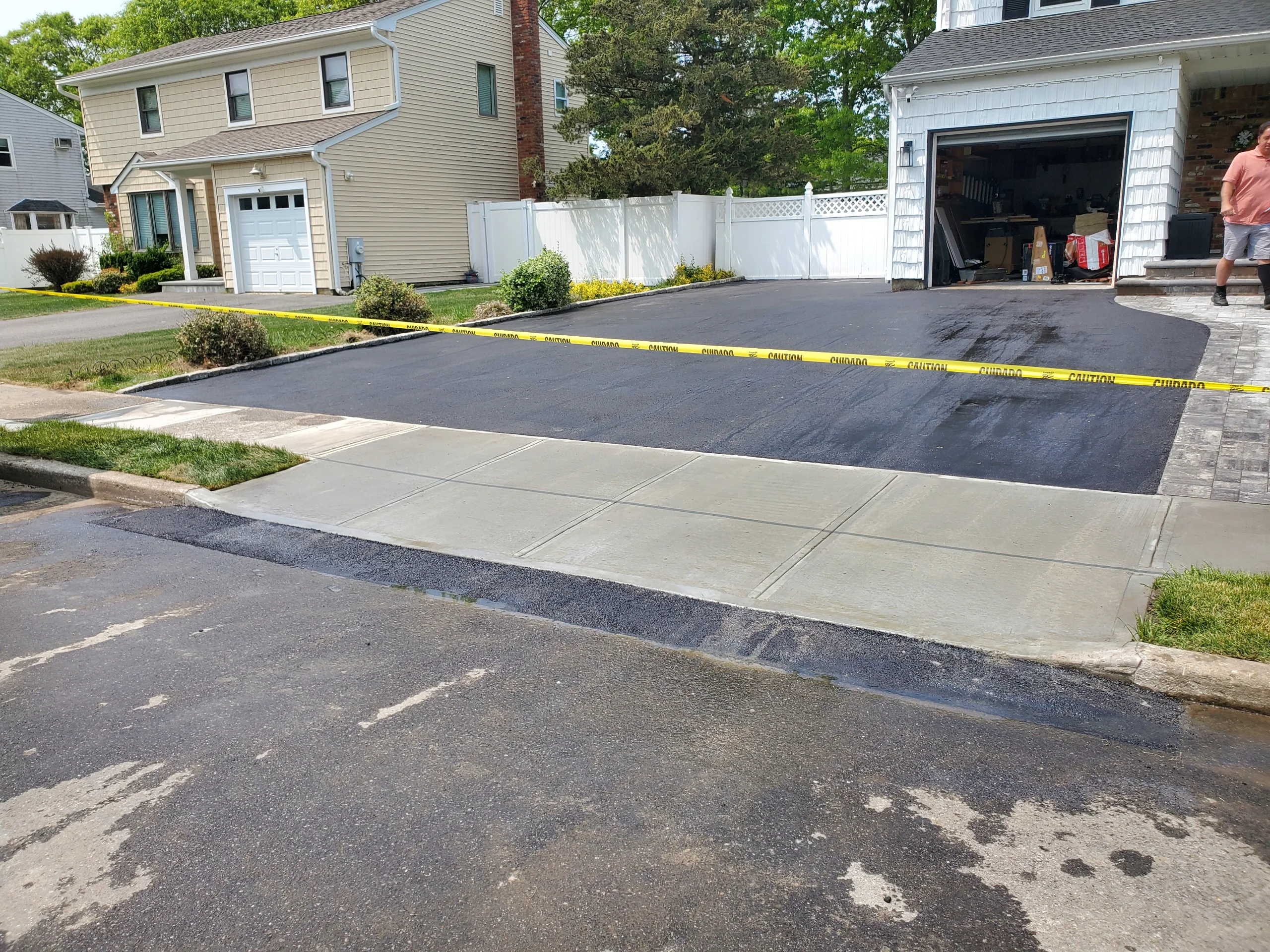
Belgian block driveway aprons create a transition between your driveway and the street that handles heavy vehicle weight without cracking. These installations cost between nine and eleven dollars per linear foot, and they add a finished look that increases property value. We set each block on a compacted base with proper drainage underneath.
Sidewalk repair addresses the cracking, settling, and heaving that happens when concrete wasn’t installed correctly the first time. We don’t just patch the surface—we fix the base issues causing the problem. That means excavating failed sections, regrading for drainage, and pouring new concrete that matches your existing work.
Masonry flatwork covers everything from patio installations to walkway construction. Standard concrete pours run between four and six dollars per square foot for finished work. That includes proper base preparation, reinforcement, and finishing techniques that prevent the surface damage Long Island’s freeze-thaw cycles cause.
Long Island gets up to 45 inches of annual rainfall. Your concrete work needs to handle that water without failing. Every service we provide includes the drainage planning and base preparation that makes the difference between permanent improvements and expensive repairs.
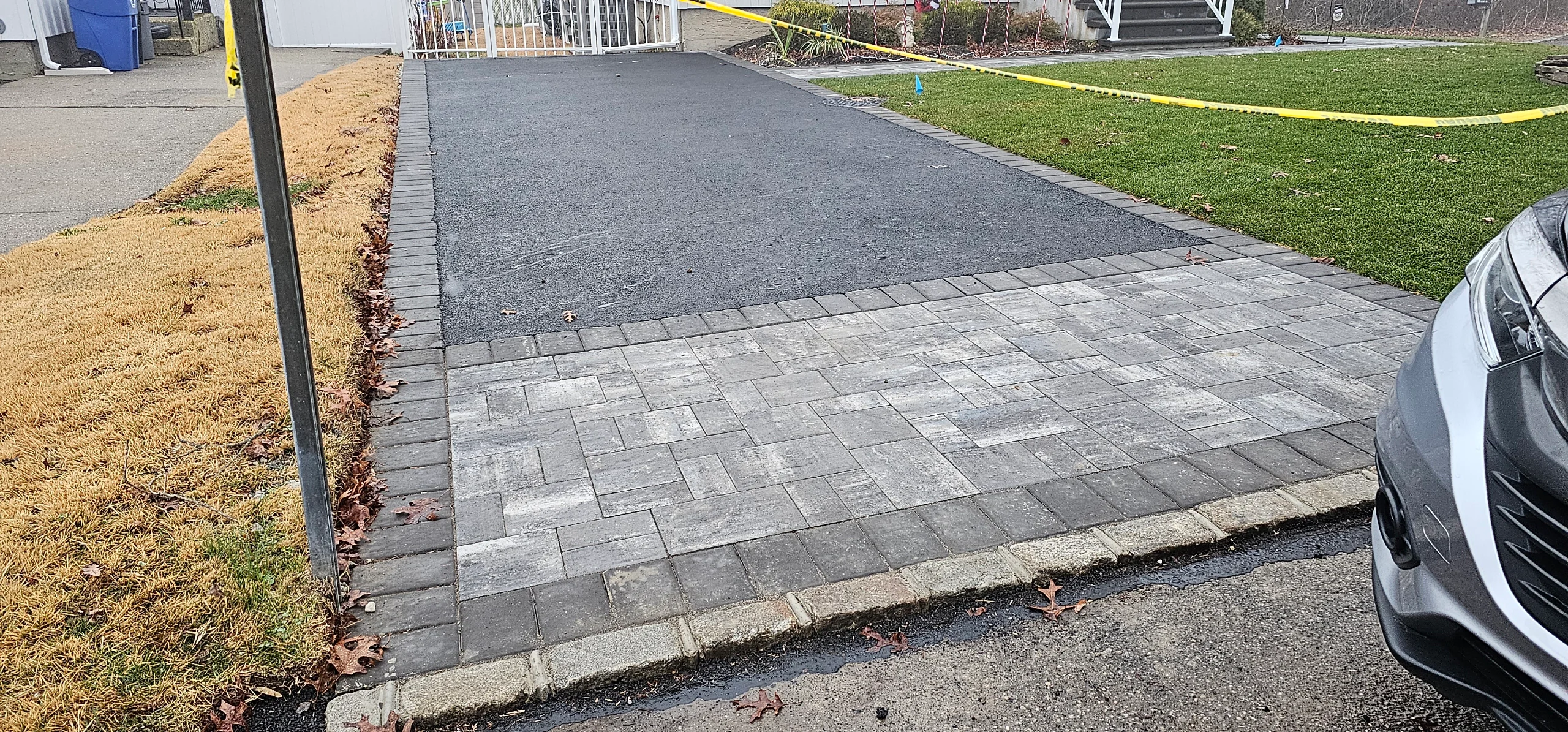
Properly installed concrete should last 30 years or more in Stony Brook. That lifespan depends entirely on installation quality, not just the concrete itself.
The concrete you see failing after five or ten years wasn’t engineered for Long Island’s conditions. Water got into cracks, froze, expanded, and destroyed the surface from within. Or the base wasn’t compacted correctly, so sections settled unevenly as sandy soil shifted underneath.
We engineer every installation for Suffolk County’s specific challenges. That means grading for drainage so water doesn’t pool under your concrete. It means using proper base materials that compact solidly in sandy soil. It means adding reinforcement and control joints that prevent cracking as the ground moves through freeze-thaw cycles. Your concrete work should be a permanent improvement, not something you’re replacing in a few years.
Belgian block aprons handle heavy vehicle weight better than standard concrete edges. They also add a finished look that increases property value in Stony Brook’s market.
The transition between your driveway and the street takes constant stress from vehicles entering and leaving. Standard concrete edges crack and crumble under that pressure, especially when water gets underneath and the base shifts. Belgian block distributes that weight across individual stones set on a compacted base.
Installation costs run nine to eleven dollars per linear foot. That’s higher than standard curbing, but you’re getting a detail that lasts decades and improves your home’s curb appeal. In neighborhoods where the median home value exceeds $450,000, those details matter. Buyers notice quality installations, and appraisers factor them into property valuations.
Poor drainage destroys more concrete work in Suffolk County than any other factor. Sandy soil drains fast, but it also shifts easily when water moves through it.
Contractors who skip proper base preparation and drainage planning create concrete that looks fine initially. Then water starts pooling underneath during heavy rain. The base material shifts or washes away. The concrete settles unevenly, cracks form, and those cracks let in more water that freezes and expands during winter.
We see this constantly in Stony Brook. DIY projects and inexperienced contractors skip the excavation depth, the base compaction, and the grading that prevents water problems. They save time and money on installation, but you pay for it in repairs within a few years. Proper installation costs more upfront because we’re doing the engineering work that makes your concrete last.
Standard concrete work runs between four and six dollars per square foot for finished installations. That includes excavation, base preparation, concrete pouring, and finishing.
Belgian block edging costs nine to eleven dollars per linear foot. Concrete delivery adds about $135 per cubic yard. Sidewalk repairs depend on how much we need to excavate and replace—sometimes we’re fixing just the surface, sometimes we’re rebuilding the entire base.
Those prices reflect the work that makes concrete last in Suffolk County’s conditions. Cheaper quotes usually mean shortcuts on base preparation, thinner concrete pours, or skipped drainage planning. You’ll save money initially, but you’ll spend more on repairs and eventual replacement. We price our work to include the engineering and materials that prevent those problems.
Spring and fall offer the best conditions for concrete installation. You want temperatures consistently above 50 degrees for proper curing, but not the extreme heat of summer.
Concrete needs time to cure and gain strength. Cold temperatures slow that process and can cause surface damage if the concrete freezes before it’s fully cured. Extreme heat causes concrete to dry too quickly, which leads to cracking.
Spring gives us moderate temperatures and lets your concrete cure fully before summer heat arrives. Fall works well because your installation will be complete before winter freeze-thaw cycles start. We can work during summer, but we take extra precautions to prevent heat-related curing problems. Winter installations are possible but require additional measures that increase costs. If you’re planning concrete work, reach out in early spring or late summer to get on the schedule for optimal installation conditions.
Most concrete installations require permits from Suffolk County. That includes driveways, sidewalks, curbing, and any work that changes your property’s drainage patterns.
Permits ensure your concrete work meets local building codes and doesn’t create drainage problems for neighboring properties. The permit process includes plan review and inspections during installation. Some contractors skip permits to save time and money, but that creates liability for you as the property owner.
We pull all necessary permits before starting work. We know Suffolk County’s requirements, and we build our installation timeline to accommodate inspection schedules. Permitted work also protects your property value—buyers and appraisers check permit records, and unpermitted improvements can complicate sales or refinancing. The permit cost is small compared to the protection it provides.
Other Services we provide in Stony Brook