
Hear from Our Customers

You’re spending your Saturdays bent over garden beds, pulling the same weeds that were there last week. Your back hurts, your perennials look stressed from accidental root damage, and by Tuesday the dandelions are already back.
That’s not a maintenance problem. That’s a technique problem.
Professional weeding services handle the root system properly—literally. When you hand-pull weeds without understanding what’s underneath, you’re tearing through the root zones of plants you actually want to keep. Your hostas, daylilies, and ornamental grasses share soil space with crabgrass and broadleaf weeds. One wrong pull and you’ve damaged months of growth.
The difference shows up in July when your beds still look clean and your perennials are thriving instead of struggling to recover. You’re not reseeding bare spots or replacing plants that didn’t make it. You’re actually enjoying your yard instead of maintaining it every weekend.
That’s what happens when someone who understands Suffolk County soil conditions and dense suburban garden layouts handles your residential weed control. Your property looks the way it should in a neighborhood where landscaping matters.
We’ve been handling property maintenance in Suffolk County long enough to know exactly what grows in East Islip—wanted and unwanted. We’re based in Smithtown, licensed and insured, and we treat every property like it’s our own because our reputation lives in this community.
East Islip properties have a specific look: dense suburban garden beds with established perennials, mature landscaping, and tight spacing that makes weed control tricky. You can’t just spray everything and hope for the best. These beds need hand-pulling by someone who knows the difference between a weed seedling and your emerging bulbs.
We’ve been doing this work in Suffolk County long enough to understand the timing, the soil, and the standards your neighborhood expects. When we leave, your beds look clean and your plants look healthy. That’s the baseline, not the goal.

We start with a walkthrough of your property to identify what’s growing where. That matters because pulling weeds near shallow-rooted perennials requires a different approach than clearing out an area with deep-rooted shrubs.
The actual removal is done by hand. We’re pulling from the base, getting the root system out without disturbing surrounding soil more than necessary. For established weeds with deep taproots, we use tools that extract the entire root—not just snap off the top growth that’ll be back in a week.
After clearing, we look at your mulch situation. Thin mulch or bare spots are where weeds come back fastest. If your beds need a refresh, we’ll let you know. If they’re fine, we’ll tell you that too.
Timing matters as much as technique. Pre-emergent treatments go down when forsythia stops blooming and lilacs start flowering—that’s the window when soil temperatures trigger weed germination in Suffolk County. Miss that window and you’re fighting weeds all summer instead of preventing them.
You’ll get a clear timeline before we start, and we work around your schedule. Most residential weed control jobs take a few hours depending on bed size and weed density. You don’t need to be home, but we’ll update you when we’re done.

Ready to get started?
You’re getting complete manual weed removal from all garden beds, including hand-pulling of established weeds and root extraction for perennial weed species. We’re not just clearing what’s visible—we’re addressing what’s about to emerge based on the season and what typically grows in East Islip.
Garden bed cleanup includes removing debris, dead plant material, and anything else that doesn’t belong. If your beds have been neglected or you’re dealing with overgrowth, we’ll get them back to a maintainable state.
Seasonal weeding and mulching work together. Spring weeding prepares beds for the growing season. Summer maintenance keeps beds clean during peak growth. Fall cleanup removes seed heads before they spread and prepares beds for winter. Each season has specific weed pressures in Suffolk County, and the approach adjusts accordingly.
We also coordinate with other services if your property needs it—core aeration, overseeding, or soil amendments that improve overall lawn and garden health. East Islip properties often have compacted soil from mature tree roots and heavy clay content. Addressing that makes everything else easier to maintain.
The goal isn’t just a one-time cleanup. It’s setting up your beds so they stay cleaner longer and your plants perform better throughout the season.

Most East Islip properties need professional weeding three to four times per season to stay ahead of weed pressure. That breaks down to early spring before weeds establish, late spring after the first flush of growth, mid-summer to catch anything that broke through, and early fall to prevent seed spread before winter.
The frequency depends on your bed density, mulch condition, and what’s been growing there. Properties with thin mulch or beds that haven’t been maintained recently need more frequent attention initially. Once beds are under control, you can often stretch to seasonal maintenance.
Dense suburban garden beds like the ones common in East Islip create microclimates where weeds thrive—shade, moisture retention, and disturbed soil from years of planting. Those conditions mean weeds come back faster than they would in open lawn areas. Regular removal before weeds set seed keeps the population manageable instead of letting it compound every year.
Not if it’s done correctly. The risk comes from pulling too aggressively near shallow root systems or yanking weeds that have intertwined with desirable plant roots. That’s why professional weeding services use specific techniques based on what’s growing in each bed.
For areas with dense perennial growth, we’re working carefully around root zones and pulling at angles that minimize soil disturbance. Weeds growing directly against plant crowns get removed differently than weeds in open mulch areas. The goal is extracting the weed root system without tearing through everything around it.
Chemical control sounds easier but creates its own problems in mixed beds. Broadleaf herbicides can damage perennials, and spray drift hits plants you’re trying to protect. Hand-pulling gives you precision—especially important in East Islip’s tightly planted garden beds where everything is close together. Your perennials stay healthy and weeds actually get removed instead of just knocked back temporarily.
Early spring before weeds establish is ideal, but the real answer is: whenever your beds need it. Starting in March or April in Suffolk County means catching weeds while they’re small and easier to remove. You’re also preventing them from setting seed, which reduces how many weeds you’re fighting later in the season.
If you’re starting mid-season, that’s fine too. Summer weeding focuses on removing established growth before it spreads further. Fall weeding prevents seed dispersal and clears beds before winter, so you’re starting next spring with less weed pressure.
The timing that matters most is pre-emergent application, which happens when soil temperatures hit the right range—usually when forsythia finishes blooming in East Islip. That window prevents crabgrass and other annual weeds from germinating in the first place. Miss it and you’re in removal mode all summer. Combining seasonal weeding and mulching with properly timed pre-emergent gives you the cleanest beds with the least ongoing effort.
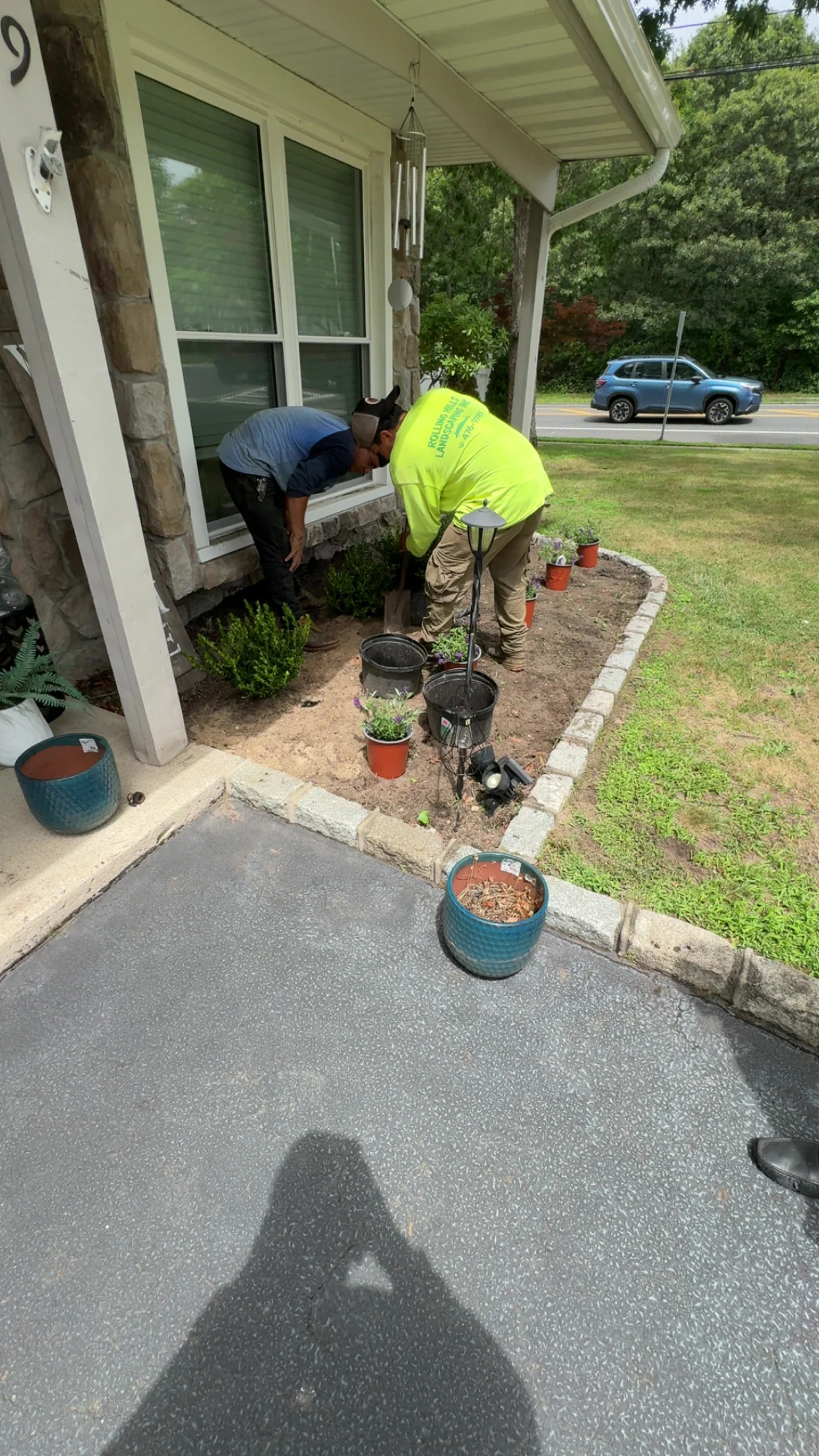
We’re working within your existing landscape, not redesigning it. That means pulling weeds without scattering mulch, disturbing edging, or leaving beds looking torn up. The hand-pulling technique matters here—controlled removal from the base rather than ripping plants out and taking surrounding mulch with them.
After weeding, we reset any displaced mulch and make sure beds look intentional, not like someone just thrashed through them. If your mulch is thin or breaking down, we’ll mention it because that’s where weeds come back fastest. But we’re not upselling you on services you don’t need.
East Islip properties often have specific landscape designs with layered plantings and decorative elements. We’re paying attention to what’s supposed to be there. Your ornamental grasses, groundcovers, and self-seeding perennials don’t get mistaken for weeds and removed. That level of attention is what separates professional garden bed maintenance from someone who just clears anything green that looks like it doesn’t belong.
Our primary approach is manual weed removal because it works better in densely planted garden beds where you can’t spray without hitting desirable plants. Hand-pulling gives you precision and removes the entire root system when done properly.
We do use pre-emergent treatments in early spring to prevent weed germination before it starts. Those applications are targeted and timed specifically for Suffolk County growing conditions. Pre-emergent stops seeds from sprouting—it doesn’t kill existing plants or create the drift issues you get with post-emergent sprays.
For properties that want completely organic approaches, we adjust the plan and increase manual removal frequency. The tradeoff is more labor and slightly higher cost, but it’s effective if that’s your preference. Most East Islip clients want their beds clean and their perennials protected, and they’re fine with a combination approach that uses the right method for each situation. We’re transparent about what we’re using and why, so you can make an informed decision for your property.
Most lawn care companies focus on turf—mowing, fertilizing, and broadcast weed control that works for open grass areas. Garden bed maintenance requires different knowledge and a different approach. You’re working around established plants with varying root depths, different water needs, and specific spacing requirements.
We’re identifying plant species before we start pulling, understanding what’s dormant vs. what’s dead, and recognizing the difference between a weed and a desirable self-seeder. That matters in East Islip where properties have mature landscapes with expensive perennials and ornamental plantings.
The other difference is local expertise. We’ve been working in Suffolk County long enough to know what grows here, what the soil is like, and what weed pressures are typical for each season. We’re not following a generic maintenance script—we’re adjusting based on what your specific property needs and what’s realistic for this area. You’re getting residential weed control from people who understand the particular challenges of maintaining dense suburban garden beds in your neighborhood, not a crew running through a checklist.
Other Services we provide in East Islip