
Hear from Our Customers

You’re not spending your Saturday morning bent over pulling weeds that’ll be back in two weeks. Your hostas aren’t competing with crabgrass for water. Your mulch beds actually look like mulch beds.
That’s what happens when someone who knows Long Island soil conditions handles your garden bed maintenance the right way. Not just surface pulling that leaves roots behind. Not herbicides that risk burning your expensive perennials.
Hand-pulling, done correctly, at the right intervals. Your beds stay clean longer. Your established plantings get the nutrients and moisture they’re supposed to get. And when you pull into your driveway after a 30-minute commute, you’re not looking at work you need to do—you’re looking at a property that reflects what you’ve invested in it.
In Bay Shore’s dense suburban landscape, where properties sit close and neighbors notice, that difference matters. Not just for curb appeal. For what your home is worth and how you feel about it.
Rolling Hills Property Services Inc isn’t new to Bay Shore or Suffolk County. We’re based in Smithtown, and we’ve been maintaining properties across Long Island long enough to understand how clay-heavy soil behaves, which weeds come back hardest, and what it takes to protect the perennials people actually care about.
We’re licensed and insured because that’s the baseline. What matters more is that we show up when we say we will, we don’t damage your plants while we’re working, and we’re clear about pricing before we start.
You’re not getting a crew that treats every property the same. Bay Shore’s inland suburban gardens have different challenges than coastal properties. We adjust our approach based on what’s actually growing in your beds and what you’re trying to protect.

We start by walking your property with you or on our own if you’re not around. We’re looking at what’s established, what’s struggling, and where the weed pressure is heaviest. Not every bed needs the same attention.
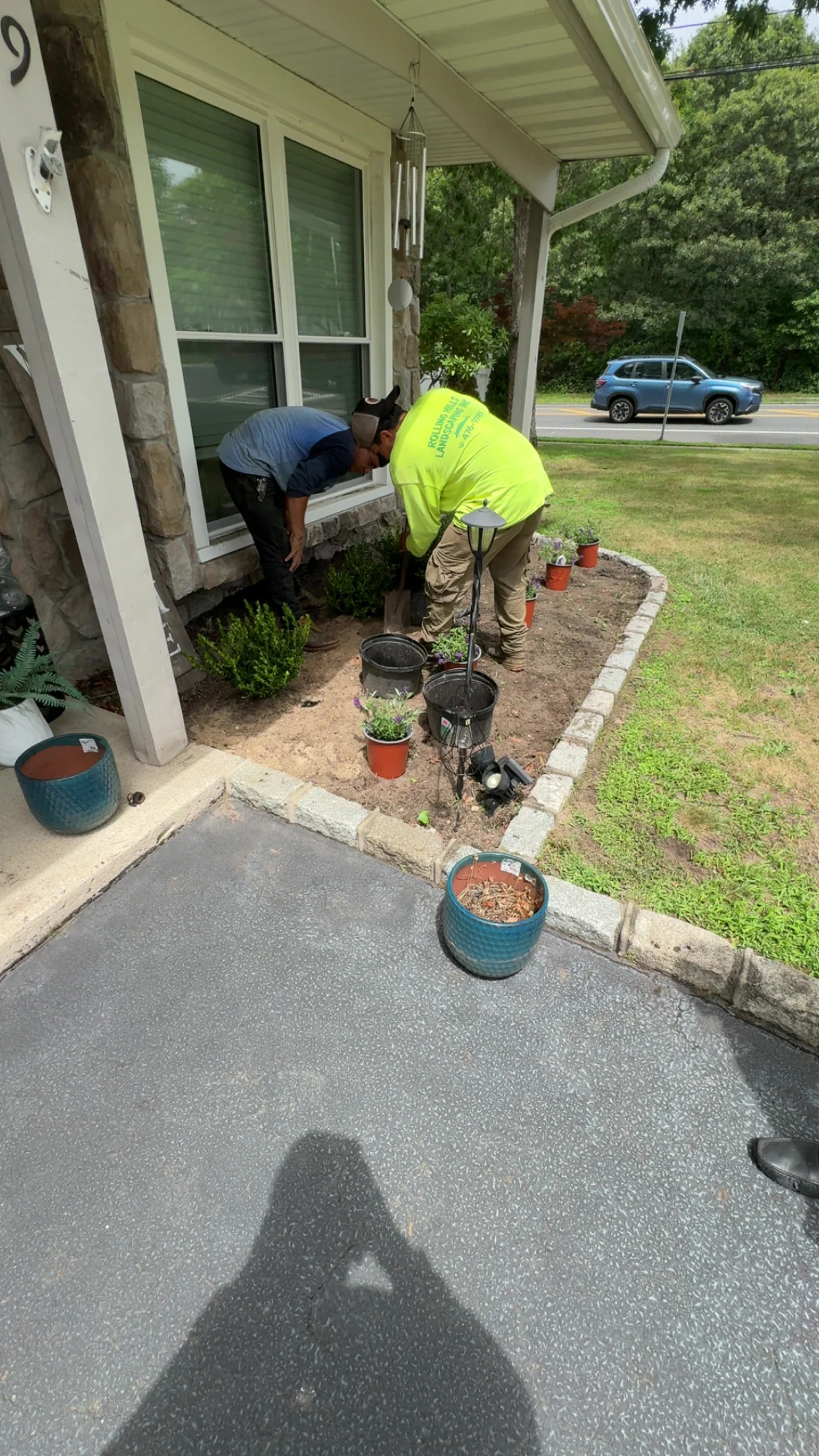
The actual work is manual. We hand-pull weeds at the root, working carefully around your perennials, shrubs, and groundcovers. If something’s too close to an established plant or the roots are intertwined, we take the time to separate them properly. Rushing this part is how plants get damaged.
After we pull, we remove everything from the property. You’re not left with piles of pulled weeds sitting in your driveway. If your mulch is thin or breaking down, we’ll let you know—that’s usually why weeds come back faster than they should.
For properties that want ongoing care, we set up a seasonal weeding and mulching schedule. Spring and fall are the heaviest times. Summer maintenance keeps things in check. The goal is to stay ahead of the problem so you’re never looking at beds that are out of control.

Ready to get started?
You’re getting complete manual weed removal from all garden beds, foundation plantings, and landscape areas we agree on upfront. We’re not just hitting the visible stuff—we’re pulling root systems so they don’t regenerate in a week.
We edge beds where needed so there’s a clean line between your lawn and your plantings. That’s not just aesthetic. It’s functional. It stops grass from creeping into your mulch and makes future maintenance easier.
All debris gets hauled away. Weeds, clippings, anything we pull comes off your property. If we see pest damage, disease issues, or drainage problems while we’re working, we’ll point them out. You’re not paying extra for that—it’s just part of knowing what to look for.
In Bay Shore, where the median property value hit $467,800 in 2023, keeping your landscape clean isn’t optional. It’s protecting an investment. We treat it that way. Your beds get the same attention whether it’s a small front yard or a half-acre property with extensive plantings.

Most properties need attention every 4-6 weeks during the growing season, but that depends on how much sun your beds get, how thick your mulch is, and what’s already established. Beds in full sun with thin mulch will need more frequent service. Shaded areas under mature trees usually stay cleaner longer.
Spring is when everything wakes up, so that’s your heaviest period. Weeds are germinating, and if you don’t stay on top of it in April and May, you’re playing catch-up all summer. Fall is the second push—cooler weather brings a new wave of growth, and if you let it go, those weeds drop seeds that become next year’s problem.
If your beds are currently overgrown, the first visit takes longer. We’re not just pulling what’s visible—we’re getting the property back to a manageable state. After that, maintenance visits are faster and less expensive because we’re staying ahead of it instead of reacting to it.
Not if it’s done correctly. The risk comes when someone rushes or doesn’t know what they’re looking at. If you yank a weed that’s rooted close to a hosta or daylily without checking first, you can tear roots or disturb the plant. That’s why we work carefully and take the time to separate root systems when needed.
Herbicides are the bigger risk for established perennials. Spray drift, overapplication, or using the wrong product can burn foliage or kill plants outright. That’s especially true for anything with shallow roots or sensitive foliage. Hand-pulling eliminates that risk entirely.
We’ve been doing this long enough to know the difference between a weed seedling and a perennial that’s just emerging. If we’re not sure, we ask or we leave it. You’re not going to come home and find out we pulled your new plantings because someone wasn’t paying attention.
Mulch is your first line of defense. A 2-3 inch layer of quality hardwood mulch blocks light from reaching the soil, which is what weed seeds need to germinate. If your mulch has broken down to less than an inch or it’s mostly decomposed, you’re going to see more weeds no matter how often you pull.
Pulling weeds before they go to seed is the second part. One mature weed can drop hundreds or thousands of seeds. If you let them flower and seed out, you’re creating years of future work. Staying on a regular schedule prevents that cycle from starting.
Edging also matters. If there’s no clear barrier between your lawn and your beds, grass will creep in. It’s harder to pull, it spreads fast, and it competes directly with your plantings. A clean edge stops that and makes the whole bed easier to maintain. We handle all of that as part of our seasonal weeding and mulching programs, so you’re not just getting short-term cleanup—you’re getting a system that reduces how much work the property needs over time.
It’s all manual removal. We don’t spray herbicides as part of our standard weeding service. That’s a deliberate choice. Hand-pulling gives you complete control over what stays and what goes, and it eliminates any risk to your established plants, pets, or kids playing in the yard.
Chemicals have their place for specific situations—like dealing with poison ivy or invasive species that are impossible to control manually. But for routine garden bed maintenance, they’re overkill. You end up with residue in the soil, potential damage to nearby plants, and you’re often still pulling dead weeds anyway.
Manual removal also lets us see what’s actually happening in your beds. We’re noticing if something’s struggling, if there’s pest damage, if drainage is poor. You don’t get that when you’re just spraying and walking away. For Bay Shore properties where plantings are close together and gardens are established, hand-pulling is the smarter approach.
It depends on the size of your property, how many beds you have, and what condition they’re in. A small front yard with two foundation beds is different from a half-acre property with extensive perennial gardens. We price based on what the job actually requires, not a one-size-fits-all rate.
For most residential properties in Bay Shore, you’re looking at a few hundred dollars for an initial cleanup if the beds are overgrown, and less for ongoing maintenance visits once things are under control. We’ll give you a clear price after we see the property—either in person or from photos if that’s easier for your schedule.
Ongoing maintenance through a seasonal program costs less per visit because we’re keeping up with it instead of starting from scratch each time. Spring and fall are the bigger services. Summer visits are usually lighter. We’ll walk you through options that make sense for your property and your budget, and you decide what level of service works. No pressure, no surprises.
You don’t need to be home. Most of our clients aren’t around when we’re working—they’re at work, they’re dealing with their day, and they’d rather just come home to finished beds. As long as we can access the areas that need attention, we’re fine working independently.
We’ll walk the property with you the first time if you want to show us specific plants you’re concerned about or areas that need extra attention. After that, we know what to do. If something comes up while we’re working—a plant that looks diseased, a drainage issue, anything you should know about—we’ll reach out or leave a note.
Scheduling is flexible. We’re not locked into narrow windows. If you need us there on a specific day or you’d rather we avoid certain times, we work around that. The goal is to make this easy for you, not add another thing you have to coordinate or be present for.
Other Services we provide in Bay Shore