
Hear from Our Customers

Your driveway apron cracks within five years. Water pools near your foundation after every storm. The front walkway has settled two inches on one side, creating a tripping hazard you’ve been meaning to fix for months.
These aren’t cosmetic problems. They’re structural failures that started with poor base preparation and improper grading.
When concrete work is done right in Bay Shore, you’re looking at decades of performance. The base gets excavated to proper depth, graded to Suffolk County’s 5% slope requirements, and compacted with the right equipment. Water moves away from your foundation instead of toward it. The surface stays level because the subsurface was built to handle Long Island’s clay soil and freeze-thaw cycles.
You’re not just getting a new driveway apron or sidewalk. You’re getting a permanent fix that stops the water problems, eliminates the safety risks, and gives your property the kind of finished look that buyers notice when they pull up to the curb.
That’s what happens when the grading is handled with heavy machinery and local expertise, not guesswork.
We’ve been handling property maintenance and concrete work across Suffolk County for years. We’re based in Smithtown, fully licensed and insured, and we’ve seen what happens when concrete contractors cut corners on base prep or ignore local soil conditions.
Bay Shore sits in a high-groundwater area. Your clay soil holds water. Your properties deal with drainage issues that require specific grading solutions, not generic flatwork installs.
We use the equipment and expertise needed to get the grade right the first time. That means proper excavation, compacted gravel base, and concrete installations that account for Long Island’s weather patterns. We’re not the cheapest option, and that’s intentional. You’re paying for work that lasts 30+ years instead of failing in 10.

First, we assess your property’s drainage situation and existing grade. Bay Shore homes often need specific slope corrections to move water away from foundations, especially in areas with high water tables.
Next comes excavation and base preparation. We remove existing concrete or soil to proper depth, then install and compact a gravel base using heavy machinery. This step determines whether your concrete lasts 15 years or 40. The base has to support the slab and handle water movement beneath the surface.
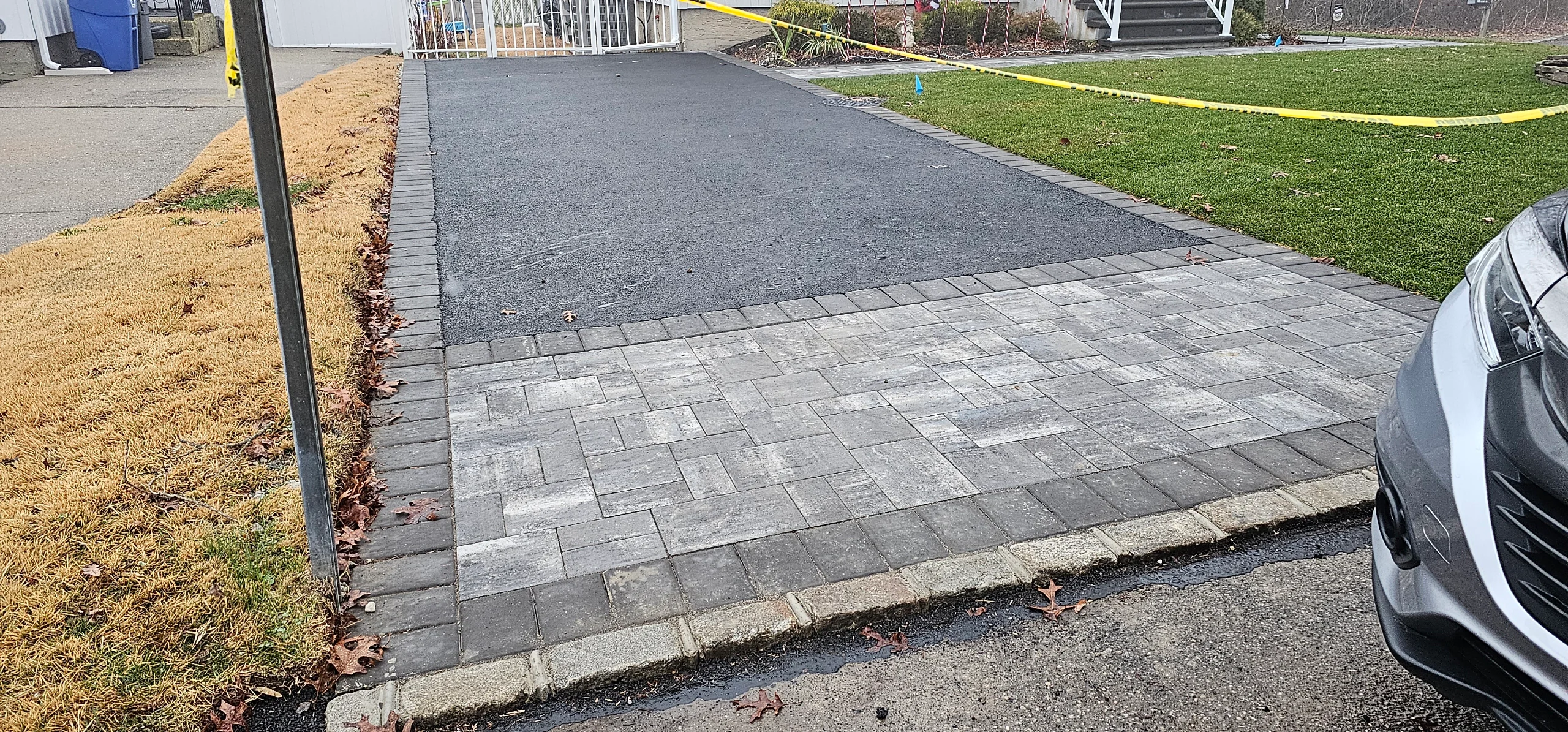
Then we set forms, pour the concrete, and finish the surface with the right slope for drainage. For driveway aprons, we can install Belgian block edging that matches your existing landscape. For sidewalks and curbs, we ensure proper height transitions and ADA compliance where needed.
After the pour, we apply sealant once the concrete has cured. This protects against Bay Shore’s freeze-thaw cycles and extends the life of the installation. You’ll get a walkthrough of maintenance requirements and a timeline for when you can use the surface.
The whole process typically takes a few days depending on project size, and we keep you updated at every stage.

Ready to get started?
Our concrete services cover the full scope of residential flatwork and masonry. That includes driveway aprons with Belgian block edging, sidewalk installation and repair, concrete curb work, and patio installations. We handle the grading and drainage corrections that Bay Shore properties require, especially in neighborhoods dealing with water table issues.
For masonry work, we install retaining walls, decorative edging, and structural repairs using materials that match your existing landscape. Suffolk County properties often need custom solutions for sloped yards or areas with poor drainage, and we have the equipment to handle those site conditions.
Every project includes proper base preparation with excavated soil removal, compacted gravel installation, and concrete finishing with the correct slope. We’re licensed, insured, and we pull permits where required. You get a warranty on workmanship, and we use concrete mixes rated for Long Island’s climate.
Bay Shore homes in higher-end neighborhoods see measurable property value increases from quality concrete work. A new driveway apron or front walkway can add $3,000 to $10,000 in appraised value, and it creates the kind of curb appeal that makes your property stand out on the block.
Professionally installed concrete in Bay Shore should last 30 to 50 years if the base preparation and drainage are handled correctly. The key factors are proper grading, a compacted gravel base, and sealing to protect against freeze-thaw damage.
Long Island’s climate creates specific challenges. Winter freeze-thaw cycles cause water to expand in cracks, which breaks down concrete over time. Clay soil holds moisture, which means poor drainage leads to settling and structural failure. If the base wasn’t compacted properly or the grade doesn’t move water away from the slab, you’ll see problems within 10 to 15 years.
DIY installations or contractors who skip base prep often fail much sooner. You’ll notice cracking, settling, or surface deterioration that requires expensive repairs or full replacement. When the work is done right from the start, you’re looking at decades of performance with minimal maintenance beyond occasional resealing.
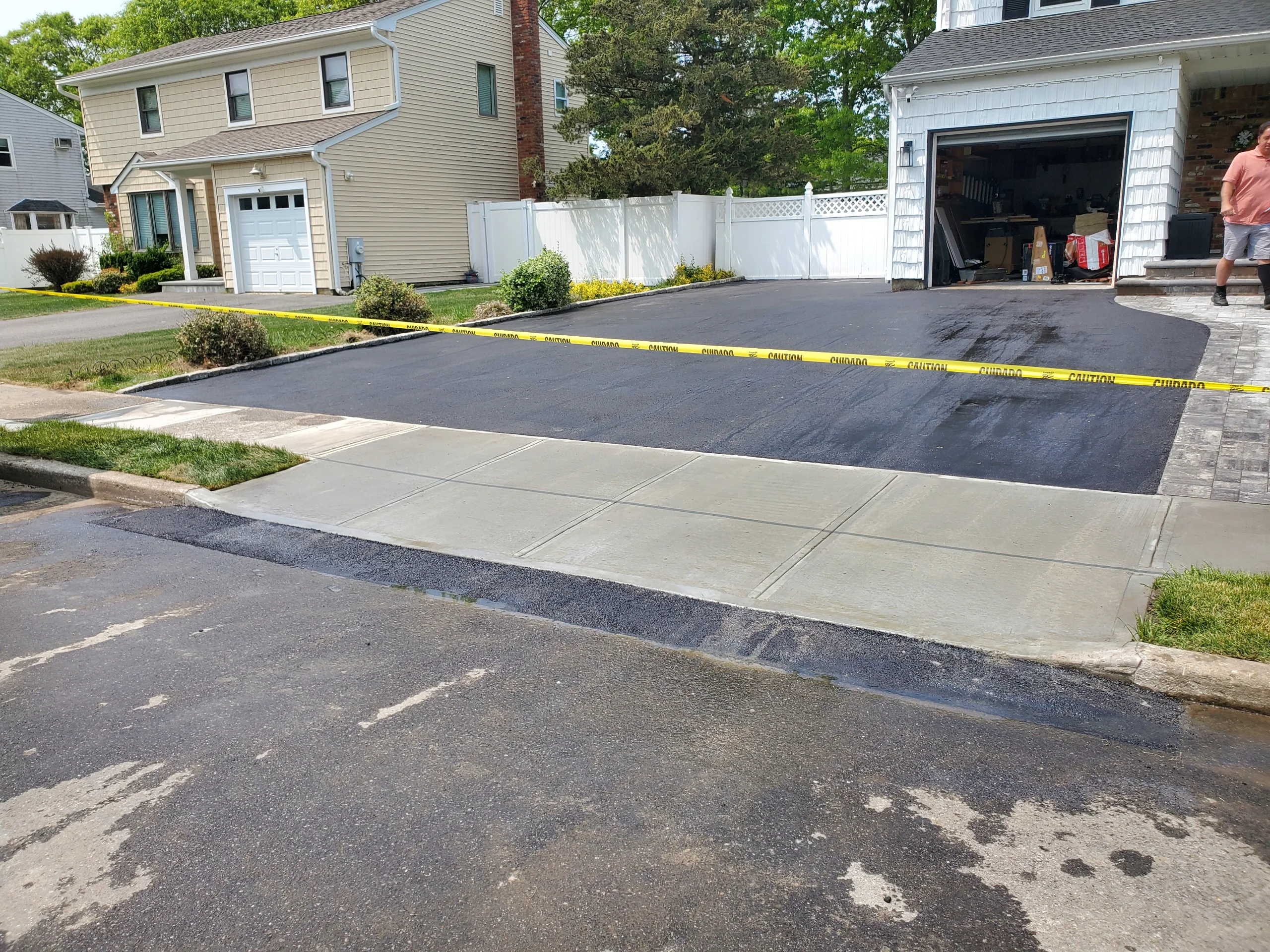
A driveway apron is the section that connects your driveway to the street, and it’s usually the most visible part of your property from the curb. It takes more abuse than the rest of your driveway because it handles the transition between two different surfaces and deals with street runoff.
In Bay Shore, aprons often include Belgian block edging for a finished look that complements the neighborhood aesthetic. The apron needs to be graded properly to prevent water from pooling at the street connection or flowing back toward your garage. Poor apron grading is one of the main causes of driveway drainage problems.
The apron also affects your property’s curb appeal more than any other concrete surface. A cracked, stained, or sunken apron sends a message that the property isn’t well maintained. A new apron with clean edging and proper grading creates an immediate visual upgrade that buyers and neighbors notice right away.
Concrete cracks because of ground movement, freeze-thaw cycles, or improper installation. Some hairline cracking is normal as concrete cures, but large cracks or uneven settling indicate problems with the base or drainage.
In Bay Shore, the main culprits are clay soil and water. Clay expands when wet and contracts when dry, which creates movement beneath your concrete. If the base wasn’t excavated deep enough or the gravel wasn’t compacted properly, that movement translates into cracks on the surface. Freeze-thaw cycles make it worse—water gets into small cracks, freezes, expands, and breaks the concrete apart.
You can’t prevent all cracking, but you can minimize it with proper base preparation, control joints, and sealing. Control joints are intentional weak points that guide where cracks form, keeping them clean and manageable. Sealing prevents water infiltration, which protects against freeze-thaw damage. The difference between concrete that cracks minimally and concrete that fails completely comes down to how the base was installed and whether drainage was addressed.
Concrete work in Bay Shore typically runs $6 to $14 per square foot depending on the project complexity, site conditions, and finishing details. A standard driveway apron might cost $1,500 to $3,500. Sidewalk repairs or installations usually range from $8 to $12 per square foot. Belgian block edging adds $30 to $50 per linear foot.
The price depends heavily on what’s required for proper installation. If your property has drainage issues, needs significant grading corrections, or requires extensive excavation due to poor soil conditions, costs go up. Projects that need decorative finishes, stamped concrete, or custom masonry work cost more than basic flatwork.
Cheaper quotes usually mean corners are being cut on base preparation, material quality, or proper grading. You’ll pay less upfront, but you’ll face repairs or replacement much sooner. The cost difference between a $7 per square foot install and a $12 per square foot install might be $2,000 on a driveway apron, but the cheaper option could fail in 10 years while the quality install lasts 40. That’s not a savings—it’s a future expense.
Most concrete work in Bay Shore requires a permit, especially for driveways, aprons, sidewalks, and any work that affects drainage or connects to public right-of-way. The Town of Islip, which governs Bay Shore, has specific requirements for concrete installations to ensure proper grading and stormwater management.
Permits exist to protect you and your neighbors. They ensure the work meets code requirements for drainage, slope, and structural integrity. An inspector verifies that the base was prepared correctly and that water is directed away from foundations and toward proper drainage systems. Skipping permits might save time upfront, but it creates problems when you sell the property or if the work fails and you need to file an insurance claim.
We handle permit applications as part of the project. We know what the town requires, how to submit plans, and when inspections need to happen. You shouldn’t have to deal with the paperwork or worry about whether the work meets code. That’s part of what you’re paying for when you hire licensed contractors instead of unlicensed crews.
Late spring through early fall is the best window for concrete work in Bay Shore. You need consistent temperatures above 50°F for proper curing, and you want to avoid rain for at least 24 to 48 hours after the pour. May through October typically offers the most reliable weather conditions.
Concrete cures through a chemical reaction that requires specific temperature and moisture conditions. If it’s too cold, the curing process slows down or stops, which weakens the final strength. If it gets too hot, the surface dries too quickly and you get cracking. Rain during the first 24 hours can wash out the surface and ruin the finish.
Suffolk County’s soil temperatures also matter. The ground needs to be stable and above freezing for proper base compaction. Frozen ground or saturated soil from spring thaw creates unstable conditions that lead to settling later. Most concrete contractors in Bay Shore schedule major projects between May and September to avoid weather-related complications and ensure optimal curing conditions.
Other Services we provide in Bay Shore