
Hear from Our Customers

You’re staring at cracks that weren’t there last winter. Or maybe your driveway apron is sinking where it meets the street, creating a jarring bump every time you pull in. Standing water pools near your foundation after every rain because the grading wasn’t done right the first time.
Long Island’s weather doesn’t forgive shortcuts. Freeze-thaw cycles turn small cracks into structural problems. Coastal humidity accelerates deterioration. And Ronkonkoma’s clay-heavy soil shifts and settles in ways that destroy improperly installed concrete within a few years.
Professional concrete and masonry work eliminates these cycles. Proper base preparation, precise grading at a quarter-inch per foot minimum, and drainage solutions designed for your specific property mean you’re not calling someone back in three years. Your concrete curb installation actually directs water away from your foundation. Your Belgian block driveway apron stays level and looks sharp. Your sidewalks don’t become liability risks.
This is what happens when the structural work is done right from the start. Your property value increases instead of declining. You stop worrying about trip hazards and legal exposure. And your home’s exterior finally matches the care you’ve put into everything else.
Rolling Hills Property Services Inc has spent nearly two decades working on Suffolk County properties. We’re based in Smithtown, and we’ve seen what happens when concrete contractors treat Ronkonkoma like it’s anywhere else—it fails fast.
The soil around Lake Ronkonkoma has specific drainage challenges. The freeze-thaw cycles here are more aggressive than towns just 20 miles away. We grade every job with heavy machinery to ensure water moves away from foundations and doesn’t pool on surfaces. We don’t guess at drainage—we handle it with French drains, catch basins, and proper slope calculations.
You’re working with a fully licensed and insured masonry contractor who shows up when scheduled, communicates throughout the project, and backs the work with a two-year warranty on workmanship. We’re not the cheapest option in Suffolk County, and that’s intentional. You’re paying for concrete that lasts 25 years instead of needing repairs every few winters.

We start with a site assessment to identify drainage issues, soil conditions, and any existing problems that need addressing before new concrete goes down. If your property has standing water issues or poor grading, we handle that first—otherwise the new work fails just like the old stuff did.
Next comes excavation and base preparation. This is where most concrete jobs succeed or fail. We remove inadequate base material, compact the subgrade properly, and install the right depth of gravel base for Ronkonkoma’s soil conditions. For driveways and high-traffic areas, that means at least six inches of compacted base. We’re using heavy machinery to ensure compaction meets structural requirements, not hand tampers that leave soft spots.
Then we set forms, install any necessary reinforcement, and pour or install your concrete or masonry flatwork. For Belgian block driveway aprons, we’re setting each block individually with proper bedding. For concrete curb installation, we’re ensuring the reveal height works with your existing driveway and the street grade. For sidewalk repair, we’re matching existing elevations and ensuring ADA-compliant slopes where required.
Final grading and cleanup happen after curing. You’re left with concrete that directs water properly, meets structural standards, and doesn’t need attention again for decades.

Ready to get started?
Concrete curb installation along driveways and property lines creates clean edges and improves drainage. In Ronkonkoma’s higher-end neighborhoods, this detail significantly impacts curb appeal and property value. We’re installing curbs that handle snow plow impact in winter and direct runoff away from your driveway surface.
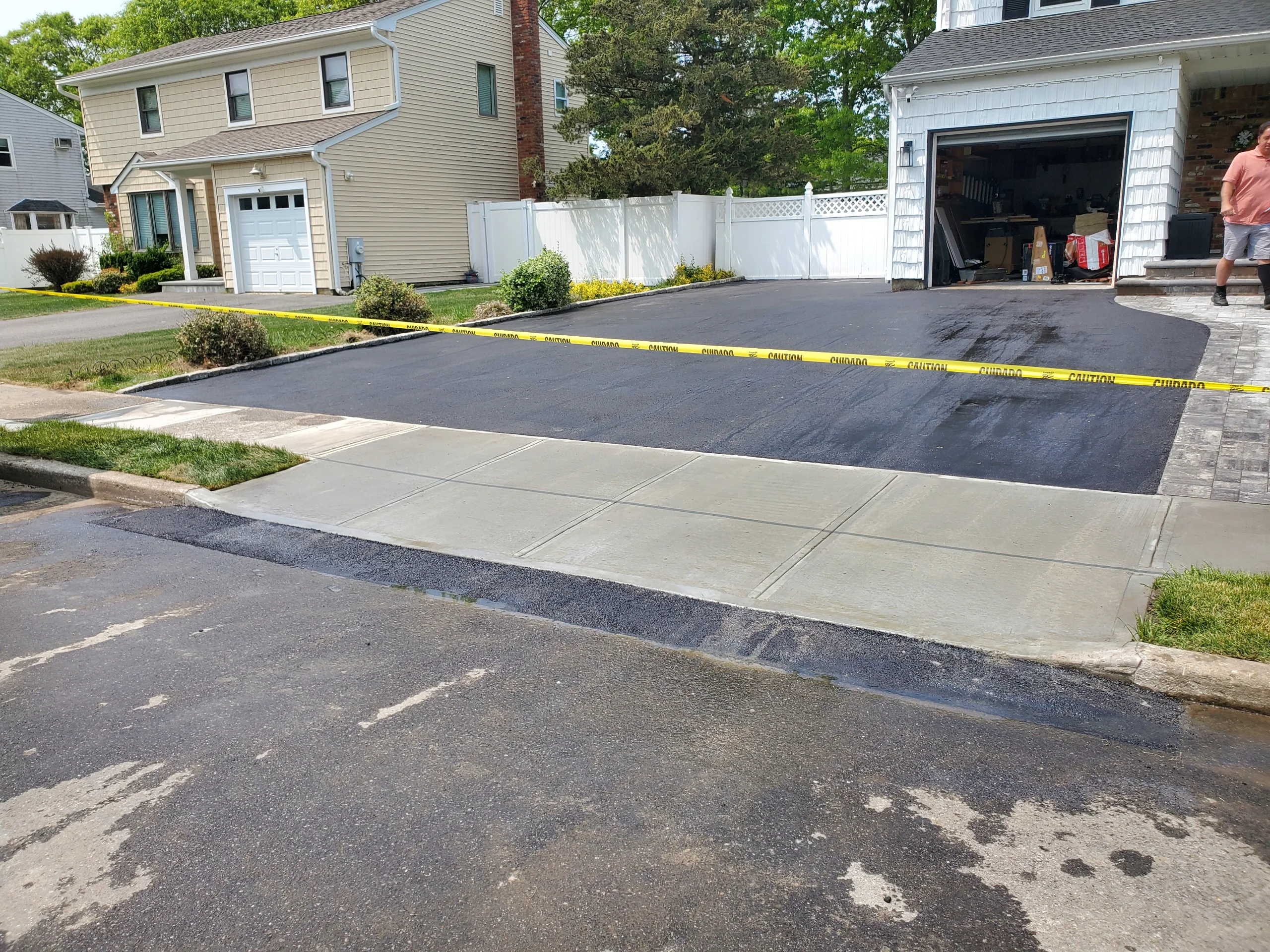
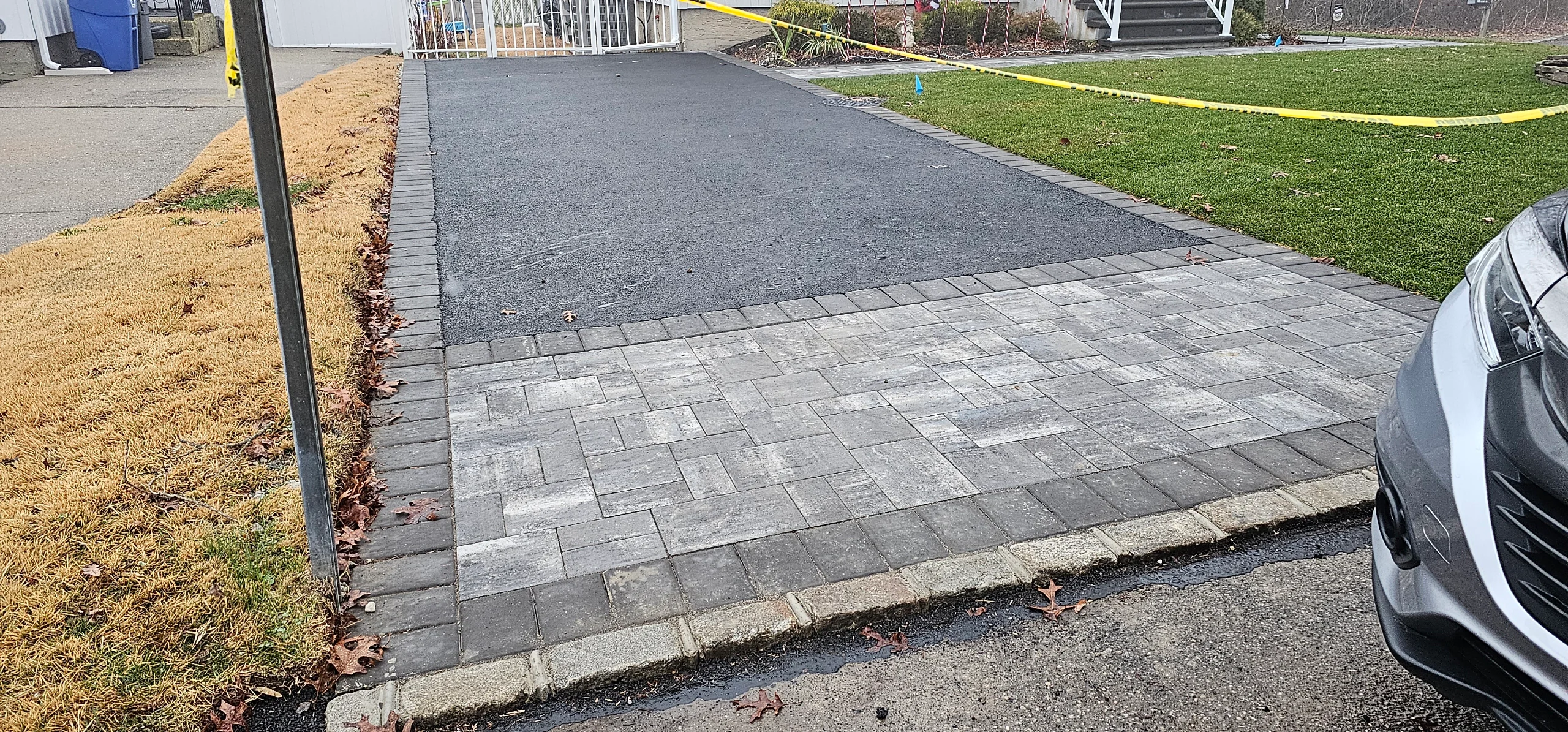
Belgian block driveway aprons at the street transition provide durability and visual appeal that poured concrete can’t match. Individual blocks can be replaced if damaged without disturbing the entire apron—no patching, no color matching issues. This matters in areas with heavy snow removal equipment and frequent freeze-thaw cycles.
Sidewalk repair and installation addresses trip hazards, improves accessibility, and eliminates liability concerns. We’re not just patching visible damage—we’re identifying why the concrete failed and fixing the underlying cause. That usually means addressing drainage, improving base material, or correcting grade issues that caused settling.
Masonry flatwork for patios, walkways, and pool decks uses either poured concrete or pavers depending on your aesthetic preferences and budget. Both options perform well in Long Island’s climate when installed correctly. The key difference is repairability—individual pavers can be lifted and reset if settling occurs, while poured concrete requires cutting and patching.
Local concrete grading and prep work ensures water moves away from foundations, doesn’t pool on surfaces, and drains to appropriate areas. In Ronkonkoma, where clay soils can create drainage challenges, this preparation determines whether your concrete lasts five years or fifty.
Properly installed concrete lasts 25 to 50 years in Ronkonkoma despite freeze-thaw cycles. The key factors are base preparation, proper drainage, and using air-entrained concrete mix that allows water to expand during freezing without cracking the surface.
Most concrete failures in Long Island happen because water gets trapped under the slab or in cracks, then freezes and expands. When we install concrete, we’re grading the base to direct water away and ensuring the subgrade is compacted enough that settling doesn’t create low spots where water pools.
Air-entrained concrete contains microscopic air bubbles that give freezing water room to expand without damaging the concrete matrix. This is standard for exterior concrete in cold climates, but not all contractors use it consistently. We do, because it’s the difference between concrete that lasts decades and concrete that starts spalling and cracking within five years.
Sealing concrete every few years adds protection, but it’s not a substitute for proper installation. If the base is wrong or drainage is poor, no amount of sealer will prevent failure.
Repairs typically cost 30% to 50% of full replacement, but only if you catch problems early. Once concrete has settled significantly, developed wide cracks, or has drainage issues causing ongoing damage, repairs become temporary fixes that don’t address the underlying problem.
For example, mudjacking or polyurethane foam injection can lift sunken concrete slabs for a fraction of replacement cost—if the concrete itself is still structurally sound. But if the base material is inadequate or drainage is directing water under the slab, the lifting is temporary. You’ll be back in the same situation within a few years.
Patching cracks and spalling works for isolated damage from impact or surface wear. It doesn’t work when the damage is from structural issues like poor base preparation or ongoing water infiltration. In those cases, you’re spending money on cosmetic fixes while the real problem continues.
We evaluate whether repairs make sense or whether you’re better off replacing the section correctly. Sometimes spending more upfront saves you from repeated repair costs and ongoing frustration. The honest answer depends on what’s actually causing the damage, not just what’s visible on the surface.
Most concrete work in Ronkonkoma requires permits from the Town of Islip, especially for driveways, sidewalks, and anything affecting drainage or property lines. Permit requirements ensure work meets code for structural integrity, drainage, and accessibility.
Driveway aprons connecting to town streets almost always need permits and inspections. The town wants to verify proper grading, adequate base depth, and appropriate transitions to street level. Belgian block aprons and concrete curbs at property lines may require survey verification to ensure you’re not encroaching on town right-of-way.
Sidewalk work typically needs permits to ensure ADA-compliant slopes and proper connections to existing walkways. If your sidewalk is in the town right-of-way (the area between your property line and the street), the town has specific requirements for materials, thickness, and installation methods.
We handle permit applications and inspections as part of the project. You don’t need to visit town offices or coordinate inspector schedules—that’s our responsibility. Unpermitted work can create problems when you sell your property or if a neighbor complains, so it’s worth doing correctly from the start.
Concrete cracks from three main causes: inadequate base preparation, poor drainage, and natural shrinkage during curing. You can minimize cracking with proper installation, but some hairline cracks are normal and don’t indicate structural problems.
Inadequate base preparation is the biggest cause of significant cracking. If the subgrade isn’t compacted properly or the gravel base is too thin, the concrete will settle unevenly as the ground shifts. This creates stress points that turn into cracks. In Ronkonkoma’s clay soils, proper compaction and adequate base depth (at least six inches for driveways) are essential.
Poor drainage allows water to accumulate under the slab, which causes erosion of base material and creates voids. The concrete eventually cracks and settles into these voids. Proper grading directs water away from the driveway, and sometimes we install drainage solutions like French drains for properties with persistent water issues.
Shrinkage cracks happen as concrete cures and are controlled with properly spaced control joints. These joints create intentional weak points where the concrete cracks in straight lines rather than random patterns. Control joints don’t prevent cracking—they control where it happens so it’s less visible and doesn’t affect structural integrity.
Reinforcement with rebar or wire mesh helps hold concrete together if cracking occurs, but it doesn’t prevent cracks. The key is proper base work and drainage from the start.
Belgian block aprons cost more upfront but offer better repairability and visual appeal compared to poured concrete. Individual blocks can be lifted and reset if settling occurs, while poured concrete requires cutting out sections and patching—which never matches perfectly.
Durability is comparable when both are installed correctly. Belgian block handles freeze-thaw cycles well because water drains through the joints between blocks rather than sitting on the surface. Poured concrete needs proper drainage and air-entrained mix to prevent spalling and cracking from freeze-thaw damage.
The aesthetic difference matters in higher-end Ronkonkoma neighborhoods where curb appeal directly impacts property value. Belgian block aprons create a more finished, upscale appearance that complements brick or stone home exteriors. Poured concrete is more utilitarian and works fine functionally, but doesn’t have the same visual impact.
Maintenance is easier with Belgian block. If snow plows chip or damage blocks, you replace individual units without disturbing the rest of the apron. With poured concrete, damage means patching or replacing larger sections, and color matching old concrete is nearly impossible.
Installation time is longer for Belgian block because each unit is set individually with proper bedding and joint spacing. Poured concrete goes faster but requires longer curing time before you can drive on it. Both options perform well in Long Island’s climate—the choice usually comes down to budget and aesthetic preferences.
Look for contractors who discuss base preparation, drainage solutions, and local soil conditions before talking about price. Anyone who gives you a quote without assessing your property’s specific challenges is guessing, and you’ll pay for those guesses later.
Verify licensing and insurance before any work starts. In New York, concrete contractors should carry general liability insurance and workers’ compensation coverage. Ask for certificate of insurance and verify it’s current. Unlicensed contractors might save you money upfront, but you’re liable if someone gets hurt on your property or if the work fails inspection.
Ask about their warranty on workmanship and what it covers. A two-year warranty on installation defects like settling, joint failure, or drainage problems is standard for quality contractors. Material warranties are separate—concrete and pavers typically come with manufacturer warranties ranging from 10 to 25 years.
Get detailed written estimates that break down materials, labor, base preparation, and drainage work separately. Vague lump-sum quotes make it impossible to know what you’re actually paying for. Detailed estimates also make it easier to compare contractors fairly—the cheapest quote often skips base preparation or drainage work that you’ll pay to fix later.
Check how they handle Ronkonkoma’s specific conditions. Do they mention the clay soils around Lake Ronkonkoma? Do they discuss freeze-thaw cycles and how their installation methods address them? Contractors who’ve worked extensively in Suffolk County understand these local factors. Contractors treating your property like it’s anywhere else will deliver generic results that fail fast.
Other Services we provide in Ronkonkoma