
Hear from Our Customers

You stop worrying about water pooling near your foundation every time it rains. That’s what happens when the grading is done right from the start.
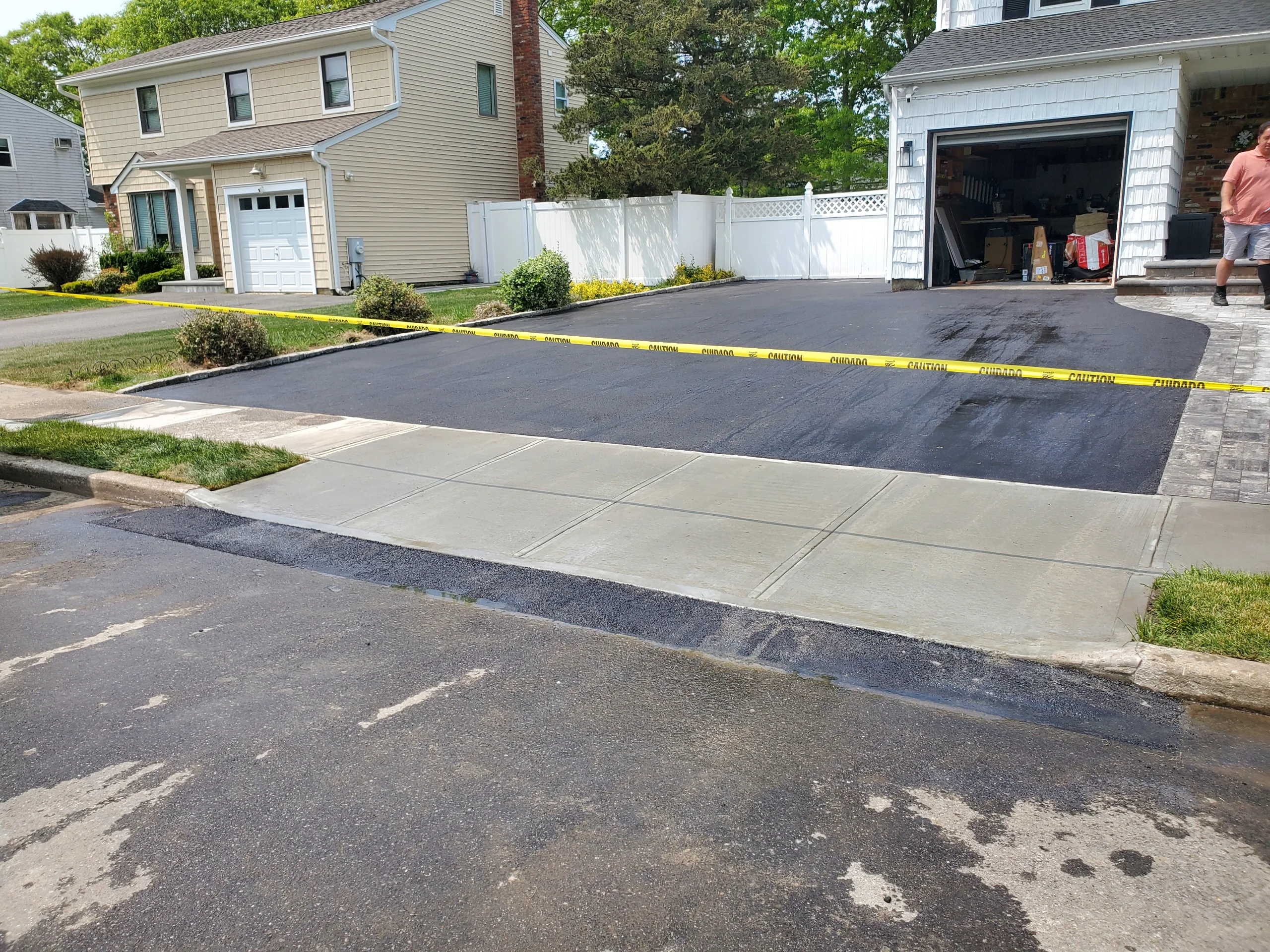
Your driveway apron sits flush with the street. Your Belgian block edging stays put through snow plows and freeze-thaw cycles. Your sidewalks don’t crack apart in three years because someone skipped the base prep.
This isn’t about making things look nice for a season. It’s about installing concrete and masonry flatwork that holds up under Suffolk County conditions—high water tables, shifting soil, and weather that punishes shortcuts. When the work is done correctly, you’re not calling someone back in two years to fix what should’ve been built right the first time.
We’ve been handling property maintenance across Suffolk County for over 15 years. We’re based in Smithtown, and we’ve worked in enough Patchogue driveways to know exactly how the water moves in your neighborhood.
The South Shore water table sits close to the surface. That means drainage isn’t optional—it’s the difference between a driveway that lasts and one that sinks or cracks within five years. We use excavators and grading lasers because eyeballing it doesn’t cut it when you’re dealing with Patchogue’s specific drainage challenges.
You’re hiring a local crew that’s licensed, insured, and clear about what the job involves before we start.

We start with excavation. That means removing old concrete or digging down to stable soil—whatever it takes to build on a solid base. If the ground isn’t prepped correctly, nothing above it matters.
Next comes grading and base prep. We’re using compacted stone and laser-guided equipment to make sure water flows away from your foundation, not toward it. This is where most drainage problems get solved or created. We compact in layers, check the grade multiple times, and don’t pour until it’s right.
Then we install the concrete or pavers with proper edge restraints. For Belgian block borders, that means setting them in a concrete footing so they don’t shift when a plow hits them. For sidewalks, we follow Village of Patchogue specs—six-inch sand base, proper concrete mix, the whole process.
You get a walkthrough before we start and updates as we go. No surprises, no guessing what’s happening on your property.

Ready to get started?
You’re getting full excavation and removal of old materials. We haul it away—you don’t deal with piles of broken concrete sitting in your yard for weeks.
The base gets built with compacted stone, graded for drainage specific to how water moves on your property. In Patchogue, that usually means directing runoff away from foundations and toward the street or a proper drainage system. We’re not guessing—we’re using equipment that measures grade to the degree.
For driveway aprons and curbing, we install Belgian block edging when it makes sense. Those granite stones are 10 to 12 inches long, set in concrete footings. They take a beating from plows and don’t budge. For sidewalk repair, we match Village of Patchogue requirements so you’re not dealing with permit issues or failed inspections later.
Everything gets finished smooth, with proper curing time before you drive or walk on it. We don’t rush the cure just to close out the job faster.
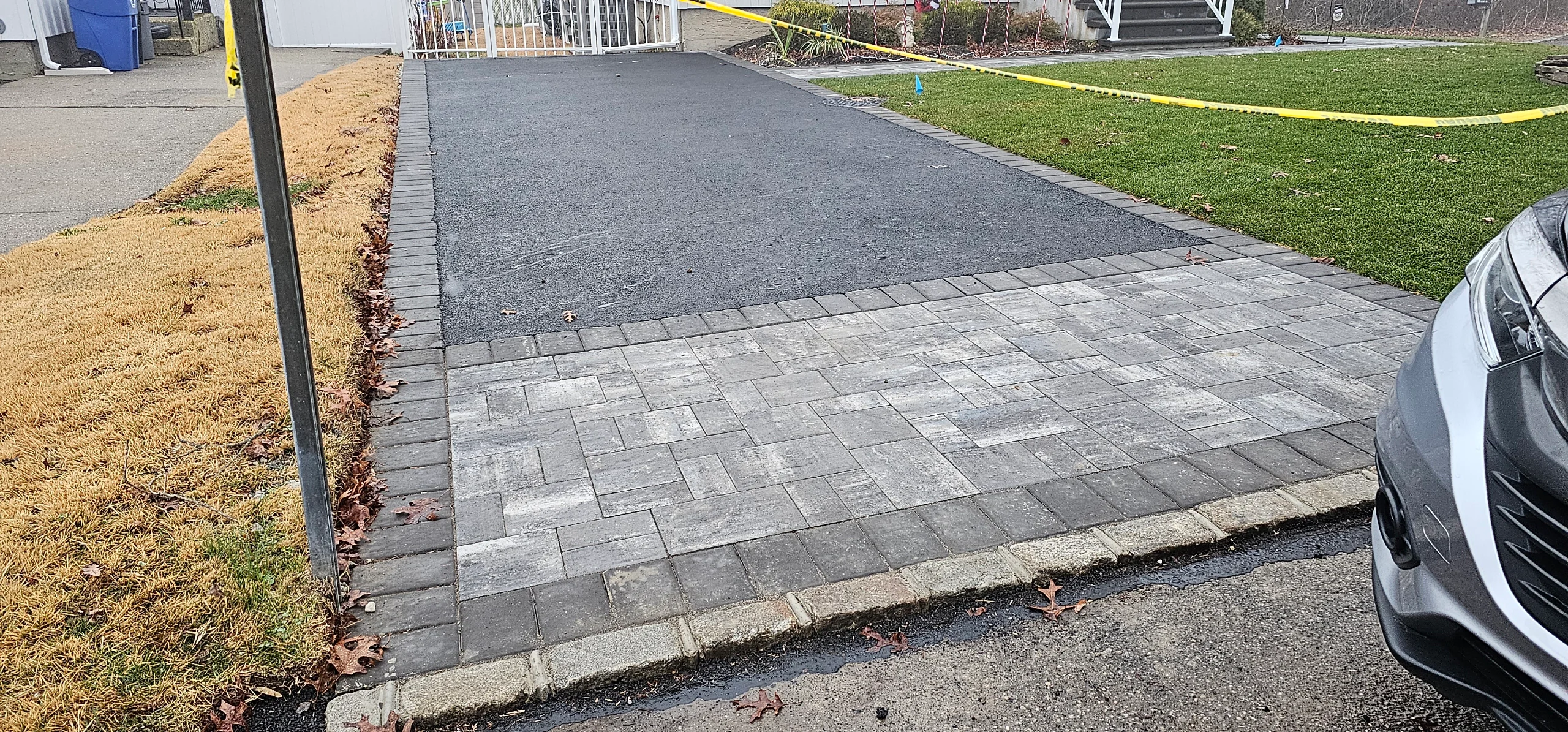
If it’s installed correctly, you’re looking at 25 to 30 years or more for paver driveways and 10 to 15 years for poured concrete. The difference comes down to how each material handles Long Island’s freeze-thaw cycles.
Concrete is a solid slab. When water gets into small cracks and freezes, it expands and makes those cracks bigger. Over time, that leads to chunks breaking off or the whole section cracking apart. Pavers, on the other hand, are individual units that flex independently. They handle freeze-thaw better because they’re not locked into one rigid surface.
The base prep matters more than the material, though. If the stone base isn’t compacted right or the grading doesn’t account for drainage, even the best pavers will sink or shift. That’s why we use heavy machinery and check grade multiple times before anything gets set.
Water pooling near foundations is the big one. Patchogue sits on the South Shore where the water table is high, so drainage has to be designed into every concrete project from the start.
We handle it by grading everything away from your house. That means the driveway, walkways, and any flatwork slopes toward the street or a drainage system—not toward your basement. We use laser levels to get the grade exact because even a small mistake sends water the wrong direction.
If your property has existing drainage problems, we’ll tell you during the walkthrough. Sometimes it’s a matter of regrading. Other times, you need a catch basin or French drain to move water off the property entirely. We don’t just pour concrete over a problem and hope it goes away. You’ll know what’s needed and why before we start.
Yes, if you’re doing curb or sidewalk work that affects the grade or public right-of-way. The Village of Patchogue requires a written application and permit for that type of construction.
We handle projects that need permits regularly, and we’ll tell you upfront if yours requires one. The permit process isn’t complicated, but it does add time to the schedule. You’ll need to submit plans showing the work, and an inspector will check it before and after.
For private driveway aprons or walkways that don’t touch the public sidewalk or curb, you usually don’t need a permit. But every property is a little different, so we confirm before starting. The last thing you want is to finish a project and then find out it doesn’t meet local code.
Because they last longer and take more labor to install correctly. Belgian blocks are large granite stones—10 to 12 inches long—and each one gets set individually in a concrete footing.
Poured concrete edging is faster. You form it, pour it, and you’re done. But it cracks easier, especially when a snow plow catches the edge or the ground shifts during freeze-thaw cycles. Belgian block doesn’t crack. It’s granite. The stones might settle slightly over time, but they get stronger as they bed into the concrete foundation.
The install process is more involved. We excavate deeper for the footing, set each block by hand, and make sure they’re level and aligned before the concrete cures. That’s why it costs more upfront. But you’re not replacing it in 10 years, and it adds real curb appeal that buyers notice if you ever sell.
We dig deeper and use more compacted stone than you’d need in drier areas. The water table around Patchogue sits close to the surface, so the base has to handle moisture without shifting or settling.
First, we excavate down to stable soil. If we hit groundwater or soft spots, we keep going until we reach solid ground. Then we build up the base in layers—usually six inches or more of compacted stone, depending on what the site needs. Each layer gets compacted with a plate compactor or roller before we add the next one.
The stone base does two things: it supports the weight of the concrete or pavers, and it lets water drain through instead of pooling underneath. If water sits under your driveway, it’ll eventually cause the surface to sink or crack. We also grade the base so water flows away from your foundation. That’s not optional in Patchogue—it’s the only way the work holds up long-term.
Masonry flatwork includes pavers, Belgian block, and other stone or brick installations. Regular concrete work is poured and finished as a solid slab. Both have their place, but they’re not interchangeable.
Flatwork gives you more design options and better durability in freeze-thaw conditions. Pavers can be pulled up and reset if you need to access utilities underneath. Concrete slabs can’t—you have to break them apart and repour. Flatwork also handles ground movement better because each unit moves independently instead of cracking as one piece.
Concrete is faster to install and costs less upfront. It works well for sidewalks, aprons, and areas where you need a smooth, uniform surface. But it requires more maintenance over time, especially in Suffolk County where winters are hard on solid surfaces. We’ll walk you through both options based on what you’re trying to accomplish and how long you want it to last.
Other Services we provide in Patchogue