
Hear from Our Customers

You’ve probably noticed water pooling near your foundation after heavy rain. Or maybe your driveway has that telltale sinking on one side. These aren’t just eyesores—they’re warnings that improper grading is directing water exactly where it shouldn’t go.
East Hampton’s soil composition and proximity to the water table create specific drainage challenges that generic concrete work ignores. When we prep for concrete or masonry flatwork, we use grading lasers and excavators to ensure water moves away from your home, not toward it. That means your new driveway or walkway won’t just look better—it’ll actually protect your property’s foundation and landscaping from water damage.
The difference shows up years later when your neighbor’s concrete is cracking and settling while yours still looks new. Proper grading and a reinforced base aren’t visible once the job’s done, but they’re the reason masonry structures either last decades or fail within five years.
We’ve been handling property maintenance across Suffolk County for years, and we’ve seen what works in East Hampton’s specific conditions. The sandy soil, the salt air, the freeze-thaw cycles—these factors determine whether concrete work holds up or falls apart.
We’re based in Smithtown and fully licensed and insured. Our team uses modern equipment including excavators and laser grading tools because precision matters when you’re building something meant to last generations. We’re not the cheapest option, and that’s intentional—you’re paying for proper base preparation, quality materials, and installation methods that account for Long Island’s climate.
East Hampton homeowners expect their properties to maintain value. Shoddy concrete work does the opposite.

First, we assess your property’s specific drainage patterns and soil conditions. This isn’t a quick walkthrough—we’re looking at slopes, existing water flow, and how your property sits relative to the street and neighboring homes. This determines how we’ll grade and what base preparation your project needs.
Next comes excavation and grading. We remove existing damaged concrete or unsuitable soil, then use heavy machinery to create the proper slope and compacted base. For Belgian block driveway aprons, this means three distinct layers: a reinforced concrete base, a mortar bed, and then the blocks themselves set in mortar joints. That’s what prevents rutting and shifting under vehicle weight.
For sidewalk repair or concrete curb installation, we ensure the base is compacted and level before any concrete gets poured. We use forms to create clean edges and control joints to manage where cracks will occur (because concrete will crack—the question is whether those cracks are controlled or random).
The concrete cures for several days. We don’t rush this. Proper curing time is what gives concrete its full strength and durability, especially important given East Hampton’s temperature fluctuations.

Ready to get started?
Concrete curb installation creates clean borders that prevent your driveway edges from crumbling. Curbs also improve drainage by directing water flow and add structure that increases property value in East Hampton’s competitive real estate market.
Sidewalk repair addresses safety hazards and liability issues. Any rise greater than a quarter inch between concrete panels is a trip hazard. We level sunken sections, replace damaged panels, and ensure proper drainage so water doesn’t pool on walking surfaces.
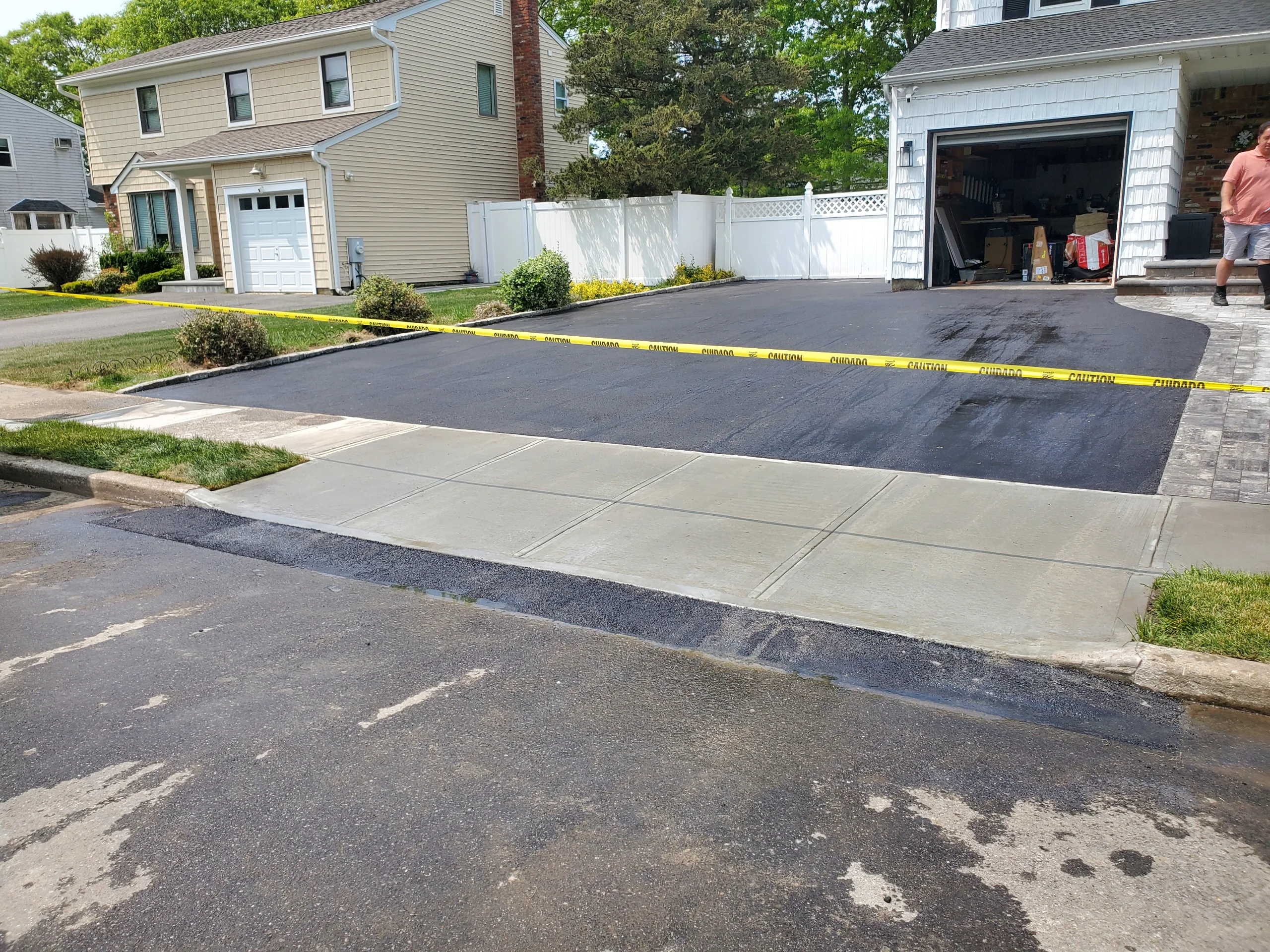
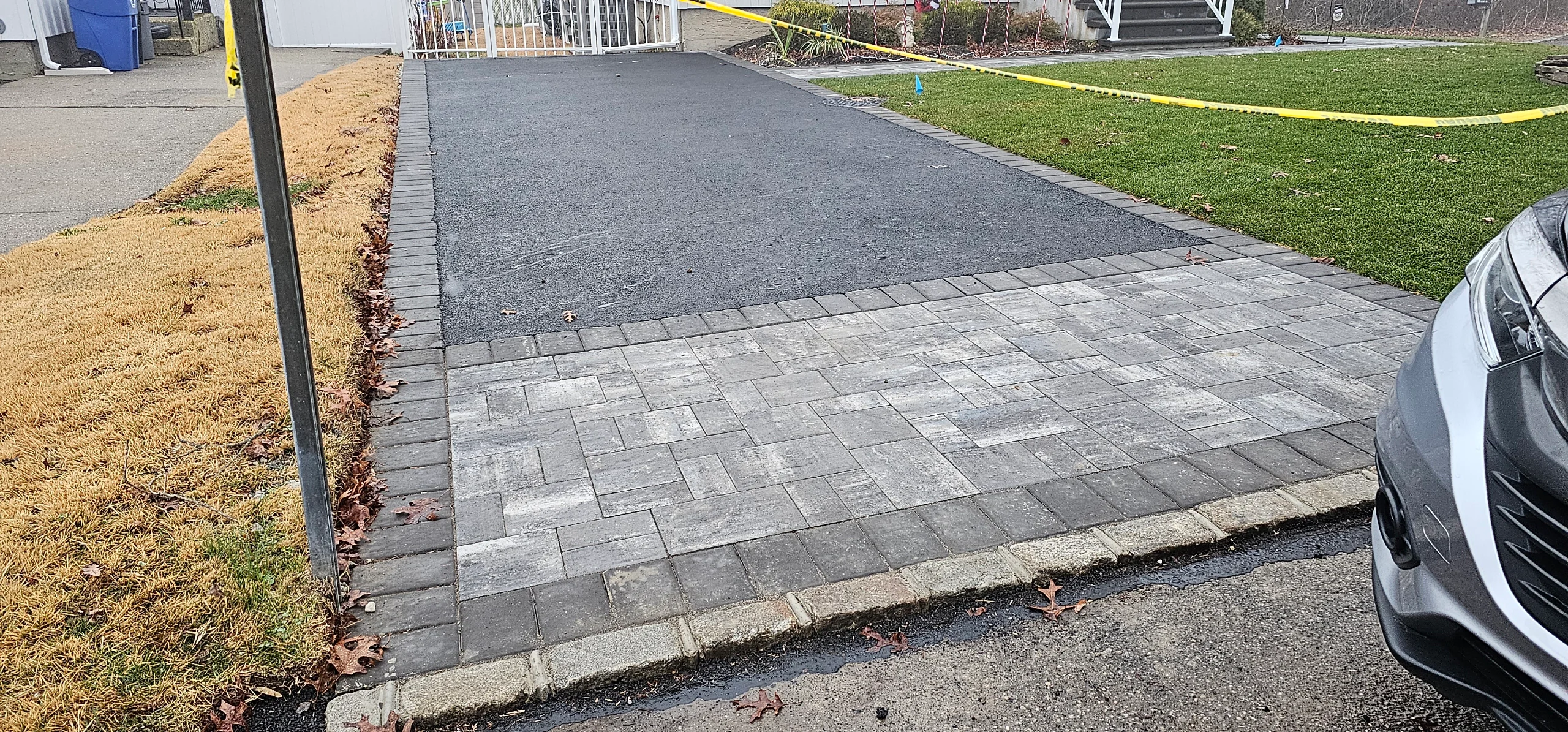
Belgian block driveway aprons provide a durable transition between your driveway and the street. These need solid bases and hard mortar joints because they don’t interlock like pavers. When installed correctly with proper base preparation, they handle heavy vehicle traffic without shifting or settling.
Masonry flatwork includes patios, walkways, and other horizontal concrete or stone surfaces. East Hampton properties benefit from stamped concrete options that provide aesthetic appeal while maintaining the durability of traditional concrete. The key is proper base preparation and grading specific to Suffolk County’s soil conditions—something that separates work that lasts from work that fails.
Properly installed concrete and masonry structures can last 30 to 50 years or more in East Hampton, but that lifespan depends entirely on installation quality and base preparation. The coastal climate here creates specific challenges—salt air, freeze-thaw cycles, and sandy soil that shifts if not properly compacted.
The concrete itself isn’t usually the problem. It’s what’s underneath that determines longevity. A driveway poured over poorly compacted fill will sink and crack within a few years. The same driveway poured over a properly graded, compacted base with adequate drainage will still look good decades later.
Belgian blocks and masonry structures follow the same principle. The blocks themselves are incredibly durable, but they need a three-layer installation—reinforced concrete base, mortar bed, and mortar joints—to handle vehicle weight without rutting. Shortcuts in base preparation show up quickly in East Hampton’s conditions.
Water is the main culprit. When water gets under concrete slabs, it washes away the base material or causes the soil to expand and contract with freeze-thaw cycles. This creates voids under the concrete, which then cracks and sinks into those empty spaces.
Poor initial grading makes this worse. If your driveway or sidewalk was installed without proper slope, water pools instead of draining away. Over time, that standing water works its way underneath and starts eroding the base. East Hampton’s sandy soil is particularly susceptible to this erosion.
Tree roots also cause problems, especially for sidewalks. As roots grow, they lift concrete sections and create uneven surfaces. The solution isn’t just removing the root—you need to address the void it created and ensure proper compaction before replacing the concrete. Otherwise, you’re just setting up the same problem to happen again.
Belgian block aprons typically range from $35 to $60 per square foot installed in the East Hampton area, depending on the scope of work and existing conditions. That’s significantly more than asphalt or standard concrete, but you’re paying for a permanent installation that won’t need replacement.
The cost reflects the labor-intensive installation process. We’re not just laying blocks on sand. Proper installation requires excavation, a reinforced concrete base, a mortar bed, and individual blocks set in mortar joints. This three-layer system is what prevents the rutting and shifting that happens when Belgian blocks are installed on inadequate bases.
For a standard two-car driveway apron (roughly 150-200 square feet), you’re looking at $5,000 to $12,000. That might seem high compared to other options, but Belgian blocks add significant curb appeal and property value in East Hampton’s real estate market. They’re also one of the few driveway materials that actually look better as they age.
Sometimes, yes—but it depends on the extent of damage and what’s causing it. If you have isolated cracks or a single sunken panel, targeted repairs can work. If the entire slab is settling or you have widespread cracking, replacement usually makes more sense both functionally and financially.
For sidewalk repair, we can often lift and level individual panels that have sunk, then stabilize the base underneath. This works when the concrete itself is still in good condition and the problem is isolated to specific sections. We can also replace individual damaged panels while leaving the rest intact.
Driveway repairs are trickier because driveways take more weight and stress. A patch might hold for a while, but if the underlying base issues aren’t addressed, the problem will spread. We’ll be honest about whether a repair will actually solve your problem or just delay the inevitable. There’s no point spending money on a fix that won’t last.
Late spring through early fall is ideal for concrete installation in East Hampton. Concrete needs temperatures above 50°F to cure properly, and you want several days of dry weather after the pour. Summer offers the most predictable conditions, though extreme heat can actually cause concrete to cure too quickly, which creates its own problems.
We can work in cooler weather with proper precautions—blankets, curing compounds, and careful monitoring. But winter installations carry more risk in East Hampton’s climate. A surprise freeze during the curing process can seriously compromise concrete strength.
If you’re planning concrete work, spring is when most people notice winter damage and start calling contractors. That means schedules fill up quickly. Fall can be a good option—contractors are less busy, and you still have adequate temperatures for proper curing. Just don’t wait until late October or November when weather becomes unpredictable.
Most concrete work in East Hampton requires a building permit, especially if you’re replacing or significantly altering existing driveways, aprons, or sidewalks. The Town of East Hampton Building Department oversees these permits to ensure work meets local codes for drainage, setbacks, and stormwater management.
Permit requirements exist for good reason in East Hampton. Improper drainage from residential properties can affect neighboring homes and public infrastructure. The permit process ensures your concrete work includes adequate slope and drainage provisions that account for the area’s water table and soil conditions.
We handle permit applications as part of our service. The process typically takes a few weeks, and inspections happen at specific stages during installation. Some homeowners try to skip permits to save time or money, but unpermitted work can create serious problems when you sell your property or file an insurance claim. It’s not worth the risk.
Other Services we provide in East Hampton