
Hear from Our Customers

Long Island’s weather doesn’t mess around. Constant wet-dry cycling weakens bonds. Freeze-thaw action creates pressure inside concrete. Salt from winter roads and coastal air eats away at surfaces.
Most concrete work fails because the prep work was rushed or the grading was wrong. Water pools where it shouldn’t. Foundations settle unevenly. What looked perfect in September cracks by March.
Proper concrete grading and prep means understanding Brentwood’s specific drainage patterns. Suffolk County sits on high water tables and shifting sands near the coast. Your concrete needs a foundation that accounts for that—not just a flat pour and a prayer. When the base is right and the slope directs water away from your home, you’re not patching cracks every spring. You’re adding value that buyers notice and appraisers count.
We’re based in Smithtown and work throughout Suffolk County. We’re not a national franchise or a crew that shows up once and disappears. We’re the team that understands why your neighbor’s driveway apron is sinking and what actually needs to happen to fix yours.
Brentwood’s real estate has appreciated 148% over the last decade. Homes here are worth protecting with work that lasts. We use excavators, grading lasers, and materials rated for coastal freeze-thaw conditions because we’ve seen what happens when shortcuts get taken.
You’ll get a clear quote before we start, work scheduled around your availability, and communication that doesn’t leave you guessing. We’re licensed, insured, and focused on doing the job right the first time.

First, we assess your property’s drainage and soil conditions. Brentwood sits in an area where water tables and soil composition vary block to block. We’re looking at slope, existing drainage issues, and how water moves during heavy rain or snowmelt.
Next comes excavation and base prep. We remove unstable soil, compact the base, and install proper backfill materials. If your project needs weep holes, drainage pipes, or grading adjustments to direct water away from structures, that happens now. This is the step most crews rush—and the reason most concrete fails early.
Then we pour and finish. We use concrete mixes rated for Long Island’s climate, vibrate out air bubbles for even density, and finish the surface to your specs. Whether it’s a smooth driveway, a Belgian block apron, or a textured walkway, the curing process matters as much as the pour. We protect the concrete during curing and make sure it sets properly before you use it.

Ready to get started?
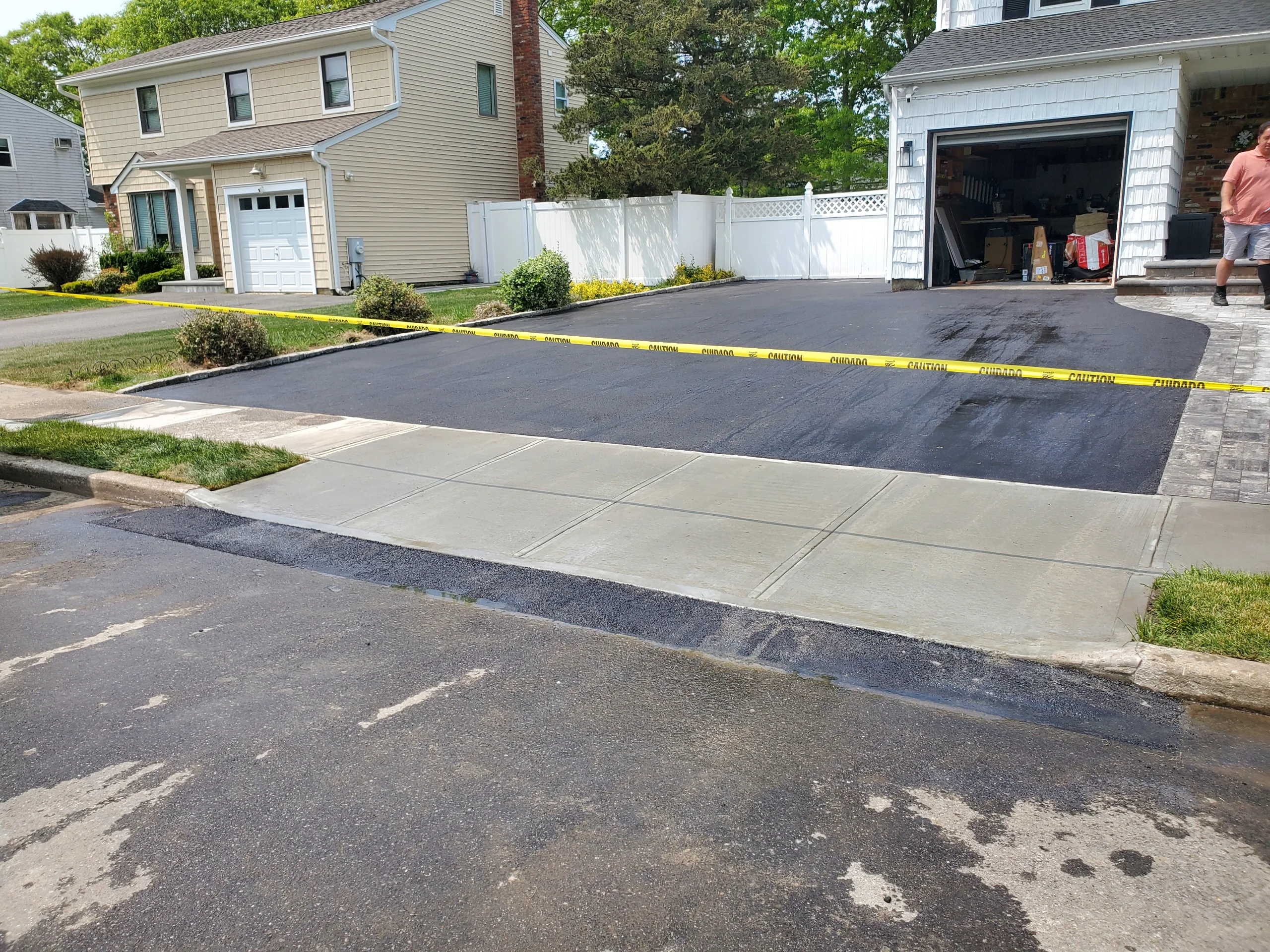
Concrete curb installation gives your driveway clean edges and prevents pavement from crumbling into your lawn. It’s a small detail that makes a big difference in how your property looks from the street.
Sidewalk repair addresses safety and liability. A single crack or uneven slab can cause falls, and in Brentwood’s neighborhoods, that’s a risk you don’t need. We replace or repair damaged sections with concrete that matches your existing work and meets local codes.
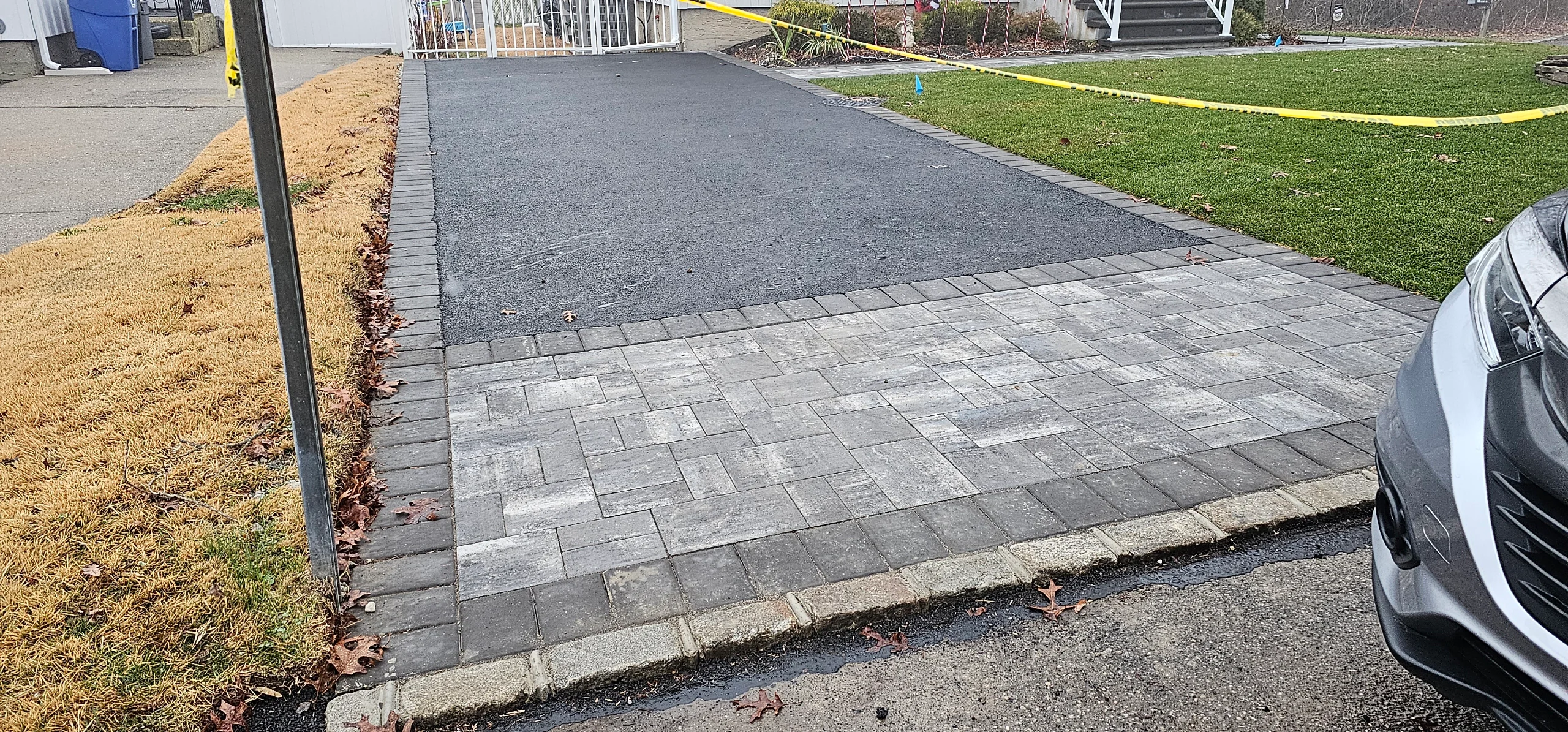
Belgian block driveway aprons are one of the best upgrades for curb appeal in higher-end Brentwood neighborhoods. They frame your driveway entrance, protect edges from traffic damage, and hold up to Northeast winters better than standard concrete edging. They’re also one of those details that buyers notice during showings.
Masonry flatwork covers patios, walkways, and other horizontal concrete surfaces. The key is making sure the base is stable and drainage is built in from the start. Suffolk County’s soil doesn’t forgive bad prep work, so we handle grading, compaction, and material selection before any concrete gets poured.
Concrete contractors generally charge between $6 and $14 per square foot, but your actual cost depends on several factors. Job size matters—larger pours cost less per square foot because setup and equipment costs get spread out. Site prep is another variable. If we’re working on flat, accessible ground with good drainage, costs stay lower. If we need to excavate problem soil, adjust grading, or work around landscaping, that adds time and materials.
Concrete thickness and finish also affect price. A standard driveway needs four to six inches of concrete. Heavier traffic areas or unstable soil might need more. Decorative finishes, stamped patterns, or Belgian block edging cost more than a basic broom finish. Location plays a role too—Brentwood’s higher property values and Long Island’s material costs push prices toward the upper end of that range.
The best way to know what your project will cost is to get a detailed quote that accounts for your property’s specific conditions. We assess drainage, soil stability, and access before pricing anything out, so you’re not surprised by change orders halfway through the job.
Concrete cracks for three main reasons: poor base preparation, water infiltration, and freeze-thaw cycles. Suffolk County’s climate makes all three more likely if the work isn’t done right.
Poor base prep is the biggest culprit. If the soil underneath isn’t compacted properly or the base material shifts, the concrete above it cracks as it settles unevenly. We prevent this by excavating unstable soil, using the right base materials, and compacting everything in layers. Grading also matters—if water pools under your concrete, it weakens the base over time.
Water infiltration happens when drainage isn’t built into the design. Brentwood gets nor’easters and heavy spring rains. If water has nowhere to go, it sits under your concrete, eroding the base and creating voids. We install drainage solutions during construction—proper slope, weep holes, and sometimes drainage pipes—so water moves away from your concrete instead of undermining it.
Freeze-thaw damage is unavoidable on Long Island unless you use the right concrete mix and installation techniques. Water gets into small cracks, freezes, expands, and makes those cracks bigger. We use air-entrained concrete mixes designed for freeze-thaw resistance and make sure the surface is finished and cured properly to minimize water absorption.
A driveway apron is the section that connects your driveway to the street. It’s the transition point where your private property meets the public road, and it takes more abuse than the rest of your driveway. Aprons handle the weight of vehicles entering and exiting at an angle, plus they’re exposed to road salt, street runoff, and sometimes snowplow damage.
Belgian block aprons are popular in Brentwood because they’re more durable than standard concrete edging and they add a finished, high-end look. Belgian blocks are individual stone or concrete blocks set along the edges of your apron. They frame the entrance, protect the pavement edges from crumbling, and hold up better to the kind of wear that happens at the curb line.
A regular driveway is the main surface leading to your garage or parking area. It’s usually a continuous concrete or asphalt pour designed to handle the weight of your vehicles and daily traffic. The apron is specifically engineered for that transition zone where the stress is highest.
If your apron is cracking or sinking, it’s usually because the base wasn’t prepped for the extra load or the drainage is directing water into that area. Replacing or upgrading your apron with proper grading and Belgian block edging solves both problems and gives your property a noticeable curb appeal boost.
Concrete reaches initial set within 24 to 48 hours, but full cure takes about 28 days. You can walk on most concrete surfaces after 24 hours, but driving on a new driveway or apron should wait at least seven days—and that’s in good weather.
Long Island’s climate affects curing time. If we pour during cooler months, concrete cures slower. If it’s hot and dry, it cures faster but needs protection from drying out too quickly, which can cause surface cracking. We monitor weather conditions and adjust our curing methods—using curing compounds, covering the concrete, or wetting it down—to make sure it sets properly.
The 28-day full cure is when concrete reaches its maximum strength. That doesn’t mean you can’t use it before then, but heavy loads, sharp turns, and aggressive use should wait until the concrete is fully cured. For driveways, we usually recommend light use after a week and normal use after two weeks, with full heavy-duty use safe at four weeks.
Rushing this process is one of the most common mistakes homeowners make with DIY projects or when they hire crews that move too fast. Concrete that’s used too early can develop surface damage, cracking, or weak spots that show up later. We give you a clear timeline based on your specific project and weather conditions so you know exactly when your new concrete is ready.
Most concrete work in Brentwood requires a permit, especially if you’re installing a new driveway, expanding an existing one, or doing work that affects drainage or property lines. Suffolk County and the Town of Islip have specific codes for concrete thickness, slope, and drainage to prevent water runoff issues and ensure structural safety.
Sidewalk repair and replacement usually need permits too, particularly if the sidewalk is in the public right-of-way or connects to a public street. The town wants to make sure the work meets ADA requirements, has proper slope for drainage, and doesn’t create trip hazards.
Smaller projects like patios or walkways that don’t affect drainage or property boundaries might not need permits, but it’s always better to check first. Unpermitted work can cause problems when you sell your home or if a neighbor complains about drainage issues.
We handle permit applications as part of our service. We know what Brentwood and Suffolk County require, we submit the paperwork, and we make sure the work passes inspection. That protects you from fines, gives you documentation that the work was done to code, and ensures your concrete installation won’t cause issues down the road. If you’re getting quotes from other contractors, ask whether permits are included—some crews skip this step to save time or cut costs, and that liability falls on you as the property owner.
Late spring through early fall is ideal for concrete work on Long Island. You want temperatures consistently above 50 degrees during the day and above 40 at night for at least a week after the pour. Concrete cures through a chemical reaction that slows down significantly in cold weather, and if it freezes before it’s fully set, the surface can fail.
Summer is the busiest season, so scheduling can be tighter and costs may be slightly higher. But the weather is predictable, curing times are faster, and you can use your new concrete sooner. Late spring and early fall offer good weather with more availability and sometimes better pricing.
Winter concrete work is possible but requires extra precautions—heated enclosures, special concrete mixes, and longer curing times. It’s more expensive and usually only makes sense if you have an urgent repair or a project that can’t wait until spring.
Rain is the other factor. We don’t pour concrete in active rain, and we need a few dry days after the pour for proper curing. Brentwood gets nor’easters in late fall and early spring, so timing around weather patterns matters. We monitor forecasts closely and schedule pours when conditions are right, not just when the calendar says it’s convenient.
Other Services we provide in Brentwood