Planning landscape demolition in Suffolk County means understanding local soil conditions, proper concrete removal techniques, and when professional site preparation saves you money long-term.
Share:

Summary:
You’re looking at that cracked driveway, that crumbling patio, or that overgrown section of your yard, and you know something needs to change. Maybe you’re planning a complete landscape overhaul. Maybe you just need to remove some aging concrete before it becomes a bigger problem.
Either way, landscape demolition is where it starts. Not the fun part—the necessary part. The part that determines whether your new installation lasts 30 years or starts showing problems in three.
This isn’t about swinging a sledgehammer and hoping for the best. It’s about understanding what you’re working with in Suffolk County, what needs to happen, and when to recognize you need help. Let’s walk through what actually goes into planning landscape demolition the right way.
Landscape demolition covers more ground than most people realize. It’s the removal of existing hardscape and landscape elements to prepare your Suffolk County property for renovation or new construction.
That includes old concrete patios, driveways, and walkways. It covers deteriorating retaining walls, broken pavers, and outdated decorative features. Sometimes it means removing overgrown trees, stumps, and root systems that interfere with your plans.
The scope depends entirely on your project. A simple patio replacement might only require breaking up and hauling away a few hundred square feet of concrete. A full landscape renovation could involve clearing vegetation, removing multiple concrete structures, excavating soil, and regrading your entire yard to address Long Island’s drainage challenges.
Concrete removal is often the heaviest part of landscape demolition—literally and figuratively. Old driveways, patios, and walkways don’t just disappear. They need to be broken apart, lifted out, and hauled away, often in pieces weighing hundreds of pounds.
The process starts with assessing what you’re removing. Thickness matters. A 4-inch residential patio breaks up differently than an 8-inch driveway designed to support vehicles. Reinforcement matters too—concrete with rebar or wire mesh requires cutting tools before you can remove it in manageable pieces.
Access determines your approach in Suffolk County properties. Can equipment reach the area, or are you working in a tight backyard with narrow gates? Many older Long Island homes have limited access, which means more manual labor and potentially higher costs for your landscape demolition project.
Then there’s what’s underneath. Sometimes you find a proper gravel base. Sometimes you find another layer of old concrete nobody mentioned. Sometimes you hit Long Island’s characteristic sandy soil, clay deposits, or fill that wasn’t compacted properly in the first place. What you discover during removal tells you a lot about what went wrong and what needs to happen differently this time.
Debris disposal isn’t simple either. Concrete is heavy, and landfills charge by weight. The good news is that concrete is highly recyclable. We prioritize crushing it into aggregate for road base or other construction uses, keeping it out of landfills and often reducing your disposal costs.
Long Island has several recycling facilities that process concrete, asphalt, and brick into reusable materials. Working with contractors who prioritize recycling makes environmental and economic sense for your landscape demolition project.
Trees, shrubs, and overgrown vegetation create their own challenges in landscape demolition. Roots don’t respect property lines or concrete slabs. They grow underneath, around, and sometimes straight through hardscape, creating the cracks and heaving you’re probably trying to fix.
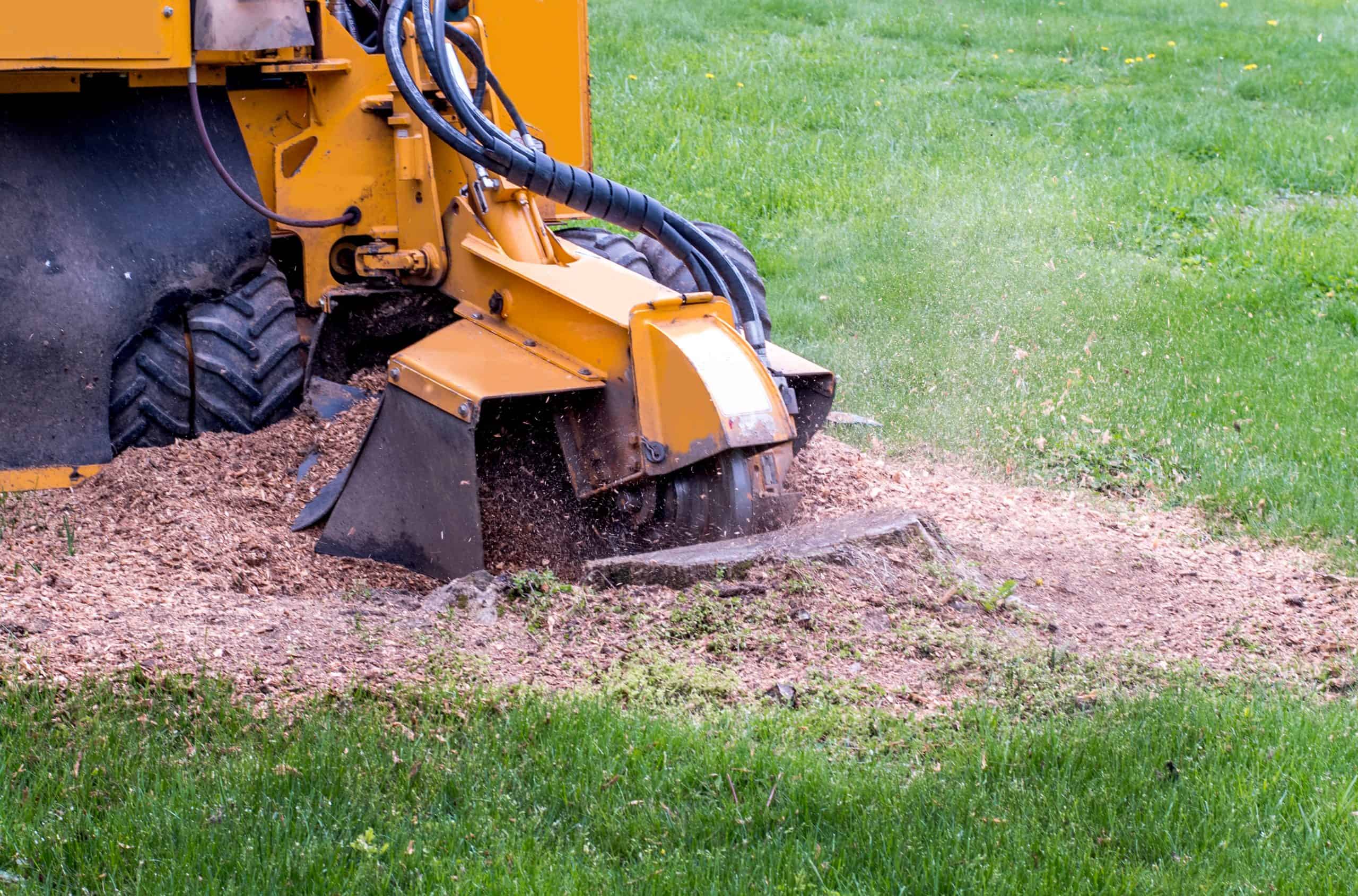
Removing vegetation means dealing with root systems. Small shrubs pull out relatively easily. Mature trees require stump grinding or complete excavation, depending on your plans for the space. Stump grinding removes the visible stump and grinds roots down several inches below grade, leaving wood chips you can use as mulch or remove entirely.
Full excavation digs out the entire root ball, which matters if you’re installing new concrete or structures in that exact location. You don’t want roots decomposing under your new patio, creating voids that lead to settling and cracking down the road.
Suffolk County’s sandy soil makes tree removal somewhat easier than clay-heavy areas, but it also means roots spread wide searching for water and nutrients. A tree with a 20-foot canopy might have roots extending 30 or 40 feet from the trunk. You won’t remove all of them during landscape demolition, but you need to address the major structural roots that could cause future problems.
Timing matters for vegetation removal. Late fall through early spring is ideal for tree work in Long Island. Trees are dormant, which reduces stress if you’re transplanting anything. Frozen ground can complicate digging, but it also means less mud and mess during the demolition phase.
Consider what you’re removing and what you want to keep. We can work around existing landscape features you value, protecting root zones and preventing damage to trees and plantings that aren’t part of the demolition plan.
Want live answers?
Connect with a Rolling Hills Property Services Inc expert for fast, friendly support.
Sometimes you don’t need complete landscape demolition. Sometimes you just need to fix what’s there. That’s where concrete grinding companies come in, offering surface preparation that can save you thousands compared to full replacement.
Concrete grinding uses diamond-embedded equipment to level uneven surfaces, remove high spots, and create the right texture for overlays or coatings. It’s particularly useful for Suffolk County driveways and patios where the underlying base is solid, but the surface has deteriorated or developed lippage at joints.
The process removes a thin layer of concrete, exposing fresh material underneath and creating a uniform surface. For decorative concrete installations or protective coatings, proper grinding by experienced concrete grinding companies ensures adhesion and prevents failures down the road.

Deciding between grinding and complete landscape demolition depends on what’s wrong with your concrete and what you’re trying to achieve. Grinding works when the concrete itself is structurally sound but the surface is damaged, uneven, or needs preparation for a new finish.
You’re looking at grinding if you have minor height differences between slab sections, surface scaling or spalling that hasn’t penetrated deeply, or old coatings and adhesives that need removal before applying new finishes. It’s also the right choice when you’re installing decorative concrete overlays that require a specific surface profile for proper bonding.
Full landscape demolition and removal makes more sense when concrete has major cracks that indicate underlying problems, when settling has created significant elevation changes, or when the slab is too thin or poorly reinforced to serve its purpose. If you’re changing the layout entirely or if the existing concrete was never installed correctly in the first place, removal and replacement is usually the better long-term investment.
In Suffolk County, soil conditions often determine the right approach. If settling is due to poor initial compaction or erosion of the base material, grinding the surface won’t fix the problem. You’re just creating a smooth surface on top of an unstable foundation, which means you’ll be dealing with the same issues again in a few years.
Professional assessment by experienced concrete grinding companies helps you make the right call. They can identify whether surface damage is cosmetic or symptomatic of deeper structural problems requiring full landscape demolition. They’ll also consider your budget and timeline, offering options that balance immediate costs against long-term performance.
The right choice depends on your specific Suffolk County property situation, but understanding the difference prevents you from spending money on a temporary fix when you really need a permanent solution.
Professional concrete pourers need proper site preparation following landscape demolition to deliver results that last. The work that happens before concrete arrives determines whether your new installation performs well for decades or starts showing problems within a few years.
Site preparation starts with excavation to the correct depth. For most residential applications in Suffolk County, that means removing soil to accommodate your base material plus the concrete thickness. A typical driveway requires 4-6 inches of compacted gravel base plus 4-6 inches of concrete, so you’re excavating 8-12 inches below your finished grade.
The base is where most problems start or stop. Properly compacted gravel provides drainage, prevents frost heaving, and creates a stable platform that won’t settle under load. In Suffolk County, where soil composition varies dramatically from sandy coastal areas to clay-heavy inland zones, the base material and compaction method need to match your specific conditions.
Coastal properties with sandy soil drain well naturally but shift more easily. The solution is proper compaction in lifts—adding gravel in 2-inch layers and compacting each one before adding the next. Inland properties with heavier clay soil need attention to drainage, often requiring additional measures to prevent water from pooling under the slab.
Forms define your concrete’s shape and thickness. Professional concrete pourers use sturdy lumber or metal forms, properly braced and leveled to ensure accurate dimensions. The forms also control slope for drainage—typically a quarter inch per foot away from structures to prevent water from flowing toward foundations.
Reinforcement is next. Wire mesh or rebar doesn’t prevent all cracking, but it keeps cracks tight and prevents sections from separating. The key is positioning reinforcement in the middle third of the slab, not laying it flat on the base where it provides no benefit.
When concrete pourers arrive at your Suffolk County property, they’re working with material that starts setting within a couple of hours. Everything needs to be ready—forms in place, base compacted and level, reinforcement positioned correctly, and any utilities or features accounted for. Delays or last-minute changes create problems that show up as weak concrete, cold joints, or improper finishing.
The difference between a driveway that lasts 30 years and one that starts cracking in three often comes down to what happened during landscape demolition and site preparation before the concrete truck arrived. That’s why experienced concrete pourers insist on proper preparation—they know their work is only as good as the foundation it sits on.
After landscape demolition and new concrete installation, protecting your investment matters. That’s where concrete painting contractors come in, offering protective coatings and decorative finishes that extend concrete lifespan in Suffolk County’s challenging coastal environment.
Concrete coatings serve two purposes. They protect against moisture penetration, chemical exposure, and surface wear. They also enhance appearance, transforming plain gray concrete into attractive surfaces that complement your landscape design.
In Long Island’s coastal climate, protective coatings become even more important. Salt exposure from winter de-icing and ocean proximity, freeze-thaw cycles, and moisture from nor’easters all take their toll on unprotected concrete.
Article details:
Share:
Continue learning: