Trimming bushes at the wrong time can cost you a full season of blooms. Here's what Long Island homeowners need to know before picking up the shears.
Share:
Summary:
There’s a reason so many Long Island yards look great from the street in May and a little rough by August. It’s not neglect — it’s timing. Most homeowners trim their bushes when it’s convenient, not when it’s actually right for the plant. And on Long Island, where sandy glacial soil, coastal salt air, and a Zone 7 climate create a very specific growing environment, that gap between “convenient” and “correct” can mean losing a full season of blooms or stressing a plant that took years to establish.
This guide covers the real timing rules, the species-specific details that matter most across Suffolk County, and a few lawn care questions that tend to come up at the same time. We’ll walk you through what works, what doesn’t, and when to call in help if you’d rather skip the guesswork.
These two words get used interchangeably all the time, but they’re not the same thing — and mixing them up leads to real problems. Trimming is about shape and size. You’re cutting back growth to keep a shrub looking neat, controlling how wide or tall it gets, and maintaining the lines of your landscape.
Pruning is about plant health. You’re removing dead, diseased, or structurally problematic branches to help the plant grow better and live longer. Both matter, but they call for different tools, different timing, and different techniques.
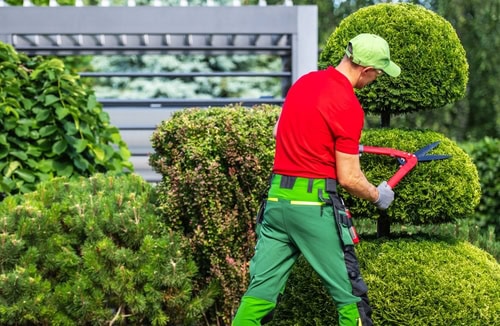
A hedge shear is fine for trimming a boxwood into a clean shape. Use that same tool on a rhododendron and you’ll end up with brown, ragged edges because large-leaved plants need hand pruners that make clean cuts at the stem. Knowing which task you’re actually doing — and what your plant actually needs — is the starting point for everything else.

Spring feels like the obvious time to get outside and cut everything back. The yard looks overgrown after winter, you want it cleaned up, and the impulse to grab the hedge trimmer is completely understandable. But spring trimming is where the most common — and most costly — mistakes happen.
The issue is timing relative to bloom cycles. Spring-blooming shrubs like lilacs, forsythia, and viburnum set their flower buds in the previous fall. They’re sitting there all winter, ready to open in April and May. If you trim those plants in early spring before they bloom, you’re cutting off the buds. The plant won’t be damaged, but you won’t see a single flower that season.
The fix is simple once you know it: wait until the blooms have fully faded, then prune. You get your flowers, the plant gets shaped, and the timing works for everyone. Summer-blooming shrubs like rose-of-Sharon and butterfly bush work differently. They flower on new wood — growth that happens during the current season. For those, late February or early March pruning is actually ideal.
You’re cutting back before new growth starts, which encourages the plant to push out strong new shoots that will carry the summer blooms. The broader principle for spring yard care is this: identify what you have before you cut anything. A quick look at whether a shrub blooms in spring or summer tells you everything you need to know about when to trim it.
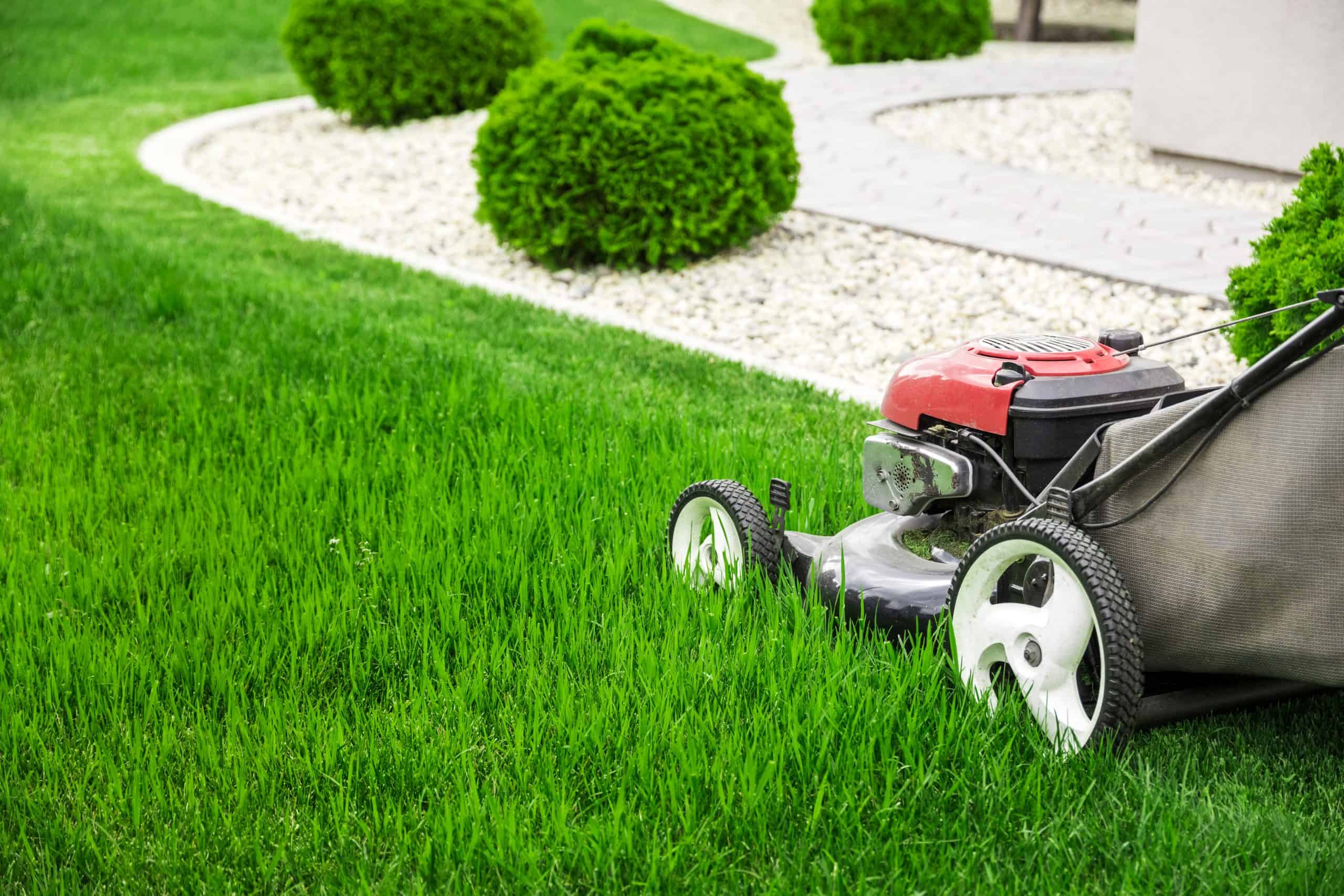
Spring isn’t just shrub season. It’s also when homeowners across Suffolk County start thinking about bare spots in the lawn, thin turf from a rough winter, or a full lawn renovation. Those decisions — seed versus sod, patch versus replace — often come up at the same time as the trimming and cleanup work. Which means it helps to have a clear picture of the whole yard before you start any of it.
Suffolk County’s sandy, fast-draining soil is a factor here. Sand drains quickly, which is great for avoiding waterlogged roots but means grass and shrubs alike need consistent moisture to establish. If you’re putting down new seed or sod in spring, the soil prep matters as much as the product you choose. Loose, compacted, or nutrient-poor sandy soil will undercut even the best sod installation if it isn’t addressed first.
On the shrub side, spring is also when you’ll start seeing the full picture of winter damage. Branches that look borderline in March often clarify by April — either they push new growth or they don’t. Waiting a few weeks before making final cuts on borderline branches gives the plant a chance to show you what’s actually dead versus what’s just slow to wake up. That patience pays off, especially on established foundation plantings that would take years to replace.
Want live answers?
Connect with a Rolling Hills Property Services Inc expert for fast, friendly support.
The general answer — late winter to early spring, before new growth begins — holds for most trees and shrubs in Suffolk County’s Zone 7a/7b climate. Dormant-season pruning lets the plant direct its energy into healing cuts quickly once growth resumes, and it reduces the window for disease and insects to get into fresh wounds.
But “most” isn’t “all,” and the exceptions are where things get complicated. The rule that applies year-round without exception is the “three Ds”: dead, diseased, or damaged branches should come out whenever you find them, regardless of season. A broken branch after a nor’easter doesn’t wait for February. A diseased limb in July doesn’t either.
Beyond that, timing depends heavily on the specific plant.

For most deciduous shrubs — the ones that lose their leaves in winter — late winter pruning (think February into early March) is the sweet spot. The plant is dormant, you can see the structure clearly without leaves in the way, and you’re set up for strong spring growth. This applies to most of the foundation plantings you’d find on a typical Suffolk County property: spirea, weigela, viburnum, and similar shrubs that bloom in summer or are grown primarily for foliage.
Spring bloomers, as mentioned earlier, are the exception. Lilacs, forsythia, azaleas, and rhododendrons need to be pruned right after they finish flowering — usually May or June depending on the year. Prune them any earlier and you’re sacrificing next year’s blooms along with this year’s.
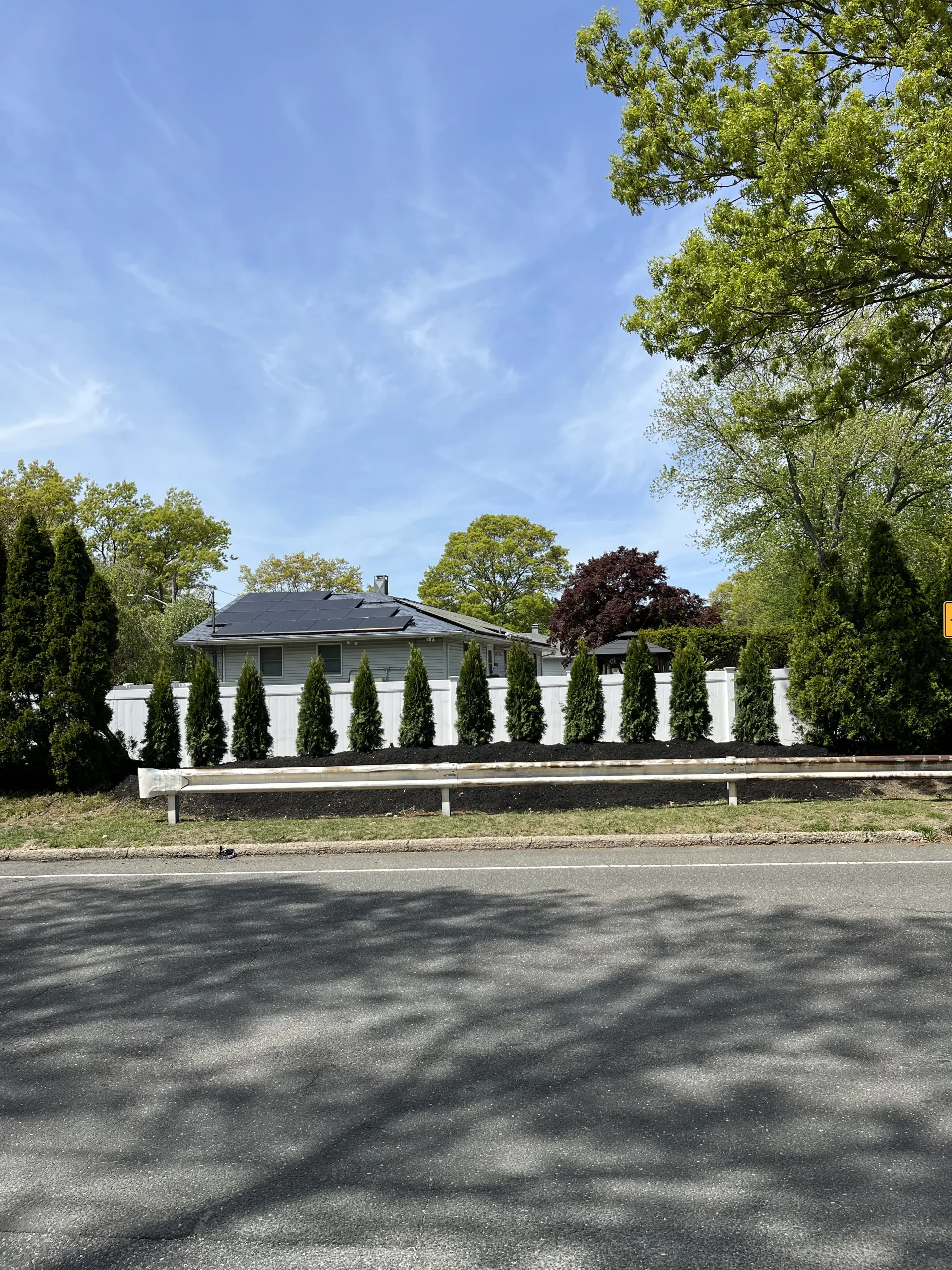
Evergreen shrubs like boxwood, arborvitae, and holly are generally more forgiving. Light trimming in late spring after new growth hardens off is typical, with a second light pass possible in early fall. Avoid heavy cuts on evergreens in late fall — new growth stimulated by pruning won’t have time to harden before the first frost, which can cause dieback on the fresh tips.
One structural principle that applies across almost every shrub species: the bottom should always be wider than the top. It’s not just aesthetic. A shrub that’s wider at the top shades out its own lower branches, which eventually die off and leave you with a bare-legged plant that looks awkward and is harder to correct the longer it goes. Getting the shape right from the start — or correcting it gradually over a few seasons — makes a meaningful difference in how the plant looks and how healthy it stays.
Trees follow the same general dormant-season logic as shrubs, but a few species on Long Island carry specific risks that are worth knowing before you schedule any work.
Oak trees are the big one. Long Island has a significant oak population — they’re one of the most common native trees across Suffolk County — and they carry a specific disease risk during spring. Oak wilt is spread by sap beetles that are most active from April through June. Those beetles are attracted to fresh pruning cuts, and if they’re carrying the fungal spores that cause oak wilt, a spring pruning job can introduce the disease directly into the tree.
The practical guidance from arborists who work on Long Island is clear: prune oaks in winter while they’re dormant, or wait until late summer after the beetle flight has ended. Avoid the April through June window if you can help it.
Pine trees respond well to pruning in late winter or early spring. There’s also a technique called candle pruning — pinching back the new growth tips that emerge in spring — that controls size without making hard cuts into older wood. It’s a useful approach for homeowners who want to keep their pines compact without stressing the tree.
Fruit trees — apples, pears, and peaches are all common on Long Island residential properties — should be pruned in late winter while they’re still dormant, ideally in February or early March before bud break. Fall pruning of fruit trees is specifically discouraged because it stimulates new growth that won’t survive the first hard frost. You end up with dieback that sets the tree back and creates entry points for disease.
Evergreen trees like arborvitae, spruce, and fir tolerate light trimming through the growing season but respond best to pruning in late winter or early spring before new growth pushes. Heavy cuts on evergreens in summer or fall can leave the plant stressed heading into winter.
Crape myrtles are worth their own mention because they’re common enough on Long Island — Zone 7 is the northern edge of their range, and they thrive here — and because they’re one of the most frequently mismanaged trees in the region. The practice of cutting crape myrtles back to thick stubs every year has a name in the industry: crape murder. It’s widespread, it looks dramatic, and it’s genuinely harmful.
It weakens the tree, creates knobby, unnatural growth, and destroys the graceful branching structure that makes crape myrtles worth having. The right approach is light pruning of dead wood and any crossing or rubbing branches in late winter. That’s it. The tree doesn’t need to be cut to the ground annually to perform well.
The timing rules aren’t complicated once you know them, but they do require knowing what you’re working with. Long Island’s mix of climate, soil, and plant variety — spring bloomers, oaks, crape myrtles, fruit trees, coastal-stressed evergreens — means the generic advice you find in national gardening guides doesn’t always apply here.
Zone 7a/7b, sandy glacial soil, and the specific disease risks that come with our springs all shape what the right call looks like for your property. If you’re comfortable with the timing and have the right tools, a lot of this is manageable on your own. But if your shrubs have gotten ahead of you, if you’re not sure what species you’re dealing with, or if you’d just rather hand it off to someone who does this every day across Suffolk County, we’re here.
We offer free estimates and straightforward pricing — no guessing, no runaround. Text us at 631-652-8035 for fast availability, or reach us by phone during regular business hours. We’ll take a look and tell you exactly what your property needs.
Article details:
Share:
Continue learning: