
Hear from Our Customers

You’re not just getting a new driveway apron or sidewalk. You’re getting water that flows away from your foundation instead of pooling against it. You’re getting concrete that won’t crack after two winters because it was graded correctly from day one.
Proper concrete work in Smithtown means understanding that 5% slope requirement. Six inches of drop for every ten feet of distance. That’s what keeps water moving during Long Island’s heavy spring rains and prevents the kind of foundation damage that costs five figures to fix.
When the grading is done right with GPS-guided equipment and heavy machinery that can actually compact soil properly, your concrete stays level. Your property value goes up by 5-10% because buyers see a home that’s been maintained correctly. And you stop worrying every time it rains.
We’ve been handling concrete and masonry work in Suffolk County long enough to know exactly what fails and why. The freeze-thaw cycles. The coastal moisture. The sandy soil that shifts if you don’t compact it right.
We’re locally owned and based in Smithtown, which means we’re not learning about Long Island’s drainage issues on your property. We’ve seen what happens when concrete contractors skip the proper grading or don’t use reinforcing mesh. We’ve fixed those jobs.
Every project we take on is fully licensed and insured, with the kind of heavy equipment—bulldozers, excavators, GPS-guided graders—that ensures precision you can’t get from a guy with a truck and a shovel. We’re here because we live here, and your property matters.

First, we assess your drainage situation. Where’s the water going now? Where does it need to go? We’re looking at your foundation, your existing grade, and any low spots that collect water after rain.
Then comes the heavy machinery. We excavate to the right depth, remove any unstable soil, and bring in proper base material. The grading happens with GPS-guided equipment that ensures we hit that 5% slope—or whatever your specific property needs based on the layout.
We compact in layers. This isn’t optional. Long Island’s sandy soil will settle if you don’t compact it right, and that’s when concrete cracks. Once the base is solid and graded correctly, we install reinforcing mesh and pour the concrete with the finish you want.
You get a walkthrough before we start and updates throughout. No surprises. No “we’ll figure it out as we go.” Just a clear plan executed with the right equipment and the experience to handle whatever we find underground.

Ready to get started?
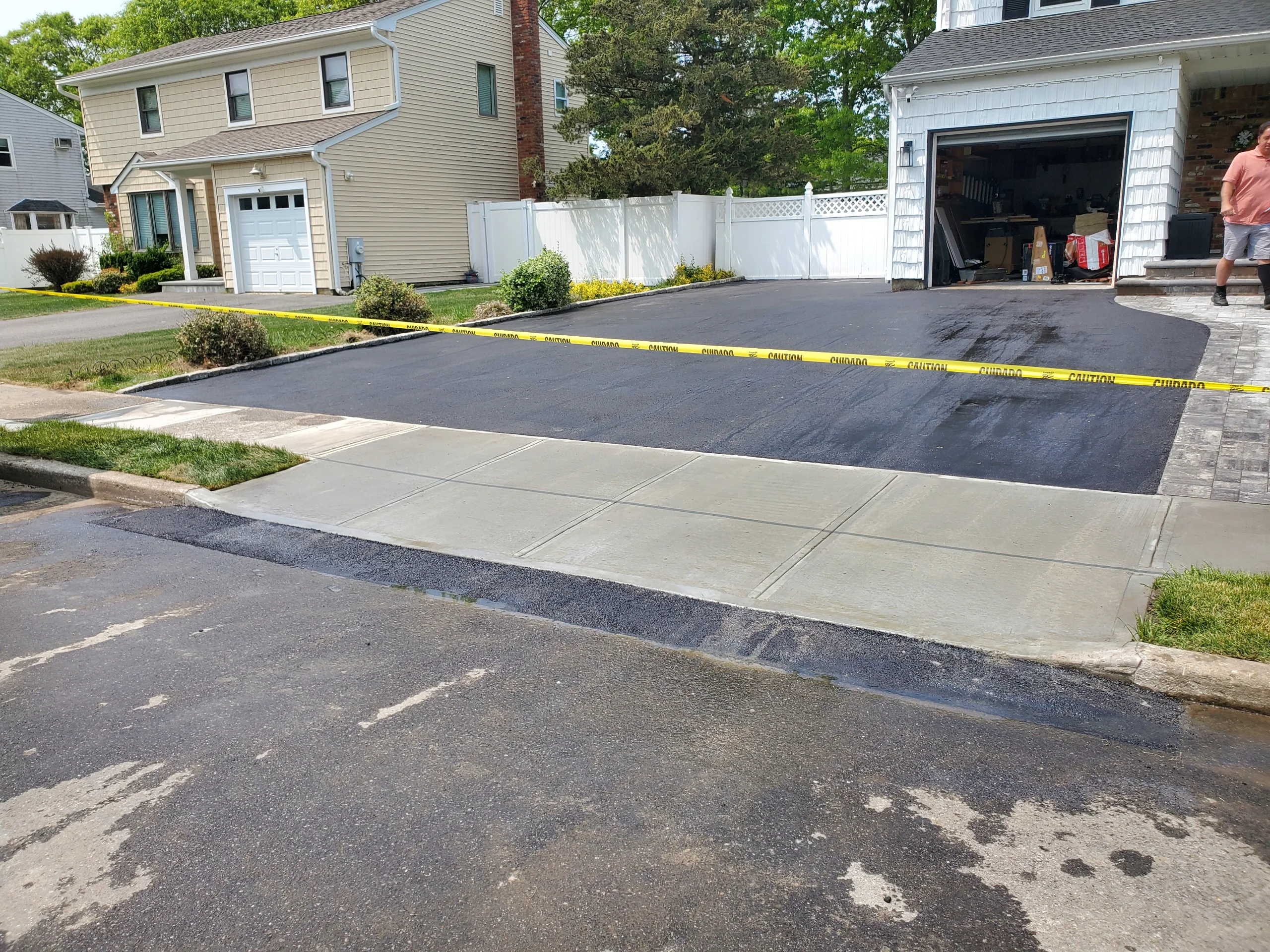
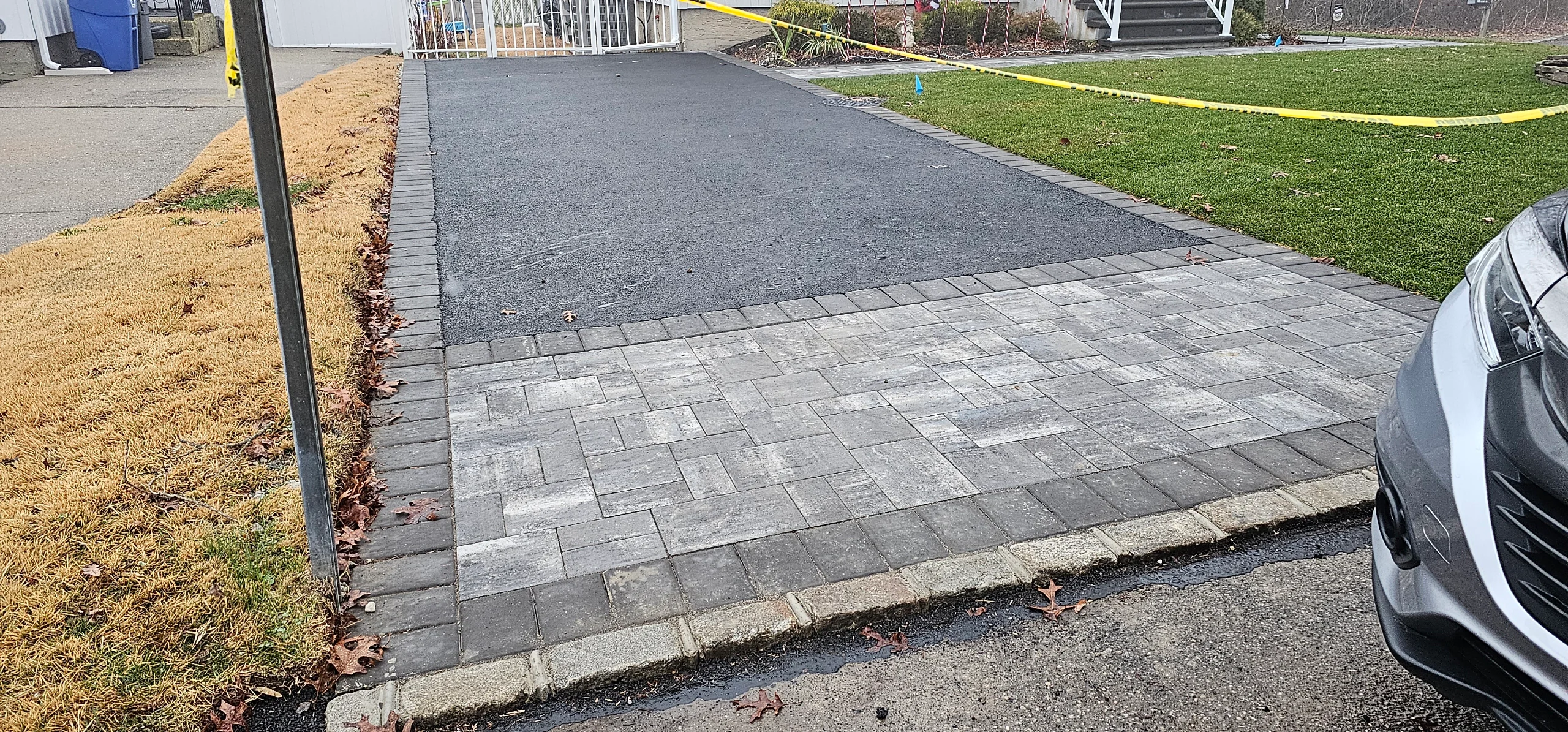
You’re getting more than just concrete. Belgian block driveway aprons that define your property line and handle the transition from street to driveway without cracking. Sidewalk repair that matches your existing concrete or upgrades the whole run if that makes more sense. Masonry flatwork for patios, walkways, or any area where you need a solid, level surface that drains properly.
Every job includes proper site prep. We clear vegetation, excavate to the right depth, and handle any grading issues before concrete ever gets poured. In Smithtown’s high-end neighborhoods, this level of detail is what separates properties that hold value from ones that become maintenance headaches.
We also handle curb installation—the kind that channels water correctly and looks clean from the street. This matters more than most homeowners realize. Proper curbing can redirect hundreds of gallons of water away from your foundation during a single storm. It’s functional and it improves curb appeal, which is why well-done concrete work adds 5-10% to your home’s perceived value.
Most residential concrete projects take three to seven days from start to finish, depending on size and complexity. A simple driveway apron might be done in three days. A full driveway with extensive grading work could take a week.
Weather affects the timeline. We don’t pour concrete if rain is coming within 24 hours or if temperatures are going to drop below 50 degrees at night. Long Island’s spring and fall weather can be unpredictable, so we schedule with buffer room.
The concrete itself needs time to cure. You can walk on it after 24-48 hours, but you shouldn’t drive on it for at least seven days. Full strength takes 28 days. Rushing this process is how concrete fails early, so we give you realistic timelines upfront.
The difference is in what you can’t see. Cheap concrete work skips the base prep. They pour over whatever’s there, compact poorly or not at all, and hope it holds. It might look fine for six months, but then it settles, cracks, or develops drainage problems.
Professional concrete work starts underground. We excavate to the right depth, install a proper base, compact in layers, and grade everything to ensure water flows away from your foundation. We use reinforcing mesh. We don’t skip steps because they’re expensive or time-consuming.
The result is concrete that lasts 20-30 years instead of needing repair in five. It’s the difference between spending money once and spending it three times. In Smithtown, where property values are high, cutting corners on concrete work is a bad investment.
Yes, but only if it’s done right. Well-executed concrete work can add 5-10% to your home’s perceived value because it improves curb appeal and signals to buyers that the property has been maintained properly. A clean driveway apron, level sidewalks, and proper drainage make a strong first impression.
Buyers in Suffolk County’s higher-end neighborhoods notice details. They see cracked concrete or poor drainage and immediately start calculating repair costs. They see professional masonry flatwork and Belgian block edging and they see a home that’s been cared for.
The ROI is strongest when the concrete work solves a visible problem—like water pooling near the foundation or a crumbling driveway apron. Those are red flags during inspections. Fixing them removes objections and makes your property more competitive when it’s time to sell.
Long Island’s sandy soil and flat topography create drainage challenges you don’t see in other regions. Water doesn’t naturally flow away—it sits. That’s why proper grading is critical. We grade at a 5% slope away from your foundation, which is six inches of drop for every ten feet of distance.
We also look at where the water goes after it leaves your property. If your neighbor’s yard is higher than yours, or if you’re in a low spot, we might need to install drainage solutions beyond just grading. French drains, catch basins, or redirecting downspouts all factor into the plan.
The goal is to prevent water from pooling anywhere near your foundation. Even a 1-2% slope—just one to two inches over ten feet—is enough to keep water moving instead of sitting on surfaces. We use GPS-guided graders to hit these grades precisely, because eyeballing it doesn’t work when you’re dealing with Long Island’s specific challenges.
We use professional-grade heavy machinery: bulldozers for clearing and rough grading, excavators for digging and material removal, and GPS-guided graders for precision leveling. This equipment allows us to hit exact grades and ensure proper compaction, which is impossible with smaller, consumer-grade tools.
Compactors are critical. We use plate compactors and roller compactors depending on the area size. Long Island’s sandy soil will settle and shift if it’s not compacted in layers, and that’s when concrete cracks. The right equipment prevents those problems before they start.
We also have specialized attachments for different tasks—laser levels for checking grades, concrete screeds for finishing, and power trowels for larger flatwork areas. This isn’t equipment you rent for a weekend. It’s what we use as professional concrete contractors to deliver results that last decades, not years.
We handle both, and the right choice depends on the condition of your existing concrete. If you have one or two cracked sections but the rest is solid and level, repair makes sense. We can cut out the damaged sections, re-grade the base if needed, and pour new concrete that matches the existing finish.
If your sidewalk has multiple cracks, uneven sections, or drainage problems, replacement is usually the better investment. Repairing bad concrete is like putting a bandaid on a broken bone—it might look better temporarily, but the underlying issues remain.
We’ll assess your sidewalk and give you an honest recommendation. Sometimes repair saves you money. Sometimes it’s throwing good money after bad. In Smithtown, where curb appeal matters and property values are high, doing it right the first time usually makes more financial sense than piecing together repairs that won’t last.
Other Services we provide in Smithtown