
Hear from Our Customers

You get a driveway that doesn’t turn into a skating rink every time it rains. You get walkways that don’t become tripping hazards after one winter. You get Belgian block aprons that stay put instead of shifting under your tires.
That’s what happens when concrete work is done right the first time. The base is compacted correctly. The grading accounts for Hauppauge’s clay-heavy soil. The drainage is mapped before we pour anything.
Your property value goes up because buyers can see quality work. Your maintenance costs go down because you’re not patching cracks every spring. And you stop worrying about water pooling against your foundation after every storm.
This isn’t decorative work that looks good for a season. It’s structural work that protects your biggest investment for decades.
We’ve been handling concrete and masonry work across Suffolk County for years. We’re based in Smithtown, fully licensed and insured, and we’ve seen what happens when concrete gets installed without accounting for Long Island’s specific conditions.
Hauppauge sits on some of the densest clay soil in the region. That soil doesn’t drain naturally. When construction crews compact it further with heavy equipment, you get an impermeable layer that traps water right where you don’t want it—under your driveway, along your foundation, pooling in your yard.
We use the right machinery to prep your site correctly. We grade for proper drainage before any concrete goes down. And we install Belgian block borders and curbs with a solid base that can handle vehicle weight without rutting or shifting. You’re not getting a crew that learned concrete work in a different climate. You’re getting contractors who understand exactly what your property needs.

First, we assess your property’s drainage. We look at soil composition, existing grade, and where water currently flows during heavy rain. This tells us how to prep the site so your concrete doesn’t fail in three years.
Next comes excavation and base prep. We remove unsuitable material, compact the subgrade properly, and install the right base layers. For Belgian block work, that means a solid concrete base—not just gravel and sand that will shift under load. For driveways and walkways, we ensure proper pitch and drainage paths.
Then we install forms, pour concrete to the right thickness for your specific use, and finish the surface appropriately. For curb installation or Belgian block aprons, we set each piece with precision so edges stay crisp and transitions are clean.
After curing, we remove forms, backfill as needed, and walk you through maintenance basics. You’ll know exactly what to expect for longevity and what simple steps keep your concrete looking good for decades. The whole process is transparent, and we keep you updated at every stage.

Ready to get started?
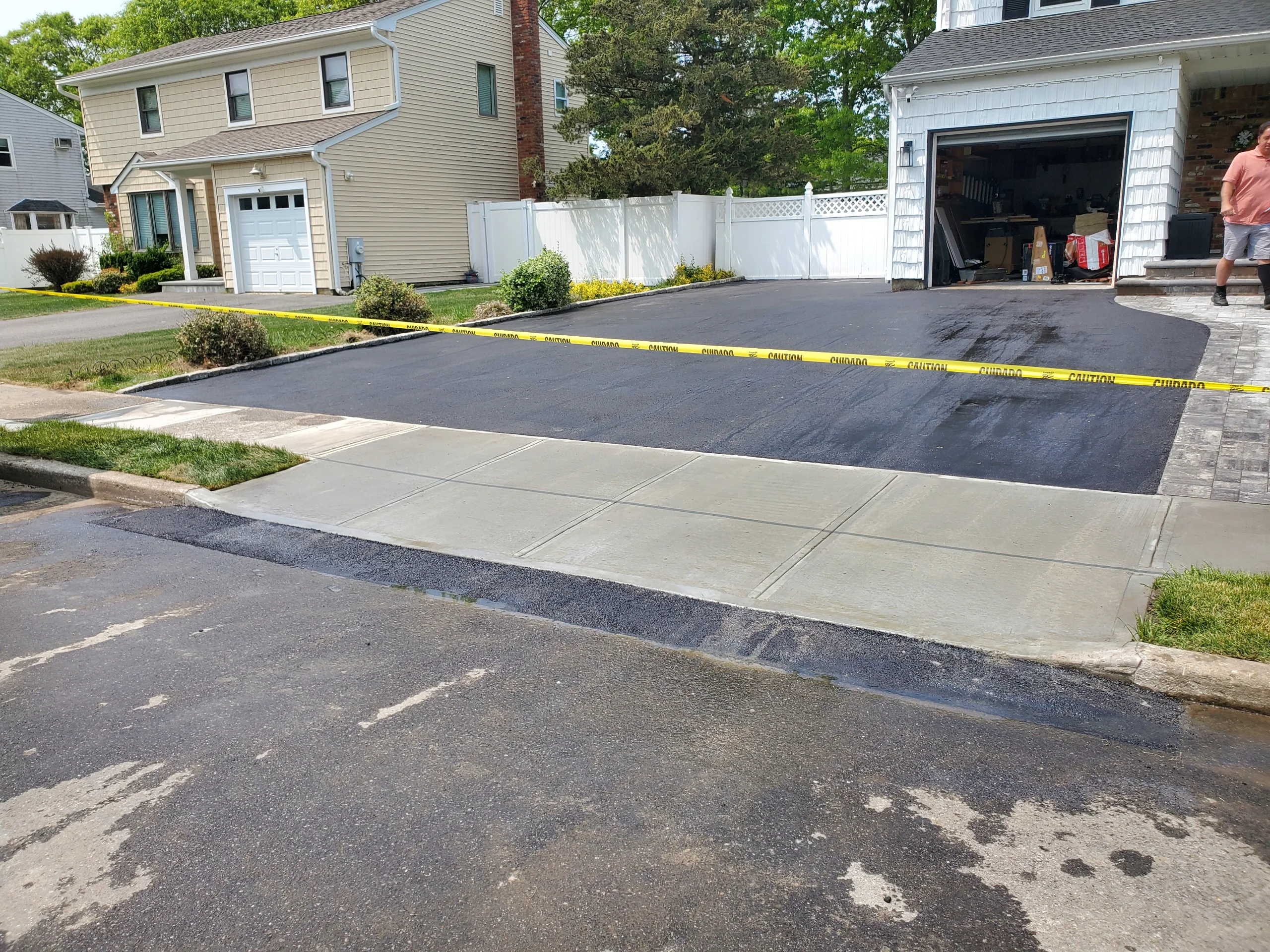
You get full-service concrete and masonry flatwork designed for Hauppauge properties. That includes new driveway installation, concrete curb installation along property lines or garden beds, sidewalk repair and replacement, and Belgian block driveway aprons that create a polished transition from street to driveway.
We handle the grading and drainage work that most concrete contractors skip. Hauppauge’s clay soil requires specific attention to water management. Without proper grading, you’ll have pooling water, foundation issues, and premature concrete failure. We map drainage before we pour, so water moves away from structures and high-traffic areas.
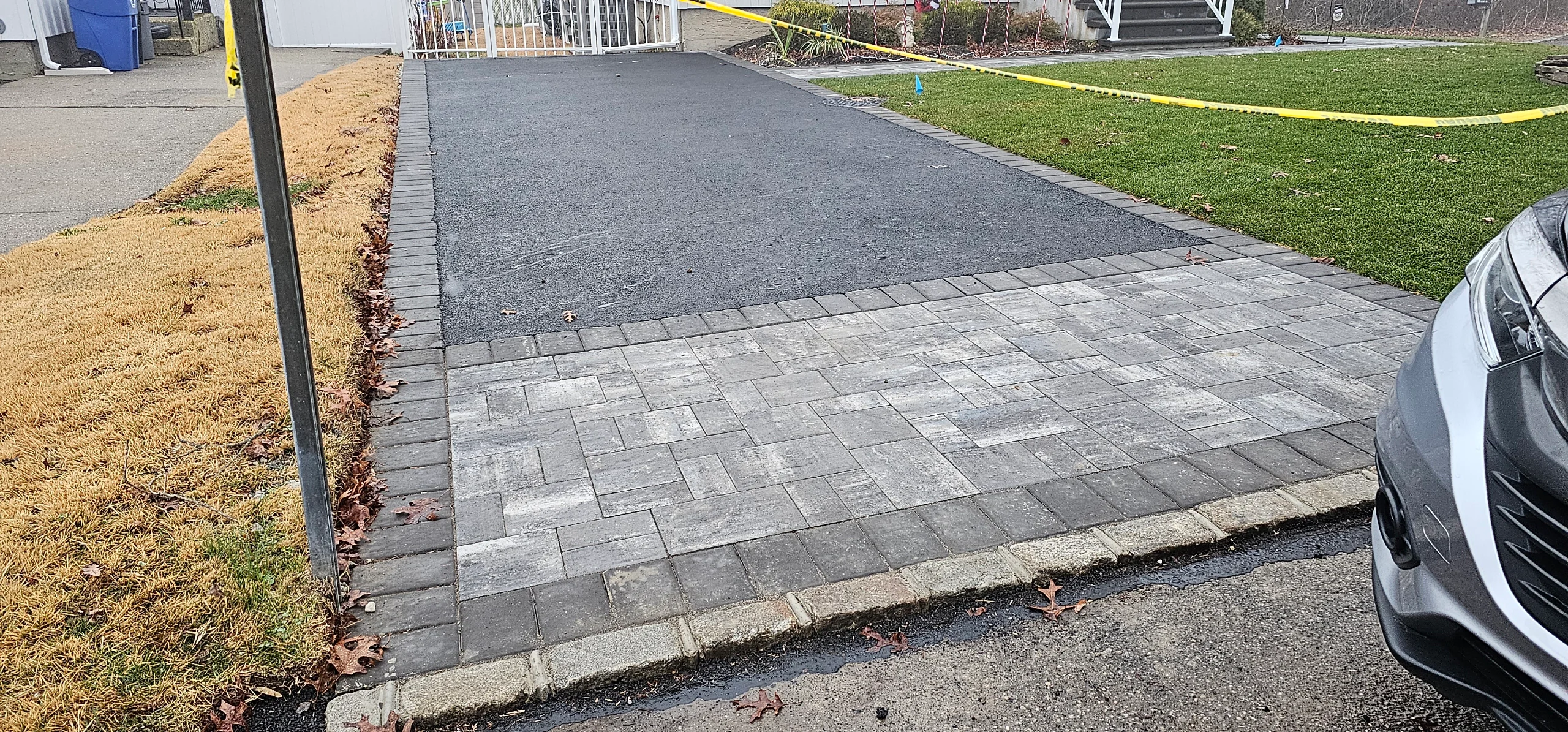
Belgian blocks get installed the right way—on a concrete base with mortared joints. This isn’t decorative edging that shifts after one winter. These are heavy granite blocks that define borders, protect pavement edges, and add genuine curb appeal. They’re especially popular in Hauppauge’s established neighborhoods where property values justify the investment in permanent materials.
Every project includes site assessment, proper base preparation, code-compliant installation, and a clear explanation of what you’re getting. We don’t upsell services you don’t need, and we don’t cut corners on the work you’re paying for. You get concrete work that lasts 20 to 30 years with minimal maintenance, even in New York’s freeze-thaw climate.
A properly installed concrete driveway lasts 20 to 30 years in Hauppauge, sometimes longer with basic maintenance. The key word is “properly installed.”
New York’s freeze-thaw cycles are hard on concrete. Water seeps into small cracks, freezes, expands, and makes those cracks bigger. If your base wasn’t compacted correctly or your drainage wasn’t planned for Long Island’s clay soil, you’ll see problems within five years. Cracking, sinking, and surface spalling become expensive repairs.
When the base is right and the concrete is poured at the correct thickness with proper reinforcement, you’re looking at decades of use. Simple maintenance—sealing every few years, keeping drainage clear, and addressing small cracks early—extends that lifespan even further. The upfront investment in quality installation pays off in longevity and lower lifetime costs.
Belgian blocks are solid granite, not concrete pavers or plastic edging. They’re heavier, more durable, and they require a completely different installation method to perform correctly.
The biggest mistake is laying Belgian blocks on gravel and sand like you would with interlocking pavers. Belgian blocks don’t interlock. They’re individual rectangular pieces of stone. Without a solid concrete base and mortared joints, they shift under vehicle weight, rut out, and create an uneven surface that looks terrible and performs worse.
We install Belgian blocks on a poured concrete base with mortared joints. This creates a permanent border that can handle the weight of vehicles pulling in and out of your driveway. It protects your pavement edges from crumbling, defines clean lines for garden beds or property borders, and adds the kind of polished detail that increases property value in Hauppauge’s nicer neighborhoods. You’re paying more than plastic edging, but you’re getting something that lasts as long as your driveway does.
Hauppauge’s clay-heavy soil is usually the culprit. Clay acts like a natural barrier—water can’t penetrate it, so it sits on the surface instead of draining into the ground.
Construction makes this worse. When builders use heavy equipment during home construction, they compact the soil even further. You end up with an impermeable layer just below the surface that traps water exactly where you don’t want it. Add in poor grading from the original site work, and you’ve got standing water after every storm.
Fixing this requires regrading your property to create proper drainage paths. We use heavy machinery to reshape the land so water flows away from your foundation, your driveway, and high-traffic areas. Sometimes that means installing drainage solutions like French drains or catch basins. Sometimes it’s as simple as adjusting the grade and compacting it correctly. Either way, you need someone who understands Suffolk County soil conditions and knows how to move water effectively. DIY grading rarely works because you need the right equipment and the experience to read how water moves across your specific property.
Concrete work in Hauppauge typically runs $4 to $8 per square foot for standard driveways and walkways, depending on site conditions and project complexity. Belgian block installation costs more because of material and labor intensity.
Your actual cost depends on several factors. If your property has drainage issues that need correction first, that adds to the total. If we’re removing old concrete or dealing with difficult access, that affects pricing. Decorative finishes, thicker pours for heavy vehicle use, or complex layouts all change the numbers.
We provide transparent pricing after assessing your property. You’ll get a detailed quote that breaks down what you’re paying for—excavation, base prep, materials, labor, and any site-specific work like drainage correction. No surprises, no vague estimates. You’ll know exactly what the investment is before we start, and you’ll understand why quality installation costs more than the lowest bid you’ll find. Cheap concrete work fails fast in Long Island’s climate. You either pay for it to be done right once, or you pay to fix it repeatedly.
It depends on the damage. Minor surface cracks and small areas of spalling can often be repaired. Structural issues like significant sinking, widespread cracking, or base failure usually require replacement.
Here’s how to tell the difference: If your concrete has settled unevenly and created tripping hazards, the base has failed. Patching the surface won’t fix that. If you have a few hairline cracks but the concrete is still level and structurally sound, repair might be the right call.
We assess the actual condition during a site visit. We’ll tell you honestly whether repair makes sense or whether you’re throwing money at a problem that will come back in a year. Sometimes partial replacement is the answer—tearing out the worst sections and tying new concrete into the existing work. For sidewalk repair, this is common. For driveways, full replacement often makes more sense because you want consistent appearance and performance across the whole surface. We don’t push replacement if repair will actually work, but we also won’t sell you a patch job that fails next winter.
Late spring through early fall is ideal for concrete work in Hauppauge. You need consistent temperatures above 50 degrees for proper curing, and you want to avoid the freeze-thaw cycle that happens in late fall and winter.
Concrete needs time to cure and gain strength. Cold temperatures slow that process and can cause surface damage if the concrete freezes before it’s fully cured. Extremely hot summer days can cause concrete to cure too quickly, leading to cracking. We work around weather conditions, but the shoulder seasons—May, June, September, and October—typically offer the most predictable conditions.
That said, scheduling matters more than perfect weather. If you need concrete work done and we’re in a reasonable temperature window, we can make it happen. We monitor forecasts closely and plan pours around rain and temperature swings. If you’re planning a project, reaching out in early spring gives you the best selection of dates. Waiting until peak season means longer lead times. Either way, we’ll tell you honestly what timeline makes sense for your specific project and current weather patterns.
Other Services we provide in Hauppauge