
Hear from Our Customers

Water flows away from your foundation instead of pooling in your driveway. That’s the difference between proper grading and guesswork.
Your concrete work should look sharp and function flawlessly for decades. We’re talking about driveways that don’t settle, walkways that don’t crack every spring, and Belgian block aprons that frame your property like it belongs in one of Commack’s premium neighborhoods. This isn’t cosmetic. It’s structural.
Long Island’s freeze-thaw cycles destroy improperly installed concrete within a few years. Water seeps into small cracks, freezes, expands, and turns minor issues into major problems by spring. We account for that from day one—using the right base materials, proper compaction with commercial-grade equipment, and grading that moves water where it needs to go. Your property value increases because the work actually lasts.
You’re not dealing with standing water after storms. You’re not explaining to buyers why your driveway looks like a patchwork quilt. You’re living in a home that looks maintained because it is.
We’ve been handling concrete and masonry work in Suffolk County long enough to see what holds up and what doesn’t. We’re based in Smithtown, fully licensed and insured, and we’ve worked on enough Commack properties to understand the soil conditions, drainage patterns, and climate challenges that make or break concrete installations here.
Commack has sandy soil that shifts. It has freeze-thaw cycles that crack poorly installed surfaces. It has homeowners who expect quality because they’re investing in established neighborhoods where curb appeal matters. We show up with the right equipment, the right materials, and the experience to get it right the first time.
You’re not getting a crew that learned concrete work in Ohio. You’re getting contractors who understand why a 2% slope matters and what happens when you skip proper compaction on Long Island soil.

We start with grading. That means using heavy machinery to create the right slope—typically 2-5% away from your home—so water moves toward drainage areas instead of pooling or threatening your foundation. This step determines whether your concrete lasts five years or fifty.
Next comes base preparation. We excavate, remove unsuitable fill, and bring in proper aggregate the same day. Then we compact it with commercial-grade equipment—asphalt steam rollers and heavy-duty power plate compactors—not hand tampers that leave soft spots. The base has to be rock-solid or everything above it fails.
Then we pour and finish the concrete, whether that’s a driveway, walkway, curb installation, or Belgian block apron. Thickness matters. Your driveway apron needs to be thicker than the rest of the driveway because it handles more weight and stress. We follow code requirements and engineer it for your specific use.
After the concrete cures properly, you’ve got a surface that’s built to handle Commack’s weather, your vehicles, and decades of use. No shortcuts. No surprises.

Ready to get started?
You’re getting concrete driveways engineered for Long Island’s conditions—proper thickness, correct slope, and a base that won’t settle. Sidewalk repair that addresses the root cause, not just the surface crack. Belgian block driveway aprons that frame your property and handle the transition from street to driveway without cracking or sinking.
Concrete curb installation that defines your landscape and manages water flow. Masonry flatwork for patios, walkways, and outdoor spaces that need to be level, durable, and built to last. Every project includes proper drainage solutions because water management isn’t optional in Commack—it’s the difference between work that lasts and work that fails.
We handle the excavation, grading, base prep, material delivery, installation, and cleanup. You’re not coordinating multiple contractors or renting equipment. We own the machinery we use, and we’re accountable for every phase of the work.
Commack homes sit on soil that requires specific installation techniques. The water table, the sandy composition, the seasonal moisture—these aren’t minor details. They’re the reason some driveways last thirty years and others crack in three. We factor in local conditions because we’ve been working here long enough to know what matters.
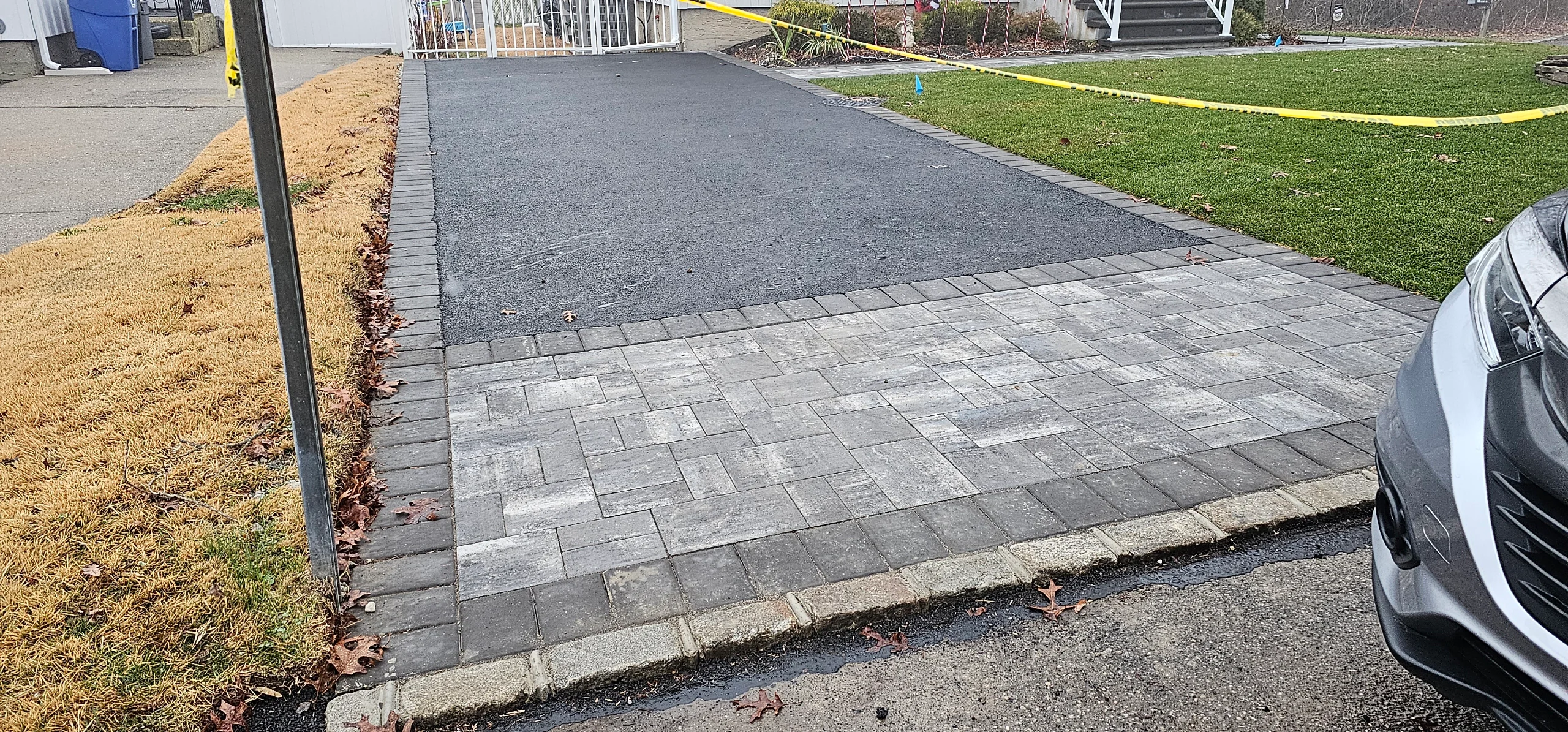
A properly installed concrete driveway in Commack should last 25-30 years minimum, often longer. That assumes correct base preparation, proper thickness, appropriate grading for drainage, and installation by contractors who understand Long Island’s soil and climate.
The driveways that fail early—cracking within five to ten years—almost always have the same problems. Inadequate base compaction. Poor drainage that lets water pool and seep under the concrete. Insufficient thickness for the load. Shortcuts during installation that save time but cost you money later.
Long Island’s freeze-thaw cycles are brutal on concrete that wasn’t installed correctly. Water gets into small cracks, freezes, expands, and makes those cracks bigger every winter. By spring, you’re looking at structural damage that requires replacement, not repair. Proper installation prevents that cycle from starting.
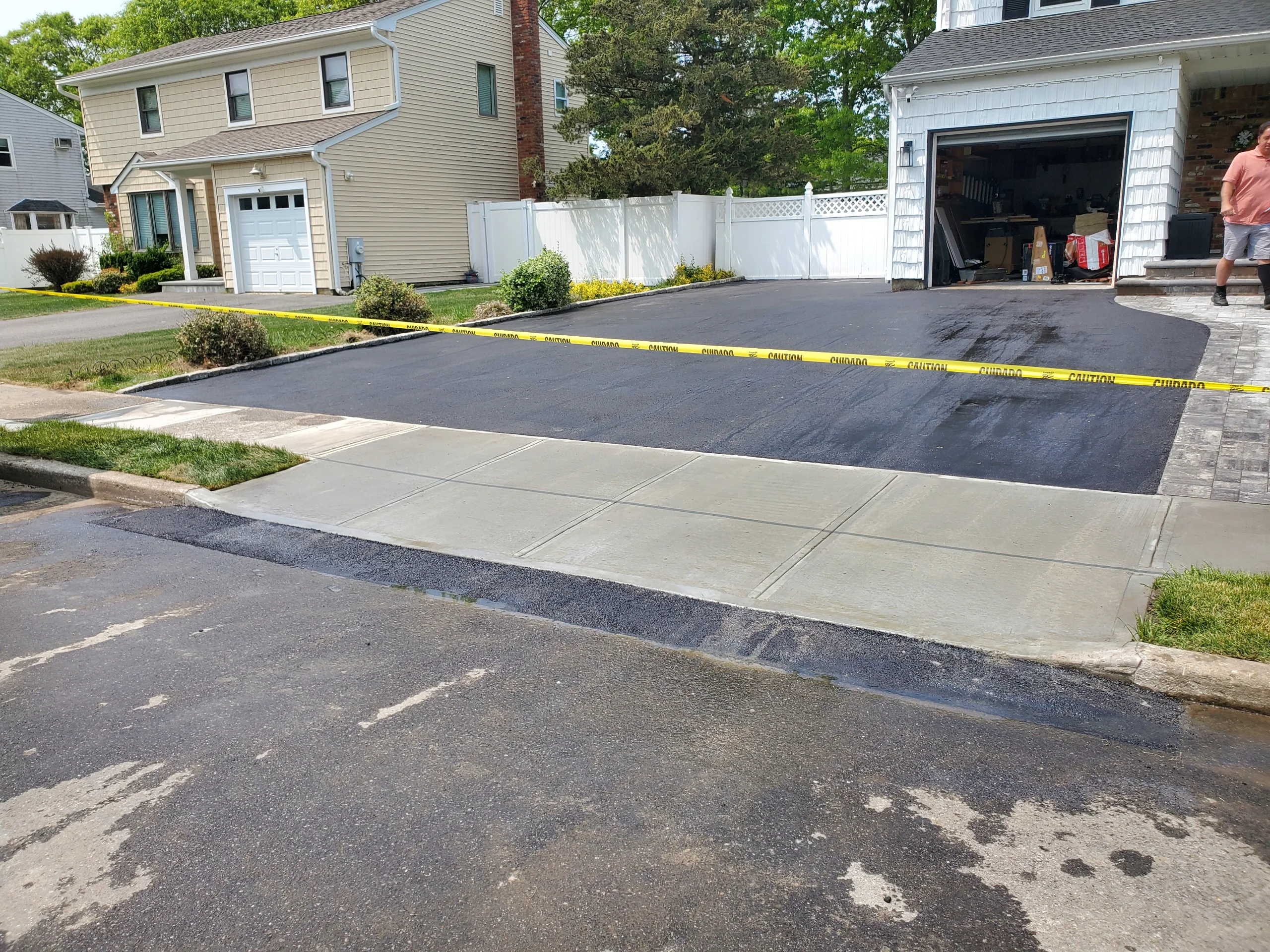
Your driveway apron is the section that connects your driveway to the street—it’s the transition zone that handles the most stress. Aprons need to be thicker than the rest of your driveway because they bear more weight and deal with the angle change between street grade and your property.
Most codes require aprons to be at least seven inches thick, while the non-apron portion of your driveway can be four inches. That extra thickness matters. Aprons crack and sink when they’re not built to handle the load, and repairing them is expensive because you’re often dealing with the street connection and municipal requirements.
Belgian block aprons are popular in Commack because they’re durable, attractive, and they frame your property entrance in a way that increases curb appeal. They’re also functional—properly installed Belgian block handles the transition without cracking and manages water runoff better than standard concrete edges. It’s a permanent upgrade that pays off in both appearance and property value.
Standing water means your grading is wrong. Your driveway should have a 2-5% slope away from your home and toward appropriate drainage areas. Even a slight grade—1-2 inches of drop over 10 feet—makes a massive difference in water movement.
If water pools on your driveway, it’s either because the original installation didn’t include proper grading, or the base has settled unevenly over time. Both problems lead to the same result: water sits, seeps into cracks, and accelerates concrete deterioration. In winter, that standing water freezes and causes more damage.
Fixing drainage issues requires more than patching the surface. You need to address the grading and often the base underneath. That might mean removing sections of concrete, regrading the base, and reinstalling with the correct slope. It’s not a quick fix, but it’s the only permanent solution. Commack’s sandy soil makes proper compaction and grading even more critical because the ground shifts more easily than clay-heavy soil in other regions.
Concrete driveway installation in Commack typically runs between $8-15 per square foot depending on thickness, site conditions, and whether you need significant grading or excavation work. A standard two-car driveway might be 600-800 square feet, putting you in the $5,000-12,000 range for quality work.
Sidewalk repair costs less—often $6-10 per square foot—but depends on how much of the base needs work. If you’re just replacing a few cracked sections with solid base underneath, costs stay lower. If the base has settled and needs to be redone, you’re looking at more extensive work.
Belgian block aprons and curbing run higher per linear foot because of material costs and installation precision, but they’re permanent upgrades that increase property value in Commack’s established neighborhoods. The real question isn’t what it costs—it’s what it costs when you hire someone who cuts corners and you’re replacing everything in five years. Quality concrete work is expensive upfront and cheap over time. Poor concrete work is cheap upfront and expensive forever.
It depends on what caused the cracks and how extensive the damage is. Surface cracks from minor settling can sometimes be repaired if the base is still solid and the concrete is structurally sound. Deep cracks, multiple cracks, or sections that have sunk or heaved usually mean the base has failed and repair won’t last.
Here’s the test: if water pools in the cracked area, the grading is wrong and repair won’t fix the underlying problem. If the cracks are wider than a quarter-inch or if sections of concrete have separated and moved, you’re looking at base failure. Patching those cracks might look better temporarily, but the problem will come back because the foundation underneath isn’t stable.
Commack’s soil conditions mean base failure is common when concrete wasn’t installed correctly the first time. Sandy soil shifts, water infiltrates, and the freeze-thaw cycle does the rest. We’ll assess what’s happening under the surface and tell you honestly whether repair makes sense or whether you’re better off replacing the section and doing it right. Sometimes spending money on repairs just delays the inevitable and costs you more in the long run.
Most concrete driveway work in Commack doesn’t require a permit if you’re replacing an existing driveway in the same footprint. But if you’re expanding the driveway, changing drainage patterns, or working near the street connection, you might need approval from the Town of Smithtown or Town of Huntington depending on which jurisdiction your property falls under.
Sidewalk work in the public right-of-way—the area between your property line and the street—typically requires a permit because it’s considered public infrastructure even though you’re responsible for maintaining it. Curb installations and Belgian block aprons that connect to the street often need permits as well.
We handle permit requirements as part of the project when they’re necessary. The bigger issue is making sure the work meets code regardless of whether a permit is required. Your driveway apron needs to meet thickness requirements. Your grading needs to direct water appropriately. Your base needs to be properly compacted. Those standards exist whether you pull a permit or not, and they’re the difference between work that lasts and work that fails. We build to code because it’s the right way to do the job, not because someone’s checking.
Other Services we provide in Commack