
Hear from Our Customers

You’re not just fixing a cracked driveway or patching a sidewalk. You’re addressing drainage problems that have been flooding your basement every spring. You’re eliminating the constant cycle of repairs that eat into your budget year after year.
Properly installed concrete work handles what Brightwaters throws at it—record-high water tables, clay soil that holds moisture instead of draining it, and winters that crack poorly graded surfaces within a decade. When the grading is right and the prep work is thorough, you get 75 to 100 years of performance. Not 10 years of patching.
Your property value reflects the quality of what’s visible from the street. A clean apron, level sidewalks, and Belgian block accents tell buyers this home has been maintained by someone who understands what lasts. That’s not cosmetic—it’s structural intelligence that pays back when it matters.
We’re based in Smithtown and have been handling Suffolk County’s concrete and masonry work for years. We’re fully licensed, bonded, and insured, which matters when heavy machinery is excavating next to your foundation.
We’ve seen what happens when contractors use methods that work elsewhere but fail here. Long Island’s clay-rich soil, high water table, and coastal moisture require different grading standards and drainage solutions. We use those standards on every job.
Brightwaters homeowners expect quality that matches their investment. We deliver that with the equipment, experience, and local knowledge to get concrete work right the first time—so you’re not calling someone else to fix it in five years.

We start with an on-site assessment of your drainage, soil conditions, and existing surfaces. This tells us how much excavation is needed and what grading adjustments will direct water away from your foundation. Brightwaters sits on clay soil that doesn’t absorb water—it holds it. That means every concrete surface needs a minimum 5% slope for the first ten feet, sometimes more depending on your property’s layout.
Next comes excavation and base prep using heavy machinery designed for precision grading. We’re not eyeballing slopes or guessing at compaction. The base layer determines whether your concrete lasts 15 years or 75 years, so we compact properly and verify drainage flow before any pour happens.
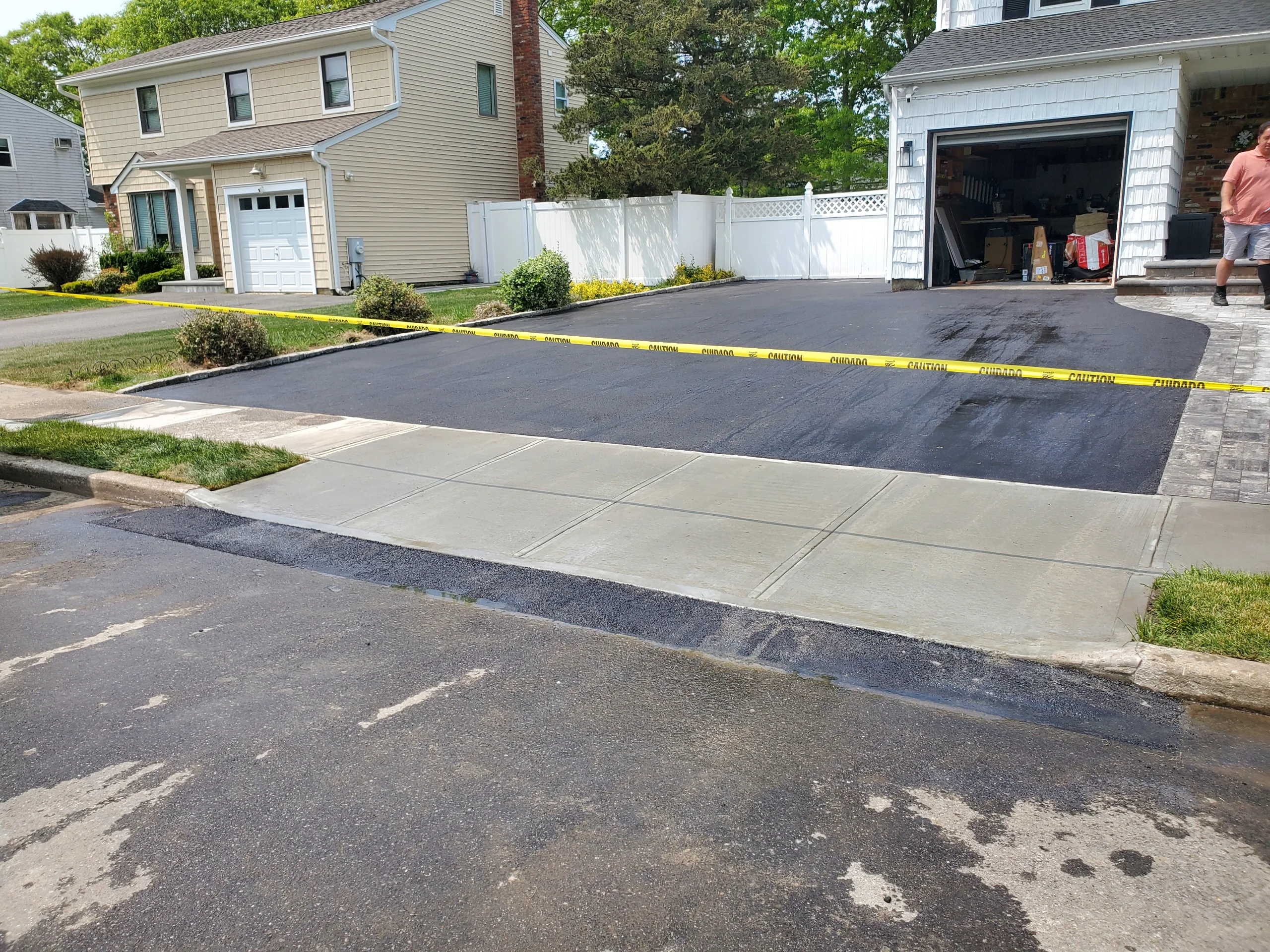
Once the concrete is placed, we finish it to your specs—whether that’s a standard broom finish, stamped patterns, or Belgian block borders for driveway aprons. All aprons and curb cuts in Brightwaters must be concrete per local code, and we handle the permitting. After curing, you get a surface that’s built to handle Long Island’s freeze-thaw cycles, heavy vehicle loads, and wet seasons without cracking or settling.

Ready to get started?
Our concrete and masonry work covers driveway aprons, sidewalk repair and replacement, curb installation, and Belgian block accents that give your property a high-end finish. We also handle foundation-adjacent flatwork where drainage is critical—patios, walkways, and retaining wall bases that need to manage water correctly.
Brightwaters properties average over $710,000 in value, and homeowners here expect craftsmanship that reflects that investment. Belgian block aprons can run $18,000 to $42,000+ depending on driveway size, but they deliver a European aesthetic with durability that outlasts standard concrete edges. For homeowners prioritizing curb appeal and longevity, it’s a smart choice.
Every project includes proper grading to Suffolk County standards, compacted base layers, and drainage solutions specific to your property’s soil and water table conditions. We’re addressing the root cause of concrete failure—not just pouring over problems and hoping they don’t resurface. You also get transparent pricing, clear timelines, and communication throughout the process so there are no surprises when the job wraps.
Properly installed concrete lasts 75 to 100 years in Brightwaters if the grading and base prep are done right. The problem is most concrete starts showing issues within 10 to 15 years because the installation didn’t account for Long Island’s clay soil, freeze-thaw cycles, and drainage challenges.
Water is the enemy. When concrete isn’t sloped correctly or the base isn’t compacted, water seeps underneath, freezes in winter, and expands. That’s what causes cracks, settling, and premature failure. Clay soil makes this worse because it holds water instead of draining it, creating constant pressure against your foundation and concrete surfaces.
If you’re replacing concrete that failed early, the issue wasn’t the material—it was the prep work. We excavate deeper, compact thoroughly, and grade to at least 5% slope for the first ten feet. That’s how you get decades of performance instead of another repair cycle in five years.
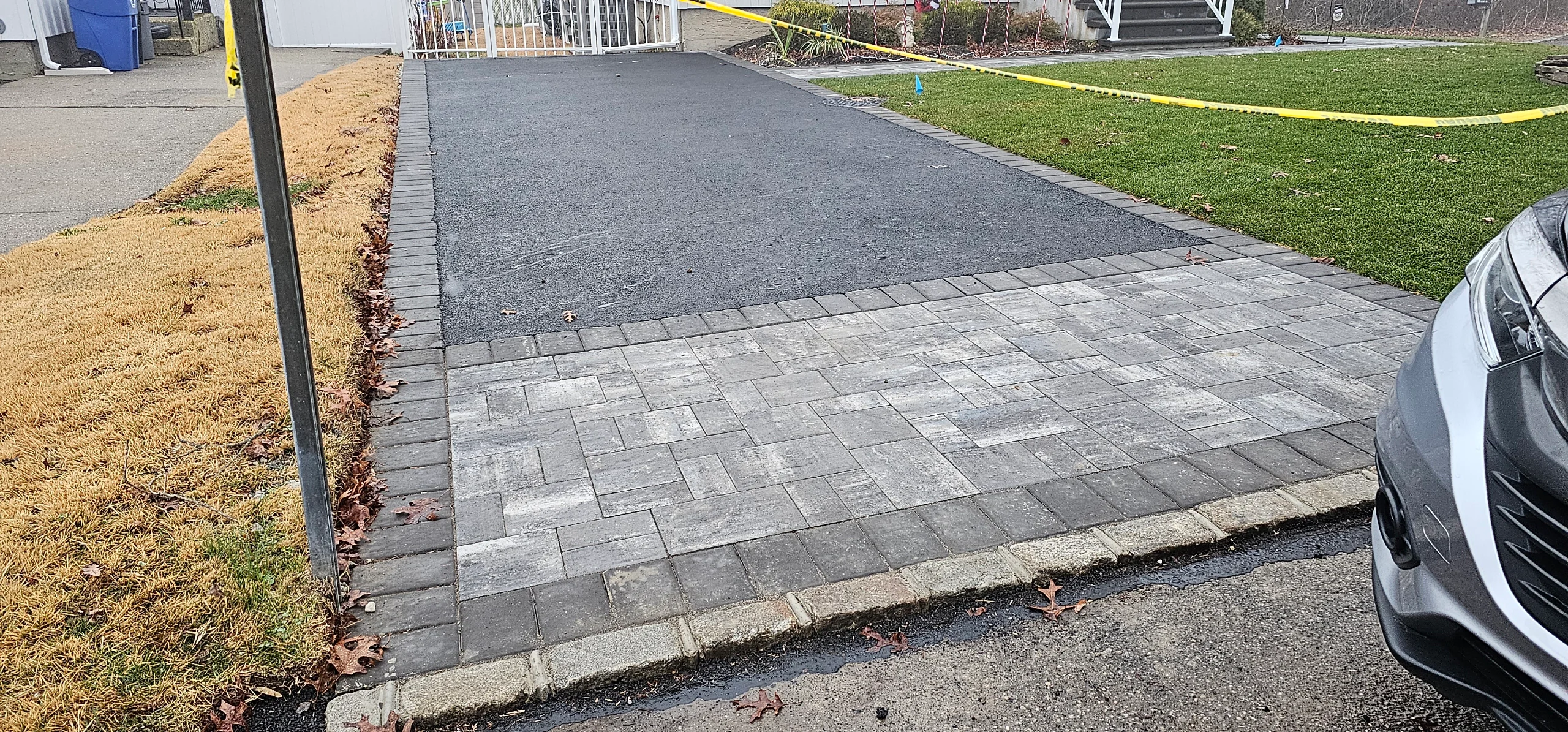
A concrete apron is the section of your driveway that connects to the street, and in Brightwaters it’s required to be concrete per local code. A Belgian block apron uses imported stone blocks to frame or border that concrete section, giving it a more refined, high-end look that’s common in upscale Long Island neighborhoods.
Belgian block costs significantly more—typically $18,000 to $42,000+ for a full driveway depending on size—but it’s incredibly durable and adds instant curb appeal. The blocks are set in concrete and designed to handle vehicle weight and weather without shifting or cracking. It’s a permanent upgrade that increases property value and eliminates the need for edging repairs down the line.
If you’re planning to stay in your home long-term or you’re preparing to sell in a competitive market, Belgian block is worth considering. It’s one of those details that signals quality to buyers and neighbors alike.
Most concrete cracks on Long Island because the grading and drainage weren’t handled correctly during installation. Clay-rich soil holds water instead of absorbing it, and when that water sits under your concrete through winter, it freezes and expands. That expansion creates pressure that cracks the surface from below.
Brightwaters has a high water table and frequent rainfall, which makes proper drainage even more critical. If your concrete isn’t sloped away from your foundation at the right grade—at least 1/8 to 1/4 inch per foot depending on the area—water pools instead of running off. Over time, that water works its way into small cracks, widens them during freeze-thaw cycles, and turns minor issues into major failures.
The other common cause is poor base prep. If the soil underneath isn’t excavated and compacted properly, the concrete settles unevenly and cracks under vehicle weight or temperature changes. Fixing this requires removing the old concrete, re-grading the base, and pouring new concrete with the correct slope. Patching doesn’t solve the underlying problem—it just delays the inevitable.
Sidewalk repair costs depend on whether you’re patching a small section or replacing the entire walkway. Minor repairs—filling cracks or leveling a single slab—typically run a few hundred dollars. Full sidewalk replacement for a standard residential walkway usually falls between $2,000 and $5,000 depending on length, width, and site conditions.
The bigger question is whether repair makes sense or if replacement is the smarter move. If your sidewalk has multiple cracks, uneven sections, or drainage problems causing repeated issues, patching is just a temporary fix. You’ll spend money now and again in a few years when the same problems resurface.
Replacement gives you the chance to address grading issues, improve drainage, and install concrete that’s built to last. In Brightwaters, where properties are high-value and curb appeal matters, a clean, level sidewalk is part of maintaining your home’s market position. We’ll assess your situation and tell you honestly whether repair or replacement makes more sense for your property and budget.
Yes, you need a permit for any new driveway apron or curb cut in Brightwaters. Residential permits cost $55 for a single-car width or $75 for a double-car width driveway. All aprons must be constructed in concrete per local code—asphalt and pavers aren’t allowed for the section connecting to the street.
The permit process ensures your apron meets town standards for width, slope, and drainage. This protects both your property and the public right-of-way. If the apron isn’t graded correctly or the curb cut isn’t sized properly, you can end up with drainage problems that affect your driveway, your neighbor’s property, or the street itself.
We handle the permitting as part of our concrete services, so you don’t have to navigate the town requirements yourself. Once the permit is approved, we schedule the work and complete the installation to code. This keeps your project compliant and ensures you won’t have issues when it’s time to sell or if the town ever inspects the work.
Late spring through early fall is the best window for concrete installation in Brightwaters. Concrete needs temperatures above 50°F to cure properly, and you want to avoid pouring during freezing conditions or when heavy rain is forecasted. Late April through October typically offers the most consistent weather for quality concrete work.
That said, scheduling often depends on when you notice the problem. Concrete repair searches spike in spring when homeowners see winter damage—cracks that widened over freeze-thaw cycles or sections that settled after snowmelt. If you’re planning decorative concrete or a full driveway replacement, summer is ideal because you have more flexibility with curing time and weather delays.
We recommend booking early if you’re targeting a specific season, especially for larger projects like Belgian block aprons or full sidewalk replacements. Suffolk County contractors stay busy during peak months, and concrete work requires proper scheduling to ensure quality results. If you’re dealing with drainage issues or foundation concerns, don’t wait—those problems get worse with every rain and freeze cycle.
Other Services we provide in Brightwaters