
Hear from Our Customers

You’re not looking for someone to mow and leave. You’ve got established beds with perennials you’ve invested in. Hostas, daylilies, ornamental grasses—plants that cost real money and take years to mature.
Weeds don’t care. They steal water, block sunlight, and compete for the nutrients your plants need to thrive. Left unchecked, they’ll choke out what you’ve worked to build.
Professional weeding means hand-pulling that gets the root without damaging what you want to keep. It means knowing the difference between a weed seedling and a perennial coming back in spring. It means timing pre-emergent applications before soil temps hit 55 degrees, so crabgrass never gets a foothold.
Your beds stay clean. Your plants get what they need. And you’re not spending your Saturday bent over with a hand trowel and an aching back.
We’re not new to Suffolk County. We’ve spent decades learning how Long Island’s soil, climate, and growing season affect what works and what doesn’t.
Riverhead sits in a unique spot—dense suburban neighborhoods with mature landscaping, but also sandy soils and microclimates that change from block to block. We know when to apply pre-emergents based on local soil temperatures, not a calendar. We know which invasive species are taking over North Fork properties and how to deal with them before they spread.
Licensed, insured, and locally owned. We’re not a franchise following a script. We’re the crew that shows up, does the work right, and doesn’t leave until your property looks the way it should.

First, we walk your property. Not a quick glance from the driveway—an actual assessment of what’s growing, where the problem areas are, and what’s going to need attention throughout the season.
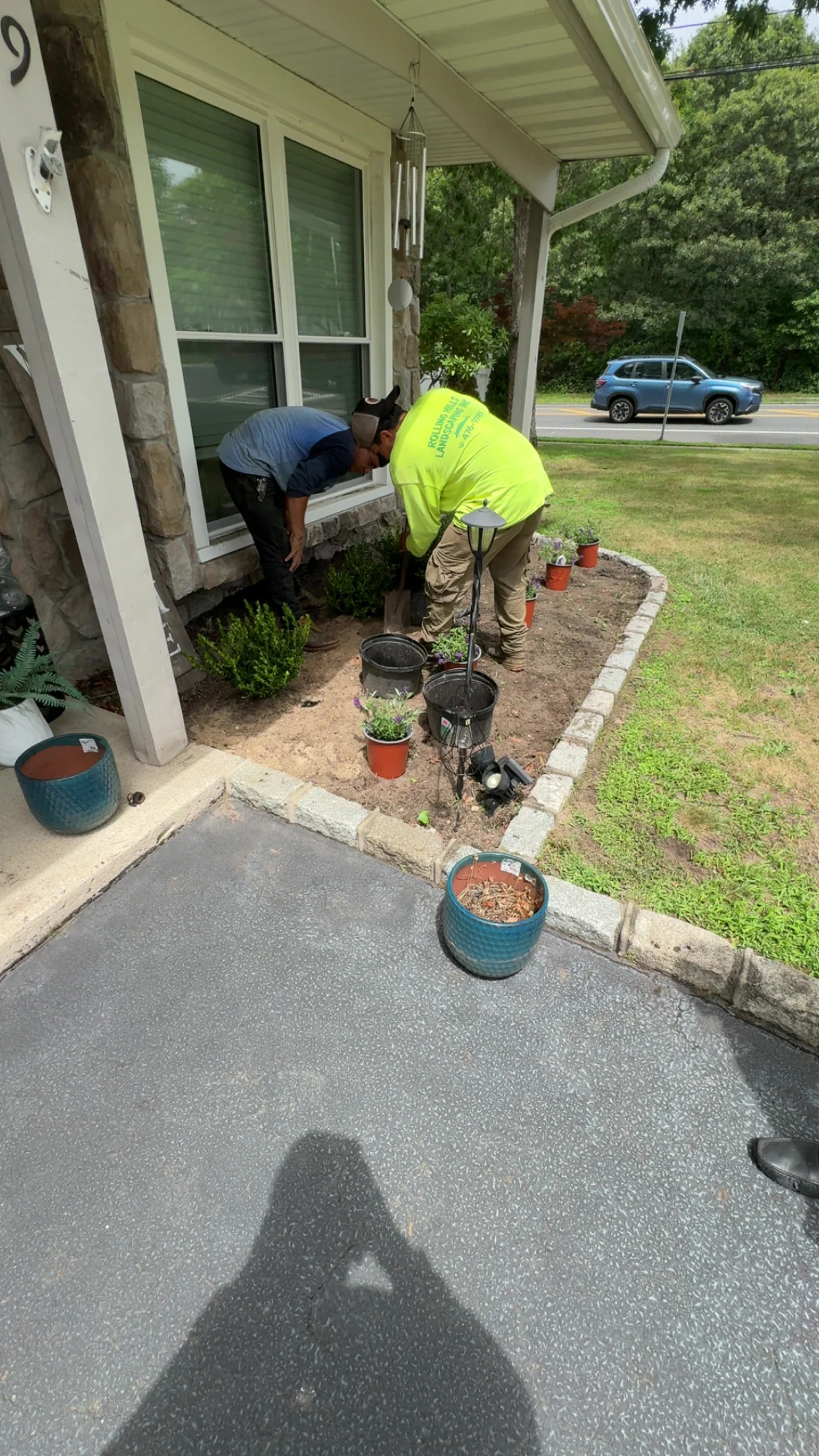
Then we get to work. Hand-pulling starts at the root level, especially in beds where perennials are tight together. We’re not ripping through with a hoe and hoping for the best. Every weed gets pulled carefully so your plants stay intact.
For larger areas or lawns, we time pre-emergent treatments to stop weeds before they germinate. That means monitoring soil temps in Riverhead specifically, not guessing based on a date. Crabgrass prevention only works if it’s applied before the soil warms up enough to trigger growth.
We haul away all debris. No piles left by the curb for you to deal with. When we’re done, your beds are clean, mulch is refreshed if needed, and you’ve got a plan for seasonal maintenance that actually prevents problems instead of reacting to them.

Ready to get started?
Weeding isn’t one-and-done. Suffolk County’s growing season runs long, and different weeds emerge at different times. Spring brings crabgrass and chickweed. Summer means spurge and nutsedge. Fall is when cool-season weeds try to establish before winter.
Our seasonal weeding service covers all of it. Regular visits during peak growing months keep beds clear before weeds set seed and spread. We’re not just pulling what’s visible—we’re stopping the next generation from taking root.
Mulch refresh is part of the process. Weeds love bare soil, and mulch breaks down faster than most people realize. We top off beds to maintain a 2-3 inch layer that suppresses weed growth and holds moisture where your plants need it.
In Riverhead’s dense suburban neighborhoods, properties are close together. Weed seeds don’t respect property lines. If your neighbor’s lawn is full of dandelions, you’re fighting an uphill battle. Consistent maintenance keeps your beds clean even when the surrounding area isn’t cooperating.
You’re not paying for a crew to show up and guess. You’re paying for people who know what they’re looking at, what needs to happen, and when it needs to happen to actually work.

Depends on the time of year and how established your beds are. Spring through early summer is the worst—what people call the “100 days of hell” for weeding. Weeds are germinating fast, and if you’re not staying ahead of them, they’ll take over.
Most properties need service every 2-3 weeks during peak season (April through June). Once summer hits and mulch is down, you can stretch it to once a month. Fall is lighter, but cool-season weeds will still pop up and need attention.
If your beds have been neglected for a while, expect the first visit to take longer. We’re not just pulling weeds—we’re getting the roots out so they don’t come right back. After that, maintenance visits are faster because we’re catching new growth before it establishes.
Not if it’s done right. That’s the whole point of manual removal—you can work around plants without tearing up roots or breaking stems.
The problem with tools like hoes or cultivators is they don’t discriminate. They churn up everything, including the roots of plants you want to keep. In dense beds where hostas, daylilies, and ground covers are growing close together, that’s a disaster waiting to happen.
Hand-pulling lets us get under the weed, pull from the base, and remove the entire root system without disturbing what’s next to it. For stubborn weeds with deep taproots—like dandelions or thistles—we use a weeding knife to get leverage without ripping up the surrounding soil. Your perennials stay put, and the weeds don’t come back.
Before soil temperatures hit 55 degrees consistently. That’s the magic number for crabgrass germination. Once the soil warms up past that point, pre-emergents won’t work—the weeds are already growing.
In Riverhead, that usually means late March to early April, but it varies year to year depending on weather. We’re not going off a calendar date. We’re monitoring soil temps and applying when conditions are right.
If you’re planning to overseed your lawn, timing gets tricky. Most pre-emergents will stop grass seed from germinating too. You either apply pre-emergent and skip seeding for 6-8 weeks, or you seed first and accept that you’ll be dealing with some crabgrass later. There are a few seed-safe pre-emergents, but they’re less effective. It’s a trade-off, and we’ll walk you through what makes sense for your property.
Weeding is for garden beds—hand-pulling or targeted removal around plants you want to protect. Lawn weed control is herbicide applications across turf areas to kill broadleaf weeds like dandelions, clover, and chickweed without harming the grass.
You can’t use the same approach in both areas. Herbicides that work great on lawns will kill your perennials and shrubs. And hand-pulling every dandelion in a half-acre lawn isn’t realistic.
For beds, we pull by hand and use mulch to suppress new growth. For lawns, we apply selective herbicides that target specific weeds while leaving grass alone. Pre-emergents go down in spring to stop crabgrass before it starts. Post-emergents handle whatever’s already growing. The goal is a thick, healthy lawn that crowds out weeds naturally, so you’re not fighting the same battle every year.
Yes. Every time. Pulled weeds don’t just disappear, and leaving them on-site is asking for problems.
If weeds have gone to seed, those seeds will drop right back into your beds or blow across your lawn. Even weeds that haven’t seeded yet can re-root if they’re left sitting on moist soil. And nobody wants to look at piles of dead weeds stacked by the curb for a week.
We bag everything and haul it off when we’re done. Your property looks clean, and you’re not dealing with disposal. It’s part of the service, not an extra charge or an afterthought. We’re not finishing the job and leaving you with cleanup work.
Japanese knotweed and other aggressive invasives are a different animal. They spread through underground rhizomes, and pulling the visible stalks doesn’t kill the root system. You cut one down, and three more pop up a few feet away.
Getting rid of knotweed takes persistence. It usually means a combination of cutting, targeted herbicide applications, and repeated follow-up over multiple seasons. You’re not going to eliminate it in one visit.
We’ve dealt with invasive species across Suffolk County, and we work with Cornell Cooperative Extension and the Long Island Invasive Species Management Area when needed. If you’ve got knotweed, mile-a-minute, or other invasives on your property, we’ll assess what’s there, explain what it’s going to take to control it, and give you a realistic timeline. Some infestations are manageable. Others require ongoing suppression. Either way, you’ll know what you’re dealing with before we start.
Other Services we provide in Riverhead