
Hear from Our Customers

Your driveway won’t crack in three years. Water won’t pool against your foundation after the next heavy rain. And your property value goes up the day we finish.
That’s what happens when concrete contractors actually understand Suffolk County’s sandy soil and know how to prep for it. Most problems start underground—with base preparation that either accounts for Long Island’s freeze-thaw cycles and coastal moisture, or doesn’t.
We excavate 8 to 10 inches deep, replace unstable soil with compacted gravel base layers, and use GPS-guided grading equipment to get drainage right the first time. That’s the difference between a driveway that lasts 30 years and one that fails in five. Proper concrete grading and prep isn’t optional in Riverhead—it’s the only thing standing between you and expensive repairs.
Rolling Hills Property Services is based in Smithtown and works throughout Suffolk County. We’re fully licensed and insured, and we’ve spent years learning how Long Island’s climate tears apart concrete that wasn’t installed right.
We’re not the cheapest option, and that’s intentional. You’re paying for excavators, compactors, and motor graders that most residential contractors don’t own. You’re paying for crews who know that Riverhead’s high water table and frequent coastal storms require specific drainage planning.
We don’t subcontract the hard parts. We handle everything from base prep to final grading, and we keep you updated through the whole process.

We start with a site visit to assess your property’s drainage, soil conditions, and grading requirements. If your driveway slopes toward your house or you’ve got standing water after storms, we’ll tell you exactly why and what it takes to fix it.
Next comes excavation. We dig down 8 to 12 inches depending on soil stability, remove anything that won’t compact properly, and build up a base using multiple layers of gravel. Each layer gets compacted with heavy machinery—not hand tampers. This is where most contractors cut corners, and it’s where most driveways fail.
Then we grade for drainage using GPS-guided equipment. Your driveway needs to slope away from your house and away from areas where water can pool. We’re accounting for Riverhead’s specific rainfall patterns and coastal storm frequency, not just eyeballing it.
Finally, we pour and finish the concrete or install your Belgian block edging with a 4 to 6 inch concrete footing. Everything gets sealed and cured properly so it can handle freeze-thaw cycles without cracking.

Ready to get started?
We handle concrete curb installation, sidewalk repair, Belgian block driveway aprons, masonry flatwork, and full driveway replacements. If it involves concrete or stone and it needs to last through Long Island winters, we do it.
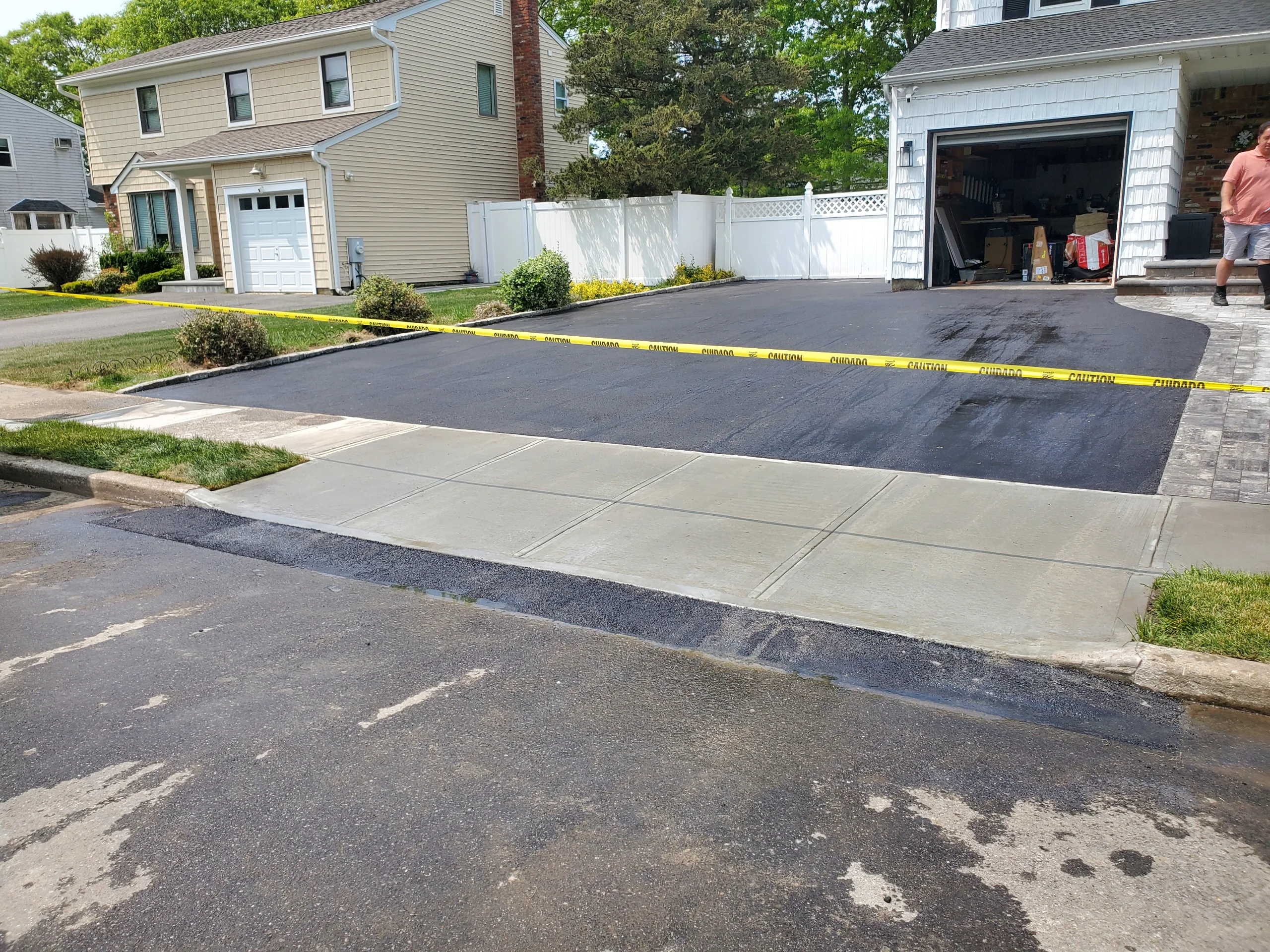
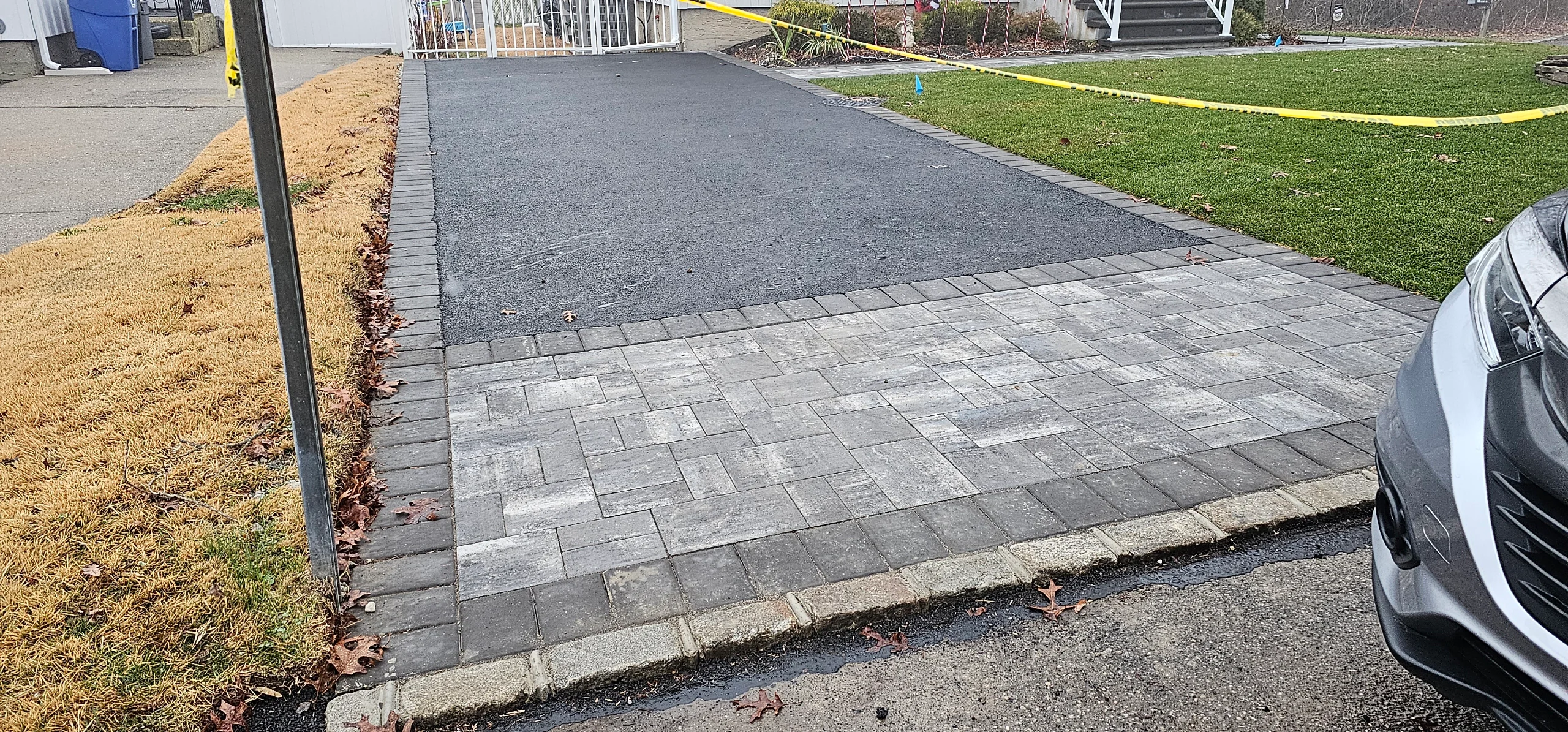
Belgian block driveway aprons are one of the most requested upgrades in Riverhead. They add instant curb appeal and a high-end look that increases property value in established neighborhoods. We trench 8 to 12 inches deep, pour a concrete footing, and set each block by hand so the lines stay clean and the structure stays stable.
Sidewalk repair in Suffolk County isn’t just about pouring new concrete over old cracks. We identify why the slab failed—usually it’s base erosion or poor drainage—and we fix the underlying issue so it doesn’t happen again. Same goes for concrete foundation repair and driveway aprons that have settled or cracked.
Riverhead’s August 2024 storm dropped up to 10 inches of rain in some areas and caused widespread flooding. Properties with proper concrete drainage solutions fared better. If your driveway or walkway isn’t graded correctly, the next storm will make that obvious.
A properly installed concrete driveway in Riverhead should last 25 to 30 years, sometimes longer. The key word is “properly installed.”
Long Island’s freeze-thaw cycles, coastal moisture, and sandy soil create conditions that destroy concrete if the base isn’t prepped right. Water gets into cracks, freezes, expands, and breaks the surface apart from within. If the base wasn’t compacted correctly or drainage wasn’t planned for, you’ll see cracking and settling within five years.
We excavate deep enough to remove unstable soil, build up a compacted gravel base in layers, and grade for drainage so water moves away from the concrete instead of pooling underneath it. That’s what makes the difference between a driveway that lasts three decades and one that needs major repairs before you’ve finished paying it off.
Suffolk County has sandy soil, which doesn’t compact the same way clay soil does. It shifts more easily, drains differently, and requires specific base preparation techniques that a lot of concrete contractors don’t account for.
Sandy soil is more prone to erosion, especially with Riverhead’s high water table and the frequency of coastal storms. If you don’t excavate deep enough and replace that sand with properly compacted gravel, the base will shift over time. That leads to cracking, settling, and premature failure.
We treat every job in Suffolk County with the assumption that the soil won’t cooperate. That means deeper excavation, more base material, better compaction, and drainage planning that accounts for how water moves through sand. It’s more work upfront, but it’s the only way to build concrete that lasts here.
Belgian block driveway aprons cost more because the installation is labor-intensive and requires a concrete footing for long-term stability. You’re looking at $25 to $45 per linear foot on average, depending on the project.
We have to trench 8 to 12 inches deep, pour a 4 to 6 inch concrete footing, and then set each block by hand so the lines stay straight and the structure stays level. It’s not something you can rush, and it’s not something you can do without the right equipment and experience.
But Belgian block adds serious curb appeal. It’s a high-end look that increases property value immediately, especially in established Riverhead neighborhoods where that kind of detail stands out. If you’re planning to sell in the next few years or you just want your home to look better than the rest of the block, it’s worth the investment.
Drainage is the most important part of any concrete job in Riverhead, and it’s where most contractors fail. We use GPS-guided grading equipment to make sure your driveway slopes away from your house and away from areas where water can collect.
Riverhead gets hit with heavy rainfall and coastal storms regularly. The August 2024 storm dropped up to 10 inches of rain in some areas and caused flooding across Suffolk County. If your concrete isn’t graded correctly, that water has nowhere to go except into your foundation or under your driveway, where it erodes the base and causes cracking.
We plan drainage before we start digging. That means understanding how water moves across your property, where it’s pooling now, and how to redirect it so it doesn’t damage your concrete or your home. Proper drainage planning is the difference between a driveway that handles storms and one that turns into a lake every time it rains.
It depends on the scope of the project. Riverhead requires permits for certain types of concrete work, especially if it involves changes to drainage, grading, or curbing that affects town road and drainage standards.
We handle permit coordination as part of the process. We know what Riverhead’s building department requires, and we make sure everything is filed correctly before we start work. That protects you from fines or issues down the road if you sell your property.
If you’re replacing a driveway, installing a new apron, or doing concrete curb installation that connects to town infrastructure, there’s a good chance you’ll need a permit. We’ll let you know upfront during the site visit so there are no surprises.
Concrete repair works if the damage is surface-level and the base is still solid. Full replacement is necessary when the base has failed, the slab has settled significantly, or there’s widespread cracking that indicates structural issues.
We don’t push replacement if repair will actually fix the problem. But we also won’t patch over a failing base just to make it look better for a year. If your sidewalk or driveway is cracking because the base eroded or wasn’t compacted properly, repair won’t solve it. You’ll be back in the same situation within a few years.
During the site visit, we’ll assess the base, check for drainage issues, and tell you honestly whether repair makes sense or whether you’re better off replacing it and doing it right. Sidewalk repair in Suffolk County is common, but only when the underlying structure can support it.
Other Services we provide in Riverhead