
Hear from Our Customers

You walk outside and actually enjoy what you see. No crabgrass poking through the mulch. No dandelions competing with your hostas. Just clean garden beds that frame your home the way they’re supposed to.
Your neighbors notice. More importantly, you stop thinking about it every time you pull into the driveway.
That’s what happens when weeds get pulled by hand, at the root, by someone who knows the difference between a weed and the perennials you paid good money for. Your plants get the water and nutrients they need. Your property value stays protected. And you get your Saturday mornings back instead of spending them on your knees with a bucket and gloves.
Miller Place properties deal with coastal winds, salt exposure, and dense suburban plantings that create perfect conditions for invasive species. You need someone who understands that—not just someone with a mower and a string trimmer.
We’ve been maintaining Suffolk County properties for years. We’re based in Smithtown, fully licensed and insured, and we’ve seen every weed problem Long Island throws at homeowners.
Miller Place has its own challenges. Your coastal location means salt-tolerant plants need special attention. Your established neighborhoods have mature garden beds with valuable perennials that can’t just be ripped out with everything else.
We’ve worked in your area long enough to know what grows here, what doesn’t, and how to keep your landscape looking sharp without damaging what you’ve already invested in. That’s not something you get from a crew that’s here one season and gone the next.

We start with a walkthrough of your property. You show us the problem areas, we identify what’s growing where, and we make sure we’re both clear on what stays and what goes.
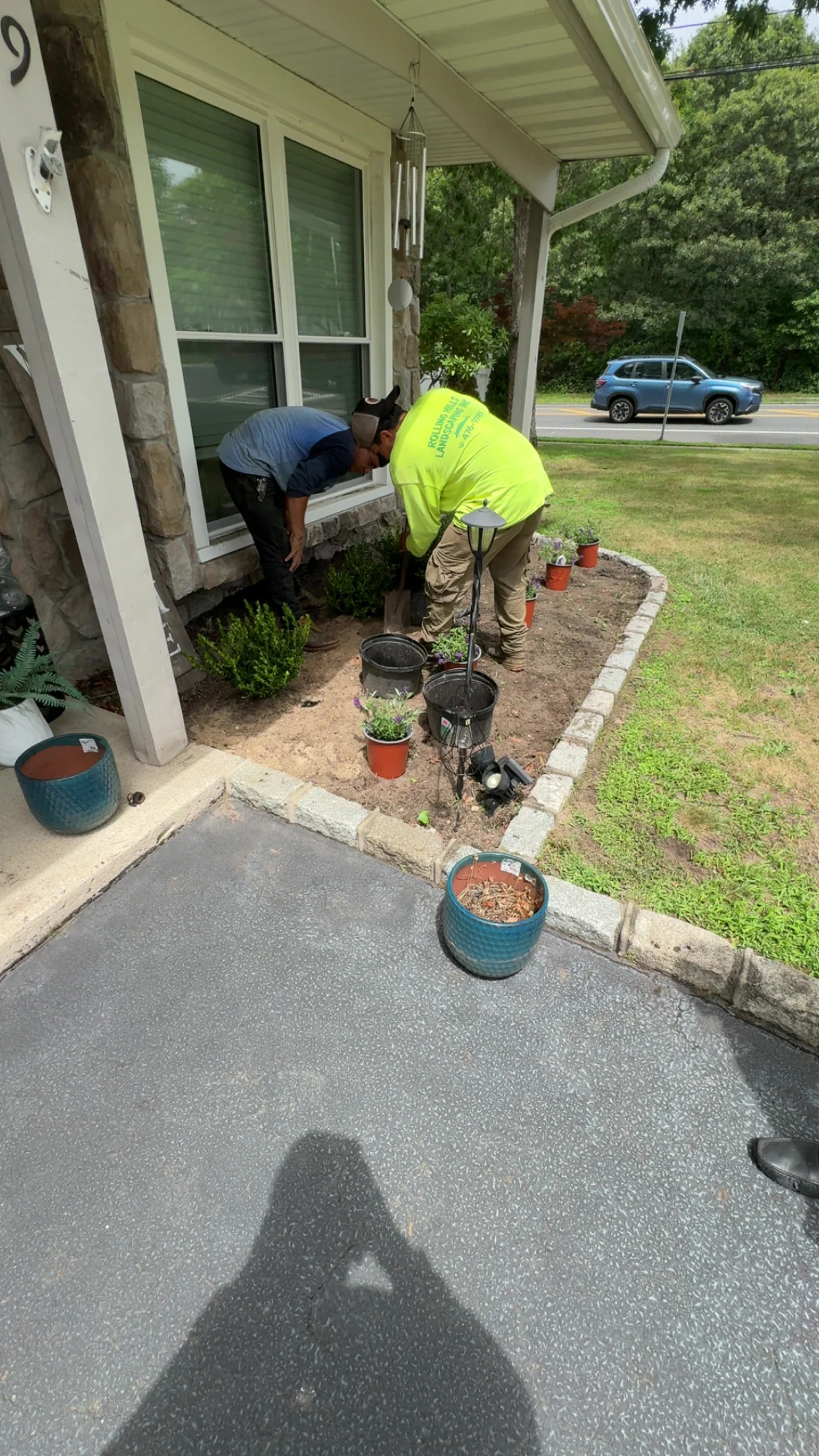
Then we get to work with manual weed removal—hand-pulling from the root. No shortcuts. No herbicides unless you specifically request them. We’re careful around your established plants because we know you didn’t spend years growing them just to have someone tear through with a weed whacker.
For garden bed maintenance, we pull weeds, refresh mulch if needed, and clean up any debris that’s accumulated. If it’s seasonal weeding and mulching, we time it right—hitting that critical March through June window when Long Island weeds are trying to establish themselves.
You get a property that looks maintained, not just mowed. And if something doesn’t look right or we spot an issue with one of your plants, we tell you. That’s part of the job.

Ready to get started?
You’re getting thorough manual weed removal from all garden beds, landscape borders, and hardscape edges. We pull weeds at the root level so they don’t just pop back up in two weeks.
We protect your perennials and established plants. If you’ve got hostas, daylilies, ornamental grasses, or anything else you want to keep, we work around them carefully. That’s especially important in Miller Place where mature plantings are common and replacement costs add up fast.
Local garden bed cleanup is part of the process. We’re not just pulling weeds—we’re removing debris, dead plant material, and anything else that makes your beds look neglected. If you’re on a seasonal schedule, we’ll refresh mulch to suppress future weed growth and give everything a finished look.
Miller Place sits right on the coast, which means your plants deal with salt spray and wind exposure that inland properties don’t face. We factor that in. Your salt-tolerant plants get the care they need without getting damaged in the process. And because Long Island’s growing season has extended significantly over the past few decades, your weed pressure isn’t just a spring problem anymore—it’s something that needs consistent attention from March through fall.

Most Miller Place properties need weeding every three to four weeks during the peak growing season, which runs from March through June. That’s when Long Island experiences what landscapers call the “100 Days of Hell”—the window when weeds establish their root systems and spread aggressively.
If you let weeds go longer than a month during this period, you’re not just dealing with more weeds. You’re dealing with mature weeds that have already dropped seeds, which means you’re fighting this season’s problem and next season’s problem at the same time.
From July through October, you can usually stretch it to every four to six weeks, depending on rainfall and how much shade your property gets. Properties with more sun and irrigation need more frequent attention. Once November hits, weed pressure drops significantly, and you can pause until early spring.
If your garden beds are heavily mulched and you’ve been consistent with maintenance, you might get away with less frequent service. But if you’re starting from scratch or recovering from a season of neglect, expect to need more intensive work upfront before settling into a regular schedule.
Hand-pulling removes the entire weed, root and all, which means it’s gone for good—or at least until a new seed germinates. Herbicides kill what’s above ground, but depending on the weed and the product, the root system might survive and resprout.
The bigger issue is what’s growing around the weeds. If you’ve got perennials, ornamental grasses, or groundcovers mixed in with the weeds, herbicides don’t discriminate. Spray drift or root absorption can damage or kill plants you want to keep. That’s an expensive problem in established Miller Place gardens where mature plantings have real value.
Hand-pulling is slower and more labor-intensive, but it’s precise. We can work right up against your hostas or daylilies without risking damage. It’s also the better choice if you’re trying to avoid chemicals on your property, especially if you have kids, pets, or concerns about runoff into Long Island’s coastal waterways.
Herbicides have their place—particularly for large-scale lawn weed control or dealing with aggressive invasives like poison ivy. But for detailed garden bed maintenance, manual removal is the smarter move. You get better results without the risk.
Not if it’s done correctly. The whole point of professional weeding is that we know what we’re looking at. We can tell the difference between a weed seedling and an emerging perennial. We know how to pull weeds without disturbing the root systems of nearby plants.
The risk comes when someone inexperienced goes too fast or doesn’t understand what’s planted in your beds. They yank out everything that looks unfamiliar, or they use tools that tear up roots indiscriminately. That’s how you lose plants you’ve had for years.
We work carefully around your established landscaping. If we’re not sure what something is, we ask before we pull it. If a weed is tangled up in the roots of a plant you want to keep, we take the time to separate them instead of ripping both out together.
Miller Place properties often have mature gardens with a mix of ornamentals, native plants, and coastal species that handle salt exposure well. Those plants have value, and replacing them isn’t cheap. Our job is to protect what you’ve invested in while eliminating what doesn’t belong there. That requires attention to detail, not just speed.
Early March, before weeds really take off. Long Island’s growing season starts earlier than it used to—climate data shows it’s increased by 28% over the past 50 years. That means weeds are germinating sooner, and if you wait until you see a problem, you’re already behind.
The goal is to catch weeds when they’re small and their root systems are still shallow. A weed that’s been growing for two weeks pulls out easily. A weed that’s been growing for two months has a taproot that’s anchored deep, and pulling it disturbs everything around it.
March through June is your critical window. If you can stay on top of weeding during that period, the rest of the season is much easier to manage. Weeds that establish themselves in spring drop seeds that create problems for years. Prevent that, and you’re not just solving this year’s issue—you’re reducing future weed pressure.
If you’re reading this in July or August and your beds are already overgrown, it’s still worth starting service now. We’ll get you back to baseline, and then you can maintain it properly going forward. But the earlier in the season you start, the less work it takes to keep things under control.
We handle both, but the approach is different. Garden bed weeding is manual—hand-pulling individual weeds to protect your perennials and ornamentals. Lawn weed control typically involves a combination of proper mowing height, targeted herbicide application, and addressing underlying issues like soil compaction or poor drainage that allow weeds to thrive.
Most homeowners don’t realize that lawn weeds and garden bed weeds are separate problems. Your lawn might be full of crabgrass and dandelions while your garden beds are dealing with mugwort, bindweed, or invasive grasses. They require different strategies.
For garden beds, we focus on manual removal and mulching to suppress future growth. For lawns, we look at the bigger picture—why are weeds outcompeting your grass? Is the lawn getting mowed too short? Is it being watered incorrectly? Are there bare patches where weed seeds are germinating without competition?
If you need comprehensive property maintenance, we can handle both. But if your main concern is keeping your garden beds clean and protecting your plantings, that’s where our detailed hand-pulling work makes the biggest difference. Lawn care is more about creating conditions where grass wins and weeds lose. Garden bed maintenance is about precision and protecting what you’ve already invested in.
It depends on the size of your garden beds, how overgrown they are, and how often you need service. For most residential properties in Miller Place, you’re looking at somewhere between $54 and $100 per hour, with an average service visit taking two to four hours depending on the scope of work.
If your beds haven’t been maintained in a while, the first visit takes longer because we’re not just pulling weeds—we’re cleaning up accumulated debris, defining bed edges, and getting everything back to a manageable state. Once you’re on a regular schedule, maintenance visits are faster and less expensive.
Properties with larger landscapes, mature plantings, or multiple garden beds obviously cost more than a small front yard with a single border. But the investment protects what you’ve already spent on plants, mulch, and landscaping installation. Letting weeds take over doesn’t just look bad—it damages your plants and creates more expensive problems down the line.
We provide clear quotes before starting work, so you know exactly what you’re paying for. No surprises, no hidden fees. And because we’re local to Suffolk County and familiar with Miller Place properties, we can usually give you an accurate estimate just from a quick walkthrough. If you want to talk through pricing for your specific property, reach out and we’ll walk you through it.
Other Services we provide in Miller Place