
Hear from Our Customers

Your garden beds stay clean without you spending another Saturday bent over pulling crabgrass. That’s the reality when someone who knows Long Island’s dense suburban landscapes handles your residential weed control.
You’re not just getting weeds pulled. You’re getting your weekends back, your property value protected, and your curb appeal maintained without the physical toll or the guesswork about what’s a weed and what’s worth keeping.
The perennials you’ve invested in stay protected because we know the difference between what belongs and what doesn’t. Your neighbors notice the difference. Potential buyers notice the difference. And you notice the difference every time you pull into your driveway and don’t see a mess staring back at you.
Dense garden beds in established Lindenhurst neighborhoods require more than just yanking whatever looks wrong. They need someone who understands mature plantings, knows how to work around root systems, and won’t accidentally destroy the plants you actually want.
Rolling Hills Property Services Inc is based right here in Smithtown. We’ve spent years working in Lindenhurst’s established neighborhoods, where properties have mature landscaping that needs careful attention, not aggressive shortcuts.
We’re licensed and insured because that matters when someone’s working on your property. We show up when we say we will, we communicate clearly about what needs to happen, and we don’t leave until the job actually looks finished.
Lindenhurst’s dense suburban garden beds aren’t like newer developments where everything’s simple and spread out. Your property has layers, established perennials, and plantings that have been there for decades. That requires a different approach than cookie-cutter lawn services offer, and it’s exactly what we handle day in and day out across Suffolk County.

We start by walking your property with you if you’re available, or doing a thorough assessment on our own if you’re not. This isn’t about rushing through and pulling everything green. It’s about identifying what stays and what goes, especially in garden beds where your perennials and intentional plantings need protection.
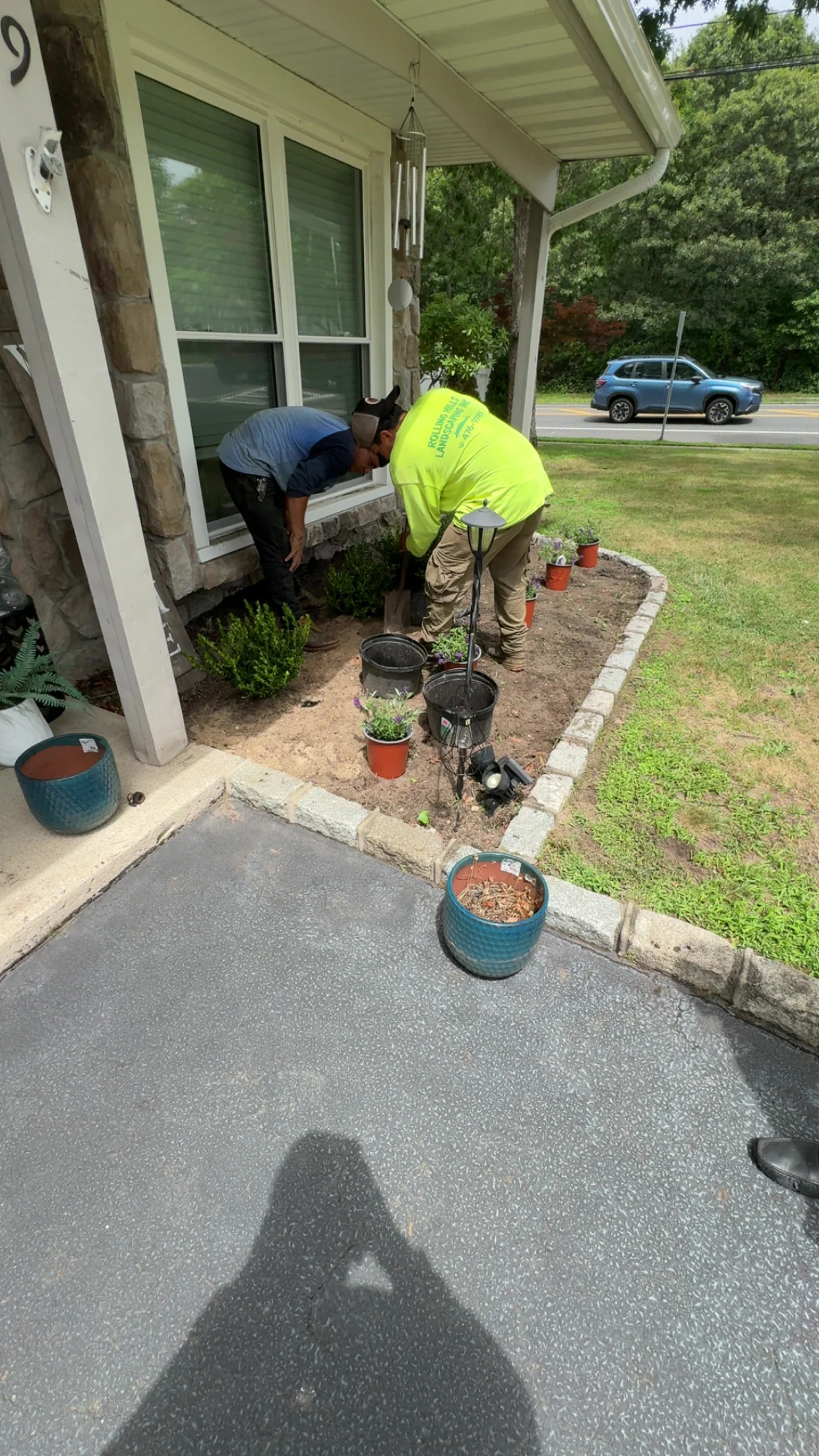
The actual weeding is done by hand. We pull from the root, not just snap off tops that’ll be back in two weeks. Around delicate perennials and established plants, we’re careful. In open areas where invasive weeds have taken over, we’re thorough.
After the manual weed removal is complete, we haul everything away. You don’t deal with piles of pulled weeds sitting in your yard. We also let you know if we spot bigger issues—like areas where mulch is breaking down, spots where weeds will keep coming back without addressing drainage, or sections that could benefit from seasonal weeding and mulching to prevent future problems.
The goal is simple: you get clean garden beds that stay cleaner longer, and you get honest feedback about what your property actually needs.

Ready to get started?
You get thorough hand-pulling of all visible weeds in your garden beds, around trees, along borders, and in any landscaped areas we’ve agreed to cover. We’re not just hitting the obvious spots and calling it done.
We remove everything we pull. No piles left for you to deal with, no debris sitting in your driveway. It’s gone when we leave.
If you’re in one of Lindenhurst’s neighborhoods with mature landscaping—and most of you are—we take extra care around established perennials, shrubs, and ornamental plantings. The whole point is protecting what you’ve already invested in, not damaging it because we’re moving too fast.
We also give you a realistic assessment of what’s happening in your beds. If your mulch is thin and that’s why weeds keep breaking through, you’ll know. If certain areas need seasonal attention to stay ahead of the problem, we’ll tell you. And if everything looks good and you just need periodic maintenance, we’ll tell you that too.
Long Island’s sandy soil drains fast, which means weeds can establish quickly when conditions are right. Our local garden bed cleanup approach accounts for that reality instead of pretending every property is the same.

It depends on how established your beds are, how much mulch you have down, and what’s already growing there. Most properties in Lindenhurst’s older neighborhoods benefit from professional weeding every 4-6 weeks during the growing season—roughly April through October.
If your beds are newer or you’ve recently had fresh mulch put down, you might stretch that to every 6-8 weeks. If your beds are older, mulch is thin, or you’ve got persistent weeds like crabgrass or ground ivy, you might need attention every 3-4 weeks to stay ahead of it.
The reality is that Long Island’s climate creates ideal conditions for weeds. We get enough rain to keep things growing, our sandy soil doesn’t suppress weeds the way heavier soils do, and our long growing season means you’re fighting this battle from spring through fall. Staying on a regular schedule prevents small problems from becoming total overhauls.
Hand-pulling removes the entire weed, root and all, without introducing chemicals near your perennials, shrubs, or any plantings you want to keep. It’s more labor-intensive, but it’s also more precise and safer for established garden beds.
Chemical treatments can work in open lawn areas, but in dense suburban garden beds like most Lindenhurst properties have, they’re risky. Spray drift can damage nearby plants, and many herbicides aren’t selective enough to kill weeds without affecting everything else. If you’ve invested in perennials, ornamental grasses, or flowering plants, hand-pulling protects that investment.
There’s also the practical side: hand-pulling gives us a chance to actually see what’s happening in your beds. We notice when mulch is breaking down, when certain areas are staying too wet, or when specific weeds keep coming back in the same spots. That information helps you make better decisions about your property, and you don’t get that from spraying and walking away.
Weeds are always going to try to come back—that’s just reality. But you can absolutely reduce how often they show up and how aggressively they take over. The key is combining regular manual weed removal with proper mulching and staying ahead of the problem instead of reacting to it.
A good layer of mulch—about 2-3 inches—blocks sunlight from reaching weed seeds in the soil, which prevents a lot of germination before it starts. When we handle seasonal weeding and mulching together, you get longer periods of clean beds because we’re addressing both the existing weeds and the conditions that let new ones establish.
Timing also matters. If we get to your beds in early spring before weeds go to seed, we’re preventing thousands of new seeds from spreading. If we wait until late summer when everything’s already dropped seeds, you’re fighting a much bigger battle next year. Consistent maintenance doesn’t eliminate weeds entirely, but it keeps them manageable instead of letting them turn into a full-scale invasion that requires major cleanup.
We pull weeds by hand specifically because it gives us control around your valuable plantings. When you’re working in dense garden beds with established perennials, hostas, ornamental grasses, and shrubs, you can’t just rip everything out and hope for the best.
We identify what’s intentional and what’s invasive before we start pulling. If there’s any question about whether something’s a weed or a plant you want to keep, we ask or we leave it alone. Around root systems of perennials and shrubs, we’re careful not to disturb the soil too aggressively or damage shallow roots.
In Lindenhurst’s mature neighborhoods, most properties have plantings that have been there for years or even decades. Those plants have value, and replacing them isn’t cheap. Our approach is built around protecting what’s already thriving while removing what doesn’t belong. That’s the whole point of professional weeding versus just having someone tear through your beds as fast as possible.
Early spring—late March or early April—is ideal because you’re getting ahead of the problem before weeds really take off. Once soil temperatures hit about 55 degrees, that’s when most weed seeds start germinating, and if you can get beds cleaned up right before that happens, you’re starting the season in control instead of playing catch-up.
That said, it’s never the wrong time to start. If it’s mid-summer and your beds are already a mess, waiting until next spring just means you’re living with the mess longer and letting weeds drop more seeds for next year. We can get you back to baseline whenever you’re ready, and then keep you there with regular maintenance.
Fall is also a smart time to get aggressive with weeding. Anything you pull now is one less plant dropping seeds for next spring, and getting beds clean before winter means you’re starting next season with a major advantage. A lot of property owners in Lindenhurst focus on spring and summer and then let everything go in fall, but that’s actually when you can make the biggest impact on next year’s workload.
Yes. Slopes, hillsides, and awkward angles are part of the job, and they’re common in Lindenhurst where properties have varied terrain and mature landscaping. Working on slopes is physically harder and requires more care because you’re dealing with unstable footing and the risk of damaging plants or soil structure if you’re not careful.
We take our time on difficult areas instead of rushing through and making a mess. Slopes often have erosion issues or thin mulch because everything slides downhill over time, so we’ll let you know if that’s contributing to your weed problems. Sometimes the solution isn’t just pulling weeds—it’s addressing why that slope keeps growing them in the first place.
If you’ve been avoiding certain areas of your property because they’re too hard to maintain yourself, that’s exactly where professional help makes the most sense. You’re not out there risking a fall or straining your back on an awkward hillside, and the work actually gets done correctly instead of being ignored until it’s completely overgrown.
Other Services we provide in Lindenhurst