
Hear from Our Customers

You didn’t invest in landscaping just to watch crabgrass and dandelions take over. When weeds move in, they’re not just ugly—they’re stealing water, nutrients, and sunlight from everything you actually want growing there.
Professional weeding means your perennials, shrubs, and ornamentals get what they need to thrive. We pull weeds by hand, targeting the entire root system so they don’t just snap off and regrow in two weeks. That’s the difference between maintenance that works and maintenance that wastes your money.
Dense suburban garden beds in Dix Hills require more than a quick pass with a hoe. The soil here gets compacted. Roots dig deep. If you’re not removing the whole plant, you’re just buying time until it comes back stronger. Our approach is thorough because anything less is a temporary fix.
We’ve been maintaining properties across Suffolk County for years. We’re based in Smithtown, and we understand how Long Island’s humid summers and clay-heavy soil create the perfect conditions for persistent weeds.
We’re not a national franchise following a script. We’re your neighbors, and we know what grows here, what struggles here, and what actually works when you’re dealing with the dense garden beds that define inland communities like Dix Hills.
You’ll work with the same crew who shows up on time, communicates clearly, and doesn’t leave until the job’s done right. We’re licensed, insured, and we back our work with a satisfaction guarantee because we’re not interested in one-time clients—we’re interested in being the team you call every season.

We start by walking your property with you. You point out the beds that need attention, any plants you’re particularly protective of, and any problem areas where weeds keep coming back. This isn’t a cookie-cutter process—we need to see what we’re working with.
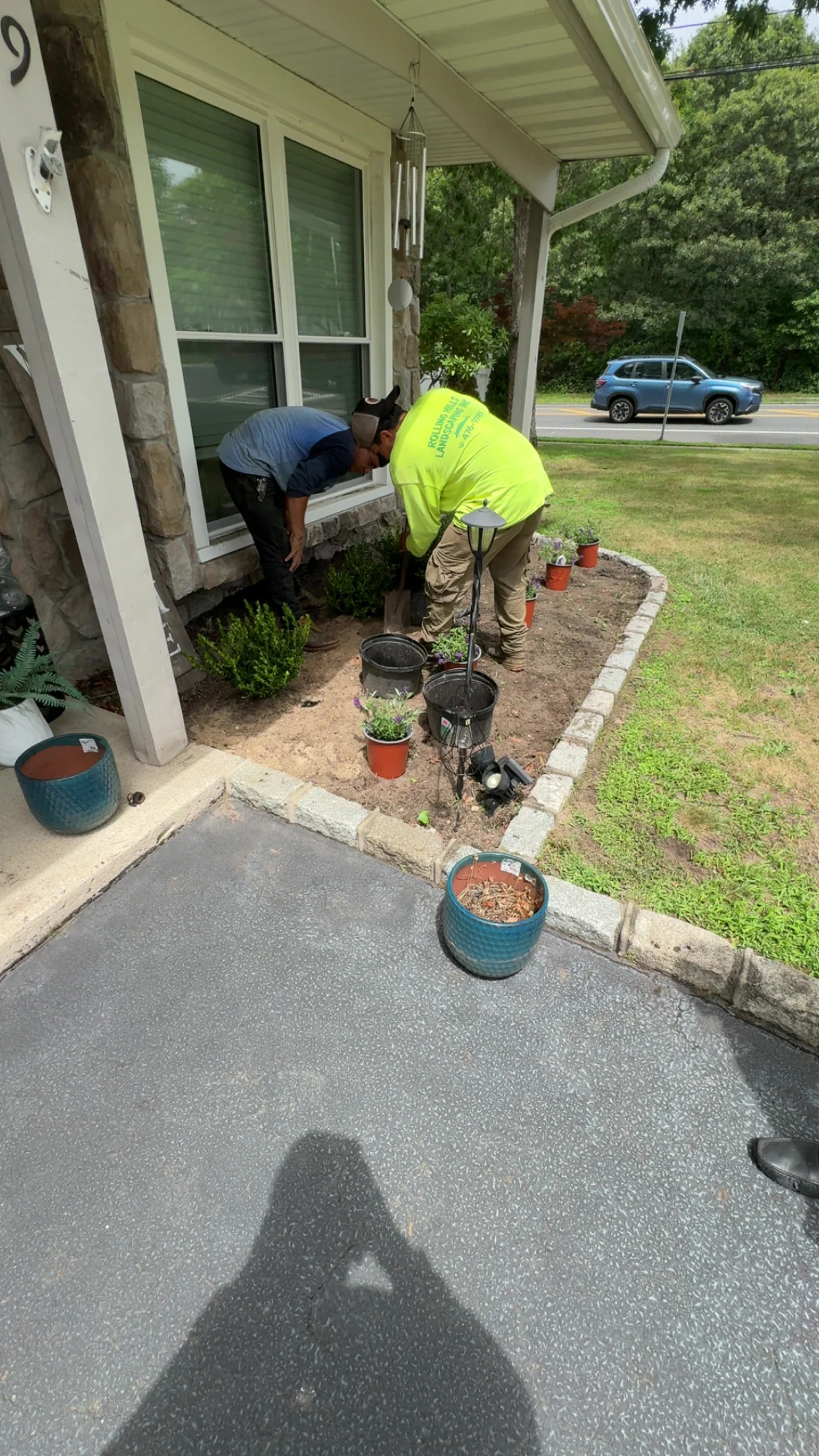
Once we’re clear on priorities, we get to work with hand tools designed for precision. We’re pulling weeds manually, getting under the root system, and removing the entire plant—not just what’s visible above the mulch. For beds with delicate perennials or newly planted flowers, this kind of careful work is the only way to avoid collateral damage.
As we go, we’re also looking at soil conditions, mulch depth, and spacing. Sometimes weeds are a symptom of a bigger issue—thin mulch, compacted soil, or poor drainage. If we see something that’s going to cause problems down the line, we’ll let you know.
After removal, we can apply fresh mulch if needed. A two-inch layer does more than look clean—it suppresses new weed growth by blocking light and keeping the soil cooler. We pull away mulch from plant bases to prevent rot, and we make sure everything’s set up to stay healthier longer.

Ready to get started?
You’re getting complete garden bed cleanup—not just a surface pass. We remove visible weeds, target root systems, and clear out any debris or dead plant material that’s built up in your beds. If it doesn’t belong there, it’s gone.
For properties in Dix Hills, that often means working through densely planted beds where ornamental grasses, hostas, daylilies, and shrubs are layered close together. These beds look great when they’re maintained, but they’re also prime real estate for weeds to hide and spread. We take the time to work around your plants carefully, so nothing gets damaged in the process.
Seasonal weeding and mulching programs are available if you want to stay ahead of the problem instead of reacting to it. Spring cleanups target early growth before weeds set seed. Summer maintenance keeps beds under control during peak growing season. Fall prep clears out annuals and reduces overwintering weed pressure.
We also handle larger landscape maintenance needs—pruning, edging, mulch installation, and soil amendments—so if your beds need more than weeding, we’re already there. One crew, one schedule, no coordination headaches.

For most residential properties in Dix Hills, expect one to two days depending on the size of your beds and how long it’s been since the last weeding. If you’ve got a quarter-acre lot with multiple garden beds and it’s been a few months, we’re likely looking at a full day or more.
Larger properties with extensive landscaping or beds that haven’t been maintained in over a year can take longer. Weeds that have been left alone develop deeper, more established root systems, and removing them properly takes more time. We’re not rushing through it—we’re doing it right.
If you’re on a seasonal maintenance schedule and we’re coming through every few weeks, the work goes faster because we’re catching weeds early. That’s the advantage of staying on top of it instead of waiting until the beds are overrun.
Not when it’s done correctly. Hand-pulling is actually the safest method for beds with delicate perennials, bulbs, or newly planted flowers because it gives us full control over what we’re removing and what we’re protecting.
The key is using the right tools and techniques. We’re not just yanking plants out and hoping for the best. We loosen the soil around the weed, work the tool under the root system, and lift the entire plant out without disturbing surrounding soil structure. For beds with shallow-rooted perennials, this approach is critical.
Chemical treatments can drift or leach into areas where you don’t want them, and mechanical removal like tilling or hoeing can slice through roots of plants you’re trying to keep. Manual removal gives us precision, and that’s what your garden beds need when every plant matters.
Because the roots are still in the ground. When you pull a weed and the stem snaps off halfway, you’ve removed the visible problem but left the root system intact. That root is going to send up new growth, often within days, and you’re back where you started.
Some weeds, like dandelions and thistles, have taproots that go deep—sometimes eight inches or more. If you’re pulling without loosening the soil first or using a tool that gets underneath the root, you’re almost guaranteed to break the stem and leave the root behind. That’s why DIY weeding often feels like a losing battle.
Soil conditions also matter. Dense, compacted, clay-heavy soil—common in Suffolk County—locks roots in place and makes them harder to extract in one piece. Wetting the soil before weeding helps, but the real solution is using the right technique and tools to get the entire plant out the first time.
Spring and early summer are the most critical times because that’s when weeds are actively growing and setting seed. If you can get beds cleaned up in April or May, you’re preventing those weeds from producing thousands of seeds that will haunt you for the rest of the season.
Fall weeding is also valuable, especially for removing perennial weeds before they go dormant and store energy in their roots over winter. Clearing out beds in October or November reduces the weed pressure you’ll face the following spring.
That said, weeding is never a bad idea if your beds need it. Waiting until weeds are flowering or seeding means you’re already behind. The earlier you address it, the easier it is to control. If you’re not sure where you stand, we can walk your property and give you an honest assessment of what needs attention now versus what can wait.
Our primary approach is manual weed removal—hand-pulling with specialized tools that target the root system. This method is effective, eco-friendly, and safe for properties where kids, pets, or pollinators are present. It’s also the best option for densely planted beds where precision matters.
We don’t default to chemical treatments, but if you’re dealing with an invasive species or a severe infestation that’s beyond what manual removal can reasonably handle, we’ll discuss options with you. Any products we use are applied carefully, and we’ll explain what we’re using and why before we do anything.
For most residential properties in Dix Hills, hand-pulling combined with proper mulching is enough to keep weeds under control. If your beds are maintained regularly, chemicals aren’t necessary. If they’ve been neglected for a long time, we’ll assess the situation and recommend the most effective approach based on what’s actually growing there.
Mulch is your first line of defense. A two-to-three-inch layer of quality mulch blocks sunlight, keeps the soil cooler, and makes it harder for weed seeds to germinate. We make sure mulch is applied thick enough to be effective but pulled back a few inches from plant stems to prevent rot.
Regular maintenance is the other piece. Weeds are opportunistic—they move into any open space they can find. If you’re staying on top of your beds with seasonal weeding, you’re catching new growth before it establishes deep roots and spreads. That’s a lot easier than letting beds go for six months and then trying to reclaim them.
Soil health also plays a role. Healthy, well-aerated soil with good drainage supports the plants you want and makes it harder for weeds to compete. If your beds have compacted soil or poor drainage, we can address that with amendments or aeration. Fixing the underlying conditions makes everything easier to maintain long-term.
Other Services we provide in Dix Hills