
Hear from Our Customers

You’re looking at concrete work because something’s not working. Water pools near your foundation after every storm. Your driveway apron cracked within two years. The sidewalk settled and now it’s a tripping hazard.
Here’s what changes when the work is done right. Water flows away from your foundation instead of toward it, which means no more soggy basements or erosion along your property line. Your driveway apron and curbing look sharp from the street, the kind of detail that makes your home stand out in neighborhoods where curb appeal directly impacts resale value. And the concrete itself stays level and intact through freeze-thaw cycles, salt exposure, and Long Island’s unpredictable weather.
The difference isn’t just cosmetic. Proper concrete work solves drainage problems before they become foundation problems. It eliminates the standing water that destroys asphalt and weakens bases. And it gives you decades of use instead of a few years before you’re calling someone else to fix it again.
You get a property that looks better, functions better, and holds its value. That’s the outcome.
We’re based in Smithtown and we’ve been handling concrete and masonry work across Suffolk County long enough to know exactly what fails here and why. Dix Hills sits on rolling moraine terrain with clay-heavy North Shore soil that holds water differently than sandy South Shore ground. That half-inch of grade everyone else ignores? It’s the difference between water draining properly and water sitting against your foundation all winter.
We’re fully licensed and insured, and we use laser-guided grading equipment because Long Island’s flat terrain doesn’t give you room for error. You’re not getting a crew that learned concrete in another state and hopes it works here. You’re getting people who understand local building codes, drainage requirements, and what actually holds up when you’re dealing with coastal moisture and freeze-thaw cycles.
We’ve worked on properties throughout Dix Hills, from expanded ranches along Deer Park Avenue to custom builds near Vanderbilt Motor Parkway. We know what your neighbors expect, and we know what your property needs.

First, we assess your property’s grade and drainage. We’re looking at where water flows now, where it should flow, and what’s causing the problem. If your property slopes toward your house instead of away from it, no amount of decorative curbing or fresh concrete will fix the underlying issue.
Next comes excavation and base preparation. This is where most contractors cut corners because you can’t see it once the concrete goes down. We excavate to proper depth, install compacted gravel and sand layers, and use heavy machinery to ensure the base is stable and graded correctly. On Long Island, where soil composition varies block by block, this step determines whether your concrete lasts five years or fifty.
Then we handle the concrete work itself: pouring, forming, finishing. Whether it’s a new sidewalk, a Belgian block driveway apron, or curb installation, we’re working to specifications that account for local freeze-thaw cycles and drainage patterns specific to Dix Hills. Every pour is timed for weather conditions, every joint is placed deliberately, and every surface is finished to handle Long Island’s climate.
Finally, we walk the property with you, explain what we did and why, and make sure you understand how to maintain it. You’re not getting a handshake and a bill. You’re getting a clear explanation of the work and what to expect long-term.

Ready to get started?
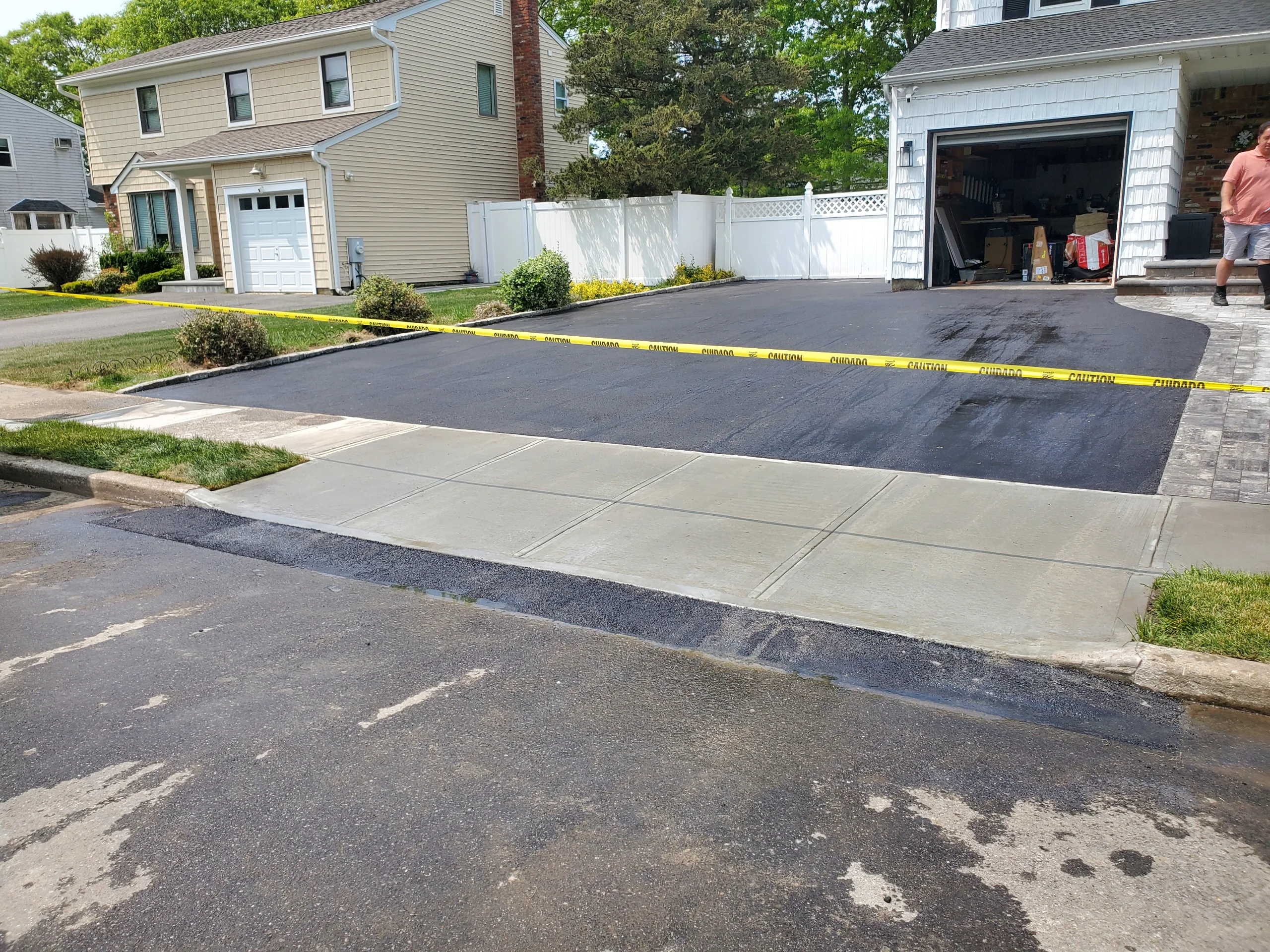
Concrete curb installation that defines property lines, manages water flow, and adds the kind of clean edge that elevates your home’s street presence in Dix Hills’ upscale neighborhoods. Sidewalk repair that addresses settling, cracking, and trip hazards without tearing out sections that are still structurally sound. Belgian block driveway aprons that combine durability with the architectural detail you see on higher-end properties throughout Suffolk County.
We also handle masonry flatwork: patios, walkways, and other horizontal surfaces where drainage and base preparation make or break longevity. And we provide local concrete grading and prep services, which means we’re solving the drainage problem at its source instead of just covering it with new concrete.
Every project includes proper drainage engineering. Dix Hills’ rolling terrain creates grade changes that require retaining walls, French drains, or pitch corrections to protect your investment. We don’t pour concrete and hope the water figures itself out. We direct the water where it needs to go before we ever mix a batch.
You also get transparent communication throughout the process. We’ll tell you what we’re doing, why we’re doing it, and what it costs before we start. No surprise charges, no vague timelines, no disappearing for days between phases. You’ll know what’s happening because we’ll keep you updated.
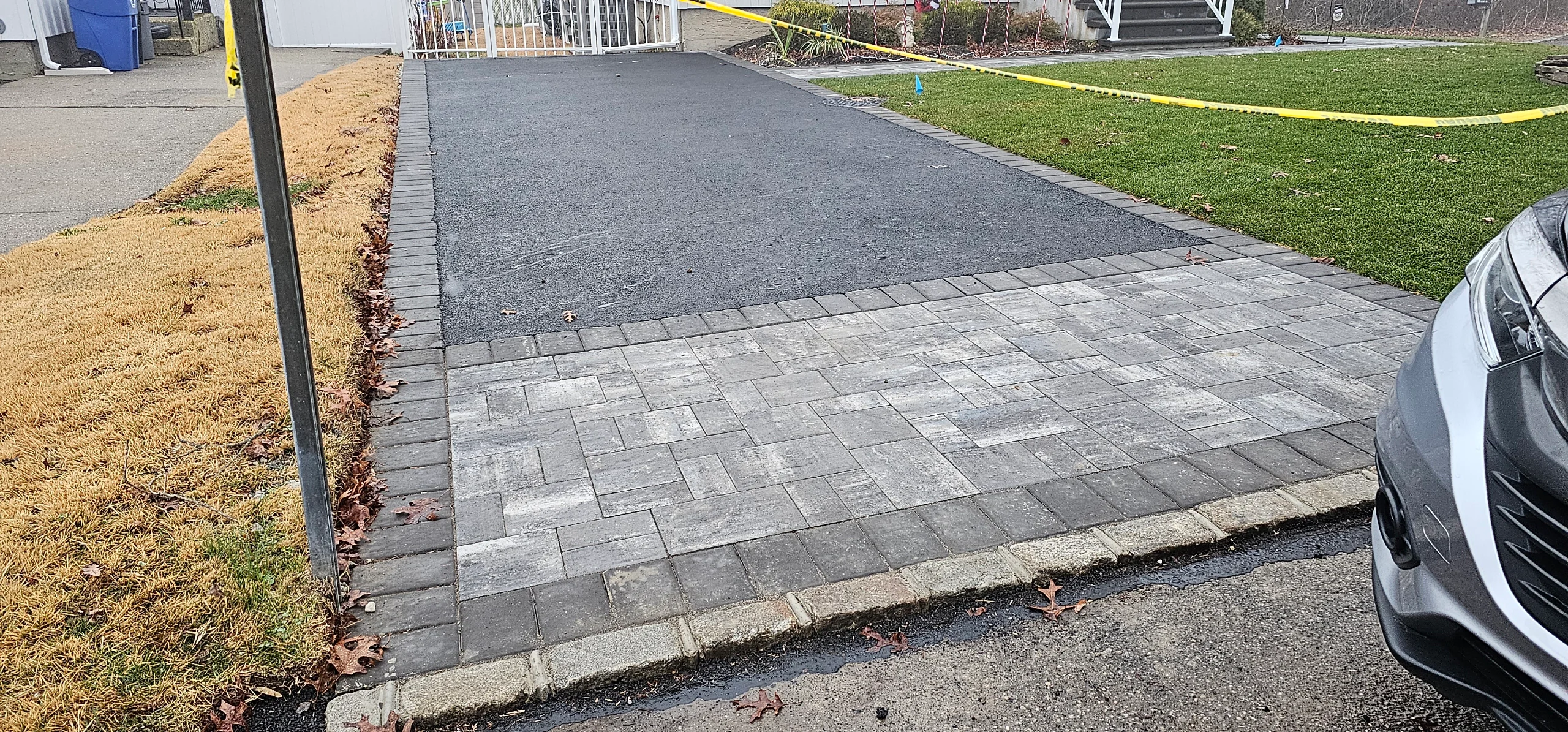
Concrete curb installation typically runs between $12 and $18 per linear foot in Dix Hills, depending on the curb style, site conditions, and how much grading work is needed before we pour. A standard residential curb along a driveway apron might cost $800 to $1,500 for an average installation, but that number moves if we’re dealing with significant drainage issues or if you’re adding Belgian block accents.
The price reflects more than just the concrete. You’re paying for excavation, base preparation with compacted gravel, proper grading to manage water flow, and the labor to form and finish the curb so it lasts. Contractors who quote unusually low prices are either skipping the base prep or using thinner pours that won’t hold up. On Long Island, where freeze-thaw cycles and clay soil create movement, cutting corners on base work means you’ll be replacing that curb in a few years instead of a few decades.
If your property has drainage problems or if the existing grade slopes toward your foundation, expect to pay more for the grading corrections that need to happen first. That’s not an upsell, it’s a necessity. Curbing installed on improper grade just channels water more efficiently toward your house, which defeats the purpose.
Belgian block is the most durable and visually distinctive option for driveway aprons in Dix Hills, especially if you’re trying to match the upscale aesthetic of neighborhoods near Half Hollow Hills or along tree-lined streets off Vanderbilt Motor Parkway. It handles freeze-thaw cycles better than poured concrete alone, it doesn’t crack the way asphalt does, and it adds architectural character that increases curb appeal and property value.
Poured concrete is a solid second choice if budget is a concern. It’s less expensive than Belgian block, it lasts decades with proper installation, and it gives you a clean, uniform look. The key is making sure the base is prepared correctly and the concrete is thick enough to handle vehicle weight and Long Island’s weather. Standard aprons should be at least four inches thick, and six inches is better if you’re parking heavier vehicles.
Asphalt is the least expensive option upfront, but it requires more maintenance and doesn’t hold up as well in Suffolk County’s climate. You’ll be sealing it every few years and dealing with cracks and settling sooner than you would with concrete or Belgian block. For Dix Hills properties where curb appeal matters, asphalt doesn’t deliver the same return on investment. You’re better off spending more now on a material that lasts and looks better long-term.
Most sidewalk repairs in Dix Hills take one to three days, depending on how many sections need work and whether we’re addressing underlying drainage or settling issues. If you’ve got one or two cracked slabs and the base underneath is still solid, we can often remove and replace just those sections without tearing out the entire walkway. That saves you money and gets the job done faster.
The bigger question is why the sidewalk cracked in the first place. If it’s just surface cracking from age or minor settling, a targeted repair works fine. But if the cracking is caused by poor drainage, tree roots, or a base that was never properly compacted, patching the surface won’t solve the problem. You’ll be looking at the same cracks again in a year or two. We assess the cause before we start work so you’re not paying twice for the same repair.
In cases where the sidewalk has settled unevenly and created trip hazards, we sometimes use mudjacking or polyurethane foam injection to lift and level the existing concrete instead of replacing it. That’s faster and less expensive than a full replacement, and it works well when the concrete itself is still in good condition. The right approach depends on your specific situation, and we’ll walk you through the options before you decide anything.
Concrete cracks for three main reasons on Long Island: improper base preparation, inadequate thickness, and freeze-thaw cycles that expand and contract the material. If the base underneath isn’t properly compacted or if it’s installed over clay soil that shifts when it gets wet, the concrete will settle unevenly and crack along stress points. If the pour is too thin for the load it’s carrying, it’ll crack under weight. And if water seeps into small surface cracks and then freezes, it expands and makes those cracks worse every winter.
We prevent cracking by addressing all three factors. First, we excavate to the right depth and install a compacted gravel and sand base that stays stable even when Long Island’s clay-heavy soil gets saturated. We use laser-guided grading equipment to ensure the base is level and properly sloped for drainage, because even a quarter-inch variance can cause problems over time. Second, we pour concrete at the right thickness for the application: four inches minimum for walkways, six inches for driveways, and thicker if the site conditions require it. Third, we use control joints to manage where cracks form if they do occur, and we apply sealant to protect the surface from water infiltration.
Long Island’s freeze-thaw cycles are unavoidable, but proper installation and maintenance make a huge difference. Concrete that’s installed correctly and sealed every few years can last fifty years or more. Concrete that’s installed poorly starts showing problems within five.
Most residential concrete work in Dix Hills doesn’t require a permit if you’re replacing an existing driveway, sidewalk, or patio with similar dimensions and materials. But if you’re expanding your driveway, adding significant square footage of new concrete, or altering drainage patterns on your property, the Town of Huntington may require a permit and a site plan review.
Any work that affects stormwater runoff or changes the grade near your property line typically needs approval, especially in Suffolk County where drainage regulations are strict. If you’re installing new curbing that redirects water flow or if you’re adding a retaining wall as part of your concrete project, you’ll likely need to submit plans and get them approved before we start. The permit process isn’t complicated, but it does add time to the project timeline.
We handle permit applications as part of our service if your project requires one. We know what the Town of Huntington requires, we know how to submit plans that get approved the first time, and we make sure the work is inspected and signed off properly. You’re not navigating that process alone. If your project doesn’t need a permit, we’ll tell you that upfront so you’re not worrying about it unnecessarily.
If water is pooling near your foundation, running across your driveway, or creating soggy areas in your yard after every rainstorm, you’ve got a drainage problem. Whether concrete work solves it depends on what’s causing the issue. If your property slopes toward your house instead of away from it, regrading and new concrete with proper pitch will fix it. If water is coming from a high point on your property and flowing downhill with no clear path away from structures, you might need French drains, catch basins, or dry wells in addition to concrete work.
Concrete curbing, aprons, and flatwork can all be part of a drainage solution, but only if they’re installed with the right grade and integrated into a larger plan that directs water where it needs to go. Pouring new concrete over a poorly graded base just gives you prettier concrete with the same drainage problem underneath. That’s why we assess the entire site before we recommend a solution. We’re looking at soil composition, existing grade, water flow patterns, and where the water is supposed to end up.
In Dix Hills, where rolling terrain and clay soil create drainage challenges that don’t exist in flatter or sandier areas, most concrete projects include some level of grading correction or drainage engineering. It’s not an add-on, it’s part of doing the job right. We’ll tell you exactly what your property needs and why, and we’ll show you what happens if you skip steps. You’ll understand the plan before we touch a shovel.
Other Services we provide in Dix Hills