Long Island trees face salt spray, humid summers, and nor'easters. Discover the seasonal care, smart planting, and hazard prevention that actually works here.
Share:
Summary:
Timing determines whether your trimming helps or harms. Prune at the wrong time and you’re opening your trees to disease, pest invasion, or leaving them vulnerable when the next storm arrives.
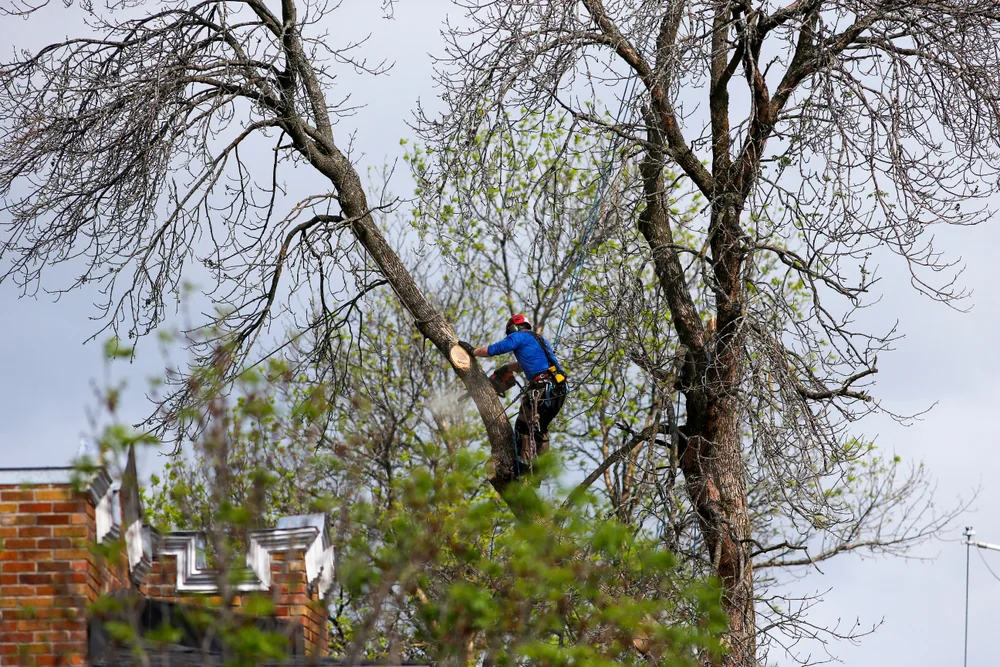
Late winter through early spring offers the optimal window for professional tree trimming Suffolk County properties need. February through March works best—after harsh winter weather but before new growth starts. Dormant trees heal faster and aren’t stressed during their active growing season.
Exceptions exist. Oak trees require winter-only pruning from December through February. Oak wilt disease spreads April through October, and fresh cuts during warm months invite infection. Hazardous branches don’t wait for ideal timing though. Broken, hanging, or clearly dangerous limbs need immediate removal regardless of season.
Weather hits Long Island hard. Nor’easters. Hurricanes. Ice storms loading branches beyond their breaking point. Your trees either withstand this or they don’t—and preparation makes the difference.
Professional tree trimming removes failure points before storms find them. Dead branches, crossing limbs creating wounds, branches with weak attachment angles. These are what end up through your roof or across your car. Salt-laden coastal air weakens branch structure gradually. What looked solid last year might be compromised now.
Regular inspection catches issues while they’re manageable. Waiting for obvious problems usually means you already have a hazard. Proper trimming improves air circulation through the canopy too. Dense crowns trap humidity, breeding fungal diseases in Long Island summers. Strategic thinning lets air move through, reduces the sail effect in high winds, and keeps trees healthier overall.
Storm preparation trimming works best in late spring or early summer, well before hurricane season peaks. This gives trees time to heal from cuts while removing vulnerable branches before they become projectiles. Waiting until October means it’s too late for preventive work. Crown reduction decreases wind resistance and weight load on branches. Not topping—that creates weak growth and worse problems. Strategic reduction that maintains natural form while improving storm resistance.
Trees receiving regular professional maintenance rarely suffer catastrophic failure during storms. The ones ending up on houses haven’t been touched in years or were butchered by someone who didn’t understand tree structure.
You don’t need arborist training to spot trouble. Regular property walks and knowing what to look for catch problems early.
Dead or dying branches are obvious red flags. No leaves during growing season, brittle wood, bark peeling away. These need removal immediately, any time of year. They’re liabilities waiting to happen. Fungal growth at tree bases signals root system or lower trunk issues. Mushrooms, conks, visible rot. Trees can look healthy above ground while rotting from inside.
Leaning trees warrant immediate attention, not just after storms. Sudden lean increases or lean toward structures need professional evaluation. Root systems might be compromised. Structural issues might not be visible from ground level. Cracks in trunks or major branches indicate internal decay or weakness. Cavities or hollow areas change risk profiles significantly, even if trees can survive with some decay.
Branches hanging over houses, garages, or parking areas pose risks even when healthy. Ice or snow weight can cause failure. If they’re already questionable, they won’t magically strengthen. Excessive dead wood throughout the canopy means stress—from disease, pests, drought, soil compaction, or other factors. Healthy trees don’t have large amounts of dead wood.
Girdling roots are harder to spot but incredibly damaging. These roots wrap around trunks instead of growing outward, slowly strangling trees and cutting off water and nutrient flow. If your tree trunk goes straight down like a telephone pole instead of flaring at the base, girdling roots might be choking it.
Want live answers?
Connect with a Rolling Hills Property Services Inc expert for fast, friendly support.
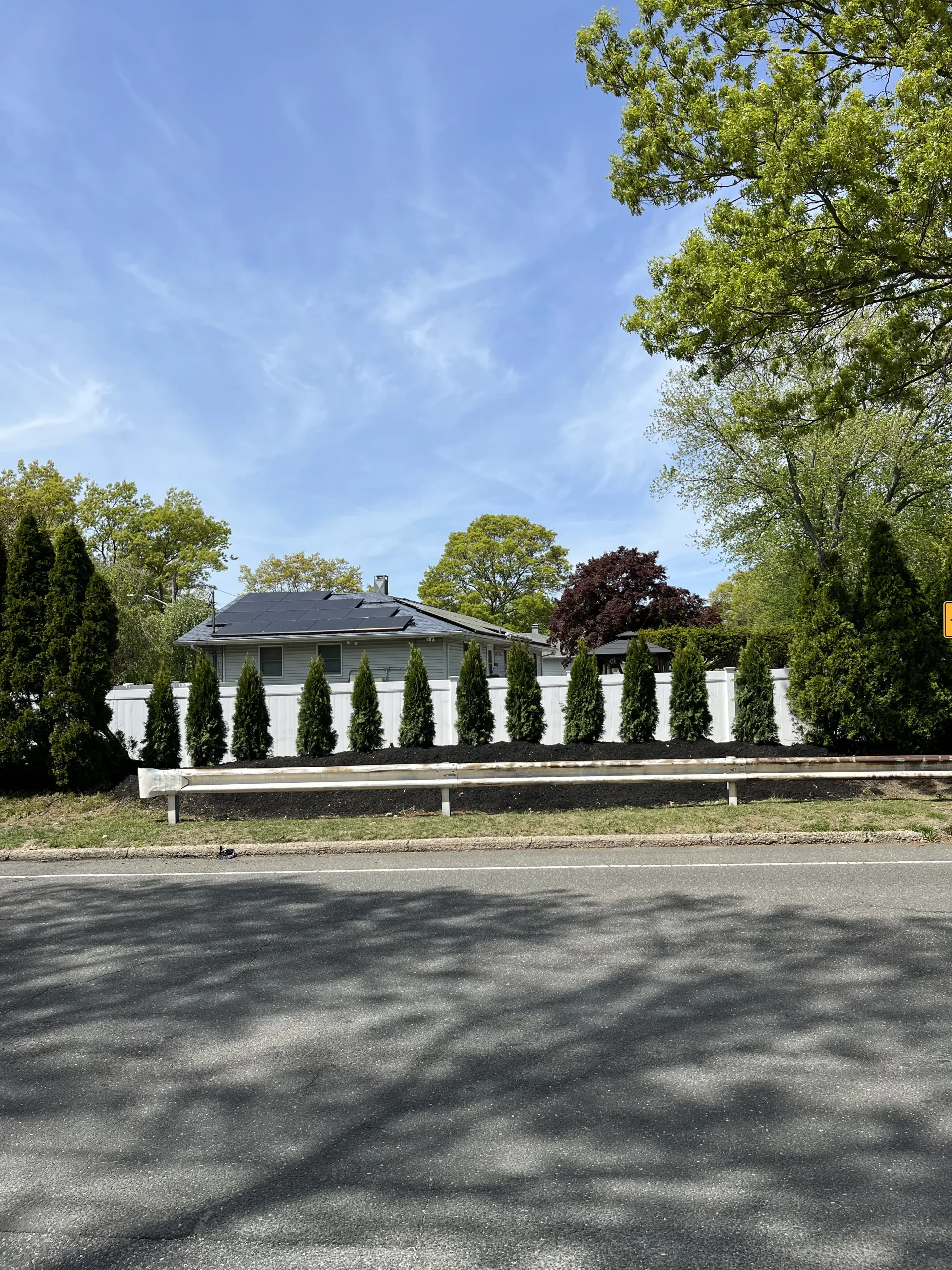
Privacy tree installation solves multiple property challenges simultaneously. Blocking unwanted views, reducing noise, creating natural boundaries, adding property value. Success depends on choosing varieties that thrive in Long Island conditions and planting them correctly from day one.
Not every privacy tree succeeding elsewhere works here. Suffolk County’s USDA hardiness zone 7 brings specific soil and weather challenges. Sandy coastal soils drain quickly. Inland properties battle heavier clay holding moisture. Summer heat and drought stress even established trees. Winter delivers salt spray and ice storms.
Trees consistently performing well here have adapted to these conditions over decades of local use. Leyland Cypress and Green Giant Arborvitae are workhorses for Long Island privacy screening. They grow 3 to 4 feet annually in our climate, tolerate wet and dry periods, provide year-round coverage. You’re looking at 8 to 10 feet of dense screening within three growing seasons.

Soil type drives species selection more than aesthetics or growth rate. Sandy coastal soil needs trees tolerating quick drainage and occasional drought. Inland clay soils require species handling wet conditions and slower drainage.
Green Giant Arborvitae handles variable conditions better than most alternatives, tolerating both wet periods and dry spells. This makes it reliable across different Suffolk County soil types. Leyland Cypress grows faster but prefers well-drained sites. Plant it in heavy clay and root rot becomes likely.
Spacing determines how quickly you achieve desired coverage. Plant trees 4 to 6 feet apart for hedge effect filling in by first or second season. Space them 8 to 10 feet apart for more individualized trees rather than solid walls. Some properties use double rows with trees staggered 6 feet apart in each row, creating appearance of 3-foot spacing and nearly total closure. This works well for road noise reduction.
Your end goal matters. Blocking specific views? Creating noise buffers? Defining property boundaries? Answers affect both species selection and placement. Trees for privacy along property lines have different requirements than screens around pools or patios. Mature size requires planning. That small tree you’re planting reaches 30, 40, or 50 feet tall depending on species. Account for overhead clearance from power lines and adequate distance from structures. Plant trees at least 15 to 20 feet from houses, though some species need more room.
Sun exposure affects growth rates dramatically. Most fast-growing privacy trees need full sun to perform. Plant them in shade and you get leggy, sparse growth instead of dense screening. Walk your property at different times to understand shadow patterns before committing to locations. Salt tolerance is critical for properties near water. Not all evergreens handle salt spray equally. Within a mile or two of coast, this drives selection. Some varieties thriving inland will struggle or die in coastal conditions.
Planting too deep kills more trees than most other mistakes combined. Studies show over 90% of professionally planted trees go in too deep. Burying the root flare where trunk meets roots suffocates trees. Roots need oxygen. Bury them under excess soil and they can’t breathe properly.
Root flare should be visible above ground, not buried. If your newly planted tree looks like a telephone pole going straight into ground with no flare at base, it’s planted wrong. This leads to girdling roots, reduced growth, eventual decline. Hole width matters as much as depth. Dig holes two to three times wider than root balls, but no deeper. Wider holes give roots room to spread and establish. Holes barely bigger than root balls restrict growth and make trees less stable, more likely to blow over in storms.
Ignoring root defects at planting sets you up for problems years later. If container trees have roots circling in spirals, address that before planting. Loosen roots, score root balls, even cut away circling roots if necessary. Plant as-is and those roots continue circling, eventually strangling trees.
Installation timing affects success rates significantly. Fall planting September through November takes advantage of cooler temperatures and higher rainfall, allowing strong root development before summer heat stress. Spring installation works but demands more careful watering throughout first growing season. Summer planting presents biggest challenges—high temperatures, lower rainfall, intense sun stress even hardy varieties during vulnerable establishment.
Watering mistakes go both directions. More newly planted trees die from too much water than not enough, especially in heavy clay. Under-watering is equally deadly in sandy soils or during hot, dry periods. Water needs depend on soil type, weather, species. Newly planted trees need daily watering first week, every three days next few months, then weekly deep watering during dry spells once established.
Mulch application seems simple but gets messed up constantly. “Mulch volcanoes” piled against trunks create moisture problems, invite pests, rot bark. Mulch should look like donuts, not volcanoes. Keep it 2 to 4 inches deep, pulled back from trunks with few inches clearance. Planting too close to structures, sidewalks, or utilities causes expensive problems years later. Tree roots typically spread one to two times tree height. That small tree you’re planting will have extensive root systems in a decade. Roots lifting sidewalks, cracking foundations, interfering with underground utilities—all preventable with proper placement from the start.
Your trees are either assets adding thousands in property value or liabilities waiting to cause damage. The difference comes down to proper maintenance. Regular tree trimming prevents storm damage and extends tree life. Smart privacy tree installation gives you screening that actually lasts. Knowing when to call in professionals saves you from expensive emergencies and safety hazards.
Long Island’s unique conditions mean you can’t copy what works elsewhere. Coastal climate, soil variations, weather patterns here require specific approaches and timing. Trees thriving in other regions might struggle or fail in Suffolk County. Species working inland might not survive near coast.
Homeowners avoiding problems stay ahead of issues rather than reacting after something goes wrong. That means regular inspections, seasonal maintenance at optimal times, professional assessment when something looks questionable. At Rolling Hills Property Services Inc., we bring local expertise and comprehensive capabilities to keep your property safe, valuable, and looking its best year-round.
Article details:
Share:
Continue learning: