Your Suffolk County lawn faces unique challenges every season. Learn sustainable practices that work with Long Island's climate—not against it.
Share:
Summary:
Sustainable lawn care in Suffolk County isn’t the same as sustainable lawn care in, say, Arizona or Georgia. Long Island sits in a cool-season grass zone with maritime influence. That means your fescue and bluegrass love spring and fall but struggle through July and August.
The soil here ranges from sandy loam near the coast to heavier clay inland. Haven Loam is the most common—deep, well-drained, and responsive to organic matter. But it still needs help.
Traditional lawn care throws synthetic fertilizer at grass four times a year, applies pre-emergent herbicides in spring, and runs sprinklers on a timer regardless of rainfall. Sustainable lawn care flips that. You’re feeding the soil, not just the grass. You’re preventing problems instead of reacting to them. And you’re letting natural cycles do most of the work—with consistent support from professional lawn maintenance when needed.

Healthy soil is the foundation of everything. When your soil has good structure, holds moisture, and supports beneficial microorganisms, your grass develops deeper roots. Deeper roots mean better drought tolerance, fewer disease problems, and less need for constant watering.
Organic matter is the key. Compost, grass clippings left on the lawn, and organic fertilizers all add carbon to the soil. That carbon feeds bacteria, fungi, and earthworms—the organisms that break down nutrients and make them available to grass roots.
Suffolk County soils tend to be slightly acidic and can benefit from occasional lime applications to balance pH. But you don’t need a soil science degree. A basic soil test every couple of years tells you what’s actually missing. Then you can add what’s needed instead of guessing.
Aeration is another simple step that makes a huge difference. Long Island lawns get compacted from foot traffic, mowing, and just settling over time. Core aeration in early fall pulls plugs of soil out, creating channels for air, water, and roots to move. It’s one of the most effective things you can do for long-term lawn health.
Topdressing with a thin layer of compost after aeration speeds up the process. The compost works into those aeration holes, adds organic matter, and introduces beneficial microbes. You’re not just treating symptoms—you’re rebuilding the system.
Suffolk County is prime territory for cool-season grasses. Tall fescue, Kentucky bluegrass, and perennial ryegrass all perform well here because they love moderate temperatures and can handle cold winters. These grasses grow most actively in spring and fall when temperatures sit between 60 and 75 degrees.
Summer is the challenge. When temperatures push into the 80s and 90s, cool-season grasses go semi-dormant. They slow down, stop growing as fast, and turn a duller green. That’s normal. The mistake most homeowners make is trying to force growth with heavy fertilizer and constant watering. That just stresses the grass and invites disease.
Instead, raise your mower height in summer. Taller grass shades the soil, reduces evaporation, and encourages deeper roots. Three to four inches is ideal. You’re also leaving more leaf surface to photosynthesize, which keeps the plant healthier even when it’s not actively growing.
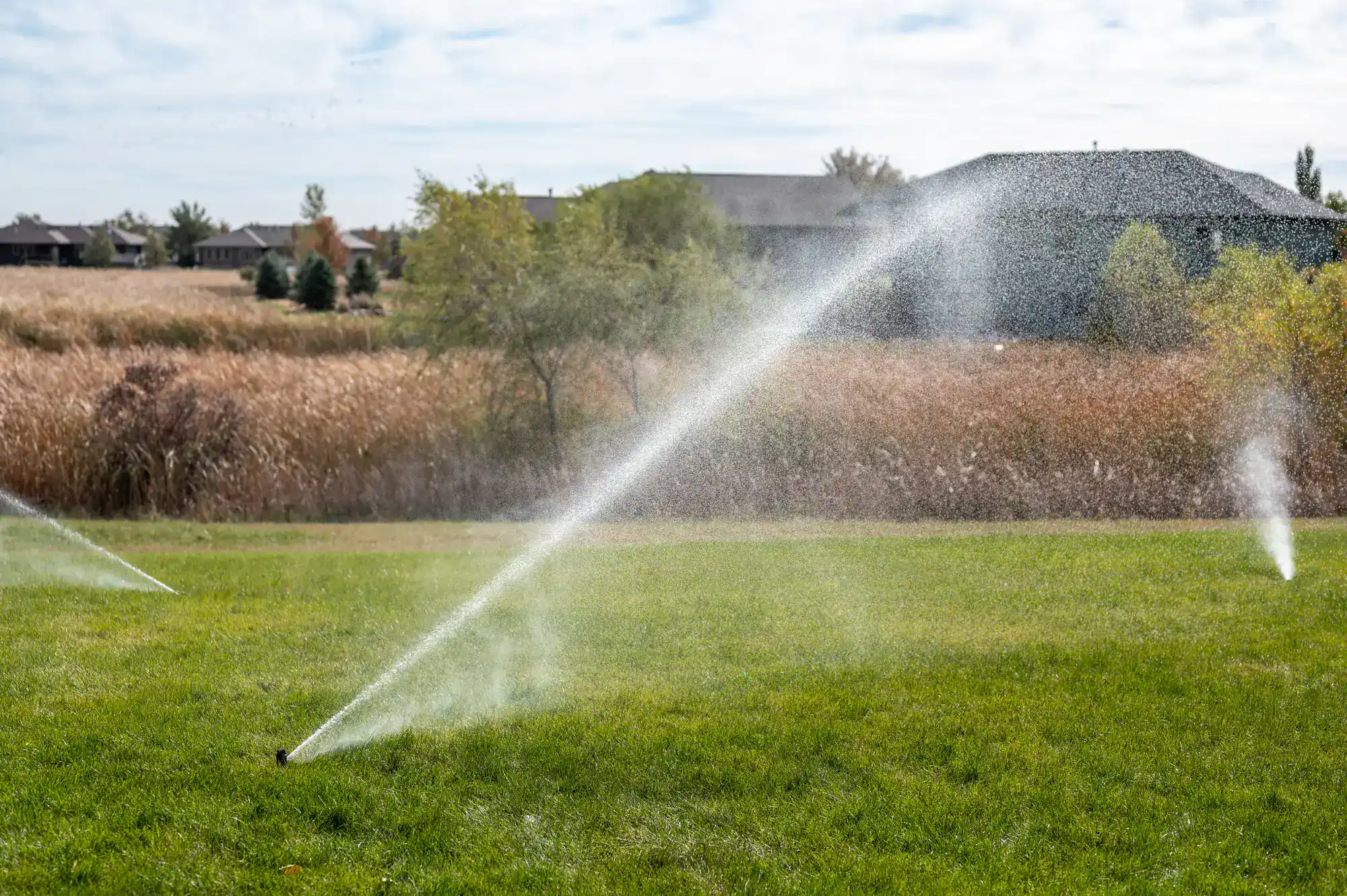
Watering should be deep and infrequent. An inch of water once a week is better than fifteen minutes every day. Deep watering trains roots to grow down instead of staying shallow near the surface. And if your lawn starts to look a little dull in late July, that’s okay. It’ll bounce back when September arrives.
Overseeding in early fall is one of the best practices for Suffolk County lawns. You’re filling in thin spots, introducing newer grass varieties with better disease resistance, and thickening the turf before winter. A thick lawn naturally crowds out weeds, which means less need for herbicides.
Want live answers?
Connect with a Rolling Hills Property Services Inc expert for fast, friendly support.
Each season in Suffolk County requires different priorities. Spring is about recovery and preparation. Summer is about protection and patience. Fall is your power season—the time to do the heavy lifting. Winter is mostly hands-off.
Understanding what to do when saves you time and money. It also keeps you from doing things that work against your lawn’s natural rhythm. A cool-season lawn doesn’t need the same care in July that it needs in October.
Here’s what actually matters during each season, based on how grass grows in this region.
Spring starts when soil temperatures hit 55 degrees, usually mid-April on Long Island. That’s when grass starts actively growing again. Your first job is cleanup—rake up any remaining leaves, sticks, or debris that accumulated over winter. You want sunlight and air reaching the soil.
This is also the time to check for any areas that need reseeding. Bare spots from winter damage, salt exposure, or foot traffic should be addressed now while temperatures are still moderate. Lightly till the bare area, add a thin layer of topsoil, spread seed, and keep it moist until it germinates.
If you’re going to fertilize in spring, go light. A slow-release organic fertilizer is better than a quick-hit synthetic. You’re trying to support steady growth, not force a growth spurt that makes you mow twice a week. Too much nitrogen in spring also encourages soft, lush growth that’s more susceptible to disease and pests.
Pre-emergent weed control is effective in spring if applied at the right time—before soil temperatures reach 55 degrees consistently. But if you’re overseeding, skip the pre-emergent. It prevents all seeds from germinating, including the grass seed you just put down.
Mowing should start once grass reaches about four inches. Keep your mower blade sharp and never cut more than one-third of the grass height at once. Dull blades tear grass instead of cutting it cleanly, which stresses the plant and creates entry points for disease.
Fall is the most important season for lawn care in Suffolk County. September through early November is when cool-season grasses are growing most vigorously. Temperatures are moderate, rainfall is usually consistent, and grass is storing energy in its roots for winter.
This is the time to aerate if your lawn is compacted. Core aeration in early September gives grass time to recover and fill in before winter. It also creates the perfect conditions for overseeding. After you aerate, spread seed over the entire lawn—not just bare spots. You’re thickening the turf and introducing newer grass varieties.
Fertilizing in fall makes sense because grass is actively growing and storing nutrients. An organic fertilizer applied in early September supports root development without forcing excessive top growth. Some homeowners do a second light application in late October, but it’s not always necessary if your soil is healthy.
Keep mowing through fall as long as grass is growing. Don’t drop your mowing height dramatically just because it’s getting colder. Grass that’s too short going into winter is more vulnerable to frost damage and snow mold. Gradually lower the height for your last few cuts, but stay above two and a half inches.
Leaves need to be managed, but you don’t have to bag them all. Mulching leaves with your mower breaks them into small pieces that decompose quickly and add organic matter to the soil. Just don’t let thick layers of whole leaves sit on the lawn—they’ll smother the grass and create disease problems.
Sustainable lawn care in Suffolk County comes down to a few core principles. Feed the soil, not just the grass. Work with your lawn’s natural growth patterns instead of fighting them. Use organic inputs when possible and avoid overwatering or over-fertilizing.
You don’t need a perfect lawn. You need a healthy one that can handle Long Island’s climate without constant intervention. That means accepting that grass will slow down in summer, that a few weeds aren’t the end of the world, and that building soil health takes time.
The payoff is a lawn that requires less water, fewer chemicals, and less of your time. It’s also better for local ecosystems, safer for kids and pets, and more resilient when weather doesn’t cooperate. If you’re ready to move toward a more sustainable approach but aren’t sure where to start, we can help you create a plan that fits your property and your goals.
Article details:
Share:
Continue learning: