
Hear from Our Customers

You’re not looking for someone to show up once and call it done. You need weeds gone at the root level, and you need them to stay gone long enough that your actual plants can thrive.
That’s what happens when weeding is done right. Your garden beds look intentional again. Your perennials get the water and nutrients they’re supposed to get, not whatever’s left after the weeds take their share.
Dense suburban properties like the ones throughout Huntington Station don’t give you much room for error. When plantings are tight and mature, you can’t just spray something and hope for the best. Hand-pulling protects what you’ve invested in while removing what doesn’t belong. Your beds look cleaner, your curb appeal improves, and you’re not spending your weekends bent over pulling the same weeds that came back because the roots were left behind.
We’re based in Smithtown and work throughout Suffolk County. We know what grows here, what doesn’t, and what keeps coming back if you don’t get it right the first time.
Huntington Station properties deal with dense plantings, mature landscapes, and soil that’s been worked for decades. That means weeds with deep taproots and rhizomes that spread under mulch. We’ve seen it all, and we know how to handle it without tearing up your beds or damaging the plants you want to keep.
We’re licensed, insured, and we show up when we say we will. No surprises, no runarounds. Just clear communication and work that holds up.

We start by walking your property with you. You show us what’s been bothering you, and we identify what’s actually a weed versus what’s supposed to be there. Not every homeowner knows the difference, and that’s fine—that’s why we’re here.
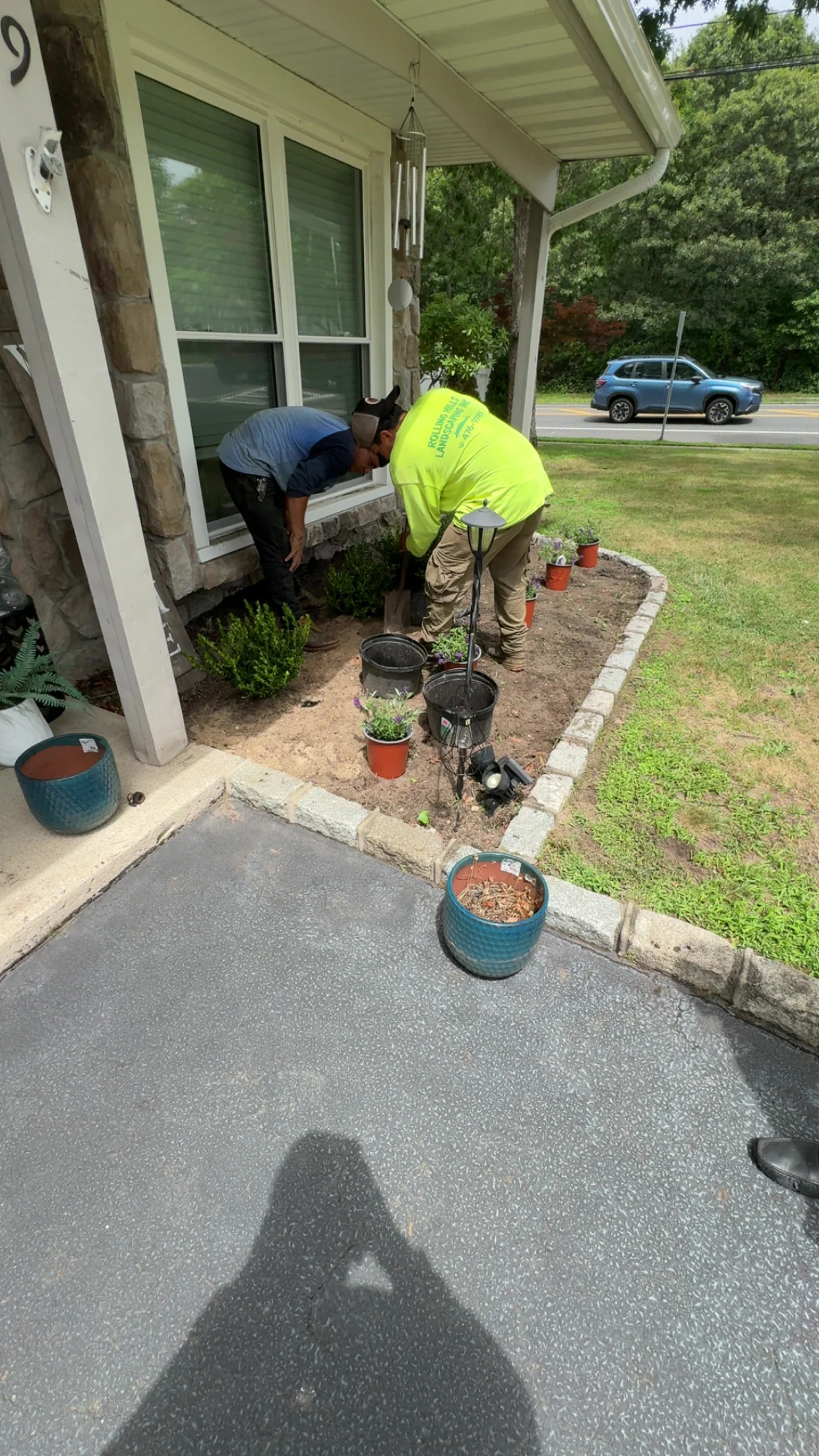
Then we get to work with hand tools. We pull weeds at the root, not at the surface. That means getting under the mulch, loosening the soil if needed, and making sure the entire root system comes out. If it’s something with a taproot or a spreading rhizome, we take the time to trace it and remove it properly.
After the beds are cleared, we assess your mulch. If it’s thin or broken down, we’ll let you know. A good three-inch layer of mulch does more to prevent weeds than anything else you can do. We can refresh it as part of the service or leave that for another day—your call.
We haul everything away. You don’t bag it, you don’t move it to the curb. We handle removal, and your property looks finished when we leave.

Ready to get started?
You’re getting manual removal of all visible weeds in your garden beds, along the edges of hardscaping, and around trees or shrubs where weeds tend to hide. We don’t use herbicides unless you specifically request them, and even then, we’re selective about where and when they’re applied.
Huntington Station’s suburban density means most properties have layered plantings—ground covers, perennials, shrubs, and small trees all sharing the same beds. That’s beautiful when it’s maintained, but it also means weeds get established fast and spread quickly. We know how to work in tight spaces without damaging your plants. We’re careful around root zones, mindful of new growth, and we don’t rush through beds just to say we’re done.
Seasonal weeding works best when it’s timed right. Early spring catches weeds before they seed. Fall weeding prevents winter annuals from taking over. We can set you up on a schedule that makes sense for your property, or we can come out as needed when things get ahead of you.
If your beds need mulch, edging, or replanting after weeds are removed, we handle that too. Everything stays in-house, so you’re not coordinating multiple companies to get your landscape back in shape.

It depends on how aggressive your weed problem is and how much mulch you have. Most properties benefit from weeding every four to six weeks during the growing season—that’s roughly April through October on Long Island.
If your beds are mulched properly and you’re staying on top of things, you might stretch that to eight weeks. If your mulch is thin or you’ve got a lot of bare soil, weeds will come back faster and you’ll need more frequent service.
The key is not letting weeds go to seed. Once they seed, you’re dealing with hundreds of new weeds instead of a dozen. Staying ahead of that cycle makes a huge difference in how much work is required each visit and how good your beds look between services.
Not if it’s done correctly. That’s the whole point of manual removal—you can be selective about what comes out and what stays.
When we’re working in dense plantings, we’re careful to loosen the soil around the weed before pulling. That reduces root disturbance to surrounding plants. We also avoid pulling during extreme heat or drought when plants are already stressed, because that’s when accidental damage is most likely to cause problems.
If a weed is tangled up in the roots of a perennial, we take the time to separate them instead of just yanking everything out. It takes longer, but it’s the only way to protect what you’ve invested in. Some companies rush through and treat everything like it’s expendable. We don’t.
We can slow them down significantly, but we can’t stop them completely. Weed seeds blow in from neighboring properties, they’re carried by birds, and they’re already sitting in your soil waiting for the right conditions. That’s just reality.
What we can do is remove existing weeds before they seed, apply mulch thick enough to block light from reaching the soil, and set you up on a maintenance schedule that keeps new weeds from getting established. Those three things together make a massive difference.
If you want a more aggressive approach, we can apply pre-emergent herbicides in early spring. Those prevent weed seeds from germinating in the first place. We don’t push chemicals, but they’re an option if you’re dealing with persistent problems and you’re comfortable using them. Most of our clients do fine with regular hand-weeding and good mulch.
Lawn care companies focus on turf. They mow, they fertilize, they might spray for weeds in the grass. But garden bed maintenance is a different skill set, and most of them don’t spend much time on it.
We specialize in the beds—the areas where your landscape actually has character. That means we know how to work around perennials, how to identify what’s a weed versus a volunteer plant, and how to remove weeds without disturbing your design.
We’re also not trying to upsell you on a lawn program or a treatment plan you don’t need. You call us when your beds need attention, we come out and handle it, and that’s it. No contracts, no pressure. Just straightforward service that focuses on what you actually asked for.
Most residential properties run between $150 and $400 per visit, depending on the size of your beds and how overgrown they are. If it’s been a while since they were last weeded, expect to be on the higher end of that range for the first visit.
Once your beds are caught up, maintenance visits cost less because there’s less work involved. We’re not starting from scratch every time—we’re just staying ahead of new growth.
We give you a clear quote before we start. No hourly rates that keep climbing, no surprise charges. You’ll know exactly what you’re paying and what you’re getting. If we run into something unexpected, we’ll talk to you before doing any additional work.
We work year-round, but the type of weeding changes depending on the season. Spring and summer are when most weeds are actively growing, so that’s when we’re busiest. Fall weeding focuses on preventing winter annuals from taking over and cleaning up beds before everything goes dormant.
Winter weeding is less common, but we’ll come out if you need it—especially if you’ve got cool-season weeds that stay green all year. Huntington Station doesn’t freeze solid for months like other parts of the country, so there’s usually something growing even in January and February.
The best time to start is early spring, right before everything wakes up. That’s when you can get ahead of the problem instead of chasing it all summer. But we’ll work with you whenever you’re ready.
Other Services we provide in Huntington Station