
Hear from Our Customers

Your garden beds stay clean longer because we’re pulling weeds at the root—not just cutting them back to return in two weeks. That means your hostas, daylilies, and ornamental grasses actually have room to thrive instead of competing with crabgrass and dandelions for water and nutrients.
You’re not spending Saturday mornings bent over flower beds with a hand trowel. You’re not buying another bottle of weed killer that may or may not work. You’re getting consistent results from someone who knows the difference between a weed seedling and a perennial coming back in spring.
Holbrook’s dense suburban lots mean your garden beds are visible—from the street, from the driveway, from your neighbor’s kitchen window. When they’re maintained right, your property stands out for the right reasons. When they’re not, everyone notices that too.
We’re based in Smithtown, and we’ve been handling property maintenance across Suffolk County long enough to know what works here and what doesn’t. Holbrook’s inland climate and soil conditions create specific challenges—different from what you’d deal with closer to the coast.
We’re licensed, insured, and we show up when we say we will. No runarounds, no vague timelines. You get clear communication, transparent pricing, and work that’s done right the first time.
This isn’t a side hustle or a summer gig. It’s a full-service operation that handles everything from lawn care to tree work to excavation, which means we understand how all the pieces of your property fit together.

We start with a walkthrough of your property to see what we’re dealing with. Not all weeds are the same, and not all garden beds need the same approach. Dense plantings require more careful hand-pulling. Beds with mulch need different attention than beds with ground cover.
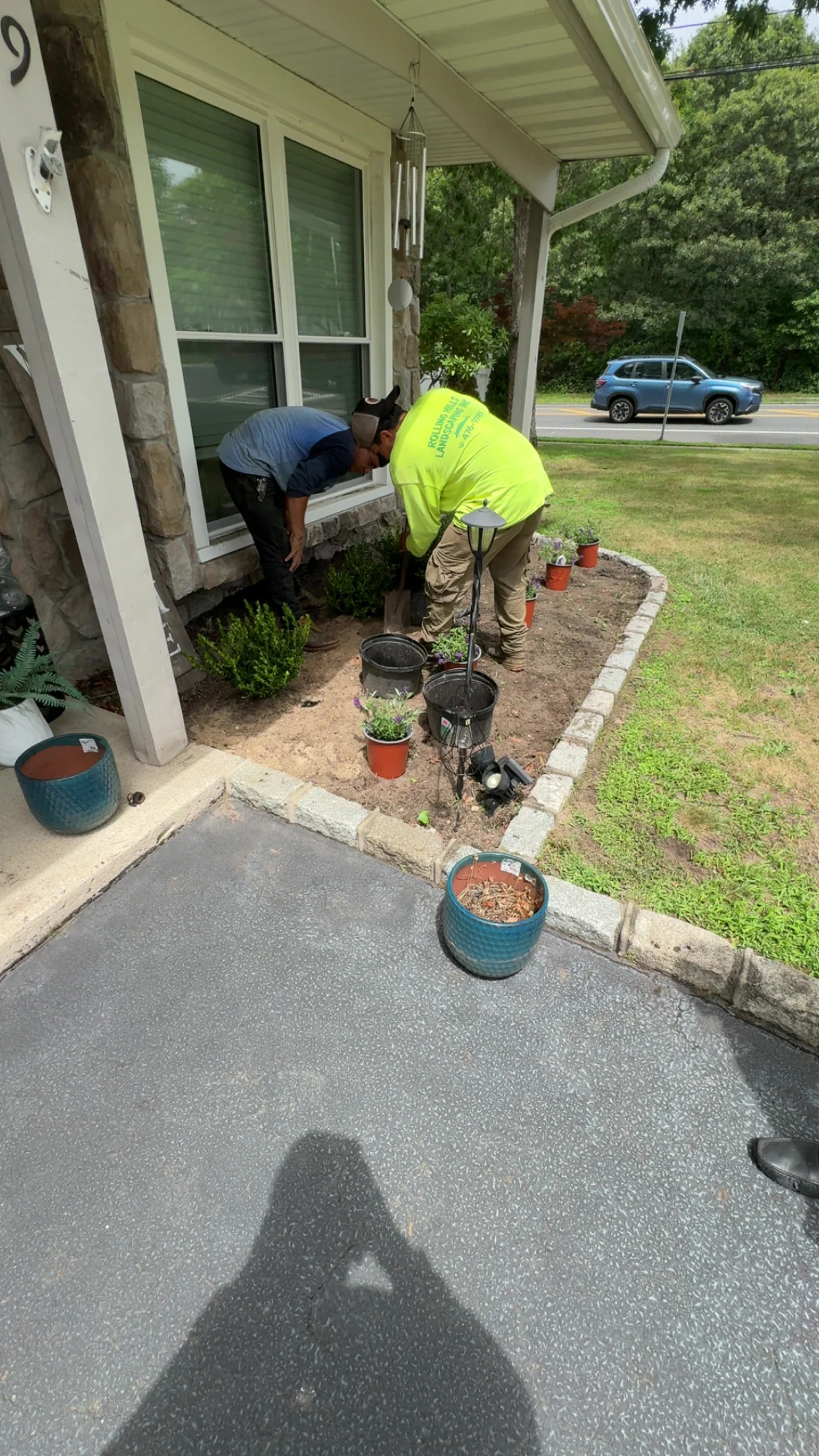
Once we know what’s there, we get to work pulling weeds manually—roots and all. We’re not spraying chemicals near your perennials or using tools that disturb root systems. We’re removing the entire plant so it doesn’t come back next week.
After the beds are clear, we can apply mulch or natural deterrents to slow down new growth. Then we set up a maintenance schedule that makes sense for your property. Some beds need weekly attention during growing season. Others can go longer. We’ll tell you what’s realistic based on what we see, not what sounds good in a sales pitch.

Ready to get started?
You’re getting manual weed removal that targets everything from dandelions and crabgrass to ground ivy and broadleaf plantain. We pull the roots, not just the tops, so you’re not dealing with regrowth in a few days.
We’re also identifying problem areas before they become expensive fixes. If we see weeds choking out a section of perennials or notice drainage issues creating weed-friendly conditions, we’ll let you know. Holbrook properties often have dense suburban garden beds with tight spacing, which means weeds can spread fast if they’re not caught early.
Seasonal weeding and mulching services keep beds protected year-round. In Suffolk County, that means understanding when pre-emergent control makes sense and when it’s too late. It also means knowing that you can’t apply certain treatments between November and April due to local regulations—something a lot of fly-by-night services either don’t know or don’t care about.

It depends on the bed, the season, and what’s planted there. During peak growing season—late spring through summer—most garden beds benefit from weekly weeding. That’s when weeds are germinating constantly and can overtake perennials in a matter of days.
In early spring and fall, you can usually stretch it to every two weeks. Winter is mostly dormant, though some weeds like chickweed stay active even in cold weather. If your beds are heavily mulched and well-maintained, you might get away with less frequent service.
The real answer is that we assess your property specifically. A densely planted bed with good mulch coverage needs less intervention than a bed with thin mulch and lots of bare soil. We’ll give you a realistic schedule based on what we see, not a one-size-fits-all package.
For garden beds with perennials, yes—by a lot. Herbicides don’t discriminate well. Even selective formulas can damage desirable plants if they drift or if you’re working in tight spaces. And they don’t remove the root system, which means some weeds just come back.
Hand-pulling gets the entire plant out of the ground. It’s more labor-intensive, but it’s also more precise. You’re not risking your hostas or ornamental grasses. You’re not introducing chemicals into soil where you might be growing vegetables or herbs nearby.
There are situations where targeted herbicide use makes sense—large infestations of aggressive weeds like poison ivy, for example. But for routine garden bed maintenance in suburban Holbrook properties, manual removal protects your investment in landscaping and keeps your beds looking clean without collateral damage.
Time, tools, and knowing what you’re looking at. Most homeowners can pull weeds. The question is whether you want to spend your weekend doing it, whether you’re getting the roots, and whether you can tell the difference between a weed seedling and a perennial coming back.
We’re faster because we do this all day. We have tools designed for root extraction without disturbing surrounding plants. And we know what we’re looking at—so we’re not accidentally pulling your black-eyed Susans thinking they’re weeds.
The other piece is consistency. If you miss a week or two because life gets busy, weeds don’t wait. They seed, spread, and suddenly you’re dealing with a bigger problem. Regular professional service keeps beds maintained even when you don’t have time to think about it.
Yes, though the type of service changes with the season. Active weeding happens primarily from early spring through late fall when weeds are growing. That’s when you’ll see us most often if you’re on a maintenance schedule.
Winter service focuses more on cleanup and preparation—removing dead plant material, refreshing mulch, and addressing any cold-weather weeds that stay active. It’s also a good time for planning spring bed renovations or addressing drainage issues before they cause problems.
Suffolk County regulations prohibit certain fertilizer applications between November 1st and April 1st, which affects some aspects of lawn care but doesn’t stop garden bed maintenance. We work within those rules and adjust our approach based on what’s legal and effective for each season.
Carefully, and by knowing what we’re looking at. Early spring is tricky because perennials are just emerging and can look similar to weed seedlings. We’re trained to identify plants at different growth stages so we’re not pulling your daylilies by mistake.
We use hand tools designed for precision—not broad rakes or hoes that disturb everything in their path. When we’re pulling weeds near established perennials, we’re working around root systems, not through them. That means slower work, but it also means your plants stay healthy.
If we’re ever unsure about a plant—especially in a new client’s bed where we’re still learning what’s intentional and what’s not—we ask before we pull. It’s better to leave a weed temporarily than to remove something you wanted to keep.
Some regrowth is normal, especially if we’re dealing with aggressive weeds like ground ivy or if your beds have a heavy seed bank in the soil. Weeds don’t disappear permanently after one service—they’re a continuous management issue, not a one-time fix.
That’s why we recommend regular maintenance schedules. Weekly or bi-weekly service during growing season keeps new weeds from establishing and prevents the ones we missed from going to seed. Over time, beds get cleaner as we reduce the seed bank and stay ahead of new growth.
If you’re seeing significant regrowth between scheduled services, we’ll reassess. It might mean adjusting the frequency, adding mulch to suppress germination, or addressing an underlying issue like poor drainage that’s creating ideal conditions for weeds. We’ll figure it out and adjust the plan accordingly.
Other Services we provide in Holbrook