
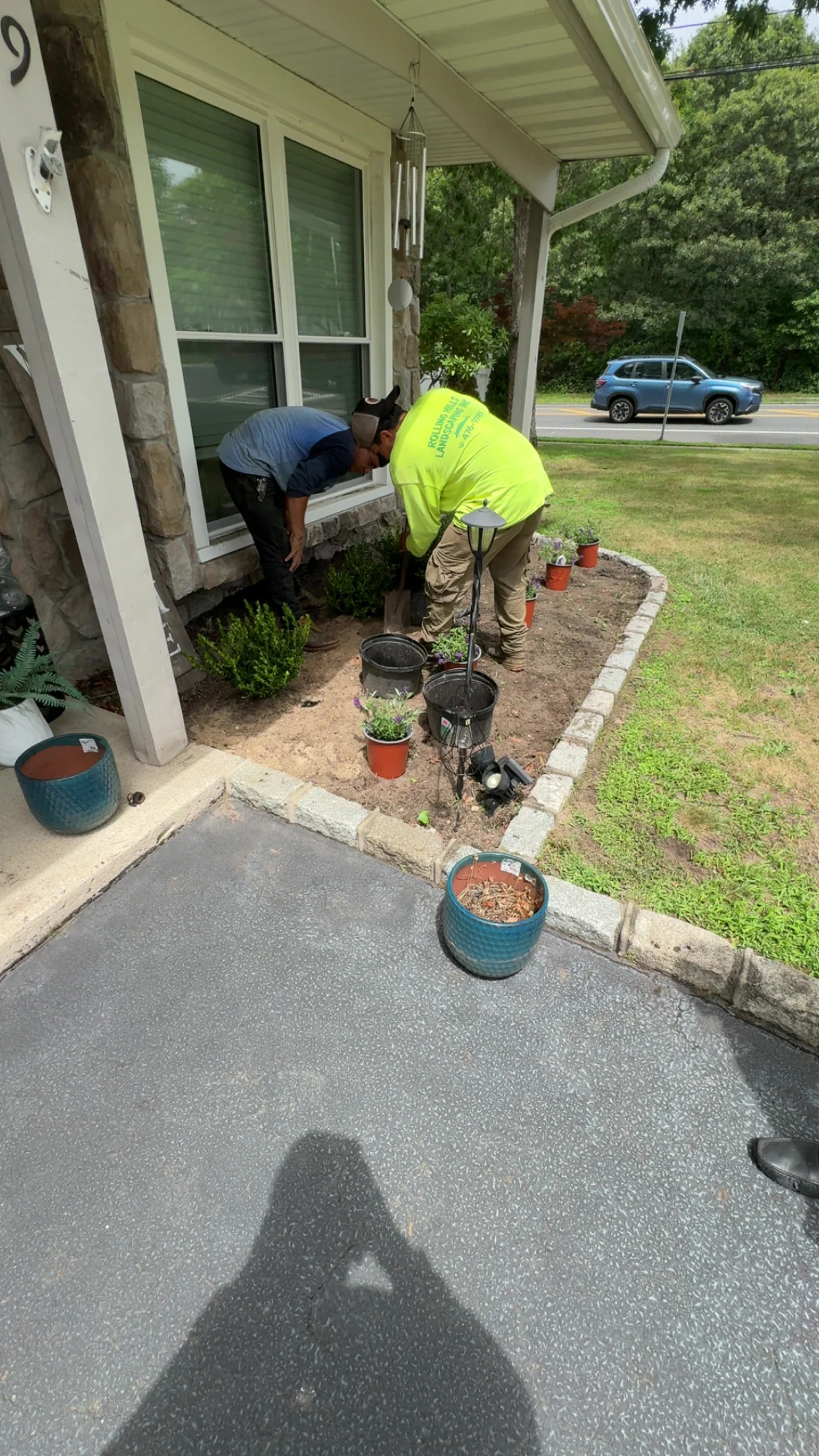
Hear from Our Customers

You’re spending 4 to 6 hours every weekend pulling weeds, edging beds, and trying to stay ahead of what pops up next. That’s over 150 hours a year you’re not getting back.
And it’s not just the time. Dense suburban garden beds like the ones common in Central Islip require careful attention. Pull the wrong way and you damage the root system of your perennials. Use the wrong chemical and you’ve just killed the plants you paid good money to install.
Manual weed removal done right means your landscaping stays intact, your beds look sharp, and you’re not out there every Saturday morning with gloves and a bucket. You get a property that looks maintained without the maintenance falling on you.
We’re based in Smithtown and work throughout Suffolk County. We’ve been handling the specific challenges that come with Long Island’s climate—hot, humid summers that stress lawns and cold winters that create gaps for weeds to take hold.
Central Islip properties deal with dense planting, cross-contamination from neighboring lawns, and soil that doesn’t always cooperate. We know what grows here, what spreads fast, and how to remove it without tearing up everything around it.
We’re fully licensed and insured, and we don’t hide behind vague pricing or surprise fees. You’ll know what you’re paying before we start, and you’ll get updates throughout the process.

We start with a walkthrough of your property to assess what’s growing, where the problem areas are, and what’s at risk. Not every weed situation is the same, and not every garden bed can handle the same approach.
From there, we hand-pull weeds at the root. This takes longer than spraying, but it’s the only way to protect perennials and ornamentals in densely planted beds. We’re careful around root systems, and we remove the entire plant—not just what’s visible above the mulch line.
After removal, we assess whether mulch replenishment is needed. A proper mulch layer suppresses future growth and keeps moisture where it belongs. If your beds are thin or uneven, we’ll let you know.
We time our visits based on Suffolk County’s growing season. Spring and early summer are critical windows, but we also handle seasonal cleanups and pre-winter prep to reduce what comes back next year.

Ready to get started?
You’re getting manual weed removal that targets the root system without disturbing surrounding plants. We work through garden beds, around trees, along fence lines, and in any area where weeds compete with your landscaping.
Mulch application is available as part of seasonal maintenance. Proper mulch depth—about 2 to 3 inches—creates a barrier that reduces future weed growth and helps retain soil moisture during Central Islip’s hot summer months.
We also handle edge trimming to keep clean lines between your beds and lawn areas. This isn’t just aesthetic—it prevents grass from creeping into your beds and reduces the chance of mower-spread weed seeds, which is a common problem in suburban neighborhoods where properties are close together.
Timing matters here. Long Island’s unpredictable spring weather makes it hard to know when to treat. We track soil temperature and seasonal patterns to schedule visits during optimal windows, so you’re not guessing when to act or missing the chance to get ahead of the problem.

Most Central Islip properties benefit from bi-weekly visits during the active growing season, which runs from late April through September. This keeps weeds from establishing deep root systems and prevents them from going to seed, which is when the problem multiplies.
If your beds are heavily planted or you’ve had recurring issues with specific invasive species, weekly visits during peak months make sense. For properties with good mulch coverage and less dense planting, monthly maintenance may be enough once we’ve cleared the initial growth.
We adjust frequency based on what’s actually happening on your property. Some areas need more attention. Some need less. We’re not locking you into a rigid schedule that doesn’t match what you’re dealing with.
Not when it’s done correctly. Hand-pulling is actually the safest method for densely planted garden beds because it targets the weed without affecting surrounding plants. Chemical treatments can drift or leach into root zones, and they don’t discriminate between what you want gone and what you want to keep.
The key is removing the entire root system. If you only pull what’s above ground, the root stays active and the weed comes back—often stronger. We loosen soil around the base, grip low, and pull steadily to get the whole plant.
For beds with shallow-rooted perennials, we’re extra careful to avoid disturbing the soil structure. In areas with established root systems, we work around them. It takes more time, but it’s the only way to protect your landscaping investment while still getting rid of the problem.
Spring and early summer are the most critical windows. Weeds germinate as soil temperatures rise, and if you catch them early—before they establish deep roots or go to seed—you’re preventing months of additional work.
Late summer into early fall is the second priority. This is when you’re preparing beds for winter and removing any late-season growth that could spread seeds or create debris. It’s also the best time to mulch, since mulch applied in fall has all winter to settle and suppress spring weeds.
That said, weeding isn’t a one-time event. Suffolk County’s climate means you’re dealing with multiple growing cycles. Consistent maintenance through the season keeps you ahead of the problem instead of constantly reacting to it.
We prioritize manual weed removal because it’s the safest option for garden beds with perennials, ornamentals, and densely planted areas. Hand-pulling removes the entire plant and doesn’t introduce chemicals into your soil or near your plants.
For larger lawn areas or properties dealing with aggressive invasive species, we can discuss selective herbicide options. If we do recommend chemical treatment, we’re transparent about what’s being used, why it’s necessary, and how it’s applied. We also offer eco-friendly alternatives for clients concerned about Long Island’s single-source aquifer.
Most Central Islip properties don’t need chemicals if the weeding is done consistently and mulch is maintained. The goal is long-term suppression, not just a quick knockdown that doesn’t last.
Cost depends on the size of your property, the severity of the weed problem, and how often you need service. Most residential properties in Central Islip fall in the range of $150 to $400 per visit for garden bed maintenance and manual weed removal.
If you’re scheduling bi-weekly or monthly service, we can structure pricing to reflect ongoing maintenance rather than one-off cleanups, which tend to cost more because there’s more ground to cover.
We provide upfront pricing after the initial walkthrough. No surprise fees, no hidden costs. You’ll know what you’re paying before we start, and if conditions change or additional work is needed, we discuss it with you first.
Yes. Mulch application is one of the most effective ways to suppress future weed growth, and it’s often included as part of seasonal weeding and mulching packages. Proper mulch depth creates a barrier that blocks light from reaching weed seeds, which prevents germination.
We assess your current mulch levels during the walkthrough. If your beds are thin or uneven, we’ll recommend replenishment. If mulch has broken down or been displaced, we’ll reset it to the right depth—usually 2 to 3 inches.
Mulch also helps retain moisture during Central Islip’s hot summer months, which reduces stress on your perennials and keeps your beds looking consistent. It’s not just about weed control. It’s about creating conditions where your landscaping thrives and weeds don’t.
Other Services we provide in Central Islip