
Hear from Our Customers

You’re looking at concrete work because something’s cracked, uneven, or just doesn’t look right anymore. Maybe your driveway apron is sinking. Maybe your sidewalk is a tripping hazard. Maybe you just want Belgian block edging that actually makes your home stand out in the neighborhood.
Here’s what matters: concrete that fails in West Babylon usually fails because of drainage. Long Island gets nor’easters. We get freeze-thaw cycles that crack poorly mixed concrete. We have sandy soil in some blocks and clay-heavy soil two streets over, and both create water problems that find every weak point in your foundation work.
When concrete is installed correctly—with proper excavation, compacted base layers, the right PSI mix for New York winters, and grading that accounts for your specific drainage patterns—it doesn’t just look better. It protects your foundation. It stops water from pooling near your house. It increases your property value in neighborhoods where curb appeal matters. And it stays level for decades, not seasons.
We’re based in Smithtown and work throughout Suffolk County. We’re licensed, bonded, and insured, which matters more than it sounds like it does—it means we pull permits correctly, we follow Town of Babylon regulations for concrete construction, and if something goes wrong, you’re covered.
We’ve been handling concrete and masonry work on Long Island long enough to know that what works in one town doesn’t always work two towns over. Drainage patterns change. Soil composition shifts. Your neighbor might have sandy soil that drains in hours while your yard holds water for days after a storm.
That’s why we don’t use the same approach for every driveway apron or retaining wall. We evaluate your site first. We look at grading, drainage, soil type, and what your property actually needs to handle Long Island weather year after year.

The work starts with site evaluation. We’re looking at your existing grade, where water flows during heavy rain, and what your soil is doing underneath the surface. If drainage is poor, we address it before we pour anything. That’s the difference between a retaining wall that lasts three years and one that lasts thirty.
Next is excavation and base prep. We remove old concrete or unstable material, then compact the base in layers. This isn’t optional. If the base shifts, everything on top of it shifts too. We use heavy machinery to get the grading exact, because a quarter-inch slope in the wrong direction means water pooling against your foundation during the next storm.
Then comes installation. For driveways, sidewalks, and aprons, we use concrete mixes engineered for New York’s freeze-thaw cycles and the salt and de-icers that come with winter. For Belgian block curbing or masonry flatwork, we set each piece with precision so it stays level and looks clean. Most projects wrap up in three to five days, and you’ll get a timeline upfront so you know exactly what to expect.

Ready to get started?
You’re getting more than a concrete pour. You’re getting site-specific engineering that accounts for West Babylon’s drainage challenges and soil conditions. That means proper excavation depth, compacted aggregate base, and grading that directs water away from your home—not toward it.
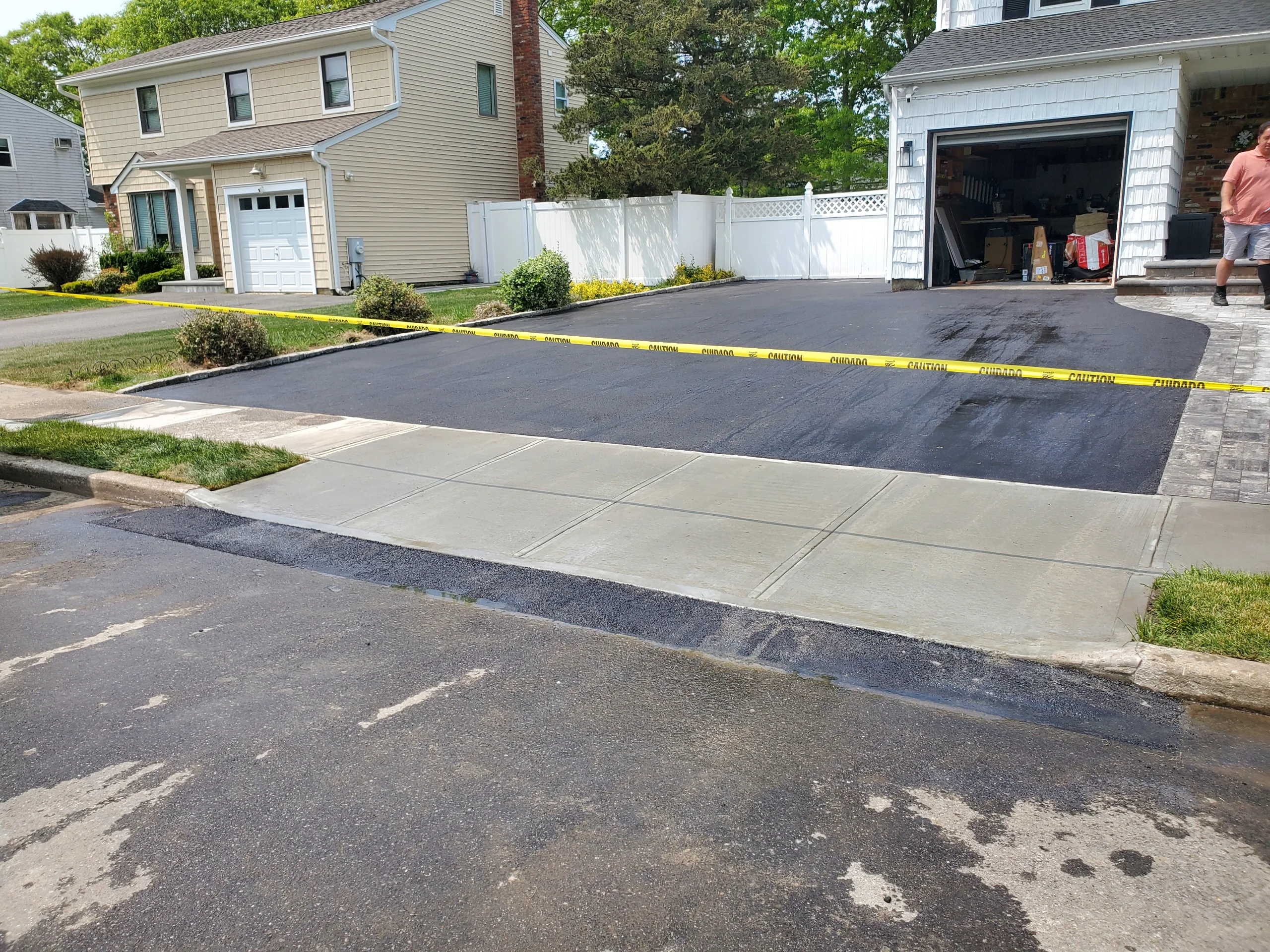
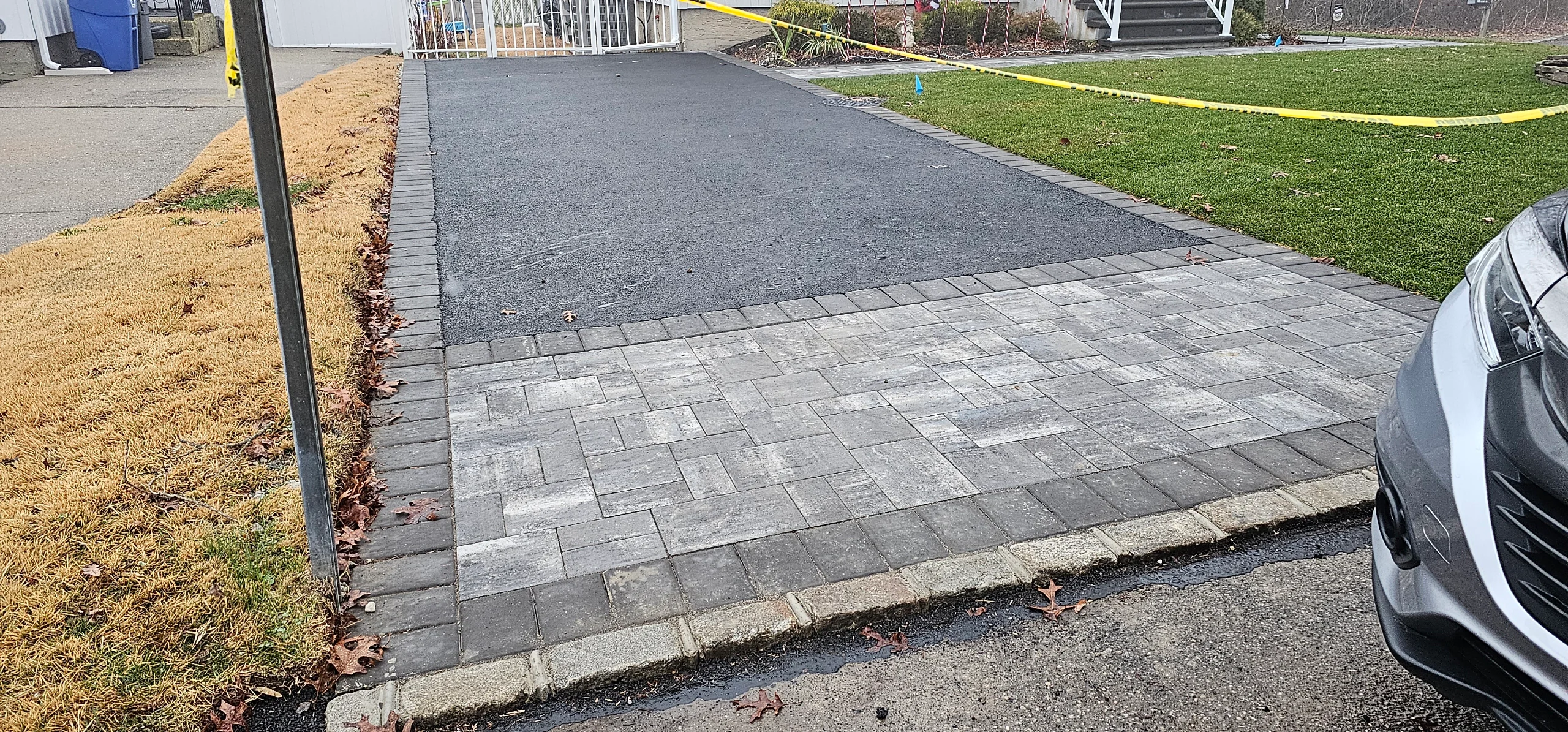
For Belgian block driveway aprons, we install edging that frames your driveway with the kind of classic detail that elevates your entire property. It’s not just decorative. It’s functional. It holds the driveway edge in place and prevents asphalt or concrete from crumbling at the borders. In high-end West Babylon neighborhoods, it’s one of the fastest ways to increase curb appeal and property value.
For sidewalk repair, we don’t just patch cracks. We remove sections that have shifted or cracked due to tree roots or settling, then reinstall with proper base prep so the new concrete stays level. Same approach for concrete curb installation—we’re creating a permanent edge that handles storm runoff and defines your landscape without shifting or sinking over time.
Every project is fully licensed and insured. We handle permits and make sure everything conforms to Town of Babylon specifications. You’ll get clear communication throughout the process, and we’ll walk you through what’s happening at each stage so there are no surprises.
Most concrete projects wrap up in three to five days, depending on the scope. A driveway apron or sidewalk repair is usually faster. A full driveway replacement or retaining wall with drainage work takes longer.
The timeline also depends on weather. We don’t pour concrete in freezing temperatures or during heavy rain because it compromises the cure. If we’re scheduled and the forecast changes, we’ll reschedule rather than rush a pour that won’t hold up.
After installation, concrete needs time to cure before you can use it. You can usually walk on it within 24 to 48 hours, but we recommend waiting at least seven days before parking vehicles on a new driveway. Full strength takes about 28 days. We’ll give you specific guidelines based on your project so you know exactly when it’s safe to use.
Poor drainage causes most concrete failures on Long Island. When water builds up underneath a slab or along a retaining wall, it creates pressure during freeze-thaw cycles. That pressure cracks concrete or pushes walls out of alignment.
The other common issue is base preparation. If the aggregate base isn’t compacted properly, or if it’s installed over unstable soil, the concrete settles unevenly. You’ll see one side of a sidewalk sinking while the other side stays level. That’s not a concrete problem—it’s a base problem.
Suffolk County soil varies block by block. Sandy soil drains fast but doesn’t always provide stable support. Clay-heavy soil holds water and expands when it freezes. Both create challenges that need to be addressed during excavation and grading. If those steps are skipped or rushed, the concrete won’t last, no matter how good the mix is.
Stamped concrete mimics the look of stone or brick but it’s still a poured slab. It can crack over time, especially in areas with freeze-thaw cycles like West Babylon. Repairs are also more noticeable because you’re patching a pattern, and it’s hard to match the original stamp and color exactly.
Belgian block is actual stone. It’s set piece by piece, usually as edging along a driveway or as a full apron at the street. It doesn’t crack the way concrete does, and if one block shifts, you can reset it without replacing an entire section. It also adds a level of detail and curb appeal that stamped concrete doesn’t match.
For driveways in high-end neighborhoods, Belgian block aprons are one of the most effective upgrades. They frame the driveway, prevent edge crumbling, and create a finished look that increases property value. If your goal is permanent curb appeal with minimal maintenance, Belgian block is the better investment.
It depends on the scope of the project. Sidewalk repairs and small concrete pads usually don’t require permits. Driveways, retaining walls, and any work that affects drainage or grading often do, especially if you’re changing the grade or adding structures near the property line.
The Town of Babylon has specific regulations for concrete construction. All work has to conform to established lines, grades, and drainage requirements. If permits are required and you skip them, you can run into issues later when you try to sell your home or if a neighbor files a complaint.
We handle permits as part of the process. We know what the town requires, we submit the paperwork, and we make sure the work is inspected and approved. That protects you from code violations and ensures the work is done to the structural standards that actually matter for Long Island’s climate and soil conditions.
Concrete costs vary based on the size of the project, site conditions, and what prep work is needed. A simple sidewalk repair costs less than a full driveway replacement with drainage corrections and Belgian block edging. Retaining walls with proper drainage systems cost more than decorative garden borders.
What drives cost is the work you don’t see. Excavation depth, base material, compaction, grading—those steps take time and equipment, but they’re what make the difference between concrete that lasts and concrete that fails in a few years. If a quote seems unusually low, it’s often because those steps are being skipped.
We provide transparent pricing after we evaluate your site. You’ll know what’s included, what the timeline is, and what you’re paying for at each stage. No surprises, no upselling once we start. Just clear communication and work that’s built to handle West Babylon’s drainage challenges and weather for decades.
It depends on the damage. Surface cracks can sometimes be sealed or resurfaced if the underlying base is still stable. But if the concrete has shifted, sunk, or cracked due to poor drainage or base failure, patching won’t fix the problem. The same issue will just show up again in a different spot.
In most cases, the better approach is to remove the damaged section, address the drainage or base issue that caused the failure, and reinstall correctly. That costs more upfront, but it’s a permanent fix instead of a temporary patch that buys you another year or two.
We’ll evaluate your concrete and tell you honestly whether repair makes sense or whether replacement is the smarter move. If your goal is to stop dealing with the same problem every few years, we’ll recommend the option that actually solves it. If a repair will hold up, we’ll tell you that too.
Other Services we provide in West Babylon