
Hear from Our Customers

Your driveway takes a beating every winter. Snowplows chew up the edges. Water pools where it shouldn’t. Cracks show up after two seasons, and suddenly you’re looking at another repair bill.
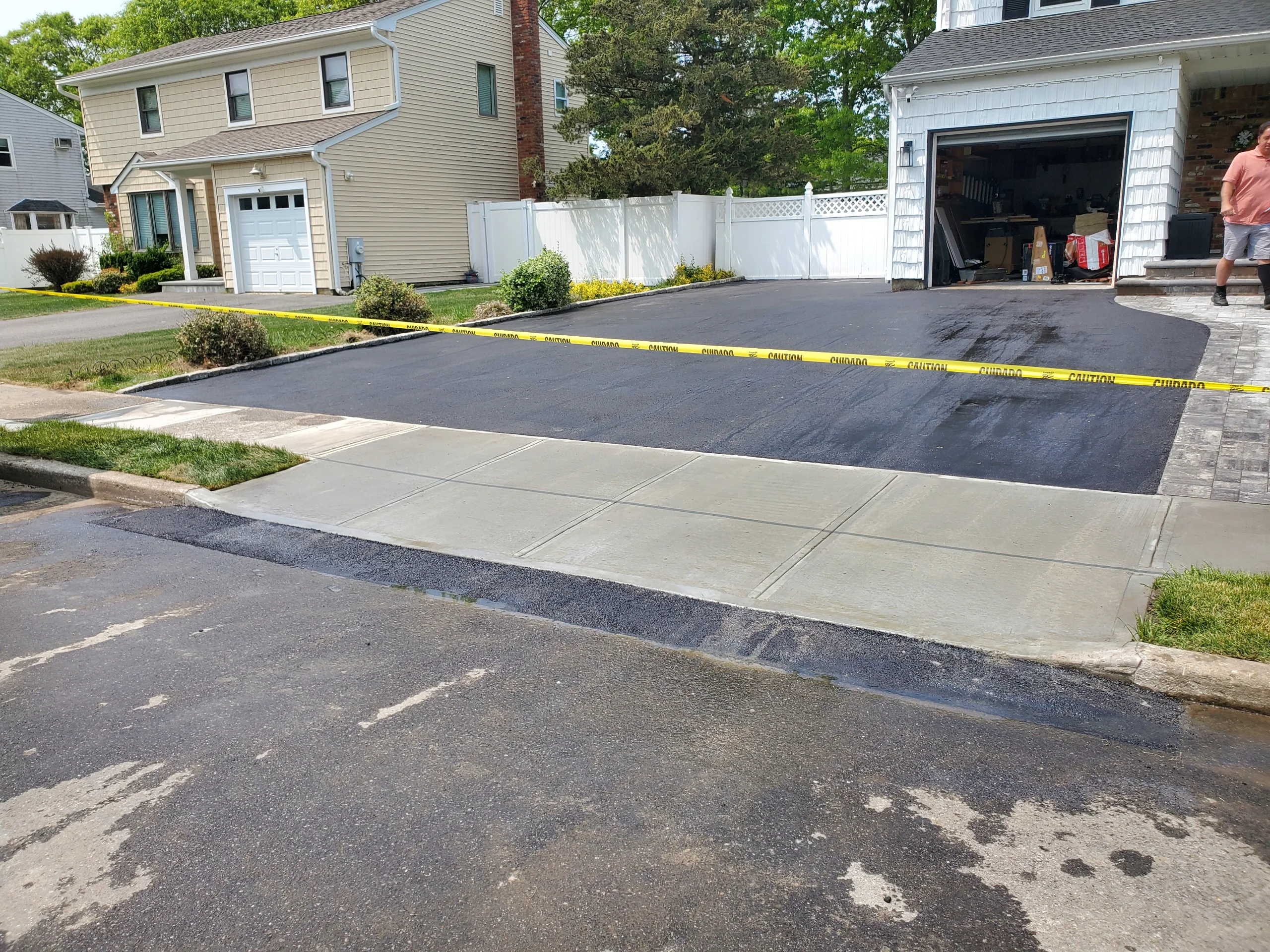
Properly installed concrete curb installation and Belgian block driveway aprons change that cycle completely. They create a physical barrier that protects your asphalt from plow damage and tire wear. They direct water away from your foundation instead of letting it pool against your garage.
In Mount Sinai’s real estate market, these details matter. Homes with professional concrete edging and aprons sell faster and command higher prices because buyers see a property that’s been maintained correctly. You’re not just fixing a cosmetic issue—you’re adding a structural upgrade that protects everything behind it.
The difference between a $15,000 driveway that lasts five years and one that lasts thirty comes down to what’s underneath and what’s protecting the edges. That’s where concrete grading and prep work separate a quick fix from a real solution.
We operate out of Smithtown and work throughout Suffolk County. We handle the concrete and masonry work that protects properties in Mount Sinai—from Belgian block installations to full sidewalk repair and replacement.
Suffolk County’s soil doesn’t behave like other places. You’ve got high water tables near the coast, shifting sands, and drainage that needs to be engineered, not guessed at. We use excavators and grading equipment to prep surfaces correctly the first time, accounting for how water moves through your specific property.
We’re licensed, insured, and we don’t disappear after the job. You’ll get clear communication from estimate to completion, and we’ll walk you through what’s happening at each stage so there are no surprises.

Every concrete job starts with what you can’t see—the grading and prep work that determines whether your installation lasts three years or thirty. We begin with a site assessment to understand your property’s drainage patterns and soil conditions. In Mount Sinai, that means accounting for water table fluctuations and how runoff moves during heavy rain.
Next comes excavation and grading. We use heavy machinery to remove unstable material and create the proper slope for drainage. This isn’t eyeballing it—we’re setting grades that move water away from structures and prevent pooling. Base material goes down in compacted layers, creating a stable foundation that won’t shift or settle.
Then we install the concrete, whether that’s curbing, aprons, sidewalks, or masonry flatwork. Belgian block gets set with precision so each piece locks into the next. Concrete gets finished to the right texture for your application—smooth for aprons, broom-finished for walkways.
The final step is curing and sealing where appropriate. Concrete needs time to reach full strength, and we don’t rush that process. When we’re done, you’ve got an installation engineered for Suffolk County’s conditions, not just poured and hoped for the best.

Ready to get started?
Concrete curb installation creates a defined edge that protects your driveway and controls water flow. We install poured concrete curbing or Belgian block depending on your property’s style and drainage needs. Belgian block adds that estate-quality look you see throughout Mount Sinai’s higher-end neighborhoods—it’s a detail that buyers notice and appraisers factor into valuations.
Driveway aprons get the same attention to grading and structural integrity. The apron is where your driveway meets the street, and it takes constant abuse from vehicles, plows, and weather. A properly installed concrete apron distributes weight correctly and prevents the crumbling edges that make driveways look neglected.
Sidewalk repair addresses trip hazards, cracking, and settling before they become liability issues. We’ll remove and replace damaged sections or install completely new walkways with proper base prep and grading. Masonry flatwork extends to patios, walkways, and other hardscape features that need to handle foot traffic and weather without deteriorating.
Every installation accounts for Mount Sinai’s specific challenges—soil composition, seasonal water table changes, and the freeze-thaw cycles that destroy improperly installed concrete. You’re getting work that’s engineered for this location, not generic concrete that might work somewhere else.
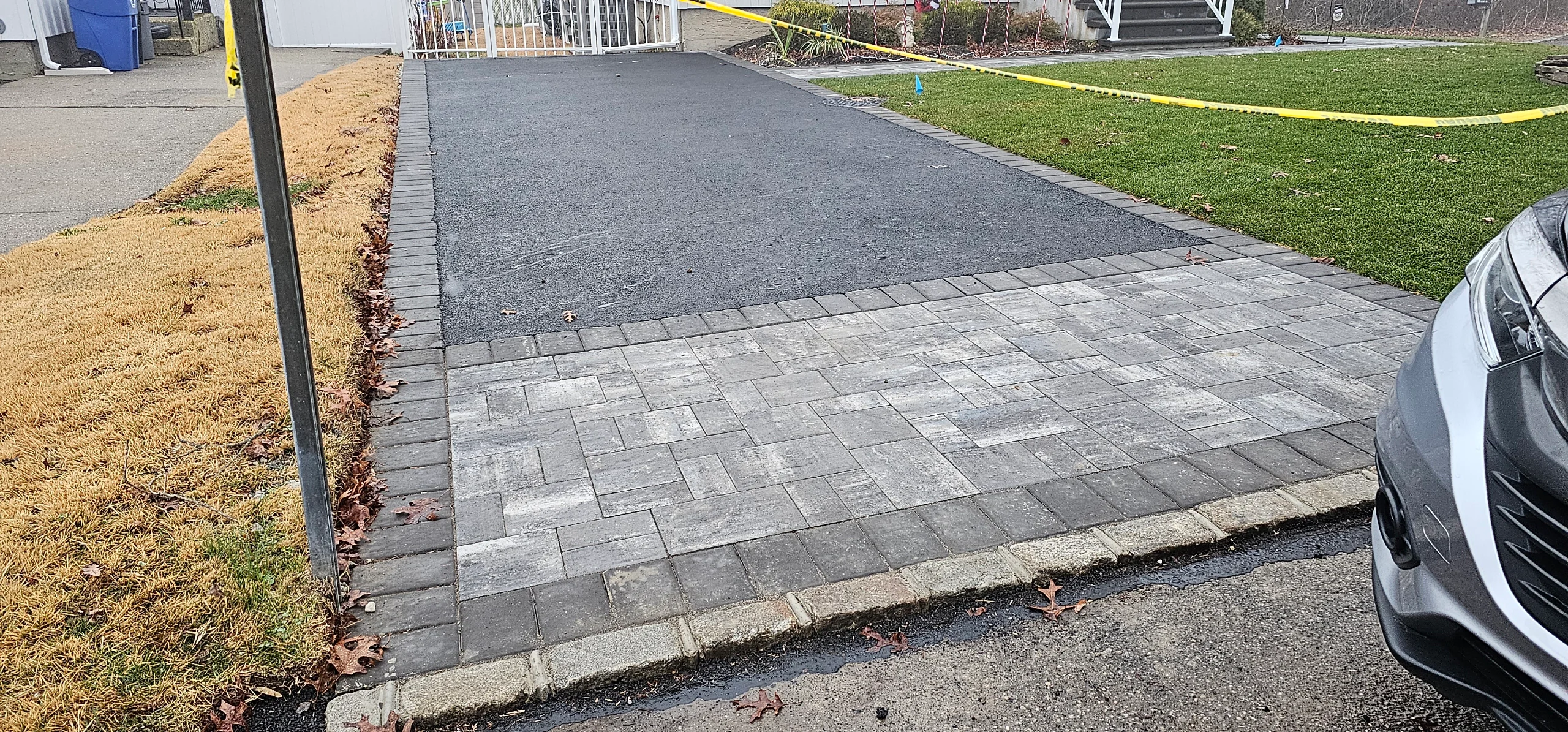
Concrete installed with correct grading and prep work regularly lasts 30 to 50 years in Suffolk County. The key factors are base stability, proper drainage design, and installation that accounts for freeze-thaw cycles.
Concrete fails when water gets underneath and freezes, causing heaving and cracking. In Mount Sinai, that means your installation needs to direct water away from the concrete itself and prevent pooling. We create drainage patterns during the grading phase that move water where it needs to go.
The base material also matters significantly. Compacted crushed stone creates a stable foundation that doesn’t shift when the ground freezes or when Suffolk County’s water table rises seasonally. Skipping this step or using inadequate base material is why you see concrete cracking within a few years—it’s not the concrete that failed, it’s what’s underneath.
Poured concrete curbing is continuous and created on-site using forms and wet concrete. Belgian block is individual granite blocks set in a pattern. Both protect driveway edges and control drainage, but they differ in appearance, cost, and longevity.
Belgian block is granite, so it lasts generations without deteriorating. It’s the premium option you see in Mount Sinai’s estate properties—classic, elegant, and nearly indestructible. The installation is more labor-intensive because each block needs to be set individually with proper spacing and alignment.
Poured curbing costs less and goes in faster. It creates a clean, modern edge that’s completely customizable in terms of height and profile. Both options work well for drainage and edge protection. The choice usually comes down to aesthetic preference and budget. If you’re aiming for that high-end Gold Coast look, Belgian block is the standard. If you want clean functionality at a lower price point, poured curbing delivers.
Yes, but the increase depends on what you’re replacing and how the work integrates with your overall property. Professional concrete installations typically return 50% to 75% of cost in added property value, with some projects adding $10,000 to $15,000 in market value.
Curb appeal matters significantly in Mount Sinai’s competitive real estate market. Buyers touring homes notice cracked driveways, crumbling edges, and poor drainage immediately. These issues raise questions about overall property maintenance and often lead to lower offers or requests for repairs before closing.
Belgian block aprons and professional curbing signal that a property has been maintained to high standards. They’re details that align with buyer expectations in neighborhoods where median home values exceed $675,000. You’re not just fixing concrete—you’re eliminating red flags and adding features that match what buyers expect to see at this price point. Real estate agents will tell you that homes with strong curb appeal and no obvious maintenance issues sell faster and closer to asking price.
Suffolk County drainage requires understanding soil composition, water table depth, and how water moves across your specific property. We start every project with a site assessment that identifies where water currently goes and where it needs to go instead.
Mount Sinai properties deal with sandy coastal soils in some areas and heavier compacted soils inland. Near the water, you’ve got higher water tables that fluctuate seasonally. All of this affects how we grade surfaces and what base materials we use. The goal is creating positive drainage—water moves away from structures and doesn’t pool on concrete surfaces.
We use excavation equipment to establish proper slopes, typically a minimum of 2% grade to ensure water movement. In problem areas, we’ll integrate drainage solutions like catch basins or redirect runoff to appropriate areas. This isn’t cosmetic grading—it’s engineered to handle Long Island’s heavy rain events and prevent the basement flooding and foundation issues that come from poor surface drainage. Every concrete installation we do includes this drainage planning because it’s the difference between work that lasts and work that fails.
Belgian block installation starts with excavation—we remove existing material down to stable soil, typically 8 to 12 inches depending on your soil conditions. This creates room for the base material and the blocks themselves while maintaining proper height relationships with your driveway and street.
Next comes base preparation. We install and compact crushed stone in layers, creating a stable foundation that drains well and won’t shift. The base needs to be level and properly sloped for drainage before any blocks go down. This step determines whether your apron stays level or starts sinking and separating over time.
Then we set the Belgian blocks. Each granite block gets placed individually, with consistent spacing and alignment. We use a combination of sand and stone dust to lock blocks together and fill joints. The blocks need to be flush with each other and set at the correct height relative to your driveway surface. The final step is compacting everything together and sweeping joint material into the gaps. Done correctly, you’ve got an apron that’ll outlast your driveway by decades and handle plow impacts that would destroy asphalt edges.
Concrete reaches about 70% of its full strength in seven days and continues curing for weeks after that. For foot traffic, you’re typically looking at 24 to 48 hours. For vehicle traffic, we recommend waiting at least seven days, though longer is better.
The curing process is chemical, not just drying. Concrete needs moisture to reach full strength, which is why we sometimes cover fresh concrete or apply curing compounds. Rushing this process by driving on concrete too early can cause surface damage and reduce the overall lifespan of your installation.
Temperature affects curing time significantly. In cooler weather, concrete takes longer to cure. In hot weather, it can cure too quickly and crack if not properly managed. We schedule concrete work with weather conditions in mind and give you specific guidance based on the actual conditions during your installation. For critical areas like driveway aprons that’ll see heavy vehicle traffic, patience during curing pays off in decades of additional life. You’re better off waiting ten days than dealing with surface damage that shows up in the first year.
Other Services we provide in Mount Sinai