
Hear from Our Customers

You already know what damaged concrete does to your home’s appearance. What you might not realize is how much it’s costing you in actual property value. In Mastic’s current market, where home values have climbed over 4% in the past year, curb appeal isn’t just cosmetic—it’s financial.
A cracked sidewalk or settling driveway apron tells buyers one thing: deferred maintenance. That translates to lower offers or longer time on market when you’re ready to sell. Worse, if there’s a vertical difference of half an inch or more between concrete sections, you’re looking at a code violation and potential liability if someone trips.
Professional concrete work fixes both problems at once. You get surfaces that handle Mastic’s drainage challenges—sandy soil, high water tables near the coast, freeze-thaw cycles every winter. And you get the kind of clean, level finish that makes your property stand out in a neighborhood where 421 concrete professionals are competing for the same projects.
We’ve been handling concrete and masonry work across Suffolk County for years. We’re based in Smithtown, fully licensed and insured, and we understand what Long Island’s climate does to concrete over time.
Most contractors will tell you what you want to hear, then disappear when the job gets complicated. We show up with the right equipment—excavators, grading tools, compaction machinery—because that’s what it takes to prep a base correctly in Mastic’s soil conditions. We handle permits, coordinate utility marking, and make sure every pour meets local code requirements.
You’re not getting a crew that learned concrete work on YouTube. You’re getting professionals who’ve dealt with Suffolk County’s inspection processes, drainage issues, and material requirements enough times to know what works and what doesn’t.

We start with an on-site assessment of your property. That means looking at drainage patterns, checking for soil compaction issues, and identifying why your concrete failed in the first place. If water’s pooling or the base is compromised, we need to know before any new concrete goes down.
Next comes excavation and grading. This is where most contractors cut corners, and it’s why you see driveways settling or sidewalks cracking within a year. We use heavy machinery to remove damaged concrete, regrade the base to handle Mastic’s specific drainage needs, and compact the soil properly. If your property has sandy soil or a high water table, we adjust the base material and depth accordingly.
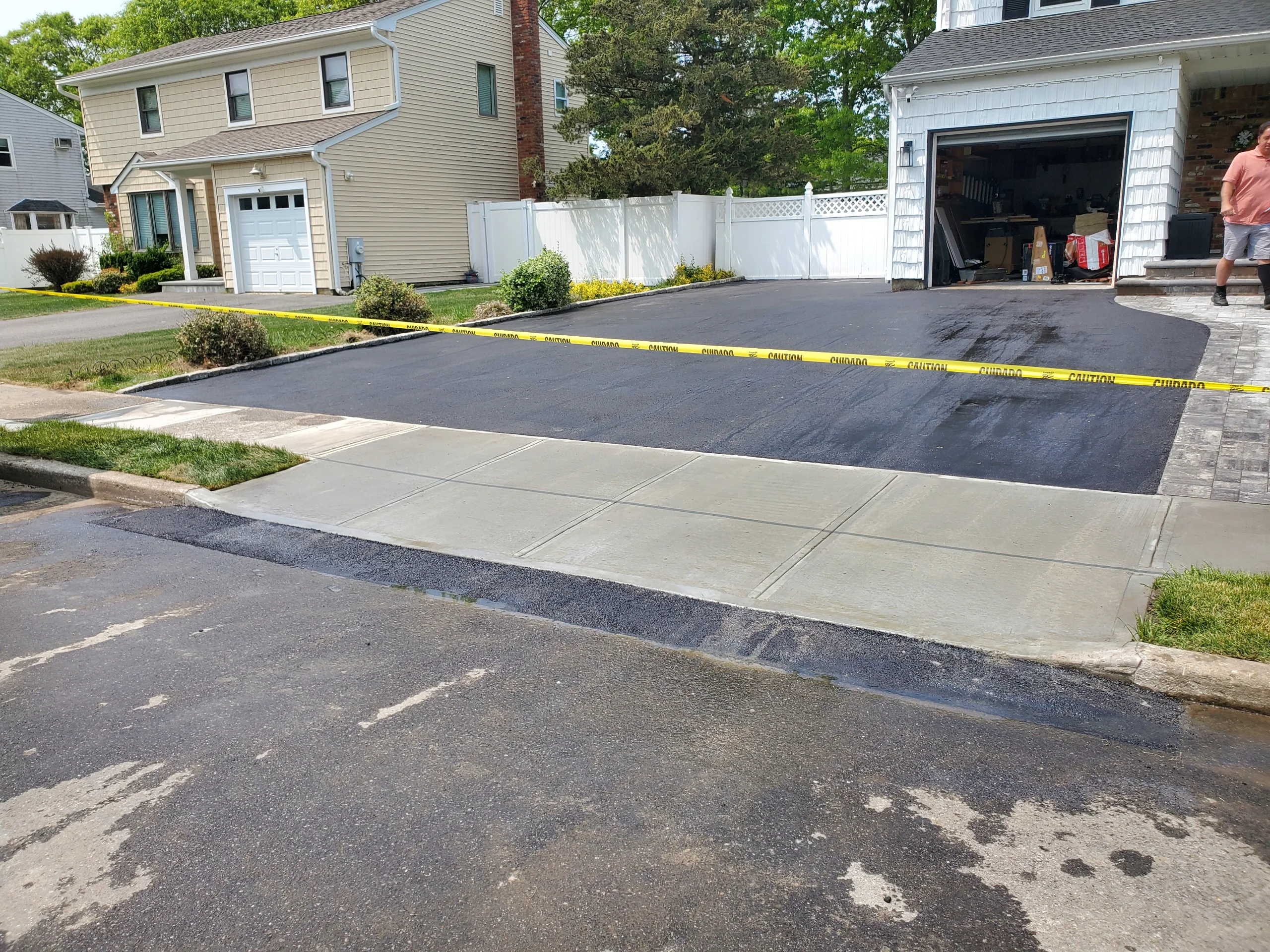
Then we form, pour, and finish the concrete. For driveway aprons, we can install Belgian block edging if you want that upscale look that’s popular in higher-end Mastic neighborhoods. For sidewalks, we make sure every section is level and code-compliant—no trip hazards, no half-inch differences that create liability issues.
After the pour, we control the cure time and protect the surface until it’s ready for use. You’ll know exactly when you can walk or drive on it, and we’ll walk you through any maintenance steps to keep it looking good long-term.

Ready to get started?
Every project includes full site prep—excavation, grading, and base compaction using commercial equipment. We’re not hand-tamping a driveway base and hoping it holds. We’re bringing in the machinery that ensures proper compaction and drainage from day one.
You get materials suited to Long Island’s conditions. That means concrete mixes that handle freeze-thaw cycles, aggregate bases that drain properly in sandy soil, and finishing techniques that prevent surface cracking. For decorative work like Belgian block aprons or masonry flatwork, we source quality materials that match Mastic’s architectural styles.
We handle all permits and coordinate with local utilities before any excavation begins. That’s a legal requirement most homeowners don’t realize exists, and it’s a critical safety step. We also carry full licensing and insurance, which protects you if something goes wrong on your property.
After installation, you get a clear timeline for curing and a straightforward explanation of what to expect. No surprises, no hidden fees, no callbacks because the work wasn’t done right the first time. Just concrete that does its job and looks good doing it.
Properly installed concrete should last 20 to 30 years in Mastic, even with Long Island’s freeze-thaw cycles and coastal moisture. The key word there is “properly installed.” Most concrete failures happen because the base wasn’t prepped correctly or the grading doesn’t account for drainage.
Mastic sits in an area with sandy soil and varying water table levels depending on how close you are to the coast. If your contractor doesn’t adjust the base depth and material for those conditions, you’ll see settling, cracking, or water damage within a few years. We compact the base using heavy machinery, not hand tools, and we grade for drainage based on your specific property’s slope and soil type.
The concrete mix matters too. We use mixes rated for freeze-thaw resistance, which is critical when winter temperatures drop and moisture in the concrete expands. Cheap concrete or improper curing will crack by the second winter. Done right, your driveway apron or sidewalk should outlast most other exterior improvements you make to your home.
Patching works when the damage is surface-level and the base underneath is still solid. If you’ve got a small crack or a single section with minor spalling, a patch can buy you a few more years. But if the concrete is settling, if there are multiple cracks, or if water’s pooling on the surface, patching is just delaying the inevitable.
Here’s the real issue: most concrete problems in Mastic stem from base failure, not surface wear. Sandy soil compacts unevenly over time, especially if it wasn’t prepped correctly during the original installation. When the base shifts, the concrete above it cracks or settles. Patching the surface doesn’t fix the base, so you’ll be patching again in a year or two.
Full replacement costs more upfront, but it solves the underlying problem. We remove the damaged concrete, regrade and compact the base properly, and pour new concrete that’s built to handle your property’s drainage and soil conditions. If you’re planning to sell your home or you’re tired of recurring repairs, replacement makes more financial sense. If you’re just trying to get another year or two out of an old driveway, patching might be worth it—but go in knowing it’s temporary.
It depends on the scope of work, but yes, most concrete projects require permits in Suffolk County. Driveway aprons, sidewalk replacements, and any work that involves excavation near property lines or utilities typically need approval from local authorities. If you’re pouring a new driveway or adding a concrete patio, you’ll definitely need a permit.
The permit process exists for good reasons. It ensures the work meets code requirements for things like drainage, slope, and structural integrity. It also requires utility marking before excavation, which prevents you from accidentally hitting a gas line or water main. Contractors who skip permits are either cutting corners or don’t understand local regulations—and that puts you at risk if something goes wrong.
We handle all permit applications and coordinate with Suffolk County’s inspection process. That includes utility marking through 811 before we dig, which is a legal requirement that protects both you and our crew. Once the work is done, we schedule the final inspection to make sure everything’s up to code. You don’t have to deal with any of the paperwork or phone calls—we manage it from start to finish.
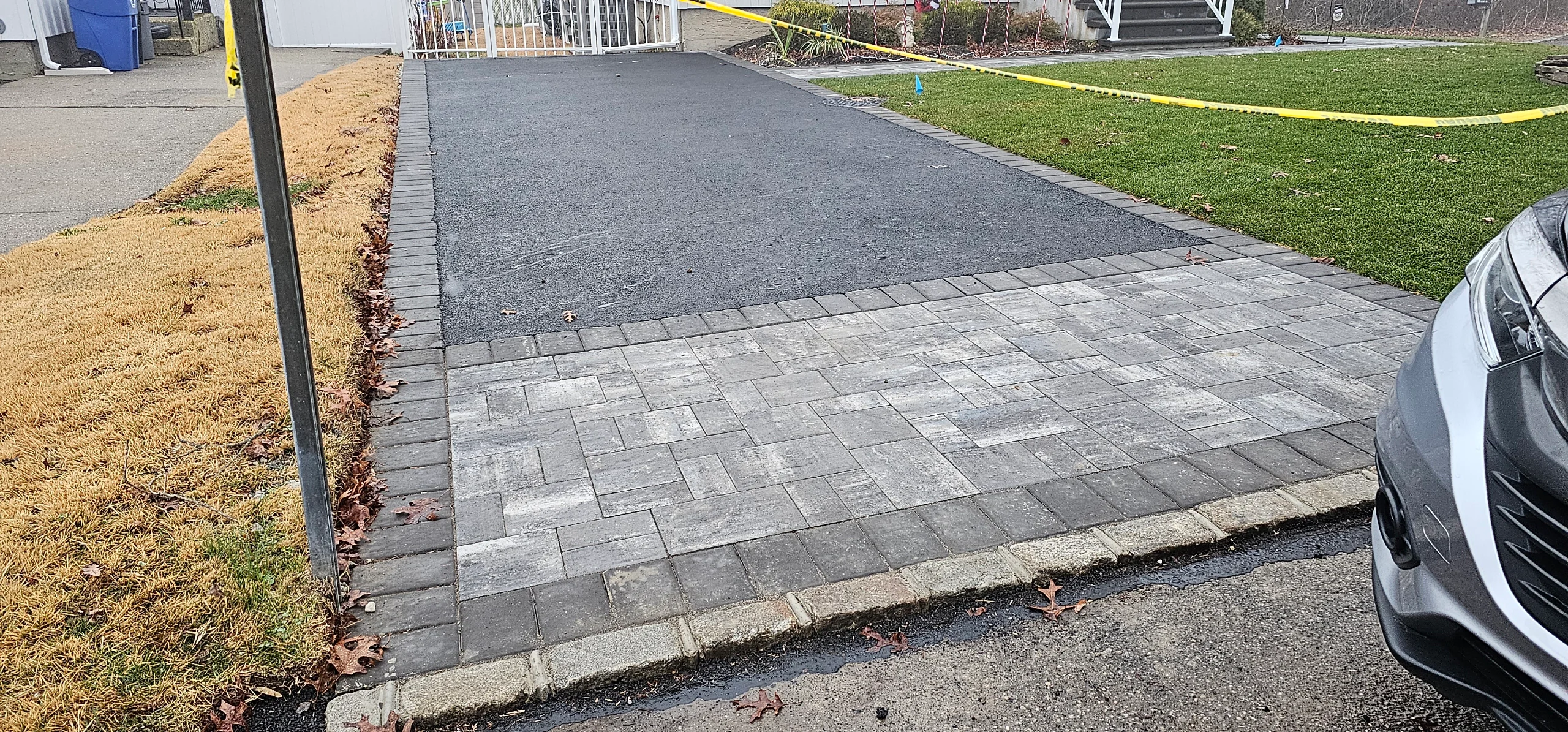
Belgian block edging typically adds $30 to $50 per linear foot compared to a standard concrete apron, depending on the block style and installation complexity. For a typical driveway apron in Mastic, that might mean an extra $800 to $1,500 total. It’s not cheap, but it’s one of the few upgrades that visibly increases curb appeal in higher-end neighborhoods.
Belgian block creates a defined, upscale look that stands out in Mastic’s real estate market. When 48% of real estate agents say curb appeal is the strongest selling point in today’s market, that kind of detail matters. It also provides functional benefits—the blocks create a solid edge that prevents asphalt or concrete from crumbling at the border, and they handle freeze-thaw cycles better than poured edges.
The installation requires more labor because each block has to be set individually and leveled precisely. We excavate deeper along the edges, set a compacted base, and mortar the blocks in place so they don’t shift over time. It’s not a DIY project, and it’s not something you want a general laborer attempting. Done correctly, Belgian block edging should last as long as the concrete itself—20 to 30 years with minimal maintenance.
Concrete cracks for three main reasons in Mastic: base failure, water infiltration, and freeze-thaw damage. All three are preventable with proper installation, but most contractors skip the steps that actually matter because they’re time-consuming and require the right equipment.
Base failure happens when the soil underneath isn’t compacted correctly or when the base material is too thin for the soil type. Mastic’s sandy soil is particularly prone to settling, especially near the coast where water tables are higher. If the base shifts, the concrete above it cracks. We use heavy compaction equipment and adjust base depth based on your property’s soil conditions—not a one-size-fits-all approach.
Water infiltration is the second issue. If the concrete isn’t graded properly, water pools on the surface or seeps into the base, weakening the structure over time. In winter, that water freezes and expands, causing surface cracks and spalling. We grade every pour to direct water away from the concrete and toward appropriate drainage points. That includes accounting for Long Island’s freeze-thaw cycles when we select concrete mixes and finishing techniques.
The third factor is the concrete mix itself. Cheap concrete or improper curing leads to surface cracking within the first few years. We use mixes rated for freeze-thaw resistance and control the cure time to prevent premature cracking. You’ll still get minor hairline cracks over time—that’s normal with any concrete—but you shouldn’t see structural cracking or settling if the work is done right.
You can walk on new concrete after 24 to 48 hours in most cases, but you shouldn’t drive on it for at least seven days. Full curing takes about 28 days, though the surface will be strong enough for normal use well before that. The timeline depends on weather conditions, concrete mix, and the thickness of the pour.
Here’s what actually happens during curing: concrete doesn’t dry, it cures through a chemical reaction between water and cement. That reaction continues for weeks, and the concrete gets stronger over time. If you put heavy weight on it too early—like driving a car onto a fresh driveway—you risk cracking or surface damage that won’t show up until later.
We’ll give you a specific timeline based on your project and current weather conditions. In warmer months, concrete cures faster. In cooler weather or high humidity, it takes longer. We also protect the surface during curing to prevent premature drying, which can weaken the concrete and cause surface cracking.
If you need to use the area sooner for any reason, let us know during planning. We can adjust the concrete mix or installation schedule in some cases, but there’s no shortcut that doesn’t compromise quality. Most homeowners find that waiting a week for a driveway or a couple days for a sidewalk is a small inconvenience compared to dealing with cracked concrete a year later.
Other Services we provide in Mastic